The concept of the Trinity – the belief that God exists as one being in three co-equal, co-eternal persons: the Father, the Son, and the Holy Spirit – is arguably one of the most central and yet most profoundly mysterious doctrines in Christianity. For centuries, theologians, mystics, and everyday believers have grappled with its implications, seeking to understand and articulate this divine paradox. Even the most profound thinkers admit to its elusive nature. As Saint Augustine famously expressed, “If you understand, it is not God.” This statement encapsulates the awe and humility that often accompany contemplation of the Trinity, reminding us that our human minds are inherently limited when trying to grasp the infinite.
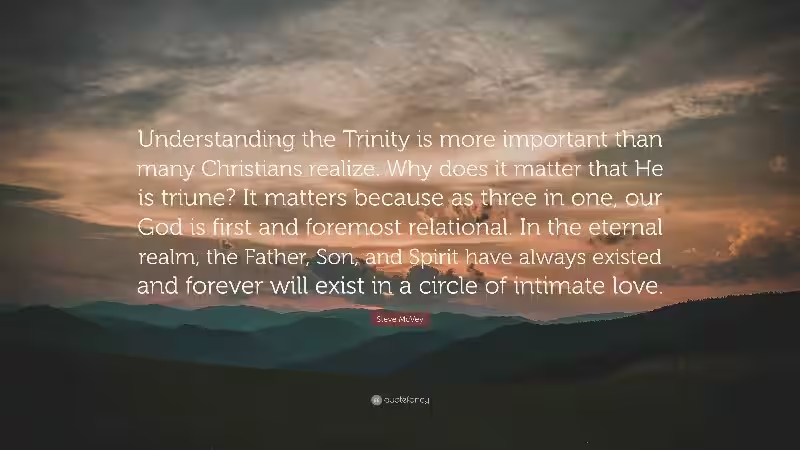
This doctrine, while challenging, is not merely an abstract theological puzzle; it has profound implications for how Christians understand God’s relationship with humanity, the nature of salvation, and the very essence of love. It speaks to a God who is not solitary but intimately relational, a God who, from the very beginning, existed in perfect communion. This inherently communal nature of God, as revealed in the Trinity, offers a powerful lens through which to view the world and our place within it, shaping our understanding of community, fellowship, and divine love. We will explore various facets of this doctrine, weaving in insightful trinity quotes to illuminate its richness and enduring significance.
Understanding the Divine Dance: Father, Son, and Holy Spirit
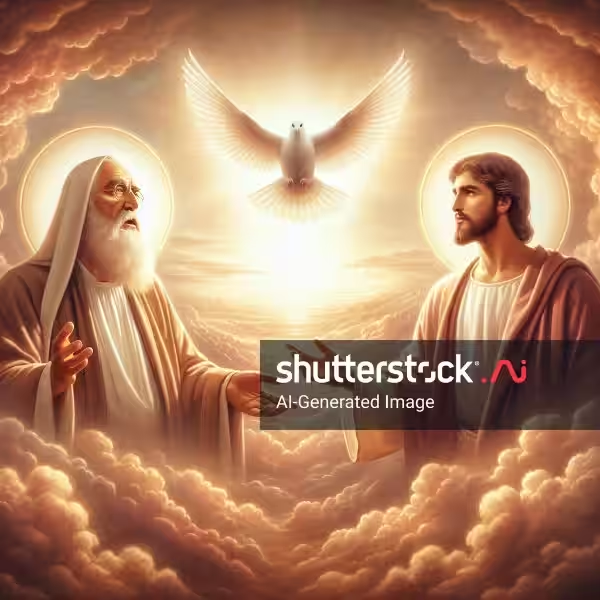
At its core, the doctrine of the Trinity is an attempt to reconcile seemingly contradictory truths about God. The Bible consistently affirms God’s oneness: “Hear, O Israel: The Lord our God, the Lord is one.” (Deuteronomy 6:4). Yet, it also clearly presents Jesus Christ as divine, the Son of God, and the Holy Spirit as God. The challenge, then, is to affirm both the absolute unity of God and the distinct personhood of the Father, Son, and Spirit. This is where the beauty and complexity of the trinity quotes truly begin to shine, offering different perspectives on this delicate balance.
Think of it like this: imagine a three-leaf clover. Each leaf is distinct, with its own shape and texture, yet they all belong to the same single plant. This analogy, while imperfect, helps to grasp the idea of distinct persons within a single divine essence. It’s crucial to emphasize that this is not a concept of three gods, but one God who is triune. The early Church Fathers, in their diligent efforts to articulate this truth, often used analogies to bridge the gap between human understanding and divine reality. For example, Gregory of Nyssa spoke of how “the Father is in the Son, and the Son in the Father. Likewise, the Father is in the Spirit, and the Spirit in the Father.” This emphasizes the profound interconnectedness and mutual indwelling of the divine persons.
The Father: The Source and Foundation
In the Trinitarian understanding, the Father is often seen as the fountainhead of divinity, the unoriginated source from which the Son is eternally begotten and the Spirit eternally proceeds. He is the Creator of all things, the Sovereign Lord who holds all in His power. Yet, this does not imply a distant or detached deity. The Father’s love for humanity is so profound that He sent His Son into the world. This initiating act of love is a cornerstone of Christian theology. As the Nicene Creed powerfully states, the Father is “God from God, Light from Light, true God from true God, begotten, not made, consubstantial with the Father.”
The Father’s role is not one of dominance or hierarchy in the sense of inferiority, but rather of origin and relationship. He is the one from whom all things flow, and to whom all things ultimately return. His love is the foundation upon which all other divine actions rest. When we pray to the Father, we are often acknowledging His ultimate authority and His role as the one who sends and empowers. This is reflected in a simple yet profound truth within many trinity quotes: “The Father is the beginning of all, since He is from no one; the Word is from the Father, and the Spirit is from the Spirit.” This highlights the distinct, yet unified, roles within the Godhead. Understanding the Father as the source helps us to appreciate the purpose and intention behind God’s creation and His redemptive plan.
The Son: The Incarnate Word and Redeemer
The Son, Jesus Christ, is the incarnate Word of God. He is the perfect revelation of the Father to humanity, the one through whom all things were made and by whom all things are sustained. His unique identity as both fully God and fully human is central to the Christian faith. The Gospel of John famously declares, “In the beginning was the Word, and the Word was with God, and the Word was God. He was with God in the beginning.” This passage immediately connects Jesus to the eternal divine being of God. The Son’s mission was to redeem humanity, to bridge the gap created by sin through His sacrifice and resurrection.
The Son’s relationship with the Father is one of perfect obedience and unity. He states, “I and the Father are one” (John 10:30). This is not a statement of subservience but of shared essence and purpose. Jesus’ earthly life and ministry were a demonstration of the Father’s love and will. His suffering and death on the cross are seen as the ultimate act of divine love, reconciling humanity to God. Many powerful trinity quotes focus on the Son’s role as mediator: “The Son is the image of the invisible God, the firstborn over all creation.” (Colossians 1:15). This emphasizes that in seeing Jesus, we see God. His humanity allows us to relate to God in a tangible way, while His divinity assures us of God’s ultimate power and authority.
The Holy Spirit: The Empowerer and Comforter
The Holy Spirit is the divine presence that indwells believers, the Comforter, the Advocate, and the Empowerer. While the Father initiates and the Son redeems, the Holy Spirit applies God’s work to our lives, guiding, sanctifying, and empowering us. Jesus promised, “And I will ask the Father, and he will give you another Advocate to help you and be with you forever—the Spirit of truth.” (John 14:16-17). This highlights the Spirit’s role as a constant, intimate companion and guide.
The Holy Spirit is not a mere force or influence, but a person of the Godhead, actively involved in the world and in the lives of believers. He convicts of sin, regenerates hearts, and bestows spiritual gifts. The Spirit is the assurance of our adoption into God’s family. The diversity of the Spirit’s work is often captured in various trinity quotes: “The Spirit searches all things, even the deep things of God.” (1 Corinthians 2:10). This illustrates the Spirit’s intimate knowledge of God’s will and His capacity to reveal divine truths to us. He is the active agent of God’s love in our everyday lives, enabling us to live lives that are pleasing to Him and to experience His presence in profound ways.
The Trinity in Practice: Living Our Faith in Light of the Godhead
The doctrine of the Trinity is not meant to be an intellectual exercise confined to theological seminaries. It has profound practical implications for how we live our lives as Christians. Understanding God as a relational, communal being informs our understanding of community and love within the Church and beyond. If God Himself exists in perfect fellowship, then our own relationships should reflect this divine model.
Consider the concept of divine love, which is not merely an attribute of God but is intrinsic to His very being. The Father loves the Son, the Son loves the Father, and they both love the Holy Spirit. This eternal, perfect love is what spills over into creation and ultimately into human redemption. When we talk about trinity quotes that inspire us, we often find them pointing to this sacrificial, self-giving love. As John 3:16 famously states, “For God so loved the world that he gave his one and only Son…” This act of giving is rooted in the very relational nature of the Trinity. Our call to love one another, then, is not just a commandment but a participation in the very life of God. This understanding encourages us to foster deeper, more authentic relationships within our faith communities and to extend that love outwards.
Worship and Prayer: A Trinitarian Engagement
Our worship and prayer should naturally reflect our understanding of the Trinity. When Christians pray, they often address the Father, through the Son, in the power of the Holy Spirit. This demonstrates an awareness of the distinct yet unified roles of the Godhead in their interaction with God. The prayers in Scripture often follow this pattern, acknowledging the Father as the ultimate recipient, the Son as the mediator, and the Spirit as the enabler of communion.
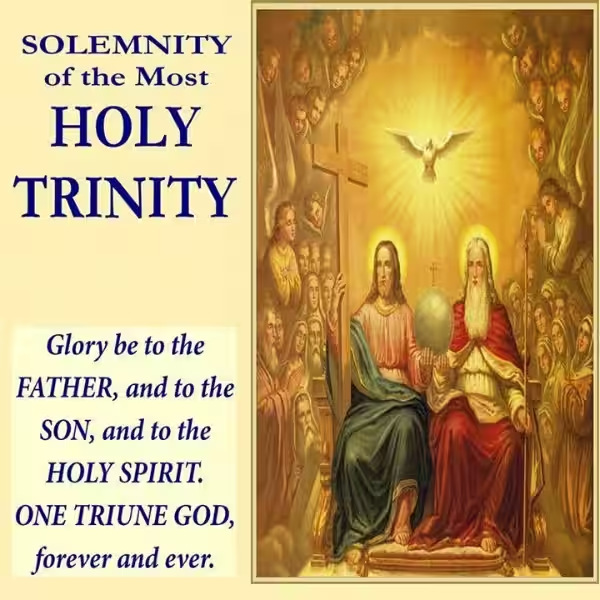
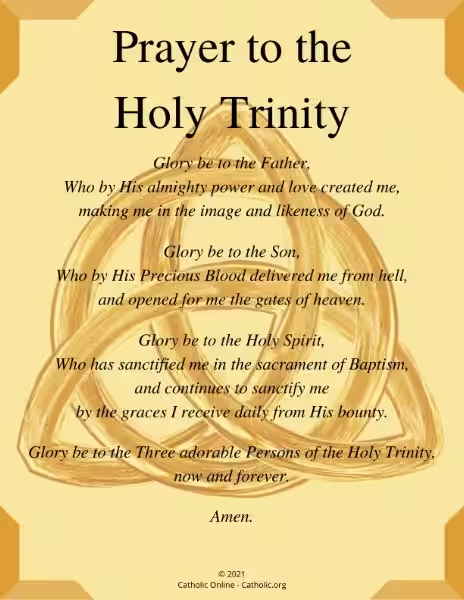
The great hymns and creeds of the Church are rich with Trinitarian theology. Think of the Doxology: “Glory be to the Father and to the Son and to the Holy Spirit, as it was in the beginning, is now, and ever shall be, world without end. Amen.” This ancient declaration is a powerful expression of worship directed to the triune God. As we engage in worship, whether individually or corporately, we are entering into the divine life of the Trinity. The trinity quotes that resonate most deeply often speak of this intimate communion. When we sing praises, confess our sins, or offer thanksgiving, we are doing so in the presence of and in relationship with the Father, Son, and Holy Spirit. This Trinitarian framework elevates our worship from a mere performance to a profound engagement with the very heart of God.
Ultimately, the doctrine of the Trinity is not just about understanding God’s nature; it’s about understanding ourselves and our purpose in relation to Him. We are created in the image of a triune God, a God of relationship and love. This implies that community, love, and connection are fundamental to our very being. The Holy Spirit empowers us to live out this reality, transforming us to become more like Christ, who perfectly revealed the Father.
The journey of faith is a process of progressive revelation, where the Holy Spirit continually illuminates the truths of God to us. The trinity quotes serve as guideposts on this journey, offering glimpses into the profound mystery of God’s being. As we grow in our understanding and experience of God, we become more deeply integrated into the life of the Trinity. This transformation leads to a life of purpose, meaning, and abundant love, reflecting the very nature of the God we serve. The Christian life, then, is a journey of growing into the likeness of a triune God, experiencing His love, and participating in His eternal fellowship.
Frequently Asked Questions about the Trinity in Religion
What is the Trinity?
The Trinity is a core doctrine of many Christian denominations, asserting that God is one God in three co-equal, co-eternal persons: the Father, the Son (Jesus Christ), and the Holy Spirit. These three persons are distinct yet share the same divine essence.
Is the Trinity mentioned in the Bible?
While the word “Trinity” itself does not appear in the Bible, the concept is understood by many Christians to be revealed throughout Scripture. Passages that are often cited as supporting the Trinity include the baptism of Jesus (Matthew 3:16-17), the Great Commission (Matthew 28:19), and various New Testament epistles that speak of the Father, Son, and Holy Spirit in relation to each other and to God.
How can God be one and three at the same time?
This is a central mystery of the Christian faith, often described as beyond full human comprehension. Analogies are sometimes used, such as water existing as ice, liquid, and steam, or a clover with three leaves on one stem, but these are imperfect and cannot fully capture the divine nature. The doctrine emphasizes that God’s unity is in His essence, while His plurality is in His persons.
What is the relationship between the Father, Son, and Holy Spirit?
Within the Trinity, there is a relational dynamic described by theological terms. The Father is understood as the source or origin of divinity, the Son is eternally begotten of the Father, and the Holy Spirit eternally proceeds from the Father and the Son. Despite these distinct roles and relations, all three are fully God and share the same divine nature and will.
Does every religion believe in the Trinity?
No, the doctrine of the Trinity is specific to Christianity. Other monotheistic religions, such as Judaism and Islam, believe in one God but do not accept the concept of a triune God. Many other world religions have different understandings of the divine or operate with polytheistic or pantheistic frameworks.