In the vast tapestry of religious devotion, few concepts resonate as deeply and universally as the Holy Trinity. This foundational doctrine of Christianity, the belief in one God existing in three co-equal persons – the Father, the Son, and the Holy Spirit – offers a profound framework for understanding the divine. For many, engaging with this mystery is not just an intellectual exercise but a deeply personal, spiritual practice. This is where the power of Holy Trinity prayers comes into play, offering a tangible way to connect with this sacred truth in our daily lives. Whether you are a lifelong believer or simply curious about the spiritual heart of Christianity, exploring these prayers can unlock a richer understanding of faith, offering solace, guidance, and a profound sense of connection.
The beauty of Holy Trinity prayers lies in their accessibility and adaptability. They are not confined to ancient texts or formal liturgies; they can be woven into the fabric of our everyday experiences. From a simple morning invocation to a heartfelt plea for strength, these prayers serve as bridges between the human and the divine, reminding us that we are never alone. They offer a constant reminder of God’s presence in our lives, a presence that is multifaceted, loving, and ever-watchful. As we delve into the world of these sacred utterances, we will discover how they can transform our perspective, strengthen our resolve, and deepen our overall religious journey.
Understanding the Holy Trinity: A Foundation for Prayer
Before we explore the prayers themselves, it’s crucial to grasp the essence of the Holy Trinity. This doctrine, while complex, is central to Christian theology. Imagine a single, perfect circle, representing God. Now, imagine that circle is also comprised of three distinct, yet inseparable, rays of light emanating from its center. Each ray is the circle, and the circle is each ray, yet they remain distinct. This is a simplified way to visualize the concept: one God, three persons. The Father is the Creator, the source of all; the Son, Jesus Christ, is the Redeemer, who became human to reconcile us with God; and the Holy Spirit is the Sanctifier, who empowers, guides, and comforts us.
This understanding is not merely academic; it profoundly influences how we pray. When we address the Father, we acknowledge the divine authority and love from which all creation flows. When we pray in the name of the Son, we invoke the sacrifice and intercession of Jesus, our mediator. And when we call upon the Holy Spirit, we seek His indwelling presence, His wisdom, and His strength to live a life that is pleasing to God. This interwoven nature of the Trinity means our prayers can be directed to one person, or encompass all three, recognizing their unified divine essence. For instance, a simple prayer might begin, “Heavenly Father, through Jesus Christ, by the power of your Holy Spirit…” demonstrating this interconnectedness.
Prayers of Invocation and Adoration
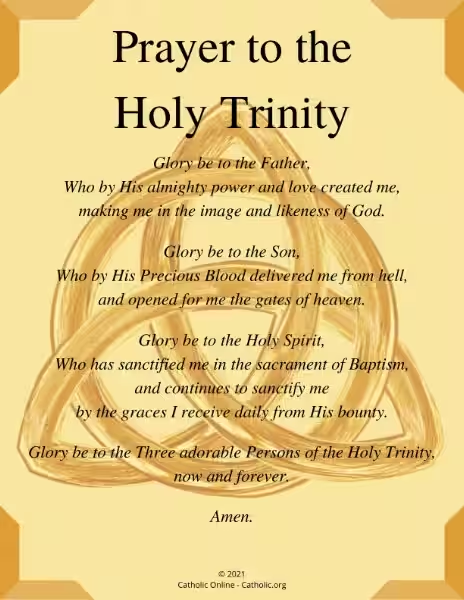
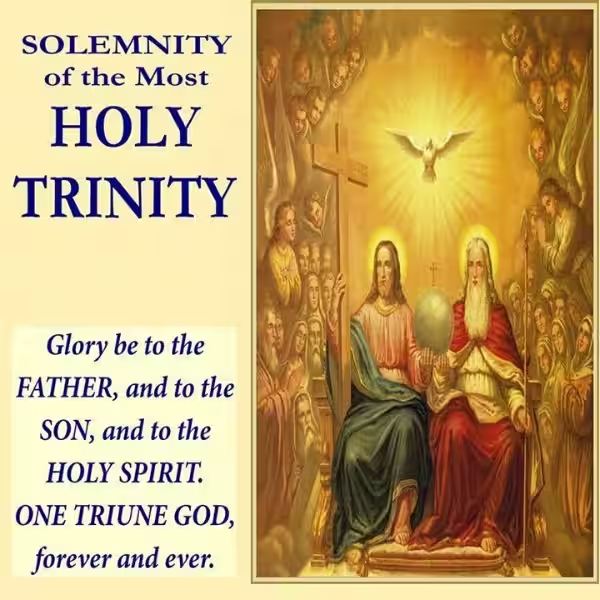
One of the most fundamental aspects of religious practice is invocation and adoration, and Holy Trinity prayers are perfect for this. These prayers express our deep reverence and love for God in His Trinitarian nature. They are moments where we pause our busy lives to acknowledge the majesty and glory of the divine. A classic example is the Glory Be (or Doxology): “Glory be to the Father, and to the Son, and to the Holy Spirit. As it was in the beginning, is now, and ever shall be, world without end. Amen.” This simple yet profound prayer encapsulates our worship of God’s eternal nature and His continuous presence in our lives.
Beyond the Glory Be, there are countless ways to express adoration. We might offer spontaneous prayers, perhaps while observing a breathtaking sunset, acknowledging the Father as the Creator, Jesus as the one through whom all things were made, and the Holy Spirit as the animating force behind the beauty before us. Such moments of awe are natural starting points for Trinitarian worship. Another relatable example is during times of great joy; we might exclaim, “Thank you, Father, for this blessing, through your Son, by the grace of the Spirit!” This heartfelt expression connects our personal experiences to the overarching divine plan, reinforcing our faith and gratitude. We can also find many liturgical prayers that beautifully articulate this adoration, often sung or recited in communal worship, further solidifying the shared experience of faith.
Prayers for Guidance and Strength
Life’s journey is rarely without its challenges, and it is in these moments that Holy Trinity prayers for guidance and strength become invaluable. When faced with difficult decisions, overwhelming tasks, or personal struggles, turning to the Trinity offers a source of unwavering support and wisdom. For example, you might pray, “O God, the Father, the Son, and the Holy Spirit, grant me the wisdom to discern your will, the courage to follow it, and the strength to persevere.” This prayer acknowledges God’s comprehensive knowledge (Father), Christ’s example of obedience (Son), and the Spirit’s empowering presence.
Consider a student preparing for a crucial exam. They might pray, “Heavenly Father, you know all things, please grant me clarity. Lord Jesus, you understand temptation and pressure, give me peace. Holy Spirit, you are the spirit of wisdom, guide my mind.” This personalized approach to Trinitarian prayer makes it incredibly relatable and effective. It’s about tapping into the specific attributes of each person of the Trinity that correspond to our needs. Even a simple, whispered prayer like, “Father, Son, and Holy Spirit, help me,” can be a powerful act of faith, drawing on the combined power of the divine to navigate life’s complexities. These prayers remind us that we are not alone in our struggles; the Triune God is actively involved in our lives, ready to lend a helping hand.
Prayers of Thanksgiving and Intercession
Beyond asking for help, Holy Trinity prayers of thanksgiving and intercession are vital for a mature spiritual life. Expressing gratitude is a cornerstone of faith, and directing our thanks to the Trinity acknowledges that all good gifts come from this unified divine source. A prayer of thanksgiving might sound like: “Almighty God, Father, Son, and Holy Spirit, I give you thanks for your boundless love, your redeeming grace, and your constant guidance. You are worthy of all praise.” This acknowledges the Father’s love, the Son’s sacrificial work, and the Spirit’s ongoing ministry in our lives.
Intercessory prayer, praying for others, is also deeply enriched by understanding the Trinity. We can pray for loved ones, communities, or even the world, appealing to the specific roles of the Trinity. For instance, one might pray, “Father, in your merciful love, hear our plea for healing for [name]. Lord Jesus, by your wounds, grant them restoration. Holy Spirit, breathe your life-giving presence into their situation.” This structured intercession shows a deeper engagement with the doctrine. Even a simple thought of gratitude at mealtime, like “Thank you, God, for this food. Amen,” implicitly acknowledges the Trinity as the source of sustenance. These prayers foster a spirit of generosity and connection, extending our faith beyond ourselves to encompass the needs of others.
Integrating Holy Trinity Prayers into Your Daily Life
The true power of Holy Trinity prayers lies not just in their content but in their consistent application. Making these prayers a regular part of your routine can profoundly shift your spiritual perspective. Think of it like building a muscle; the more you exercise it, the stronger it becomes. You can start small. Perhaps dedicate your morning alarm to a brief Trinitarian invocation. As soon as you wake, before your feet hit the floor, whisper, “Father, Son, and Holy Spirit, guide my day.” This simple act sets a spiritual tone for the hours ahead, anchoring you in divine presence.
Another effective strategy is to associate prayers with specific activities. When you fill your car with gas, you might offer a prayer to the Father for provision, thanking Jesus for His sacrifice that enables our journeys, and asking the Spirit for safe travels. During your workday, when you encounter a moment of stress, pause and pray, “Lord, give me the patience of the Father, the wisdom of the Son, and the peace of the Spirit.” These small, consistent acts of devotion build a powerful habit, making your connection with the Holy Trinity a living, breathing part of your existence, rather than a once-in-a-while formality. Look for opportunities in your daily commute, during your lunch break, or even while doing chores to offer a brief moment of Trinitarian connection.
Simple yet Powerful Practices
You don’t need elaborate rituals to engage effectively with Holy Trinity prayers. Simplicity is often key to sustainability. A powerful practice is the Sign of the Cross, often accompanied by the words, “In the name of the Father, and of the Son, and of the Holy Spirit. Amen.” This ancient gesture is a constant affirmation of our faith in the Trinity and a reminder of Christ’s sacrifice. Integrating this into your day – upon waking, before meals, or before embarking on a journey – can be a deeply grounding experience, a personal declaration of your Trinitarian faith.
Another accessible practice is a moment of contemplation. Take a few minutes, perhaps before sleep, to simply reflect on the nature of the Trinity. Imagine the Father’s unconditional love, the Son’s perfect example, and the Holy Spirit’s intimate presence within you. You don’t need to recite a specific prayer; allow your heart to respond. This quiet reflection can lead to a profound sense of peace and connection. Consider creating a personal “Trinitarian Moment” – a specific time or place where you intentionally focus on your relationship with the Father, Son, and Holy Spirit. This could be sitting by a window, walking in nature, or even during a quiet coffee break. The goal is to create dedicated space for this sacred connection.
The Trinity in Liturgy and Personal Devotion
For many, the most familiar expressions of Holy Trinity prayers are found within established religious liturgy and personal devotion. Church services are replete with prayers that invoke the Trinity, from opening blessings to closing benedictions. The Nicene Creed, for instance, is a powerful doctrinal statement that articulates the belief in one God, the Father Almighty, the Maker of heaven and earth, and in one Lord, Jesus Christ, the Son of God, eternally begotten of the Father, and in the Holy Ghost, the Lord, the Giver of life. Reciting or listening to such creeds in communal worship can powerfully reinforce the Trinitarian faith.
On a personal level, many find comfort and strength in traditional prayers like the Apostles’ Creed, which also clearly outlines belief in God the Father, Jesus Christ His only Son, and the Holy Spirit. Beyond formal prayers, personal devotion can involve journaling about one’s relationship with the Trinity, or setting aside time for silent prayer, focusing on the unique role of each person of God. The act of singing hymns that reference the Trinity, such as “Holy, Holy, Holy! Lord God Almighty,” is another way to express devotion and feel the unifying power of shared worship. The key is to find what resonates most deeply with you, whether it’s the structured beauty of liturgy or the intimate whisper of personal prayer, and to engage with it consistently.
The Holy Trinity, while a profound mystery, is also a source of immense comfort and strength for millions. Through Holy Trinity prayers, we are invited to engage with this divine reality in tangible, life-affirming ways. These prayers offer a comprehensive framework for our spiritual lives, encompassing adoration, petition, thanksgiving, and intercession. They remind us that God is not a distant, abstract being, but a loving, relational God who is actively involved in every aspect of our existence.
By incorporating these prayers into our daily routines, we can cultivate a deeper, more consistent connection with the Father, the Son, and the Holy Spirit. Whether it’s a simple Sign of the Cross, a heartfelt Glory Be, or a spontaneous utterance of gratitude, each prayer is an opportunity to draw closer to the divine. Embrace the richness and power of Trinitarian prayer, and discover how it can illuminate your path, strengthen your faith, and bring you closer to the heart of God. The journey of faith is a lifelong one, and the Holy Trinity is with us every step of the way, offering an unwavering presence of love, guidance, and infinite grace.
Frequently Asked Questions about the Holy Trinity and Prayer
What is the Holy Trinity?
The Holy Trinity is the central doctrine of most Christian religions, stating that God is one God, but exists as three co-equal and co-eternal persons: the Father, the Son (Jesus Christ), and the Holy Spirit.
What are prayers to the Holy Trinity?
Prayers to the Holy Trinity can be addressed to any or all of the three persons of the Godhead. They often express adoration, thanksgiving, petitions, or a desire for guidance and strength. Examples include the Gloria Patri (“Glory be to the Father…”) and prayers that specifically invoke Jesus and the Holy Spirit.
Can I pray directly to the Father, Son, or Holy Spirit?
Yes. While the Trinity is one God, Christian tradition allows for prayer to be directed to the Father, through the Son, by the power of the Holy Spirit, or to each person individually, recognizing their distinct roles and relationships within the Godhead.
How does praying to the Trinity relate to my religion?
For Christians, praying to the Holy Trinity is a fundamental aspect of their faith. It reflects their belief in the triune nature of God and a desire to connect with God in all His fullness. The specific forms and emphasis of such prayers can vary between different Christian denominations.
Are there specific prayers I should use when praying to the Trinity?
Many traditional Christian prayers are Trinitarian in nature, such as the Sign of the Cross, the Gloria Patri, and the Nicene Creed. However, personal prayer is also encouraged, where you can express your own thoughts and feelings to God, acknowledging His Trinitarian nature.
Does praying to the Trinity mean I’m praying to three different Gods?
No. The doctrine of the Trinity teaches that there is only one God, who subsists in three distinct, co-equal, and co-eternal persons. Praying to the Trinity is an act of worship and communion with this one God.