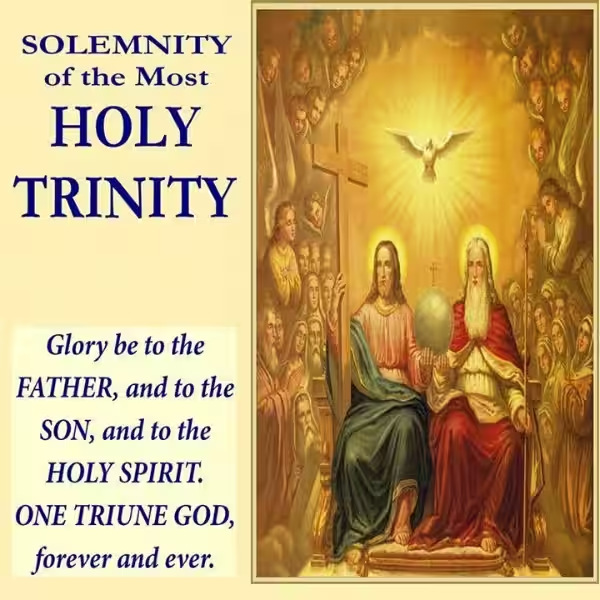
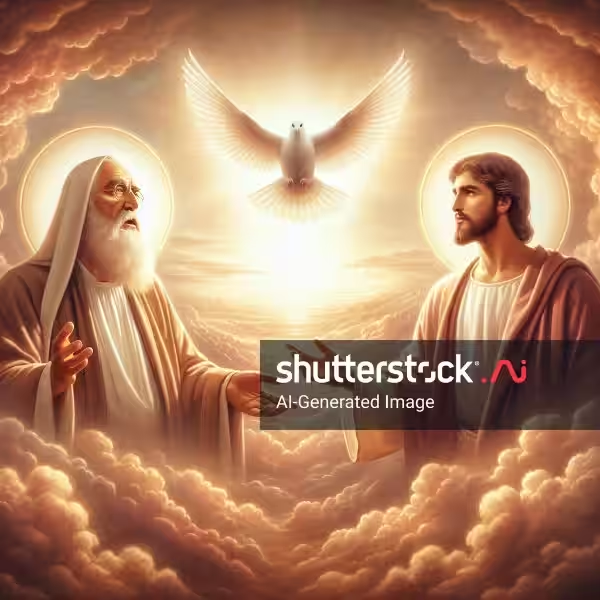
The concept of the Holy Trinity—God the Father, God the Son, and God the Holy Spirit—is arguably the most central and yet, for many, the most mystifying doctrine in Christianity. It speaks to a God who is one in essence, yet three in distinct persons. This profound truth underpins the very fabric of Christian belief, shaping worship, theology, and the personal experience of faith for millions worldwide. Delving into the Holy Trinity quotes isn’t just an academic exercise; it’s an exploration of the heart of God’s revelation to humanity, a journey that can deepen our understanding and strengthen our spiritual lives.
Throughout history, theologians, saints, and everyday believers have grappled with articulating this divine mystery. The challenge lies in expressing an infinite truth within the confines of human language. Yet, through their words, we gain glimpses into the loving, relational, and active nature of the triune God. These religion quotes serve as signposts, guiding us towards a more intimate encounter with the divine, offering comfort, wisdom, and a profound sense of awe at the God we serve.
The doctrine of the Trinity is not a simple mathematical equation, but a complex theological understanding that has been debated and refined over centuries. It asserts that there is only one God, indivisible and eternal, yet within this single divine being, there exist three co-equal and co-eternal persons: the Father, the Son (Jesus Christ), and the Holy Spirit. This is not to say there are three gods, nor that the persons are merely different modes or manifestations of God, but rather that they are distinct in their relationships within the Godhead while being fully God. As St. Augustine famously pondered, “If you grasp it, it is not God.” This inherent mystery is not a reason for dismissal but an invitation to humility and worship.
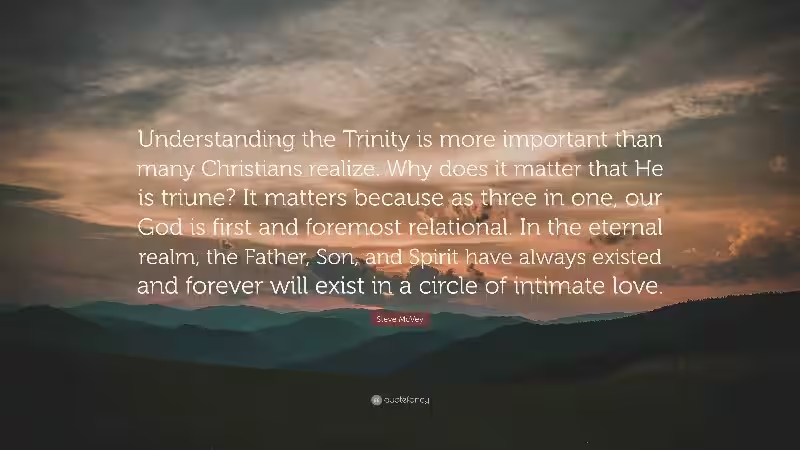
Understanding the Trinity is crucial because it informs our entire Christian worldview. It reveals a God who is inherently relational, engaged in an eternal dance of love and communion within Himself. This intrinsic relationality is then extended outward in creation and redemption. The Holy Trinity quotes from scripture and tradition often highlight this relational aspect, showing how the Father sends the Son, the Son obeys the Father, and both send the Spirit. This dynamic interplay is the source of God’s boundless love and grace poured out upon humanity, making the doctrine not just a theological puzzle but the very foundation of our salvation. For example, when we pray, we often address the Father, through the Son, by the power of the Holy Spirit, reflecting this divine order.
Scriptural Echoes of the Trinity
While the word “Trinity” itself doesn’t appear in the Bible, the concept is woven throughout its pages. From the creation account in Genesis, where “the Spirit of God was hovering over the waters” (Genesis 1:2), to the Great Commission in the New Testament, Jesus commands his disciples to “baptize them in the name of the Father and of the Son and of the Holy Spirit” (Matthew 28:19), the biblical narrative consistently points to a plurality within the Godhead. These religion quotes from the Bible are foundational to Christian belief and practice, offering clear indicators of God’s triune nature.
Consider the baptismal formula itself: the singular “name” signifies the unity of God, while the distinct persons mentioned reveal the plurality. This is a powerful early hint of the Trinitarian nature. Furthermore, passages like Jesus’ prayer in John 17, where he speaks of his unity with the Father and the Father’s love for him, and his promise to send the Advocate (the Holy Spirit), further illuminate this divine mystery. The Holy Trinity quotes from scripture often serve as starting points for deeper theological reflection, each verse a thread in the grand tapestry of God’s self-revelation.
In the Trinitarian understanding, the Father is often seen as the fountainhead of divinity, the unbegotten source from whom the Son is eternally begotten and the Spirit eternally proceeds. He is the ultimate Creator, the architect of the universe, and the one who initiates the plan of salvation. He is characterized by love, power, and sovereignty. When we speak of God the Father, we are referring to the divine being who is the ultimate reality, the one from whom all existence flows. The Holy Trinity quotes that focus on the Father often emphasize his role as the loving parent who desires a relationship with his children.
The Father’s love is not merely an attribute but the very essence of his being. It is this love that moved him to send his Son into the world to redeem humanity. Think of the parable of the Prodigal Son: the father’s unconditional love and eager welcome represent the Father’s heart towards us. This depiction helps to make the abstract concept of divine love more relatable and personal. The religion quotes about the Father often inspire a sense of security and belonging, reminding us that we are cherished children of a loving Creator.
The Son: The Redeemer and Revealer
Jesus Christ, the Son of God, is the second person of the Trinity. He is eternally begotten of the Father, fully God and fully human, a paradox that lies at the heart of Christian theology. His incarnation, life, death, and resurrection are the central events of salvation history. Through Jesus, we see the Father most clearly, as he himself said, “Anyone who has seen me has seen the Father” (John 14:9). The Holy Trinity quotes concerning the Son highlight his unique role as our Savior and mediator.
Jesus’ earthly ministry was a living revelation of God’s character and will. He healed the sick, forgave sins, and taught about the Kingdom of God. His sacrifice on the cross is the ultimate act of love, paying the penalty for our sins and reconciling us to the Father. His resurrection is the victory over death, offering us hope for eternal life. As John 3:16 famously states, “For God so loved the world that he gave his one and only Son, that whoever believes in him shall not perish but have eternal life.” This verse encapsulates the Son’s pivotal role in the Trinitarian plan of salvation, making the religion quotes about Jesus profoundly impactful.
The Holy Spirit: The Sanctifier and Comforter
The Holy Spirit is the third person of the Trinity, who equally proceeds from the Father and the Son. The Spirit is often described as the “breath of God”, the divine presence that indwells believers, empowers them, and guides them into all truth. He is our Comforter, our Advocate, and the one who makes God’s presence real in our lives. The Holy Trinity quotes about the Spirit often emphasize his active work in transforming us and empowering us to live out our faith.
The Holy Spirit’s work is manifold: he convicts of sin, regenerates believers, seals them for salvation, grants spiritual gifts, and empowers them for service. He is the dynamic force that animates the Church and enables individual Christians to live a life pleasing to God. Jesus promised his disciples, “But the Advocate, the Holy Spirit, whom the Father will send in my name, will teach you all things and will remind you of everything I have said to you” (John 14:26). This promise assures us of the Spirit’s constant guidance and support, making the religion quotes about the Spirit a source of immense encouragement.
The doctrine of the Trinity is not meant to be confined to theological treatises; it is a living reality that profoundly impacts our daily lives. It means that when we pray, we are connecting with a God who is not distant but intimately involved in every aspect of our existence. The Holy Trinity quotes from saints and spiritual writers often bridge the gap between abstract theology and personal experience, offering practical insights into living in the presence of the Triune God.
Living in the awareness of the Trinity means recognizing God’s presence in the world around us, in the love of our family and friends, and in the quiet moments of prayer and reflection. It means understanding that our salvation is a work of the Father, through the Son, by the power of the Holy Spirit. This understanding fosters a deep reliance on God and a profound sense of gratitude for His unfailing love and grace. The religion quotes that speak of this immanent God can transform our perspective, turning ordinary moments into opportunities for divine encounter.
Prayer and Worship as Trinitarian Encounters
Our prayers and worship are inherently Trinitarian, whether we explicitly articulate it or not. When we pray to the Father, we do so through the mediation of the Son, empowered by the Holy Spirit. This threefold connection enriches our prayer life, reminding us that we are not speaking into a void but engaging with the living God in all His fullness. The Holy Trinity quotes from liturgical traditions often reflect this structured approach to worship, guiding believers to honor each person of the Godhead.
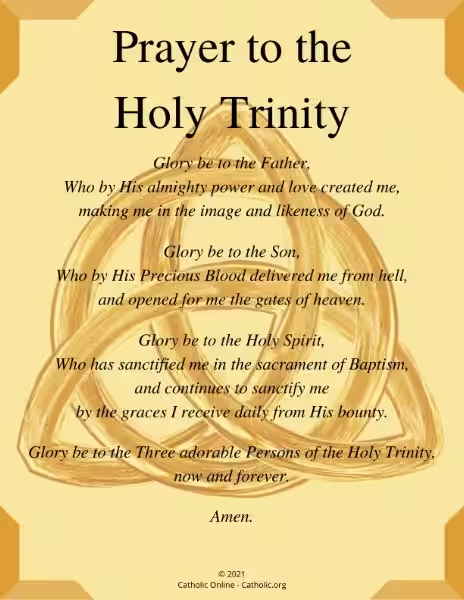
The doxologies found in many Christian traditions, such as “Glory be to the Father, and to the Son, and to the Holy Spirit,” are direct expressions of Trinitarian worship. They acknowledge God’s majesty and express our adoration for His triune nature. This consistent acknowledgment helps to engrain the reality of the Trinity into our hearts and minds, making our worship more meaningful and profound. The religion quotes that celebrate the Trinity in worship offer a pathway to a more reverent and comprehensive understanding of who God is.
The Trinity and the Christian Life
The doctrine of the Trinity is the bedrock of Christian ethics and a blueprint for Christian living. The relational nature of the Godhead calls us to cultivate loving and harmonious relationships with one another. The Father’s boundless love for humanity should inspire us to love others sacrificially, mirroring the Son’s self-giving. The Holy Spirit’s work of transformation calls us to pursue holiness and to bear the fruit of the Spirit in our lives. The Holy Trinity quotes that link the divine nature to human conduct offer practical guidance for ethical living.
Moreover, the Trinity assures us that we are never alone. The Father is our Provider, the Son our constant Intercessor, and the Spirit our ever-present Helper. This divine companionship empowers us to face life’s challenges with courage and hope. As we strive to live out our faith, the religion quotes that speak of the Trinity’s active involvement in our lives remind us that we are participating in God’s own divine life, a life of love, grace, and eternal communion.
Conclusion: Embracing the Divine Mystery
The Holy Trinity remains a profound mystery, a divine truth that transcends complete human comprehension. Yet, it is a mystery that lies at the very heart of our faith, shaping our understanding of God, ourselves, and the world. The Holy Trinity quotes we have explored, from scripture to the wisdom of the Church Fathers, are not meant to fully explain the inexplicable, but to invite us into a deeper, more reverent contemplation of the Triune God.
As we continue on our spiritual journey, let us embrace this divine mystery with humility and awe. Let the religion quotes serve as constant reminders of the God who is one in essence and three in persons, a God of infinite love, boundless grace, and eternal fellowship. May our lives be a testament to His triune nature, reflecting His love, His truth, and His Spirit in all that we do, moving us towards a more intimate and transformative relationship with the God of the Trinity. The Holy Trinity quotes are not just words; they are gateways to experiencing the fullness of God’s presence and love.
Frequently Asked Questions about the Holy Trinity
What is the Holy Trinity?
The Holy Trinity is the Christian doctrine that God is one God, but exists as a communion of three distinct persons: the Father, the Son (Jesus Christ), and the Holy Spirit. These three persons are co-equal, co-eternal, and consubstantial, meaning they are of the same divine essence or substance.
Is the concept of the Trinity found in the Bible?
While the word “Trinity” itself does not appear in the Bible, the doctrine is considered to be developed from biblical passages that speak of God the Father, Jesus as the Son of God, and the Holy Spirit as a divine presence and agent. Key passages often cited include passages where Jesus speaks of the Father, the sending of the Holy Spirit (e.g., John 14:16-17, 26), and the baptismal formula in Matthew 28:19 which commands baptism “in the name of the Father and of the Son and of the Holy Spirit.”
How can God be one and three at the same time?
This is a core mystery of the Christian faith. Christians understand that God’s nature is beyond full human comprehension. The analogy often used, though imperfect, is that of water, which can exist as ice, liquid, and steam, yet it remains H₂O. Similarly, the Trinity is understood as one God in three distinct persons, not three gods, nor one person appearing in three modes.
Are there specific Bible verses that directly state “God is the Trinity”?
No, the term “Trinity” is not explicitly found in the Bible. The doctrine is a theological interpretation developed over centuries by the early Church through careful study and interpretation of various biblical texts that point to the distinct yet unified divine nature of the Father, Son, and Holy Spirit.
What are some common misunderstandings about the Trinity?
Common misunderstandings include:
* Tritheism: The belief that there are three separate Gods.
* Modalism/Sabellianism: The belief that God is one person who appears in three different modes or roles at different times.
* Subordinationism: The belief that the Son and Holy Spirit are subordinate to the Father in essence or divinity.
What is the significance of the Trinity for Christian belief and practice?
The doctrine of the Trinity is foundational to Christian theology. It shapes the understanding of God’s nature, Jesus Christ’s divinity, the role of the Holy Spirit in believers’ lives, and the nature of salvation. It informs Christian worship, prayer, and understanding of God’s love and redemptive work in the world.