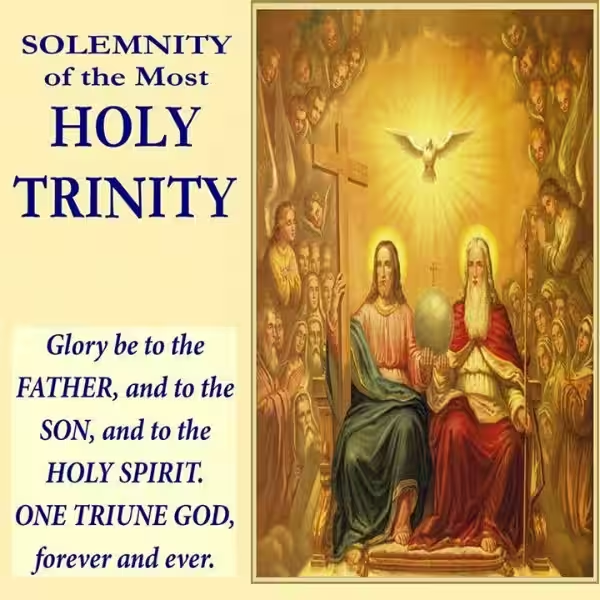
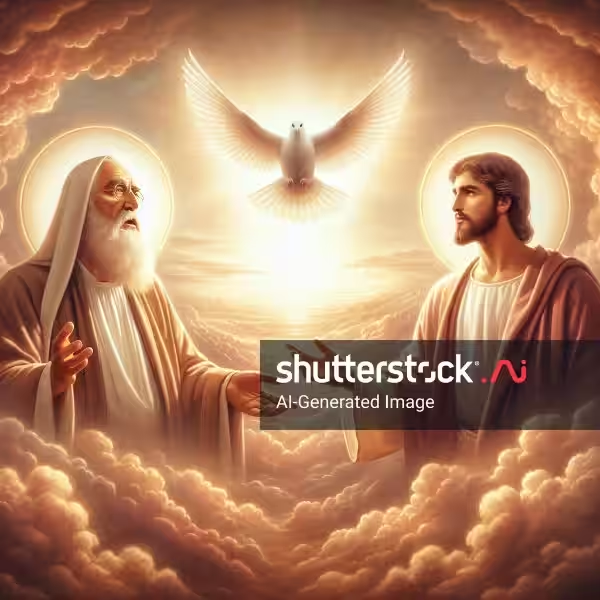
The concept of the Trinity, the Christian doctrine of one God in three co-equal persons – the Father, the Son, and the Holy Spirit – is a cornerstone of Christian faith. While the theological intricacies can be profound, the trinity symbols that have emerged throughout history offer a visual language to grasp this complex idea. These symbols aren’t just decorative elements; they are powerful representations that have guided believers for centuries, providing a tangible connection to an intangible spiritual truth. Understanding these symbols can deepen one’s appreciation for the richness and depth of religious thought, making the abstract concept of the Trinity more accessible and relatable.
Exploring these trinity symbols allows us to see how different cultures and eras have grappled with and expressed this central tenet. From ancient geometric patterns to more elaborate artistic depictions, each symbol carries a unique narrative and a specific theological emphasis. They serve as visual aids for contemplation, helping individuals to meditate on the oneness of God while acknowledging the distinct roles of each person within the Godhead. This article aims to demystify these powerful icons, offering insights into their origins, meanings, and enduring relevance in the religious landscape.
At its core, the doctrine of the Trinity posits that God is one in essence but three in person. This is not to say there are three gods, nor that the three persons are merely different modes or manifestations of a single divine being. Instead, it’s a delicate balance of unity and distinctness, a mystery that has been a subject of intense theological debate and profound spiritual exploration. The challenge for early Christians was to articulate this unique understanding of God in a world often accustomed to polytheistic or dualistic beliefs.
The need for visual representation arose naturally from the desire to communicate and preserve this understanding. Early Christian art and trinity symbols were crucial in teaching and reinforcing the Trinitarian faith, especially to a largely illiterate populace. These symbols offered a way to encapsulate complex theological ideas in a simple, memorable form, fostering a shared visual vocabulary for believers across different regions and languages. They provided a touchstone for understanding God’s relationship with humanity and the world.
The Triquetra: A Timeless Symbol of Unity
One of the most recognizable and enduring trinity symbols is the Triquetra. This knotwork design, typically featuring three interweaving loops that form three points, is a powerful representation of the eternal nature of God. The continuous, unbroken lines of the Triquetra signify eternity and the indivisible nature of the Godhead. It elegantly illustrates the concept of three distinct persons united in one divine essence, with no beginning and no end.
The Triquetra’s simplicity belies its profound meaning. Each loop can be understood to represent one of the persons of the Trinity – the Father, the Son, and the Holy Spirit – yet they are intrinsically connected, forming a single, cohesive unit. This symbol of interwoven unity is often found in early Christian art, particularly in illuminated manuscripts and metalwork, demonstrating its importance in conveying the core of Christian belief even in its nascent stages.
The Shield of the Trinity (Scutum Fidei): A Diagrammatic Approach
For those who prefer a more diagrammatic and explicit representation, the Shield of the Trinity, or Scutum Fidei, offers a clear visual breakdown. This trinity symbol is a scholastic diagram that depicts the relationship between the three persons of the Trinity and their shared divine essence. It is typically structured as a cross with labels at each corner, representing the Father, Son, and Holy Spirit, and the center, indicating “God is.” Connecting lines further illustrate relationships, such as “The Father is God, the Son is God, the Holy Spirit is God,” and importantly, “The Father is not the Son, the Son is not the Holy Spirit, the Holy Spirit is not the Father.”
The Scutum Fidei is a testament to the intellectual rigor applied to understanding the Trinity in religion. It provides a logical framework, albeit within the bounds of divine mystery, to comprehend how God can be both one and three. This diagrammatic trinity symbol was widely used in medieval theological texts and artwork, serving as a teaching tool to refute heresies and solidify the orthodox understanding of the Trinity. It’s a visual argument for faith, presenting the doctrine in a structured and defensible manner.
The Trefoil: A Simple Yet Profound Representation
Similar in its tripartite nature to the Triquetra, the Trefoil is another significant trinity symbol. Composed of three overlapping circles or lobes, it also signifies the unity of the Godhead while maintaining the distinctness of the three persons. The overlapping nature of the circles suggests their mutual indwelling and inseparable relationship. This graceful trinity symbol is often found in Gothic architecture, adorning stained-glass windows and architectural details, bathing sacred spaces in light that reflects this divine truth.
The Trefoil’s elegance makes it a popular choice for decorative purposes, yet its theological weight remains undiminished. It’s a subtle yet powerful reminder of the Trinity, often encountered in churches and religious institutions. The visual harmony of the Trefoil echoes the harmonious unity of God. Its prevalence in art and architecture speaks to its enduring appeal and its effectiveness in communicating a complex theological concept in a universally understandable manner.
Beyond the Visual: The Living Experience of the Trinity
While trinity symbols offer invaluable visual anchors, their true significance lies in their connection to the living experience of faith. The doctrine of the Trinity isn’t just an abstract theological concept; it describes the God who is actively involved in creation, redemption, and the ongoing spiritual life of believers. Understanding the symbols can lead to a deeper appreciation of God’s multifaceted nature and His personal relationship with each individual.
For many, the Trinity in religion is experienced through prayer, worship, and the sacraments. The Father represents the divine source and creator; the Son, Jesus Christ, is the redeemer and mediator; and the Holy Spirit is the indwelling comforter and guide. The trinity symbols serve as constant reminders of this divine presence and action in the world. They encourage believers to contemplate God’s love, power, and wisdom, fostering a deeper and more personal connection with the divine.
The Father in the Trinity is often understood as the ultimate source of all being, the uncreated creator of the universe. He is the divine being in His transcendence, the one from whom all emanates. While the trinity symbols may not always explicitly depict the Father in anthropomorphic ways, the concept of a divine origin and ultimate authority is inherent in their design. The Triquetra, for instance, with its unbroken, eternal loop, can be seen as representing the Father’s eternal existence and primary role.
The Father is the foundation of God’s nature. He is the one who initiates the plan of salvation and sends the Son into the world. In religious practice, contemplating the Father often involves reflecting on God’s sovereignty, His justice, and His unconditional love. The trinity symbols help to frame this contemplation, reminding us that this ultimate source is also intimately involved in His creation.
The Son: The Embodied Love
The Son, Jesus Christ, is the incarnation of God, the divine entering human history. This is where the trinity symbols often find their most relatable connection for many people. The Son is the visible manifestation of God’s love and redemption. The Christian faith centers on the belief that in Jesus, believers encounter God in a tangible, human form. This aspect of the Trinity is crucial for understanding God’s accessibility.
The sacrifice and resurrection of Jesus are the central events of Christian theology, offering salvation and reconciliation with God. The trinity symbols serve as a constant reminder of this divine act of love. The interwoven nature of the Triquetra, for example, can represent the inseparable union of Jesus’ divine and human natures, a core tenet of Christology that is intrinsically linked to the doctrine of the Trinity.
The Holy Spirit: The Indwelling Presence
The Holy Spirit is the immanent aspect of God, the divine presence that indwells believers and empowers them. This divine force is the active agent of God in the world today, guiding, comforting, and sanctifying. The trinity symbols can be interpreted to represent the continuous, life-giving energy of the Spirit. The overlapping circles of the Trefoil, for instance, can symbolize the way the Spirit permeates and connects all believers.
The Holy Spirit is often described as the “breath of God,” bringing life and renewal. In religious experience, the Spirit is felt in moments of inspiration, conviction, and spiritual growth. The trinity symbols offer a visual framework to understand this dynamic aspect of God’s ongoing relationship with humanity, ensuring that God is not a distant deity but a present, active force in the lives of believers.
The Enduring Significance of Trinity Symbols in Modern Religion
In the contemporary religious landscape, trinity symbols continue to hold significant meaning for Christians worldwide. They are not relics of the past but vibrant expressions of enduring faith. Whether etched onto ancient artifacts or displayed in modern digital art, these symbols transcend time, connecting believers to a rich theological heritage and a profound understanding of God. Their continued use in liturgy, art, and personal devotion underscores their timeless relevance.
The trinity symbols provide a consistent visual language for articulating the mystery of the Godhead. They offer a point of focus for meditation, prayer, and theological reflection. In a world often characterized by complexity and division, these simple yet profound symbols remind us of the ultimate unity and love that lie at the heart of the Christian faith. They are a testament to the power of visual representation in conveying spiritual truths and fostering a deeper connection with the divine.
Frequently Asked Questions about Trinity Symbols in Religion
What is the Trinity?
The Trinity is a core Christian doctrine that states God exists as a single God in three co-equal, co-eternal persons: the Father, the Son (Jesus Christ), and the Holy Spirit.
What are some common symbols representing the Trinity?
Several symbols are used to represent the Trinity, including:
The equilateral triangle: Each side represents one person of the Trinity, and the equal sides symbolize their equality.
The triquetra (or trinity knot): This knot, with three interweaving arcs, represents the interconnectedness and unity of the three persons.
The shamrock: While not exclusively a Christian symbol, St. Patrick famously used the shamrock to explain the Trinity to the Irish, with each leaf representing a person and the stem symbolizing their unity.
The shield of the Trinity (Scutum Fidei): A diagram with four sections, showing “Pater est Deus,” “Filius est Deus,” “Spiritus Sanctus est Deus” (The Father is God, The Son is God, The Holy Spirit is God), and “Deus est Trinitas” (God is Trinity).
Are there any biblical references to the Trinity?
While the word “Trinity” does not appear in the Bible, the concept is understood to be present through various passages that speak of the distinct identities and divine nature of the Father, Son, and Holy Spirit, and their unified divine essence. Examples include the Great Commission (Matthew 28:19) and the baptism of Jesus (Matthew 3:16-17).
Are these symbols accepted by all Christian denominations?
Most major Christian denominations that adhere to the Nicene Creed accept the doctrine of the Trinity and may use these symbols. However, interpretations and emphasis can vary. Some traditions might have specific preferences or historical connections to certain symbols.
Do other religions use symbols similar to the Trinity?
Various religions have concepts of divine triads or trinities, but they are distinct from the Christian Trinity. For example, Hinduism has the Trimurti (Brahma, Vishnu, Shiva), but this represents different aspects of the divine rather than three co-equal persons in one God. The Christian Trinity is unique in its specific theological formulation of one God in three persons.