For many, the mention of “Catholic holidays” conjures images of vibrant celebrations, solemn reflections, and the comforting rhythm of the liturgical year. These are not merely days off; they are deeply ingrained moments of spiritual significance, woven into the fabric of Catholic identity and practice. From the joyous anticipation of Christmas to the profound sorrow and ultimate triumph of Easter, Catholic holidays offer a unique lens through which to understand the faith’s core tenets, its rich history, and its enduring relevance in our modern lives. They provide opportunities for community, reflection, and a renewed connection to something larger than ourselves.
Beyond the universally recognized feasts, the Catholic calendar is a fascinating tapestry of saints’ days, Marian devotions, and commemorations that offer a constant invitation to learn, to grow, and to celebrate the diverse expressions of faith within the Church. Each holiday carries its own story, its own traditions, and its own spiritual nourishment, inviting believers to engage with their religion in a dynamic and meaningful way. Understanding these holidays is key to appreciating the heartbeat of Catholicism, a faith that finds expression not only in prayer and doctrine but also in the shared experiences of communal worship and festive observance.
The Pillars of the Liturgical Year: Christmas and Easter
Christmas: The Incarnation and the Gift of Hope
Perhaps the most universally celebrated of all Catholic holidays, Christmas marks the Nativity of Jesus Christ, a cornerstone event in Christian theology. It commemorates the Incarnation, the moment God became human, born as a vulnerable child in Bethlehem. This holiday is a powerful reminder of God’s love for humanity, a love so profound that it led Him to enter our world. The preparations for Christmas, often beginning with Advent, are a period of joyful anticipation, a time to reflect on the prophecies foretelling Jesus’ arrival and to prepare our hearts to receive Him. Think of the quiet reverence of Midnight Mass, or the bustling joy of decorating the Christmas tree – these are outward expressions of an inward spiritual reality.
The traditions surrounding Christmas are as diverse as the Catholic Church itself, yet they often converge on themes of family, generosity, and peace. From the solemnity of the Nativity story to the joyous carols sung in churches and homes, Christmas invites us to contemplate the humility of Christ’s birth and the immense hope it brings to the world. It’s a time for giving gifts, mirroring the gifts brought by the Magi, and for sharing meals with loved ones, strengthening bonds of community and familial love. The enduring message is one of new beginnings and the triumph of light over darkness.
Easter: The Resurrection and the Victory Over Death
If Christmas celebrates the beginning of Jesus’ earthly life, Easter celebrates His ultimate victory over death. This is the most sacred and important holiday in the Catholic calendar, marking the Resurrection of Jesus Christ from the dead. The period leading up to Easter, known as Lent, is a time of penance, fasting, and reflection, a spiritual journey of forty days designed to prepare believers for the profound joy of the Resurrection. This season emphasizes sacrifice and renewal, mirroring Christ’s own suffering and death on the cross.
The climax of the Easter season is the Easter Vigil, a powerful and ancient liturgy that often takes place on the Saturday night before Easter Sunday. It is a night of celebration and new life, marked by the blessing of the Paschal candle, symbolizing the risen Christ as the light of the world. Easter Sunday itself is a day of unbridled joy and exultation, a testament to the Christian belief that death is not the end, but a passage to eternal life. The empty tomb is a powerful symbol of hope and redemption, offering solace and purpose to believers worldwide. The message of Easter reverberates throughout the year, reminding us of the power of faith to overcome any obstacle.
Beyond the Great Feasts: Other Significant Catholic Holidays
The Solemnity of Mary, Mother of God: Honoring the Theotokos
The Solemnity of Mary, Mother of God, celebrated on January 1st, is a pivotal Catholic holiday that honors the Blessed Virgin Mary in her role as the Mother of Jesus. This feast day underscores a fundamental tenet of Catholic belief: that Mary is the Theotokos, the God-bearer, a title that highlights her unique and essential place in salvation history. It is a day to reflect on Mary’s profound faith, her obedience to God’s will, and her unwavering love for her son.
This observance is more than just a commemoration; it’s an invitation to emulate Mary’s virtues. Her humility in accepting God’s plan, her courage in facing the challenges of motherhood, and her constant intercession for humanity are qualities that Catholics are encouraged to cultivate in their own lives. Think of Mary as a model of discipleship, a gentle guide pointing us towards Christ. The prayers and reflections on this day often focus on Mary’s role as a spiritual mother to all believers, offering comfort and guidance.
The Feast of All Saints: Remembering the Faithful Departed
The Feast of All Saints, observed on November 1st, is a solemn yet inspiring Catholic holiday dedicated to remembering all the saints, both known and unknown, who have gone before us and are now in heaven. It is a day to celebrate the triumph of the faithful and to draw inspiration from their lives of holiness and devotion. The Church recognizes many canonized saints with their own specific feast days, but All Saints’ Day is a universal recognition of everyone who has achieved eternal beatitude through their faith and good works.
This feast is a powerful reminder that the communion of saints extends beyond our earthly existence. It is a belief that those who have passed on in God’s grace are still connected to us, praying for us and interceding on our behalf. This day offers a sense of continuity and hope, assuring believers that their faith journey is part of a larger, eternal community. It encourages us to strive for holiness in our own lives, with the hope of one day joining the heavenly host. Many families visit cemeteries on or around this day to remember loved ones who have passed.
The Feast of All Souls: Praying for the Departed Faithful
Following closely on the heels of All Saints’ Day is the Feast of All Souls, observed on November 2nd. This Catholic holiday shifts the focus from the saints in heaven to the souls of all the faithful departed who are believed to be in purgatory, a state of purification before entering heaven. The primary purpose of All Souls’ Day is to pray for these souls, offering them spiritual assistance and expressing solidarity with them in their journey towards God.
The practice of praying for the dead is deeply rooted in Catholic tradition, stemming from the belief that our prayers can have a tangible effect on the souls in purgatory. This day is a profound expression of charity and communion, reminding us that our love and prayers extend even beyond death. It’s a time for reflection on mortality and the importance of living a life that is pleasing to God, so that we ourselves may one day be counted among the blessed. Many churches hold special Masses for the departed on this day, and individuals often offer personal prayers for their loved ones who have passed.
The Rhythm of the Church Year: Advent and Lent
Advent: A Season of Waiting and Preparation
The Catholic holiday season of Advent marks the beginning of the liturgical year, ushering in a period of four weeks of joyful anticipation and spiritual preparation for the coming of Jesus Christ at Christmas. It is a time characterized by the Advent wreath, a circular arrangement of candles, often with one added each week, symbolizing the growing light of Christ. This season invites us to reflect on the prophecies of the Old Testament, the longing for a savior, and the ultimate fulfillment of God’s promise in the birth of Jesus.
Advent is not merely a waiting period; it is an active call to repentance and hope. It encourages us to examine our lives, to mend our ways, and to open our hearts to the transformative power of Christ’s presence. The readings and prayers during Advent often highlight themes of peace, hope, love, and joy, guiding believers towards a deeper understanding of the Incarnation. Think of the quiet contemplation of a cold winter evening, illuminated by the soft glow of an Advent candle – this visual captures the essence of Advent’s serene yet expectant spirit.
Lent: A Time of Penance and Renewal
The season of Lent is a cornerstone of the Catholic holiday calendar, a period of forty days (excluding Sundays) that precedes Easter. It is a time dedicated to penance, fasting, prayer, and almsgiving, serving as a spiritual preparation for the celebration of Christ’s Passion, Death, and Resurrection. The ashes received on Ash Wednesday, a practice that marks the beginning of Lent, symbolize penitence and mortality, reminding believers of their human frailty and their need for God’s mercy.
Lent is a profound opportunity for spiritual growth and transformation. It challenges individuals to step outside their comfort zones, to practice self-discipline, and to deepen their relationship with God. Whether it’s giving up a particular indulgence, dedicating more time to prayer, or performing acts of charity, the practices of Lent are designed to foster a spirit of sacrifice and conversion. The ultimate goal is to emerge from Lent with renewed faith and a greater appreciation for the immense sacrifice Jesus made for humanity, leading us to the joy of Easter.
Sacred Seasons and Everyday Faith
The Catholic holiday calendar provides a rich and structured framework for living out the faith, but the spirit of these observances permeates everyday life. The lessons learned during Advent’s anticipation, Lent’s sacrifice, and Easter’s triumph are meant to inform our daily actions and attitudes. The lives of the saints, celebrated throughout the year, offer constant inspiration for living a life of virtue and service. These holidays are not isolated events; they are milestones that punctuate a continuous journey of faith.
Ultimately, Catholic holidays are more than just religious observances; they are vibrant expressions of a living faith that nourishes the soul, strengthens communities, and offers a profound sense of purpose and belonging. They are opportunities to connect with the divine, to remember our shared heritage, and to celebrate the enduring power of love, hope, and redemption. By understanding and participating in these traditions, individuals can gain a deeper appreciation for the richness and depth of the Catholic faith.
Frequently Asked Questions about Catholic Holidays and Religion
What are the major Catholic holidays?
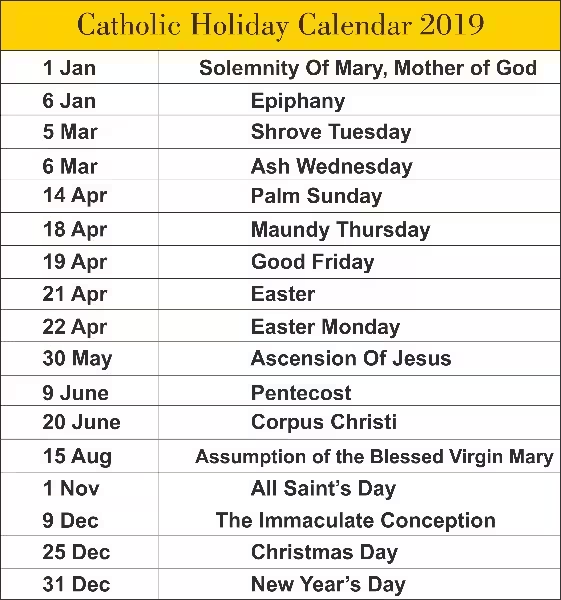
The most important Catholic holidays include:
* Christmas: Celebrates the birth of Jesus Christ.
* Easter: Celebrates the resurrection of Jesus Christ.
* Ascension Thursday: Celebrates Jesus’ ascension into heaven.
* Pentecost: Celebrates the descent of the Holy Spirit upon the Apostles.
* Immaculate Conception: Celebrates the conception of the Virgin Mary without original sin.
* All Saints’ Day: Honors all saints, known and unknown.
* Assumption of Mary: Celebrates the bodily taking up of the Virgin Mary into heaven.
What is the significance of these holidays in Catholicism?
These holidays commemorate pivotal events in the life of Jesus and Mary, and core tenets of the Catholic faith. They are times of special prayer, reflection, and celebration, often involving liturgical services and fasting or feasting.
What are the core beliefs of Catholicism?
The core beliefs of Catholicism include:
* The Trinity: Belief in one God in three persons: the Father, the Son (Jesus Christ), and the Holy Spirit.
* Jesus Christ: Belief that Jesus is the Son of God, fully divine and fully human, who died for the sins of humanity and was resurrected.
* The Church: Belief that the Catholic Church was founded by Jesus Christ and is the vehicle of salvation.
* Sacraments: Belief in seven sacraments (Baptism, Confirmation, Eucharist, Reconciliation, Anointing of the Sick, Holy Orders, and Matrimony) as outward signs of God’s grace.
* Mary: Veneration of Mary, the Mother of God, and her role in salvation history.
* Saints: Reverence for saints as intercessors and examples of Christian living.
How does Catholicism differ from other Christian denominations?
Key differences include:
* Papal Authority: The Pope, as the successor of Saint Peter, is considered the visible head of the Church on Earth and holds supreme authority.
* Sacraments: While other denominations recognize some sacraments, Catholics believe in seven specific sacraments instituted by Christ.
* Eucharist: Catholics believe in the Real Presence of Christ in the Eucharist (transubstantiation).
* Role of Mary and Saints: Catholics have a distinct devotion to Mary and venerate saints for intercession.
* Tradition: Catholicism places significant importance on both Scripture and Sacred Tradition as sources of divine revelation.
What is the role of the Mass in Catholic life?
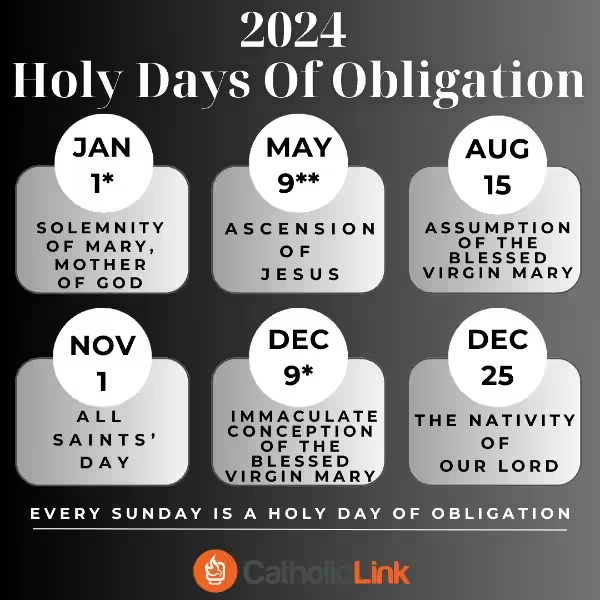
The Mass is the central act of worship in Catholicism. It is considered a re-presentation of Christ’s sacrifice on the cross and a communal encounter with God through prayer, scripture readings, and the reception of the Eucharist. It is considered a grave obligation for Catholics to attend Mass on Sundays and Holy Days of Obligation.