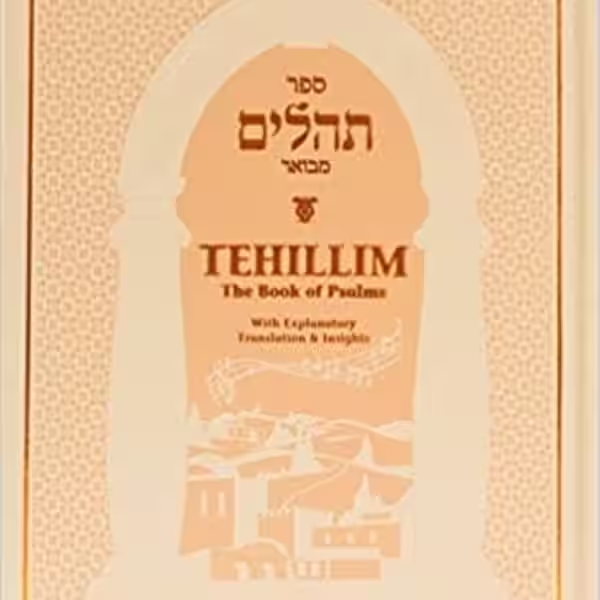
The word Tehillim, translating to “Praises” in English when referring to the Book of Psalms, is more than just a collection of ancient Hebrew poetry. It’s a profound spiritual conduit, a timeless dialogue between humanity and the Divine, expressed with a raw emotion that resonates across millennia. For many, engaging with Tehillim is a cornerstone of their religious practice, offering solace, guidance, and a deep sense of connection. This article aims to explore the multifaceted beauty of Tehillim, bridging the gap between its original Hebrew and its accessible English translations, and illuminating its enduring significance in the realm of religion.
Whether you are a seasoned practitioner or new to the concept, understanding the nuances of Tehillim, in both its original linguistic form and its translated interpretations, can profoundly deepen your spiritual journey. We will delve into the power of its verses, the importance of its original language, and how its wisdom continues to shape lives today, offering a rich tapestry of thought and feeling that transcends cultural and temporal boundaries.
The Sacred Language of Tehillim: The Power of Hebrew
The original text of Tehillim is written in Hebrew, a language considered by many to be inherently sacred. The very sounds and structure of Hebrew are believed by some to carry a unique spiritual resonance, an echo of creation itself. When we read Tehillim in its original tongue, we are connecting to a lineage of prayer and devotion that stretches back thousands of years, touching the very essence of what it means to be in communion with God.
Consider, for instance, the opening of Psalm 23, a universally beloved passage. In Hebrew, it begins with “Mizmor l’David, Adonai ro’i, lo echsar.” While the English translation, “A Psalm of David, The Lord is my shepherd, I shall not want,” is beautiful and comforting, the Hebrew word “Adonai” carries a profound weight. It’s not just a name, but a title signifying the ultimate sovereign, the eternal presence. The choice of each word, the grammatical construction, and the specific nuances of Hebrew grammar contribute to a depth of meaning that can be challenging to fully capture in translation. The very act of reciting these ancient Hebrew words can be a powerful meditative practice, a way to imbue oneself with the energy and intention of the original text.
While the original Hebrew holds a special place, the availability of Tehillim in English has opened its spiritual treasures to a vast global audience. These translations serve as vital bridges, making the profound wisdom and emotional depth of the Psalms accessible to those who may not be fluent in Hebrew. The goal of a good English translation is to convey not only the literal meaning but also the spirit and emotional intensity of the original.
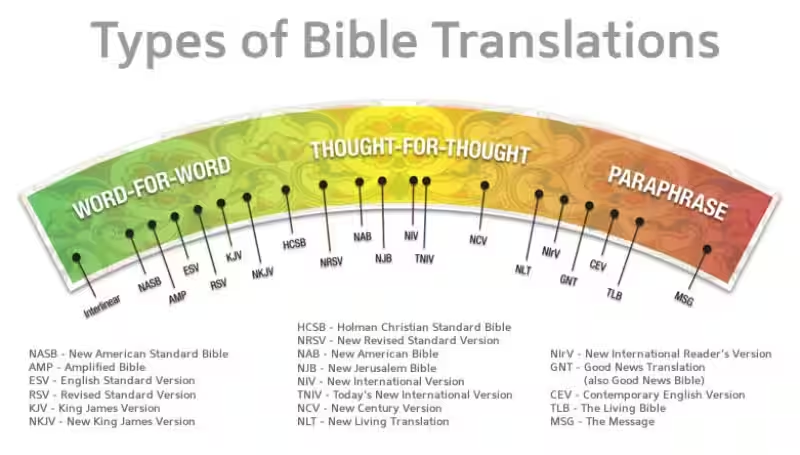
Different English translations of Tehillim offer slightly varied interpretations, reflecting the translator’s understanding and approach. Some aim for a more literal rendering, staying as close as possible to the Hebrew syntax and vocabulary, while others prioritize poetic flow and readability, seeking to capture the emotional impact for a contemporary audience. For example, the phrase “Chas v’chalila” (heaven forbid) might be translated in various ways, each conveying a similar sentiment but with a different stylistic flair. Understanding these variations can enrich one’s appreciation for the Psalms, allowing for a more comprehensive engagement with their manifold messages. The journey through Tehillim, therefore, can be a dual one: appreciating the foundational power of the Hebrew while drawing immense benefit from the clarity and accessibility of its English renderings, all within the expansive context of religion.
Thematic Richness: More Than Just Psalms
The Book of Tehillim is remarkably diverse, encompassing a wide spectrum of human experience and spiritual expression. Within its pages, one can find expressions of overwhelming joy and exultation, profound grief and lamentation, fervent pleas for deliverance, and quiet reflections on the Divine presence. This thematic richness makes Tehillim a truly universal text, offering comfort and inspiration in virtually any circumstance of life.
For example, the joyous psalms, often filled with vibrant imagery of praise and thanksgiving, can uplift the spirit during times of celebration and success. Conversely, the psalms of lament, such as Psalm 137 with its poignant cry, “Al naharot Bavel, sham yashavnu gam bachinu,” (By the rivers of Babylon, there we sat and wept), offer a space for processing pain and sorrow. These are not just abstract religious pronouncements; they are raw, honest outpourings that validate our own human struggles. The ability to find words for our deepest feelings within Tehillim, whether in its original Hebrew or its English counterparts, is a testament to its enduring power in the practice of religion.
Tehillim in Practice: Daily Life and Religious Observance
The recitation of Tehillim is deeply woven into the fabric of Jewish religious life, and its influence extends to other faith traditions as well. From daily prayers to specific occasions, the Psalms are a constant companion. Many individuals establish a personal practice of reciting a certain number of Tehillim daily or weekly, a practice often referred to as “saying Tehillim.” This devotional act can range from a few select verses to the entire book, depending on the individual’s commitment and spiritual goals.
Consider the practice of reciting Tehillim for a sick loved one. The act of praying for their recovery, often using specific verses that speak of healing and divine intervention, can be incredibly comforting for both the person praying and the recipient. Whether one recites these verses in the melodic cadence of Hebrew, connecting to an ancient tradition, or in the clear understanding of an English translation, the intention and faith behind the words are paramount. This personal and communal engagement with Tehillim underscores its vital role in fostering resilience, hope, and a deeper connection to the Divine within the broader landscape of religion. The accessibility of Tehillim in both English and Hebrew ensures that its wisdom remains a living, breathing part of spiritual devotion for countless individuals.
Frequently Asked Questions: Tehillim (Psalms) – English & Hebrew, and Religion
What is Tehillim?
Tehillim is the Hebrew name for the Book of Psalms, a collection of 150 religious poems, prayers, and songs found in the Hebrew Bible (Tanakh) and the Old Testament of the Christian Bible. It is traditionally attributed to King David.
What is the significance of Tehillim in Judaism?
In Judaism, Tehillim holds immense spiritual and emotional significance. It is a central text for prayer, meditation, and expressing a wide range of human emotions – from praise and joy to sorrow and supplication. Many Jews recite psalms daily or on specific occasions.
What is the significance of Tehillim in Christianity?
In Christianity, the Book of Psalms is also highly valued and is a fundamental part of Christian worship and devotion. It is used in liturgy, personal prayer, and as a source of comfort and inspiration.
What is the difference between Tehillim in Hebrew and English?
The Hebrew version of Tehillim is the original text. While English translations aim to convey the meaning and spirit of the psalms, they are interpretations. Many believe that the full depth and nuances of the prayers are best experienced in the original Hebrew.
Why is the original Hebrew of Tehillim considered important?
The Hebrew language is deeply intertwined with Jewish religious thought and tradition. For many, reciting Tehillim in Hebrew connects them directly to the ancient text and its spiritual power. There are also beliefs about the specific mystical properties and profound meaning embedded within the Hebrew words themselves that may not be fully transferable to translation.
Can I pray Tehillim in English if I don’t know Hebrew?
Absolutely. The intention and devotion behind your prayer are paramount. English translations are widely available and are a valuable resource for anyone wishing to connect with the Psalms. The most important aspect is a sincere heart and a desire to communicate with God.
How does Tehillim relate to the concept of religion?
Tehillim is a profound expression of religious faith and practice. It embodies core religious themes such as:
* Praise and Thanksgiving: Glorifying God for His power, mercy, and creations.
* Supplication and Lament: Expressing human struggles, fears, and requests for divine help.
* Trust and Faith: Affirming unwavering belief in God’s providence and justice.
* Wisdom and Guidance: Offering insights into righteous living and divine commandments.
* Covenant and Relationship: Reflecting the intimate connection between God and His people.
Are there specific times or ways to recite Tehillim?
In Jewish tradition, there are many customs regarding the recitation of Tehillim. Psalms are often recited daily as part of morning and evening prayers, before major holidays, during times of mourning, for healing, or to express gratitude. Different psalms are associated with various needs and occasions.
Can people of different religious backgrounds read or benefit from Tehillim?
Yes, the themes of human experience, faith, and the search for meaning are universal. Many individuals, regardless of their religious affiliation, find comfort, inspiration, and spiritual insight in reading the Psalms.