The landscape of Christianity is rich and diverse, offering a multitude of expressions of faith. Among the most prominent and historically significant are the Baptist and Catholic traditions. While both branches share a foundational belief in Jesus Christ as the Son of God and Savior, their theological interpretations, worship styles, and organizational structures reveal distinctive pathways in their religious journeys. Understanding these differences, often referred to as Baptist v Catholic distinctions, can offer valuable insights into the spectrum of Christian belief and practice. This article aims to explore these key disparities in a way that is both informative and relatable, illuminating the unique contributions each tradition makes to the global religious tapestry.
For many individuals, the journey of faith is personal and deeply ingrained. Whether one grows up in a Baptist household or a Catholic one, or arrives at these traditions later in life, the nuances of belief and practice can be a source of both curiosity and, at times, confusion. This exploration is not about declaring one tradition superior to another, but rather about fostering a greater appreciation for the richness of Christian diversity and the varied ways individuals connect with the divine. By delving into the core tenets of Baptist v Catholic beliefs, we can gain a deeper understanding of their respective approaches to scripture, salvation, sacraments, and church governance.
One of the most significant areas of divergence between Baptist and Catholic theology lies in their understanding of religious authority. For Baptists, the Bible is the ultimate and sole authoritative source for faith and practice. This principle, known as sola scriptura, means that all doctrines and ethical teachings are to be derived directly and exclusively from the Holy Scriptures. Baptists emphasize the direct accessibility of God’s Word to every believer, believing that through diligent study and the guidance of the Holy Spirit, individuals can understand God’s will.
In contrast, the Catholic Church views religious authority as a more complex and multi-layered system. While the Bible is indeed central, it is understood within the context of Sacred Tradition (the teachings passed down from the apostles through the Church Fathers and councils) and the Magisterium (the teaching authority of the Pope and bishops). Catholics believe that this threefold cord of authority – Scripture, Tradition, and Magisterium – works together to safeguard and interpret God’s revelation accurately. This means that, for Catholics, understanding and adhering to Church teachings, which are often shaped by centuries of theological reflection and authoritative pronouncements, is a crucial aspect of their faith.
For example, a Baptist might interpret a theological question by directly consulting Bible verses, seeking to find explicit guidance. A Catholic, however, might also refer to specific Church doctrines or papal encyclicals that have addressed similar issues, understanding these as authoritative interpretations of scripture and tradition. This difference in the source and interpretation of religious truth is a pivotal point in understanding the Baptist v Catholic dynamic.
The Path to Salvation: Grace, Works, and Sacraments
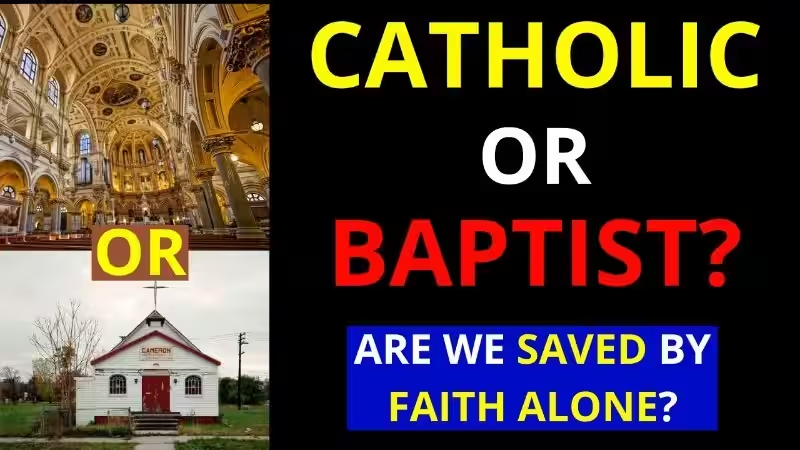
The concept of salvation, the deliverance from sin and its consequences, is a cornerstone of Christian belief, and here again, Baptist v Catholic perspectives offer distinct nuances. Baptists overwhelmingly emphasize salvation by grace through faith alone. This means that salvation is a free gift from God, received by an individual’s personal acceptance of Jesus Christ and belief in His atoning sacrifice. The sinner is declared righteous not by their own actions, but by the merit of Christ imputed to them.
Conversely, while Catholics also believe in salvation by grace, their understanding integrates the role of sacraments and good works more explicitly. They believe that God’s grace is communicated through the seven sacraments instituted by Christ, such as baptism and the Eucharist, which are seen as channels of God’s divine favor. Furthermore, while faith is essential, Catholic theology teaches that faith without works is dead, implying that a life lived in accordance with God’s commandments and characterized by acts of charity is a vital part of the ongoing process of salvation and sanctification.
Consider the example of a person seeking to live a righteous life. A Baptist would likely focus on prayer, Bible study, and personal commitment to Christ as the primary means of pleasing God and maintaining a right relationship with Him. A Catholic might engage in these practices as well, but would also place significant emphasis on regularly receiving communion, participating in confession, and engaging in acts of service to the poor or needy as integral components of their spiritual journey and a demonstration of their living faith. The Baptist v Catholic approach to salvation highlights varying perspectives on the interplay of divine grace and human response.
Worship and Liturgy: A Tale of Two Styles
The experience of worship is a tangible manifestation of a community’s faith, and here the Baptist v Catholic traditions present a striking contrast in their liturgical expressions. Baptist worship services are often characterized by their informality, spontaneity, and congregational participation. Music typically features contemporary praise and worship songs alongside traditional hymns, with a strong emphasis on preaching from the pulpit. The focus is often on direct engagement with God’s Word and a personal encounter with the Holy Spirit.
In contrast, Catholic worship, centered on the Mass, is a highly structured and reverent liturgy. It follows a prescribed order of readings, prayers, and rituals that have been developed over centuries. The Eucharist, or Holy Communion, is the central act of worship, understood by Catholics as the real presence of Christ’s body and blood. The liturgy is rich in symbolism, tradition, and ancient tradition, aiming to evoke a sense of the sacred and the mystery of God.
Imagine attending a Sunday service. In a typical Baptist church, you might experience a lively musical prelude, an impassioned sermon that delves deeply into a biblical text, and opportunities for congregational prayer and sharing. In a Catholic church, you would participate in a solemn Mass, with chanting, a sermon that often reflects on the readings of the day within the context of Church teaching, and the profound experience of receiving communion. The Baptist v Catholic differences in worship reflect a spectrum of approaches to communal spiritual expression, from the more personal and experiential to the more communal and sacramental.
Church Governance and Hierarchy: Organized Faith
The structure and governance of a religious body are crucial to its identity and operation, and the Baptist v Catholic models represent fundamentally different organizational philosophies. Baptist churches are typically congregational in their polity. This means that each local church is autonomous and self-governing, with ultimate authority resting with the congregation itself. While Baptists may associate with larger denominational bodies for purposes of missions, education, and fellowship, these affiliations are generally voluntary and do not involve hierarchical control over individual churches.
The Catholic Church, on the other hand, is characterized by a hierarchical structure. It is led by the Pope in Rome, who is considered the successor of Saint Peter and the visible head of the Church on Earth. Under the Pope are the bishops, who govern dioceses, and the priests, who serve local parishes. This top-down authority structure ensures a unified doctrinal and disciplinary framework across the global Catholic Church.
To illustrate, consider how decisions are made within each tradition. In a Baptist church, major decisions regarding church policy, finances, or pastoral appointments would typically be made through a congregational vote. In the Catholic Church, such decisions would generally be made by the local bishop, in consultation with his advisors and in accordance with the directives of the Vatican. This fundamental difference in Baptist v Catholic governance profoundly shapes how these communities function and relate to one another.
The Role of Mary and the Saints: Intercession and Veneration
The veneration of Mary, the mother of Jesus, and other saints is a distinguishing feature of Catholic piety that often sets it apart from Baptist beliefs. Catholics hold Mary in high esteem, believing her to be the Mother of God and a powerful intercessor. They do not worship her, but they venerate her and ask for her prayers, believing she can intercede on their behalf with her Son. Similarly, saints are recognized as holy individuals who have lived exemplary lives, and Catholics may ask for their prayers as well.
Baptists, however, generally do not practice the veneration of Mary or saints. Their belief is that Jesus Christ is the sole mediator between God and humanity, as stated in scripture. They believe that believers have direct access to God through prayer, and that appealing to Mary or saints for intercession is not biblically supported and could detract from the unique mediatorial role of Christ.
For instance, when a Catholic faces a difficult situation, they might pray, “Holy Mary, Mother of God, pray for us sinners, now and at the hour of our death.” A Baptist, in a similar situation, would likely direct their prayer solely to God through Jesus Christ. This is a significant point in the Baptist v Catholic theological landscape, highlighting different understandings of prayer, mediation, and the communion of saints.
Conclusion: A Shared Journey, Different Paths
The Baptist v Catholic dialogue reveals two vibrant and enduring expressions of Christian faith. While their approaches to scripture, salvation, worship, governance, and the role of Mary and saints present clear distinctions, both traditions are united by their core belief in Jesus Christ and their commitment to following His teachings. Understanding these differences is not about diminishing the significance of either tradition, but rather about appreciating the diverse ways in which faith can be lived out.
In a world that often seeks unity, recognizing and respecting these variations within Christianity fosters a more profound understanding of the global religious community. Whether one finds solace and spiritual fulfillment in the direct, scripture-focused worship of a Baptist church or in the rich, sacramental liturgy of a Catholic parish, the journey of faith is a deeply personal and often communal endeavor. The Baptist v Catholic conversation, in its entirety, underscores the multifaceted nature of religious experience and the enduring power of belief across different traditions.
Baptist vs. Catholic: Frequently Asked Questions
What are the main differences in how Baptists and Catholics view Jesus Christ?
While both traditions hold Jesus Christ as the central figure of their faith and believe in his divinity, resurrection, and salvific role, there are nuances. Catholics believe Jesus instituted the Church and the sacraments as means of grace. Baptists, while affirming Jesus’ role in salvation, often emphasize a personal relationship and direct access to God through prayer and faith, with less emphasis on the formal structure of sacraments as channels of grace.
How do Baptists and Catholics differ on the role of Mary?
Catholics hold Mary, the mother of Jesus, in high regard, believing in her immaculate conception, perpetual virginity, and her role as the Mother of God, interceding for believers. Baptists also respect Mary as the mother of Jesus but do not ascribe to these specific doctrines. They view her as a faithful servant of God but do not believe in her intercessory role or venerate her in the same way Catholics do.
What are the core beliefs about salvation in Baptist and Catholic traditions?
Baptists generally emphasize salvation by grace through faith alone in Jesus Christ, often termed “sola fide.” This is typically understood as a personal decision and acceptance of Christ. Catholics believe salvation is a process initiated by God’s grace, received through faith and good works, and mediated through the Church and its sacraments. While faith is essential, participation in the sacraments and living a life in accordance with Church teachings are also considered vital.
How do Baptists and Catholics view the Bible?
Both Baptists and Catholics consider the Bible to be the inspired Word of God. However, Catholics also recognize the authority of Sacred Tradition and the Magisterium (the teaching authority of the Church) as equal in authority to Scripture in guiding faith and morals. Baptists generally hold to the principle of “sola Scriptura,” meaning the Bible alone is the ultimate authority for faith and practice.
What are the different understandings of the Church?
For Catholics, the Church is a visible, institutional body founded by Jesus Christ, with a hierarchical structure led by the Pope, bishops, and priests. It is seen as the Ark of Salvation. Baptists typically view the Church as a local congregation of believers who have made a personal profession of faith. While they may recognize a broader fellowship of churches, they generally emphasize the autonomy of the local church and do not have a hierarchical structure that mirrors the Catholic Church.
How do Baptists and Catholics approach the sacraments?
Catholics have seven sacraments (Baptism, Confirmation, Eucharist, Penance, Anointing of the Sick, Holy Orders, and Matrimony) which they believe are outward signs instituted by Christ to give grace. Baptism and Eucharist are considered particularly central. Baptists generally recognize two ordinances: Baptism and the Lord’s Supper (Communion). These are typically viewed as symbolic acts of obedience and remembrance, rather than as means of conferring grace in the Catholic sense. The mode and timing of baptism also differ, with many Baptists practicing believer’s baptism by immersion, while Catholic baptism is often infant baptism by pouring or immersion.
What is the role of the Pope in each tradition?
The Pope is the visible head of the Catholic Church, considered the successor of Saint Peter, and holds supreme authority in matters of faith and morals. Baptists do not recognize the authority of the Pope. They operate under congregational governance, with a focus on the authority of Jesus Christ as the head of the Church.