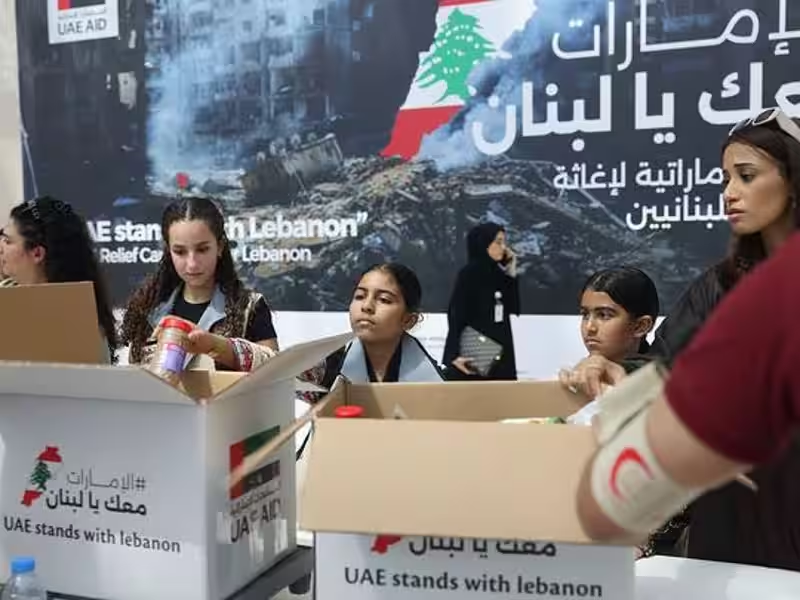
The word “Lebanon” often conjures images of ancient cedars, vibrant culture, and a rich historical tapestry. However, in recent years, the nation has faced unprecedented challenges, making the concept of Lebanon aid a recurring and critical theme. This aid, flowing from international bodies, governments, and crucially, from religious organizations, is not merely about material sustenance; it’s deeply intertwined with the religious fabric of Lebanese society and significantly impacts its ability to heal and rebuild.
Understanding the nuances of Lebanon aid requires acknowledging the profound role of religion in the country’s identity and daily life. From the bustling souks of Beirut to the quiet villages nestled in the mountains, faith permeates every aspect of existence, shaping communities, influencing social structures, and often forming the bedrock of resilience in times of crisis. This article will explore how religious motivations and networks are integral to the delivery and impact of Lebanon aid, offering a unique perspective on the nation’s ongoing journey towards recovery.
The Intertwined Destinies of Faith and Aid in Lebanon
Lebanon’s unique sectarian diversity, a cornerstone of its identity, also presents a complex landscape for aid distribution. Different religious communities – Christian denominations like Maronite, Orthodox, and Catholic, alongside Muslim sects including Sunni, Shia, and Druze – have historically established their own charitable wings and social services. When crises strike, such as the devastating economic collapse and the Beirut port explosion, these existing religious networks often become the first responders, leveraging trust and established infrastructure to reach those in need.
This intrinsic connection means that much of the Lebanon aid, especially at the grassroots level, is channeled through or is heavily influenced by religious institutions. These organizations, driven by principles of compassion, charity, and solidarity inherent in their faiths, provide not only material relief but also crucial psychological and spiritual support. For many Lebanese, their religious leaders and institutions represent a vital source of hope and a reliable lifeline when secular systems falter.
Faith-Based Organizations as Pillars of Lebanon Aid
Religious organizations in Lebanon are not simply recipients or conduits of aid; they are often the driving force behind its delivery. Think of a local church or mosque meticulously organizing food drives, or a religious charity coordinating the distribution of essential medicines. These entities possess an intimate understanding of their communities’ specific needs, often reaching marginalized populations that might otherwise be overlooked by larger, more bureaucratic aid agencies. Their local presence and deep-rooted connections are invaluable assets.
The motivations behind their involvement are multifaceted. For many, it is a direct interpretation of their religious tenets – to care for the poor, the sick, and the vulnerable. This can manifest as providing emergency shelters, financial assistance for families struggling to meet basic needs, or educational support for children whose schooling has been disrupted. The sheer volume and reach of this faith-based Lebanon aid demonstrate its indispensable role in the nation’s humanitarian response.
Examples of Religious Impact on Lebanon Aid
Consider the Maronite Patriarchal Charity, which has long been a significant provider of social services across Lebanon. In the wake of the economic downturn, it has intensified its efforts, distributing food packages, providing medical aid, and offering vocational training to help revive livelihoods. Similarly, the Islamic Charitable Association has been instrumental in providing Ramadan iftars to thousands of families and supporting orphanages and educational institutions.
The Orthodox Charity and various Catholic Caritas branches also play a crucial role, often focusing on specific areas like healthcare and education for vulnerable communities, irrespective of their religious affiliation. This cross-sectarian approach, driven by a shared humanitarian impulse, highlights the unifying potential of faith-based Lebanon aid. For instance, a Christian charity might fund a clinic serving a predominantly Muslim village, and vice versa, fostering interfaith understanding through shared acts of kindness.
Addressing Diverse Needs Through Religious Channels
The diverse religious landscape of Lebanon necessitates a nuanced approach to aid. While general humanitarian aid might focus on broad categories of need, faith-based organizations can tailor their assistance to specific cultural and religious sensitivities. This is particularly important when it comes to issues like food provisions, where adherence to religious dietary laws is paramount, or in providing comfort and support during religious observances.
Furthermore, religious institutions often provide a sense of community and spiritual solace, which are as vital as material aid in rebuilding a nation’s spirit. In times of immense hardship, having a place of worship to gather, a religious leader to offer guidance, or a community of fellow believers to share burdens can be profoundly healing. This intangible aspect of Lebanon aid, facilitated by religious networks, is often overlooked but is crucial for long-term recovery and social cohesion.
The Role of International Religious Aid
Beyond local initiatives, international religious organizations and diasporic communities also contribute significantly to Lebanon aid. Lebanese expatriates, often deeply connected to their religious heritage, frequently channel donations through their home country’s religious institutions. This global network of faith amplifies the impact of aid, bringing in essential resources from abroad.
These international contributions can range from funding for rebuilding damaged places of worship and community centers to supporting larger-scale development projects. For example, a Christian diaspora group might partner with a Lebanese diocese to fund the reconstruction of schools it supports, while Muslim organizations abroad might contribute to healthcare initiatives or vocational training programs. This international dimension underscores that Lebanon aid is a collective effort, often galvanized by shared faith and a commitment to the well-being of the Lebanese people.
Challenges and Opportunities for Lebanon Aid and Religion
Despite the vital role of religious organizations, the provision of Lebanon aid is not without its challenges. Navigating the complex political and economic landscape of Lebanon can be difficult, and ensuring that aid reaches those most in need without politicization or sectarian division is a constant concern. Transparency and accountability are crucial, and religious institutions are increasingly being called upon to demonstrate these principles in their aid operations.
However, these challenges also present opportunities for growth and collaboration. By working together, secular and religious aid providers can leverage each other’s strengths. Religious organizations can offer their deep community connections and cultural understanding, while international aid agencies can bring expertise in logistics, monitoring, and large-scale project management. This synergy between faith-based and secular aid efforts is essential for maximizing the impact of Lebanon aid and fostering a more resilient and united Lebanon.
The Future of Lebanon Aid: A Faith-Infused Path Forward
As Lebanon continues its arduous journey towards recovery, the role of faith-based initiatives in Lebanon aid will undoubtedly remain central. These organizations, fueled by a deep-seated commitment to humanitarian values and a profound connection to the Lebanese people, will continue to be a source of strength, support, and hope. Their ability to mobilize communities, provide tailored assistance, and offer intangible comfort makes them indispensable.
Ultimately, the story of Lebanon aid is a testament to the enduring power of human compassion, often amplified by religious conviction. It is a narrative of resilience woven with threads of faith, demonstrating that even in the darkest of times, communities can come together, drawing strength from their spiritual traditions to rebuild, heal, and forge a brighter future for Lebanon.
Frequently Asked Questions: Lebanon Aid & Religion
What is the religious landscape of Lebanon?
Lebanon is known for its religious diversity. The major religious groups include Maronite Christians, Sunni Muslims, Shia Muslims, and Druze. There are also smaller Christian denominations and other religious minorities. This diversity has shaped Lebanon’s history and society.
How does religious affiliation affect aid distribution in Lebanon?
Aid distribution in Lebanon can be influenced by religious affiliation due to the country’s sectarian political system and the presence of religiously affiliated NGOs and community structures. While many aid organizations strive for equitable distribution based on need, historical patterns and existing networks can sometimes lead to aid flowing through or being prioritized by specific religious communities. This is a complex issue with ongoing efforts to ensure aid reaches all those in need regardless of their religious background.
Are there specific religious organizations providing aid in Lebanon?
Yes, there are numerous religious organizations, both international and local, actively involved in providing aid in Lebanon. These can include Christian churches, Islamic charities, and organizations affiliated with the Druze community, among others. They often focus on humanitarian assistance, education, healthcare, and social services, frequently serving their respective communities but also providing support more broadly.
What is the role of religion in Lebanese society and its impact on aid efforts?
Religion plays a significant role in Lebanese society, influencing social identity, community cohesion, and political representation. This can translate into aid efforts where religious institutions act as crucial channels for delivering assistance, mobilizing volunteers, and advocating for specific needs. While this can enhance reach and trust within certain communities, it also presents challenges in ensuring a unified and equitable approach to aid across all religious groups.
How can I ensure my aid contribution reaches those most in need, regardless of religion?
To ensure your aid contribution reaches those most in need regardless of religion, consider donating to established, reputable international humanitarian organizations that have a strong track record of providing impartial aid based on need. These organizations often have robust monitoring and evaluation systems to ensure aid is distributed equitably. Researching the specific mission and delivery mechanisms of an organization before donating can also be helpful.