Introduction: The Enduring Power of a Mother’s Intercession
In the tapestry of faith, certain phrases resonate with a profound and timeless significance. Among these, the invocation, “Remember, O most gracious Virgin Mary,” stands out as a cornerstone of Catholic devotion. It’s more than just a collection of words; it’s a fervent plea, a deeply ingrained prayer that has offered solace, strength, and guidance to countless souls throughout centuries. This powerful supplication speaks to the unique position of Mary, the mother of Jesus, not only as a historical figure but as a living, breathing presence in the spiritual lives of believers.
The beauty of this prayer lies in its inherent trust. When we cry out, “Remember, O most gracious Virgin Mary,” we are acknowledging her immense love and compassion for humanity, a love that mirrors the divine love of her Son. It’s an act of faith that recognizes her as a powerful intercessor, capable of bringing our needs and desires before God with a mother’s tender concern. This article will delve into the rich history, theological significance, and practical applications of this cherished devotion, exploring why it continues to be a vital lifeline for many on their spiritual journeys.
The Roots of a Cherished Invocation
The origins of the plea, “Remember, O most gracious Virgin Mary,” are deeply entwined with the early Church’s understanding of Mary’s role. While the exact wording may have evolved, the sentiment of appealing to her maternal heart has a long and venerable history. Early Christians, even in the face of persecution and hardship, looked to Mary as a source of comfort and a model of unwavering faith. They understood that as the Mother of God, she possessed a unique intimacy with Christ and a profound understanding of human suffering.
One of the earliest and most influential forms of this prayer is the Sub Tuum Praesidium (Under Your Protection), a Greek prayer dating back to the 3rd century. This ancient text implores Mary, “Under your mercy, we take refuge, O Theotokos [Mother of God]; do not despise our petitions in our necessities, but deliver us from danger, ever Virgin, alone pure.” The consistent theme of seeking refuge and aid under her mantle of protection is a clear precursor to the sentiment encapsulated in “Remember, O most gracious Virgin Mary.” This historical grounding underscores that this devotion is not a fleeting trend but a deeply rooted expression of Christian piety.
Mary’s Role: Mother, Advocate, and Exemplar
The theological underpinnings of why we say, “Remember, O most gracious Virgin Mary,” are multifaceted and deeply rooted in Church teaching. Firstly, we recognize her as the Theotokos, the God-bearer. This title, affirmed at the Council of Ephesus in 431 AD, signifies that she is not merely the mother of Jesus the man, but the mother of God himself. This unique relationship grants her an exceptional place in God’s plan and a profound connection to her divine Son.
Secondly, Mary is our advocate. Because of her purity, her obedience to God’s will, and her intimate connection with Jesus, her prayers are believed to be particularly potent. When we ask her to “Remember, O most gracious Virgin Mary,” we are essentially asking her to present our petitions to Jesus with the same loving care a mother would show her child. Think of it like this: if you have a difficult request to make of a busy leader, it’s often helpful to have someone who knows them well, someone they trust, speak on your behalf. Mary fulfills this role beautifully for us. She is our exemplar of faith, obedience, and humility, showing us how to live a life pleasing to God.
Let’s break down the profound meaning behind the phrase, “Remember, O most gracious Virgin Mary.” The word “remember” here is not a plea for her to recall something forgotten. Instead, it’s an appeal to her perpetual awareness and loving solicitude for her children on earth. It signifies her constant, active presence in the lives of those who turn to her. This isn’t a passive remembrance; it’s an active engagement.
The adjective “gracious” is equally vital. It speaks to her kindness, benevolence, and divine favor. She is not just a mother, but a mother endowed with a special grace from God. When we address her as “gracious,” we acknowledge her inherent goodness and her role as a conduit of God’s mercy. This term evokes a sense of warmth and approachability, making her a comforting figure to whom we can pour out our hearts.
What We Ask For: Needs, Graces, and Protection
When believers cry out, “Remember, O most gracious Virgin Mary,” they are not simply reciting words; they are expressing a spectrum of human needs and spiritual desires. Primarily, it is a plea for her intercession. We ask her to remember us in our times of trial and tribulation, our moments of doubt and despair. This could be anything from seeking peace in a difficult relationship to overcoming personal struggles like addiction or anxiety.
Furthermore, we ask her to remember us in our pursuit of virtue and holiness. We pray that she might guide us to live more like her Son, to cultivate patience, humility, and love. This includes asking for the grace to overcome sin, the strength to follow God’s commandments, and the wisdom to discern His will in our lives. The prayer is a humble acknowledgment that we are not alone in our spiritual journey and that we have a powerful ally in the Mother of God. The request is not about demanding, but about humbly asking for her maternal assistance.
Practical Applications: Integrating the Devotion into Daily Life
The beauty of “Remember, O most gracious Virgin Mary” lies in its adaptability to the rhythm of everyday life. It’s a prayer that can be whispered in a moment of crisis, recited during a quiet moment of reflection, or incorporated into a more formal prayer routine. For instance, if you’re facing a challenging work project, you might quietly pray, “Remember, O most gracious Virgin Mary,” asking for clarity and perseverance.
This devotion can also be a powerful tool for spiritual growth. Regularly invoking Mary’s intercession can help cultivate a deeper sense of trust in God’s providence. It fosters a connection to a tradition that has sustained believers for centuries, offering a sense of belonging and continuity within the Church. Consider developing a habit of praying this invocation first thing in the morning, setting a positive and faith-filled tone for the day.
The recitation of the Holy Rosary is perhaps the most well-known and structured way to incorporate the invocation, “Remember, O most gracious Virgin Mary.” Each Hail Mary consists of two parts: an acknowledgment of Mary’s blessing and a petition for her intercession. The second part, “Holy Mary, Mother of God, pray for us sinners, now and at the hour of our death. Amen,” is a direct echo of this sentiment. Throughout the Rosary, we meditate on the life of Jesus, and with each Hail Mary, we are reminded of Mary’s presence and her loving concern.
Beyond the Rosary, this prayer can be a simple, personal act of devotion. It can be a short prayer to say when you wake up, before going to sleep, or whenever you feel the need for comfort and strength. You might write it on a sticky note and place it somewhere visible, or set a reminder on your phone. The key is to approach it with a sincere heart, recognizing that you are reaching out to a loving mother who is always ready to listen.
The Enduring Relevance in a Modern World
In our fast-paced, often secularized world, the plea, “Remember, O most gracious Virgin Mary,” might seem like an anachronism to some. However, its enduring relevance lies in its ability to address fundamental human needs that transcend time and culture. We all crave love, comfort, and guidance. We all face challenges and uncertainties. Mary, as the mother of Jesus and our spiritual mother, offers a constant source of these very things.
This devotion is not about superstition or blind faith; it is about a profound relationship built on love and trust. When we say, “Remember, O most gracious Virgin Mary,” we are affirming our belief in the power of prayer and the reality of a spiritual realm that actively intersects with our earthly existence. It is a testament to the enduring power of a mother’s love and her unwavering commitment to her children, a love that is divinely inspired and eternally present. This prayer serves as a reminder that we are never truly alone, especially when we turn to Mary.
A Source of Hope and Consolation
Ultimately, the invocation, “Remember, O most gracious Virgin Mary,” serves as a powerful beacon of hope and consolation. In moments of loneliness, fear, or despair, knowing that we have a loving mother in heaven who hears our cries can be an immense comfort. Her life, marked by both profound joy and deep sorrow, makes her intimately relatable to our own human experiences. She understands the sting of loss, the weight of responsibility, and the quiet strength required to embrace God’s will.
By continuing to pray this ancient and beautiful invocation, we connect ourselves to a rich spiritual heritage and tap into a source of grace that has sustained generations of believers. “Remember, O most gracious Virgin Mary” is an invitation to experience the boundless love and tender intercession of the Mother of God, a love that is as relevant and vital today as it was in the earliest days of Christianity. It’s an affirmation of faith, a cry for help, and a testament to the enduring power of divine love.
Frequently Asked Questions about “O Most Gracious Virgin Mary” and Religion
What is the “O Most Gracious Virgin Mary” prayer?
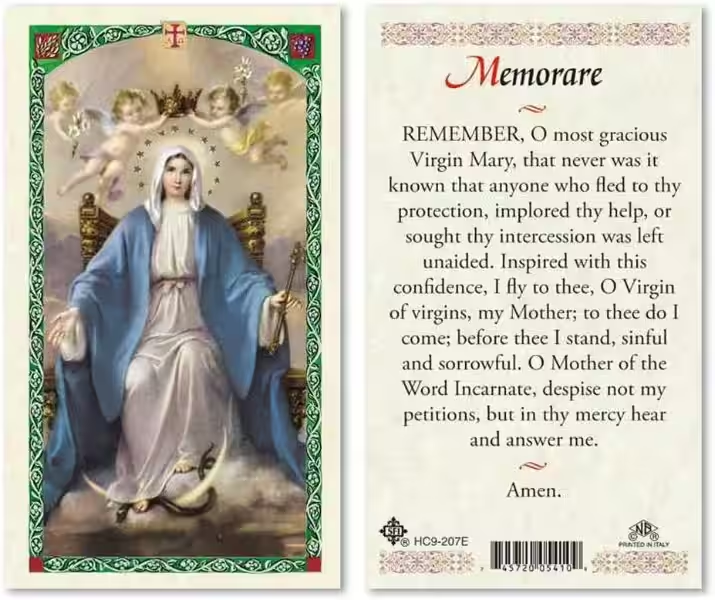
The “O Most Gracious Virgin Mary” (also known as the “Memorare”) is a popular Catholic prayer that invokes the intercession of the Blessed Virgin Mary. It expresses confidence in her mercy and asks for her help in times of need, sin, and danger.
What is the origin of the Memorare prayer?
The exact origin of the Memorare is uncertain, but it is believed to have originated in the Middle Ages, possibly around the 12th century. It gained significant popularity in the 17th century, particularly through the writings of Saint Bernard of Clairvaux and Saint Francis de Sales, though direct attribution to them is debated.
What does it mean to ask for the intercession of the Virgin Mary?
In Catholic and Orthodox Christian traditions, asking for the intercession of the Virgin Mary means asking her to pray to God on our behalf. Catholics believe that Mary, as the Mother of God, is a powerful advocate and that her prayers are pleasing to her Son, Jesus Christ. It is not worship of Mary, but a plea for her prayers.
Is the Memorare prayer considered scripture?
No, the Memorare prayer is not considered scripture. Scripture refers to the inspired Word of God found in the Bible. The Memorare is a devotional prayer composed by the Church.
Why do Catholics pray to Mary?
Catholics pray to Mary not as a divine being, but as a revered figure who holds a unique place in Christian history and theology as the Mother of Jesus. They believe she can intercede for them with God, much like one might ask a living person to pray for them. This practice is rooted in the belief of the Communion of Saints, where the souls of the faithful, both living and deceased, are united and can pray for one another.
Are there other prayers to the Virgin Mary?
Yes, there are many other devotional prayers to the Virgin Mary within Christianity, particularly in Catholicism and Orthodoxy. Some of the most well-known include the Hail Mary, the Rosary (which incorporates the Hail Mary), the Magnificat, and various litanies.
What is the theological basis for venerating Mary?
The veneration of Mary (known as Mariology) is based on several theological concepts: her role as the Mother of God (Theotokos), her perpetual virginity, her Immaculate Conception (in Catholic theology), and her Assumption into heaven (in Catholic and Orthodox theology). These doctrines highlight her unique purity, holiness, and closeness to God.
Is praying to Mary a form of idolatry?
From a Catholic and Orthodox perspective, praying to Mary is not idolatry. Idolatry is the worship of a creature or created thing as if it were God. Catholics distinguish between “latria” (worship due to God alone) and “dulia” (veneration or honor given to saints, including Mary, due to their holiness and closeness to God). The highest form of veneration given to Mary is “hyperdulia.”