The twilight of life, a time often shrouded in apprehension and uncertainty, can be illuminated by the profound spiritual comfort offered by the Catholic Church. For believers, the administration of the Sacraments at the point of death, commonly known as the Catholic Last Rites, is not merely a ritual but a divine encounter, a final embrace of God’s boundless mercy and love. This sacred practice, steeped in centuries of tradition and theological richness, provides solace not only to the dying but also to their grieving loved ones, offering a pathway to peace and spiritual preparation for the journey ahead. Understanding the significance and content of the Catholic Last Rites prayer can demystify this crucial aspect of the faith and highlight its transformative power.
At its core, the Catholic Last Rites prayer is an expression of God’s unwavering presence and sacred promises during life’s most vulnerable moments. It is a testament to the Church’s deep understanding of human fragility and the profound need for divine grace when facing the ultimate transition. This is a time when the sacramental grace of the Church acts as a powerful conduit, strengthening the soul and preparing it for eternal life.
The term “Last Rites” is a broad designation encompassing several sacraments that are often administered together when someone is in danger of death. These sacraments are not a single, monolithic prayer but a sacramental bouquet, each contributing a unique element of healing and spiritual fortification. The primary sacraments involved are Confession (Reconciliation), Anointing of the Sick, and Holy Communion (Viaticum). The Catholic Last Rites prayer is woven throughout the administration of these sacraments, forming a cohesive spiritual experience.
These sacraments are a divine lifeline, offering tangible signs of God’s love and forgiveness. They are not about “last-minute” salvation but about continuous relationship with God, culminating in a faithful and prepared departure. The Church teaches that these sacraments are essential spiritual nourishment, guiding the soul towards its eternal home with assurance and peace.
Confession: The Sacrament of Reconciliation
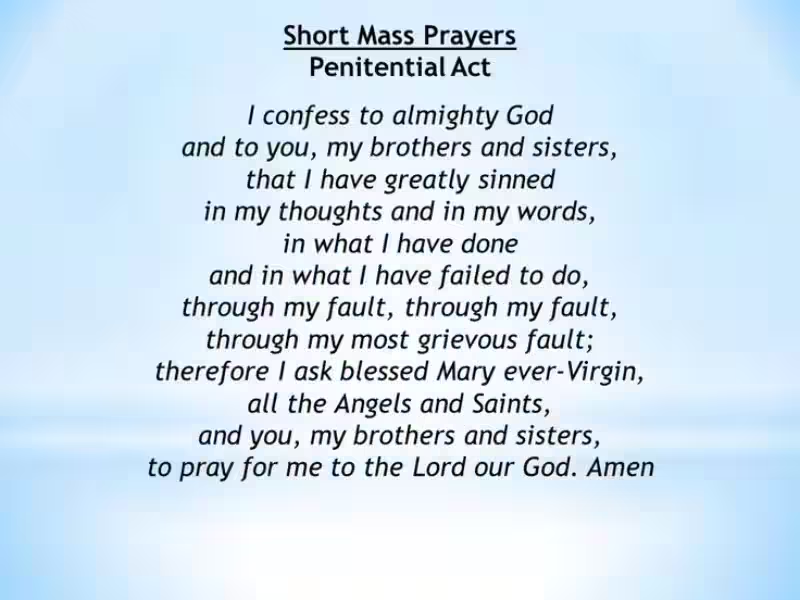
When a person is near death, the Sacrament of Reconciliation, often referred to as Confession, is profoundly important. It is an opportunity for the individual to confess any sins they may have committed throughout their lives, seeking divine forgiveness and restoration of grace. The Catholic Last Rites prayer in this context often includes prayers of contrition and absolution, where the priest, acting in the person of Christ, grants forgiveness. This act of spiritual cleansing is vital, freeing the soul from the burden of sin and allowing for a pure and unhindered passage into God’s presence.
Imagine a long journey with a heavy backpack. Confession is like being able to set down that backpack, unloading the weight and making the remaining journey much lighter and more peaceful. The prayers used during this sacrament are designed to foster deep repentance and a renewed commitment to God’s love, even in the face of approaching death. The Catholic Last Rites prayer in this moment is one of profound mercy and healing.
Anointing of the Sick: A Sacrament of Healing and Strength
The Anointing of the Sick is a cornerstone of the Catholic Last Rites. It is a sacrament that offers spiritual healing, comfort, and strength to those who are ill or facing death. The anointing with blessed oil, accompanied by specific prayers, is believed to strengthen the soul against temptation, offer peace and courage, and, where it is God’s will, restore physical health. The Catholic Last Rites prayer during this sacrament focuses on God’s loving care and the promise of eternal healing.
Think of it as receiving a divine infusion of spiritual strength to face a difficult challenge. The prayers are not just words; they are channels of God’s grace, imbuing the recipient with a profound sense of God’s presence and a steadfast hope in the face of suffering. This sacrament is a powerful affirmation of God’s intimate knowledge and love for each individual.
Holy Communion: Viaticum – Food for the Journey
When death is imminent, Holy Communion takes on a special significance and is referred to as Viaticum, meaning “food for the journey.” It is the final earthly nourishment for the soul, a spiritual sustenance that prepares the believer for their eternal journey. Receiving the Body and Blood of Christ at this moment is considered an ultimate act of faith and communion with God, assuring them of His everlasting presence. The Catholic Last Rites prayer associated with Viaticum is one of profound union and anticipation of heavenly glory.
This is like having the most essential fuel for a momentous trip, ensuring one has the strength and grace to reach their destination. The Catholic Last Rites prayer in this context is a joyous and reverent affirmation of Christ’s promise to be with us always, especially at the threshold of eternity. It is a sacred moment of unity with the Risen Christ.
The Role of the Priest and the Power of the Catholic Last Rites Prayer
The Catholic Last Rites prayer is administered by a priest, who acts as an instrument of God’s grace. The priest’s role is crucial in guiding the dying person and their family through this sacred time. They offer pastoral care, spiritual guidance, and the administration of the sacraments, all imbued with the power of prayer and the authority of the Church. The Catholic Last Rites prayer becomes a communal act of faith, uniting the dying, the priest, and the heavenly court in a shared focus on God’s love.
The priest’s presence is a visible sign of Christ’s love and the Church’s support. Their prayers are not merely recited but are fervent pleas for mercy and divine intervention. The Catholic Last Rites prayer is a testament to the Church’s unwavering commitment to its flock, ensuring that no one faces their final moments alone or without the sacramental graces they need.
The prayers for the dying are often a mix of biblical passages, traditional liturgical prayers, and personal supplications, all focused on:
Seeking God’s mercy and forgiveness.
Strengthening faith and hope.
Offering peace and comfort amidst suffering.
Preparing the soul for eternal life.
Committing the soul into God’s loving hands.
Finding Peace and Hope in Christ
The Catholic Last Rites prayer is more than just a series of words; it is a sacred encounter with the Divine. It is a profound expression of God’s unconditional love and His desire for our eternal salvation. By understanding and embracing these sacraments, individuals and their families can find immense peace and hope during life’s most challenging transition. The Catholic Last Rites prayer serves as a divine bridge, connecting the earthly realm with the eternal, assuring the believer of God’s everlasting embrace.
This spiritual journey, guided by faith and the sacramental grace of the Church, offers a pathway to a peaceful and hopeful death, one that is marked by divine love and profound spiritual reassurance. It is a testament to the enduring power of faith and the promises of eternal life found in Christ. The Catholic Last Rites prayer stands as a beacon of divine hope for all believers.
Frequently Asked Questions about Catholic Last Rites
What are the Catholic Last Rites?
The Catholic Last Rites, also known as the Anointing of the Sick, is a sacrament administered to Catholics who are in danger of death from illness or old age. It is a spiritual healing and comfort, and a preparation for death.
The purpose of the Anointing of the Sick is to offer spiritual strength, peace, and courage to the sick person. It can also bring about physical healing if it is God’s will. It also assures the person of God’s presence and love during a difficult time and helps to remit sins if the person is unable to confess them.
Who can receive the Anointing of the Sick?
Any Catholic who is seriously ill, facing surgery, or in old age can receive the Anointing of the Sick. It is not reserved only for those who are actively dying. Children can also receive it if they have reached the age of reason.
What happens during the Anointing of the Sick?
The sacrament is typically administered by a priest. It involves prayers, the reading of Scripture, and the anointing of the forehead and hands of the sick person with blessed oil (the Oil of the Sick). Holy Communion may also be given, which is then referred to as Viaticum (“food for the journey”).
Is it too late to receive the Anointing of the Sick if someone has already lost consciousness or is dying?
No, it is never too late. The Church believes that even if a person is unconscious, God can still work through the sacrament to bring grace and comfort.
What is the difference between the Anointing of the Sick and Confession?
Confession (the Sacrament of Reconciliation) is for the forgiveness of sins. The Anointing of the Sick offers spiritual strength and healing for the sick and dying, and can also remit sins if the person is unable to confess. They are distinct sacraments but can be administered together.
What is Viaticum?
Viaticum means “food for the journey” and refers to Holy Communion received by someone who is in danger of death. It is considered a very important sacrament as it prepares the person for their spiritual journey to God.
Should I call a priest if a loved one is ill?
Yes, it is always a good idea to contact a priest if a loved one is seriously ill, especially if they are in danger of death. The priest can explain the sacraments further and administer them if desired.