In the tapestry of faith, certain figures emerge not just as pious individuals, but as conduits of the divine, leaving behind a legacy that continues to inspire millions. Padre Pio of Pietrelcina, a Capuchin friar, stands as one such luminary. His life, marked by extraordinary phenomena and profound spiritual depth, offers a compelling glimpse into the mysteries of religion and the power of unwavering devotion. Exploring the factual accounts of his existence allows us to understand not only the man himself but also the enduring impact of his faith on the modern world.
For many, the name Padre Pio conjures images of stigmata, miraculous healings, and an almost tangible spiritual presence. These are not mere legends; they are documented events and deeply held beliefs that have shaped the spiritual landscape for generations. This article aims to delve into these facts, presenting them in a way that is both informative and relatable, shedding light on how a humble friar from southern Italy became a global icon of religious devotion.
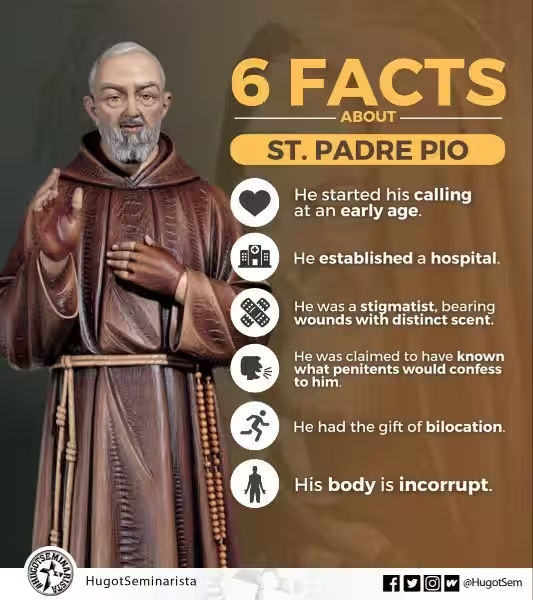
Perhaps the most widely recognized and debated aspect of Padre Pio’s life was his possession of the stigmata – the wounds of Christ that appeared on his hands, feet, and side. These wounds, which he reportedly bore for fifty years, were not fleeting occurrences but permanent, visible manifestations that bled and caused him considerable physical pain. This phenomenon, documented by numerous medical professionals and witnesses, remains a central point of discussion when exploring facts about Padre Pio.
The appearance of the stigmata on Padre Pio was not a private affair. He bore these wounds openly, often tending to them and allowing them to be examined. While skeptics sought scientific explanations, for believers, these marks were a divine sign of his deep spiritual union with Christ’s suffering. Imagine someone bearing visible scars from a profound emotional or physical experience; the stigmata were, in a sense, the physical embodiment of Padre Pio’s intense spiritual empathy and participation in the Passion of Jesus. This enduring presence of these wounds became a powerful testament to his faith for countless individuals.
Medical Examinations and Witness Testimonies
Throughout his life, Padre Pio’s stigmata were subjected to scrutiny by physicians and church officials. While some doctors were baffled, unable to find a natural cause, others attempted rational explanations. However, numerous testimonies from credible sources attest to the authenticity of the wounds, their bleeding, and the pain Padre Pio experienced. For instance, Dr. Luigi Romanelli, an army surgeon, examined Padre Pio in 1916 and described the wounds as being consistent with crucifixion, with perfectly formed edges and no signs of artificial application.
Beyond medical observations, the sheer volume of individuals who witnessed the stigmata firsthand is remarkable. People from all walks of life, including doctors, priests, and ordinary faithful, saw the wounds, smelled the fragrance often associated with his presence, and experienced the profound spiritual atmosphere surrounding him. These consistent accounts from diverse individuals strengthen the factual basis of this extraordinary aspect of his life, providing a compelling narrative for those seeking to understand the deeper spiritual realities he embodied.
A Life of Miracles: Healings and Spiritual Gifts
Beyond the stigmata, Padre Pio was renowned for a multitude of other spiritual gifts, most notably miraculous healings. Stories abound of individuals with incurable diseases, debilitating injuries, and even terminal illnesses who experienced complete and inexplicable recoveries after praying to Padre Pio or seeking his intercession. These are not isolated incidents but a consistent pattern of miraculous interventions that have been meticulously documented by the Church and countless individuals.
The healing power attributed to Padre Pio extended to both physical and spiritual ailments. People reported finding peace from anxiety, overcoming addiction, and experiencing profound conversions after encountering him or his spiritual influence. It’s akin to how a powerful piece of music can move us deeply and bring about a sense of calm or inspiration; Padre Pio’s prayers and presence seemed to have a similar, albeit divinely orchestrated, effect on the souls and bodies of those who sought his help. These documented instances of supernatural intervention serve as powerful affirmations of his spiritual authority and the efficacy of prayer.
The Process of Canonization and Verified Miracles
The Catholic Church has a rigorous process for canonization, requiring verified miracles as proof of a person’s sanctity. Padre Pio’s canonization in 2002 was preceded by extensive investigations into his life and the miracles attributed to him. Two specific miracles were officially recognized as pivotal in his path to sainthood: the healing of Consiglia Bruno, who was cured of tuberculosis, and the miraculous healing of Matteo Pio Colella, who recovered from a serious head injury. These cases underwent thorough medical and theological scrutiny.
The Church’s careful examination of these events highlights the importance of factual evidence in recognizing the divine. It’s not enough for people to simply believe; there must be provable instances of supernatural intervention. These verified miracles, like the sudden disappearance of a tumor or the complete recovery from a previously untreatable condition, serve as tangible affirmations of Padre Pio’s intercessory power and his closeness to God, solidifying his place as a saint in the annals of religion.
A Spiritual Father: Confession and Counsel
Padre Pio was not only a mystic but also a profoundly compassionate spiritual father. He spent countless hours in the confessional, offering solace, guidance, and absolution to an unending stream of penitents. His ability to discern souls, to see into the hearts of those who approached him, and to offer words of profound wisdom were well-documented by those who experienced his ministry. Many described his confessional as a place of intense spiritual encounter, where one felt truly seen and understood by God through him.
Imagine going to a wise elder for advice, and they not only offer practical solutions but also seem to understand the deepest anxieties and hopes you carry. This was the experience for many who confessed to Padre Pio. His counsel was often direct yet filled with mercy, guiding individuals towards a deeper relationship with God and a more virtuous life. The sheer volume of people he guided and the profound transformations reported underscore his significant role as a spiritual director in the lives of countless faithful.
The Gift of Bilocation and Reading Souls
Among Padre Pio’s most remarkable spiritual gifts was the ability of bilocation, meaning he could be present in two places at once. Numerous credible accounts describe him appearing to individuals in need, even when he was known to be physically in his friary. This extraordinary phenomenon, while difficult for the rational mind to grasp, is a recurring theme in testimonies about his life, suggesting a soul unbound by the normal limitations of space and time, deeply connected to the spiritual realm.
Furthermore, Padre Pio possessed the gift of reading souls, an ability to know the sins and spiritual state of individuals even before they confessed them. This meant that penitents could not hide anything from him; they were confronted with their spiritual reality in a profound way. This gift, while potentially intimidating, was used by Padre Pio to bring about genuine repentance and spiritual renewal. It’s like having a perfectly clear mirror reflecting your innermost self, prompting necessary change and growth. These supernatural insights were key to his effectiveness as a confessor and spiritual guide.
Padre Pio’s Enduring Influence on Religion
The legacy of Padre Pio extends far beyond his physical lifetime. His devotion to the Blessed Virgin Mary, his love for the Mass, and his unwavering faith in the power of prayer continue to inspire millions around the globe. His life serves as a powerful testament to the reality of the supernatural and the profound connection that can exist between humanity and the divine. The facts surrounding his life offer a compelling narrative for those seeking to deepen their understanding of faith and the mysteries of religion.
Today, the Sanctuary of Padre Pio in San Giovanni Rotondo remains a major pilgrimage destination, drawing people who seek his intercession and wish to experience the spiritual atmosphere he cultivated. His writings, prayers, and the stories of his miracles are disseminated widely, providing comfort and hope to countless individuals. The enduring appeal of Padre Pio is a testament to the fact that his spiritual message and the evidence of his extraordinary life continue to resonate deeply in the hearts of believers and seekers alike, solidifying his important place in the history of religion.
Frequently Asked Questions about Padre Pio
Who was Padre Pio?
Padre Pio of Pietrelcina (born Francesco Forgione) was an Italian Capuchin friar, priest, stigmatist, and mystic. He is widely venerated in the Catholic Church.
What are the stigmata?
The stigmata are wounds that correspond to the crucifixion wounds of Jesus Christ. Padre Pio famously bore these wounds for fifty years of his priesthood.
When was Padre Pio born and when did he die?
Padre Pio was born on May 25, 1887, and died on September 23, 1968.
What was Padre Pio known for?
He was known for his deep spirituality, his devotion to prayer, his spiritual direction, his miraculous healings, and the presence of the stigmata.
Is Padre Pio a saint?
Yes, Padre Pio was canonized as a saint by Pope John Paul II on June 16, 2002.
What is the significance of Padre Pio in Catholicism?
Padre Pio is revered as a model of faith, prayer, and suffering. Many Catholics turn to him for intercession and guidance. His life is seen as a testament to God’s grace and power.
Did Padre Pio perform miracles?
Yes, numerous healings and conversions were attributed to Padre Pio’s intercession during his lifetime and after his death. The Catholic Church officially recognized some of these as miracles.
What is a Capuchin friar?
A Capuchin friar is a member of a branch of the Franciscan order, known for their simple lifestyle, poverty, and dedication to serving God and humanity.
What does it mean to be a mystic?
A mystic is a person who has direct experiences of God or divine realities, often through contemplation and prayer. Padre Pio is considered a prominent mystic of the 20th century.
What were Padre Pio’s main spiritual devotions?
Padre Pio had a profound devotion to the Mass, the Rosary, the Eucharist, and the Sacred Heart of Jesus. He also emphasized the importance of confession and spiritual direction.