In the vast tapestry of religious belief, the figure of Jesus Christ occupies a central and often debated position. While many acknowledge his profound moral teachings and his role as a pivotal historical figure, the Christian faith asserts something far more radical: that Jesus is not merely a prophet, a teacher, or a good man, but is, in fact, God incarnate. This assertion, deeply rooted in Scripture, forms the bedrock of Christian theology and offers a unique perspective on the nature of salvation, love, and the divine-human relationship. Understanding the verses that speak to Jesus’ divine identity is crucial to grasping the core message of Christianity and its enduring impact on the world.
For centuries, scholars, theologians, and everyday believers have grappled with the implications of Jesus being God. It’s a concept that challenges our human understanding of power, authority, and existence. Yet, it is precisely this divine nature that believers find to be the source of hope, forgiveness, and the ultimate reconciliation between humanity and the Creator. This article will delve into key scriptural passages that illuminate this profound truth, exploring how these divine declarations shape our understanding of Jesus and the very essence of religion.
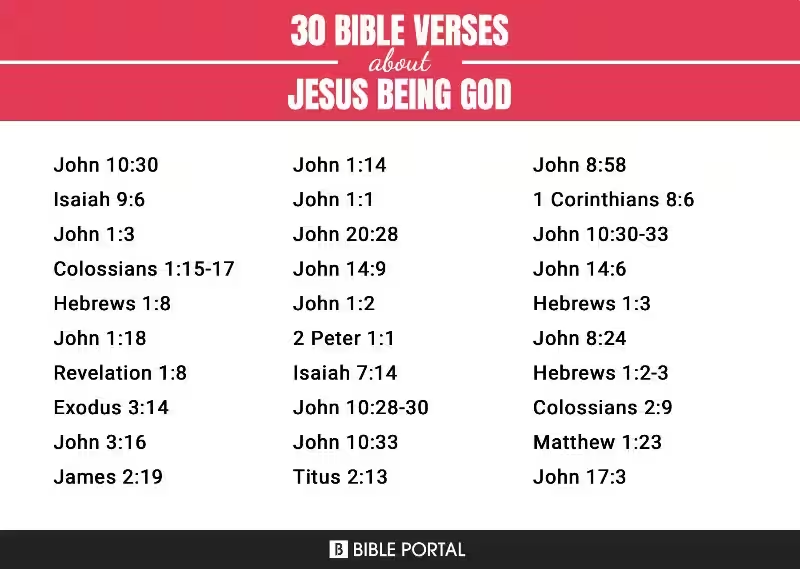
The New Testament is replete with passages that, when examined closely, point to Jesus’ inherent divinity. These are not just poetic metaphors; they are direct assertions and implications that he possessed attributes and authority exclusively belonging to God. One of the most striking examples can be found in the Gospel of John, where Jesus himself declares, “I and the Father are one” (John 10:30). This statement is not about mere unity of purpose or shared mission, but about a fundamental, ontological oneness with God the Father. It’s akin to saying two flames are not just similar, but are the same fire, sharing the same essence.
Furthermore, the Apostle John opens his Gospel with a cosmic declaration: “In the beginning was the Word, and the Word was with God, and the Word was God. He was in the beginning with God. All things were made through him, and without him was not any thing made that was made” (John 1:1-3). This “Word” is later identified as Jesus Christ. The fact that “all things were made through him” attributes to Jesus the role of Creator, a prerogative solely held by God. This isn’t about Jesus being a skilled artisan who helped build creation; it’s about him being the very source and sustainer of everything that exists, from the smallest atom to the grandest galaxy.
Jesus as the Creator and Sustainer
The concept of Jesus as the Creator is a cornerstone of his divine identity. The verse in John 1 isn’t an isolated statement; it’s echoed in other parts of Scripture. The Apostle Paul, in his letter to the Colossians, reinforces this idea, stating, “For by him all things were created, in heaven and on earth, visible and invisible, whether thrones or dominions or rulers or authorities—all things were created through him and for him. And he is before all things, and in him all things hold together” (Colossians 1:16-17). This highlights Jesus’ primacy and supreme authority over all creation. He isn’t just a participant in the cosmic order; he is its architect and its very glue.
Consider the immensity of this claim. If Jesus is the one through whom and for whom all things were made, then our very existence is inextricably linked to him. This transforms our understanding of the universe; it’s not a random, godless expanse, but a creation with a divine purpose, orchestrated by Jesus. The fact that “in him all things hold together” suggests that even the laws of physics, the forces that bind matter, and the very continuation of existence are dependent on his sustaining power. This makes Jesus not just a historical figure, but the eternal foundation of reality.
Another profound indicator of Jesus’ divinity is his authority to forgive sins. In many religious traditions, the act of forgiving transgressions against the divine is reserved for God alone. Yet, Jesus repeatedly demonstrates this power. In the Gospel of Mark, after a paralyzed man is lowered through the roof to Jesus, Jesus proclaims, “Son, your sins are forgiven” (Mark 2:5). The scribes present rightly questioned this, thinking, “Who can forgive sins but God alone?” (Mark 2:7). Their question highlights the prevailing understanding of divine prerogative.
Jesus’ response to their internal debate is equally telling. He asks, “Why do you question these things in your hearts? Which is easier: to say to the paralytic, ‘Your sins are forgiven,’ or to say, ‘Rise, pick up your bed and walk’? But that you may know that the Son of Man has authority on earth to forgive sins”—he said to the paralytic— “I say to you, rise, pick up your bed, and go home” (Mark 2:8-11). By healing the man, Jesus provides a tangible, undeniable demonstration of his spiritual authority. This act of forgiving sins, a power exclusively attributed to God, is a direct claim to divine status and a testament to his unique relationship with the Father.
The “I AM” Sayings and Divine Self-Revelation
Perhaps some of the most explicit declarations of Jesus’ divinity come from his own lips in the Gospel of John, often referred to as the “I AM” sayings. These phrases are direct echoes of God’s self-revelation to Moses in the Old Testament, where God declared, “I AM WHO I AM” (Exodus 3:14). When Jesus uses the phrase “I AM” in conjunction with divine attributes, he is intentionally identifying himself with the God of Israel.
For instance, Jesus declares, “Truly, truly, I say to you, before Abraham was, I am” (John 8:58). This is a staggering statement. Abraham was a patriarch, a revered figure who lived centuries before Jesus. By claiming to exist “before Abraham,” Jesus is asserting a pre-existence that transcends human history. Coupled with the “I AM” declaration, he is essentially saying he is the eternal God, the one who was and is and is to come. This statement alone was enough for his Jewish audience to pick up stones to throw at him, understanding it as blasphemy if he were merely human.
Jesus as the Bread of Life and the True Vine
Beyond claiming eternal existence, Jesus uses the “I AM” statements to describe his essential nature and his role in the lives of believers. He proclaims, “I am the bread of life. Whoever comes to me shall not hunger, and whoever believes in me shall never thirst” (John 6:35). Here, Jesus isn’t just offering spiritual comfort; he’s presenting himself as the ultimate sustenance for the soul, the very source of spiritual life and satisfaction. This is a role that only God can fulfill – providing eternal life and complete fulfillment.
Similarly, Jesus declares, “I am the true vine, and my Father is the vinedresser” (John 15:1). This metaphor illustrates an intimate and vital connection between Jesus and his followers, who are the branches. The Father, the vinedresser, cultivates the vine (Jesus) and ensures its fruitfulness. In this analogy, Jesus is the direct conduit of life and fruitfulness to his disciples. Just as a branch cannot bear fruit apart from the vine, believers cannot live a spiritually vibrant life apart from their union with Christ. This deep, life-giving dependency on Jesus points to his divine role as the source of all spiritual vitality.
The Worship Due to God Alone
A critical aspect of identifying Jesus as God is the recognition that worship is due to God alone. Throughout the Old and New Testaments, the command is clear: “You shall worship the Lord your God and him only shall you serve” (Matthew 4:10). Yet, the New Testament records instances where Jesus is directly worshipped, and he accepts this worship without rebuke. This acceptance is not a sin of pride; it is an affirmation of his divine nature, for he is worthy of the worship that belongs only to the Creator.
Consider the account of the wise men who came from the East. They “fell down and worshiped him” (Matthew 2:11). Later, after his resurrection, when the women encountered Jesus on their way to tell the disciples, “they came up and took hold of his feet and worshiped him” (Matthew 28:9). Even more directly, after Jesus calmed the storm, his disciples “in the boat worshiped him, saying, ‘Truly you are the Son of God!'” (Matthew 14:33). The disciples’ declaration, “Truly you are the Son of God,” in response to his divine power over nature, indicates their dawning understanding of his divine identity. In each of these instances, Jesus receives the supreme act of adoration reserved for the Almighty.
Jesus as the Judge of All Humanity
The New Testament also attributes to Jesus the role of judge over all humanity, a responsibility that belongs inherently to God. Jesus himself states, “For the Father judges no one, but has given all judgment to the Son” (John 5:22). This is a profound statement about the delegation of divine authority. The Father, the ultimate sovereign, has entrusted the solemn task of judging every person, every action, and every heart to Jesus. This implies that Jesus possesses the perfect knowledge, the absolute justice, and the divine authority necessary to carry out this ultimate judgment.
The Apostle Paul further elaborates on this in his letter to the Romans, stating, “Therefore then, we must all appear before the judgment seat of Christ, so that each may receive what is due to him for the things done in the body, whether good or evil” (2 Corinthians 5:10). This verse underscores the universal accountability of all people to Jesus Christ. It’s not a future possibility, but a certainty that each individual will stand before him to give an account of their lives. This role as ultimate judge is an attribute of divinity, demonstrating that Jesus is not merely a historical figure but the eternal arbiter of humanity’s destiny.
The Implications of Jesus Being God
The belief that Jesus is God has far-reaching implications for our understanding of religion, faith, and our place in the universe. If Jesus is indeed God, then Christianity is not just another religion among many; it is the religion that reveals the very nature of God to humanity. It means that in Jesus, we see the perfect embodiment of God’s love, mercy, and justice.
This divine identity offers a foundation for unconditional forgiveness and eternal salvation. Because Jesus is God, his sacrifice on the cross is not merely the death of a good man, but the atoning sacrifice of God himself, sufficient to cover the sins of all who believe. This provides a message of profound hope and reconciliation, bridging the gap between a holy God and sinful humanity. The religion that centers on Jesus as God offers a unique pathway to a restored relationship with the Creator, a relationship made possible by the divine intervention of God in human history through Jesus Christ.
Frequently Asked Questions: Verses About Jesus Being God
What Bible verses suggest Jesus is God?
Several passages in the Bible are interpreted by Christians to indicate Jesus’ divine nature. Among the most prominent are:
John 1:1: “In the beginning was the Word, and the Word was with God, and the Word was God.” This verse is often seen as identifying Jesus (the “Word”) with God.
John 1:14: “The Word became flesh and dwelt among us, and we have seen his glory, glory as of the only Son from the Father, full of grace and truth.” This verse connects the divine “Word” to the person of Jesus.
John 20:28: Thomas addresses Jesus, saying, “My Lord and my God!” Jesus accepts this declaration.
Titus 2:13: “…waiting for our blessed hope, the appearing of the glory of our great God and Savior Jesus Christ.” This verse directly calls Jesus “our great God and Savior.”
Hebrews 1:8: “But of the Son he says, ‘Your throne, O God, is forever and ever, and the scepter of uprightness is the scepter of your kingdom.'” Here, God the Father is depicted as calling the Son “God.”
Philippians 2:5-6: “Let the same mind be in you that was in Christ Jesus, who, though he was in the form of God, did not count equality with God a thing to be grasped,” This passage implies Jesus possessed divine nature.
Colossians 2:9: “For in him the whole fullness of deity dwells bodily.” This verse states that the complete essence of God resides in Jesus.
Isaiah 9:6: “For to us a child is born, to us a son is given; and the government shall be upon his shoulder, and his name shall be called Wonderful Counselor, Mighty God, Everlasting Father, Prince of Peace.” This prophecy about the coming Messiah is often applied to Jesus, attributing divine titles to him.
How do Christians understand the relationship between Jesus and God?
The most common understanding among Christians is the doctrine of the Trinity. This doctrine posits that there is one God, who exists eternally as three co-equal and co-eternal persons: God the Father, God the Son (Jesus Christ), and God the Holy Spirit. In this view, Jesus is fully God and fully human, a concept known as the Incarnation. Jesus is understood to be the second person of the Trinity, who took on human flesh.
Are there verses that distinguish Jesus from God the Father?
Yes, the Bible also contains passages that distinguish Jesus from God the Father. For example, Jesus often refers to the Father as being greater than himself (John 14:28), and he prays to the Father (John 17). He speaks of being sent by the Father (John 5:30). These distinctions are understood within the Trinitarian framework as referring to the distinct persons within the Godhead, not to a difference in divine essence or nature. The Father, Son, and Holy Spirit are one in being but distinct in person.
How do other religions view Jesus?
Views of Jesus vary widely across different religions:
Judaism: Jesus is generally not recognized as the Messiah or as divine. He is often seen as a historical figure, a Jewish teacher, or a preacher, but not as God or the divine Son of God.
Islam: Jesus (Isa) is highly revered as a prophet of God, the Messiah, born of a virgin, and performed miracles. Muslims believe he was not crucified but raised to heaven by God and will return before the Day of Judgment. However, Islam strictly emphasizes the absolute oneness of God (Tawhid) and does not consider Jesus to be divine or the Son of God in a literal, divine sense.
Buddhism: Jesus is sometimes viewed as a spiritual teacher or an enlightened being who demonstrated love and compassion, but not as having a divine status or being the central figure of salvation.
Hinduism: Some Hindus may see Jesus as a guru, yogi, or an avatar of a deity, recognizing his spiritual teachings and example of love, but not as the unique divine Son of God in the Christian sense.
What is the significance of Jesus being considered God in Christianity?
The belief that Jesus is God is foundational to Christian theology. It underpins several key doctrines:
Salvation: Christians believe that because Jesus is God, his sacrificial death on the cross is sufficient to atone for the sins of humanity. His divine nature gives his sacrifice infinite value.
Authority: As God, Jesus has the authority to forgive sins and to grant eternal life.
Relationship with God: Through Jesus, believers are said to have a direct relationship with God. His divinity makes him the perfect mediator between God and humanity.
Nature of God: The belief in Jesus as God reveals to Christians the nature of God as one who is loving, sacrificial, and actively involved in human history.