The declaration, “Jesus said he was God,” is arguably the most transformative and controversial claim in human history. It’s a statement that has shaped civilizations, fueled wars, inspired countless acts of love and sacrifice, and continues to be a central pillar of Christian faith. But what does this claim truly mean, and how did it come to be so profoundly impactful? It’s a question that invites us to delve into the historical context, the theological implications, and the personal resonance of Jesus’s self-understanding.
For many, the idea that a human being could declare himself divine is unfathomable. Yet, the New Testament documents, particularly the Gospels, are replete with instances where Jesus, through his words and actions, indicated a divine identity. These weren’t subtle hints; they were direct assertions that, when understood within their Jewish context, were nothing short of blasphemous to many of his contemporaries. Exploring these moments requires a willingness to engage with a narrative that challenges our everyday assumptions about the nature of reality and identity.
The assertion that “Jesus said he was God” isn’t a later invention of his followers; it’s deeply embedded within the very fabric of the New Testament narratives. From the opening verses of the Gospel of John, which proclaim Jesus as the “Word” who was “with God and was God,” to his interactions with disciples and adversaries, the divine nature of Jesus is consistently presented. These accounts are not merely historical records; they are theological testimonies, designed to convey a profound truth about the person of Jesus.
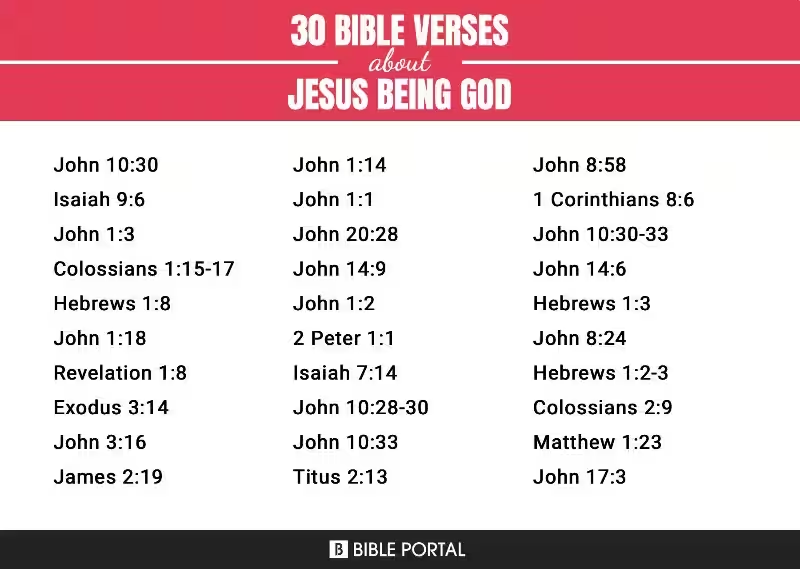
Consider the numerous occasions where Jesus claimed authority over the Sabbath, forgave sins (a prerogative reserved for God alone), and accepted worship. He famously stated, “I and the Father are one” (John 10:30), a declaration that directly links his being with that of God the Father. Furthermore, his reaction to Thomas’s exclamation, “My Lord and my God!” (John 20:28) – after seeing the resurrected Jesus – was not one of correction, but affirmation. These instances, along with many others, form the bedrock of the Christian understanding that Jesus said he was God, and his followers believed him.
Forgiveness of Sins: A Divine Prerogative
One of the most striking examples of Jesus’s divine claims lies in his unilateral forgiveness of sins. In Mark 2:5-7, when Jesus saw the faith of those who brought a paralyzed man, he said, “Son, your sins are forgiven.” The surrounding Pharisees’ immediate reaction was outrage, recognizing the blasphemy of his words: “Who can forgive sins but God alone?” This wasn’t a plea for God’s intervention; it was a direct exercise of divine authority.
This ability to forgive sins wasn’t a mere symbolic gesture. It represented a power inherent in his being, a power that only God possessed. For the Pharisees, this was an unacceptable usurpation of God’s role. It highlighted the chasm between their understanding of messianic expectations and Jesus’s self-perception. The fact that he continued to operate this way, even in the face of such accusations, underscores the confidence he had in his divine identity. His followers, witnessing these acts and the subsequent resurrection, came to believe that Jesus said he was God and demonstrated it through his actions.
The “I AM” Sayings: Direct Declarations of Divinity
The Gospel of John is particularly rich with what are known as the “I AM” sayings of Jesus. These phrases are not accidental; they echo the very name God revealed to Moses in Exodus 3:14 – “I AM WHO I AM.” When Jesus declared, “Before Abraham was, I am” (John 8:58), he was not just claiming antiquity; he was equating himself with the eternal God. This was a deliberate and profound statement designed to reveal his pre-existent, divine nature.
Other “I AM” sayings further solidify this assertion. He proclaimed, “I am the bread of life” (John 6:35), “I am the light of the world” (John 8:12), and “I am the good shepherd” (John 10:11). Each of these declarations positions Jesus as the essential source of spiritual sustenance, guidance, and salvation – attributes exclusively belonging to God. The impact of these statements was immense, leading many to believe that Jesus said he was God and that he was, in fact, divine.
Theological Implications: What Does It Mean to Be God?
The assertion that “Jesus said he was God” necessitates a deep dive into the theological implications of such a claim. Christianity doesn’t present a God who is a solitary, distant being. Instead, it speaks of a triune God: Father, Son, and Holy Spirit, three distinct persons, yet one God. Within this framework, Jesus, as the Son, shares the same divine essence and nature as the Father. This is a complex concept, often referred to as the Incarnation, where the divine enters into human form.
Understanding this requires moving beyond simple arithmetic. It’s not about three gods, but one God in three co-equal, co-eternal persons. Jesus, therefore, is fully God and fully human. This dual nature is crucial to Christian theology, explaining his ability to bridge the gap between humanity and the divine, to offer a perfect sacrifice, and to understand the human condition from within. The belief that Jesus said he was God is the cornerstone of this intricate theological understanding.
The Incarnation: God Becoming Man
The doctrine of the Incarnation is the central mystery and miracle of Christian belief. It posits that God, in the person of Jesus Christ, took on human flesh. This wasn’t a demotion for God, but a profound act of love and redemption for humanity. Jesus, being both fully God and fully man, could act as an intermediary, perfectly representing God to humanity and humanity to God. His human experiences – joy, sorrow, temptation, suffering – were real, yet unmarred by sin, allowing him to offer a perfect sacrifice for the sins of the world.
To grasp this, imagine a skilled architect designing a magnificent building. The architect is essential to its creation, but they are not the building itself. In the Incarnation, God is not just the architect of humanity; he entered into humanity, becoming a part of it. This is why the claim that Jesus said he was God resonated so powerfully. It meant that God himself had entered the world in a tangible, personal way, offering hope and salvation from the inside out.
The concept of the Trinity is essential to understanding how Christians reconcile the idea that Jesus said he was God with the monotheistic belief in one God. The Trinity is the doctrine that God eternally exists as three co-equal, co-eternal persons: the Father, the Son (Jesus Christ), and the Holy Spirit. This is not three gods, but one God existing in three distinct modes of being. Each person is fully God, sharing the same divine nature, yet they are distinct persons with unique roles.
Think of it like water, which can exist as ice, liquid, and steam. These are different forms, but they are all still water. Similarly, the Father, Son, and Holy Spirit are distinct persons, but they all share the one divine essence. This understanding allows Christians to affirm Jesus’s divinity without compromising their belief in the oneness of God. The profound truth that Jesus said he was God finds its theological grounding within this Trinitarian framework.
Personal Resonance: Faith and Transformation
Beyond the theological debates and historical analysis, the assertion that “Jesus said he was God” holds immense personal significance for millions worldwide. It transforms Jesus from a mere historical figure or a wise teacher into the Savior and Lord of their lives. This belief underpins the Christian understanding of salvation, the hope of eternal life, and the guiding principles for moral and ethical living. The transformative power of this claim lies in its ability to offer forgiveness, purpose, and a deep, personal relationship with the divine.
For believers, Jesus’s divinity means that his teachings are not just suggestions but divine commands. His sacrifice is not just a noble act but the ultimate atonement for sin. His resurrection is not just a historical event but the guarantee of future resurrection and eternal life. The impact of believing that Jesus said he was God is, therefore, life-altering, shaping one’s worldview, values, and ultimate destiny.
The Foundation of Christian Faith
The belief that Jesus said he was God is not an optional add-on for Christianity; it is its absolute foundation. Without this belief, the entire edifice of Christian theology and practice would crumble. His divinity is what gives his sacrifice its atoning power, his resurrection its victorious significance, and his teachings their divine authority. It is the bedrock upon which the Christian identity is built, offering followers a path to reconciliation with God and the promise of eternal life.
This core belief is what sets Christianity apart from other religions and philosophical systems. It’s a faith that centers on a divine human being, a God who walked among us, understood our struggles, and offered himself as the ultimate solution to humanity’s greatest problem: sin and separation from God. The audacity of this claim is what continues to inspire and challenge, making the declaration that Jesus said he was God the most compelling narrative in religious history.
A Relatable Savior: God Who Understands
One of the most relatable aspects of the Incarnation, the idea that Jesus said he was God and then became human, is that it presents a Savior who truly understands. Because Jesus was fully human, he experienced the full spectrum of human emotions and challenges. He knew hunger, thirst, fatigue, betrayal, and unimaginable suffering. This means that when Christians bring their struggles to him, they are approaching a God who is not distant and aloof, but one who has walked in their shoes.
This empathetic divinity offers immense comfort and hope. It means that no prayer is too small, no burden too heavy for God to understand. The fact that Jesus said he was God and then lived a fully human life allows believers to approach him with confidence and vulnerability, knowing they are understood and loved by a God who intimately knows the human condition, having experienced it himself. This relatability is a powerful draw, making the grand theological claims of Christianity deeply personal and profoundly impactful.
Frequently Asked Questions: Jesus Said He Was God
Did Jesus claim to be God?
The New Testament presents Jesus as making claims that, in their context, were understood by his hearers to be claims of divine authority and identity. Examples include phrases like “Before Abraham was, I am” (John 8:58) and his acceptance of worship (Matthew 14:33). He also spoke of a unique relationship with God the Father, stating “I and the Father are one” (John 10:30).
How did people at the time interpret Jesus’ claims?
The Gospel accounts show that Jesus’ claims were often met with strong reactions. Some were amazed and believed, while others, particularly religious leaders, accused him of blasphemy and sought to stone him for claiming divine authority (John 10:31-33). His crucifixion was, in part, a consequence of these perceived blasphemous claims.
What is the Christian understanding of Jesus being God?
Mainstream Christian theology, as expressed in creeds like the Nicene Creed, teaches that Jesus Christ is both fully God and fully human. This concept is known as the Incarnation, the belief that God took on human form in the person of Jesus. This understanding is central to Christian salvation, as it posits that Jesus’ divine nature enabled his sacrifice to atone for the sins of humanity.
Are there other interpretations of Jesus’ claims?
Yes, there are various interpretations. Some scholars and denominations view Jesus’ claims in a more metaphorical or subordinate sense, emphasizing his role as a prophet or a divinely inspired teacher rather than as God himself. Other religions, like Islam, recognize Jesus as a significant prophet but do not attribute divinity to him.
How does the idea of Jesus being God relate to the concept of the Trinity?
The Christian doctrine of the Trinity states that there is one God who exists in three co-equal and co-eternal persons: the Father, the Son (Jesus Christ), and the Holy Spirit. The belief that Jesus is God is fundamental to this doctrine, as it asserts the divine nature of the Son within the Godhead.