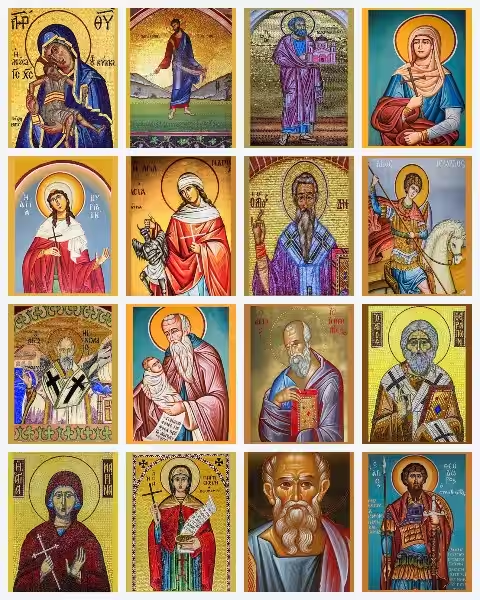
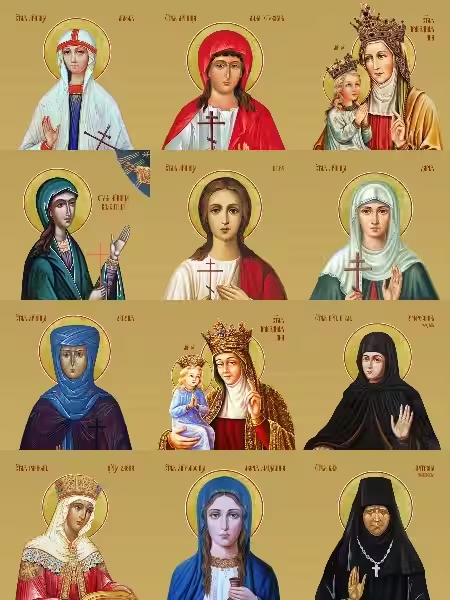
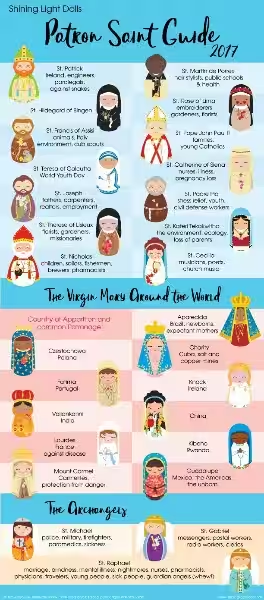
The Catholic Church, a venerable institution steeped in centuries of tradition and devotion, is graced by a pantheon of saints, individuals whose lives exemplified extraordinary virtue and unwavering faith. These holy men and women, recognized for their sanctity, serve as powerful intercessors and enduring role models for believers worldwide. Their stories, etched in the annals of religious history, continue to inspire, comfort, and guide millions, offering a tangible connection to the divine and a testament to the transformative power of faith. Exploring the lives of the most famous Catholic saints offers a profound journey into the heart of Christian spirituality, revealing timeless lessons on love, sacrifice, and perseverance.
For many, the concept of sainthood can seem distant, reserved for figures of immense historical significance. However, the beauty of these individuals lies in their humanity. They faced trials, experienced doubts, and grappled with the complexities of life, much like we do today. Their canonization is not merely an acknowledgment of their perfect lives, but a recognition of their profound willingness to surrender their will to God’s, to serve humanity with boundless love, and to live lives that, while exceptional, remain fundamentally relatable. Understanding their journeys can illuminate our own paths, offering practical wisdom and a sense of enduring hope in a sometimes chaotic world.
The Pillars of Faith: Saints Who Shaped Christian History
Among the most revered figures in Catholicism, certain saints stand out for their foundational roles and enduring impact. Saint Peter, one of Jesus’s closest apostles, is often considered the first Pope, entrusted with the keys to the Kingdom of Heaven. His journey from a humble fisherman to a pivotal leader of the early Church is a powerful narrative of transformation and unwavering loyalty, despite his moments of human frailty, such as his denial of Jesus. His courage in the face of persecution and his foundational sermons laid the groundwork for the spread of Christianity, making him an icon of leadership and forgiveness.
Equally monumental is Saint Paul, originally a zealous persecutor of Christians who underwent a dramatic conversion on the road to Damascus. His subsequent tireless missionary work, his profound theological writings, and his strategic establishment of early Christian communities across the Roman Empire were instrumental in shaping Christian doctrine and practice. His epistles, like those to the Romans and Corinthians, remain cornerstones of biblical theology, offering deep insights into faith, grace, and the Christian life. The transformation of Paul from adversary to ardent advocate is a potent symbol of redemption and the power of divine intervention.
The Shepherd of the Flock: Saint Francis of Assisi
When we speak of saints known for their profound love of creation and radical humility, Saint Francis of Assisi immediately comes to mind. Born into a wealthy family, he renounced his material possessions to embrace a life of poverty, dedicating himself to serving the poor and the marginalized. His profound connection with nature, evident in his famous Canticle of the Sun, where he addresses the sun, moon, and stars as his brothers and sisters, exemplifies a deep ecological spirituality that resonates even today. He founded the Franciscan Order, a testament to his vision of a life lived in simplicity, fraternity, and service.
Saint Francis’s devotion extended to all living creatures, a radical concept in his time. He is often depicted with animals, symbolizing his universal love and compassion. His willingness to live as the “poor man of Assisi” challenged the societal norms of his era and continues to inspire those who seek a life of meaningful service and detachment from material wealth. His legacy encourages us to find the divine in the ordinary, to treat all beings with kindness, and to embrace a life of humble service and radical generosity.
Mothers and Mystics: Women of Extraordinary Faith
The tapestry of Catholic sainthood is richly woven with the lives of remarkable women, whose faith, resilience, and love have left an indelible mark. The Virgin Mary, the mother of Jesus, holds a singular and supremely honored position within Catholic tradition. Her fiat, her “yes” to God’s will at the Annunciation, is seen as the pivotal moment that allowed for the Incarnation. Her life, characterized by profound faith, quiet suffering, and unwavering devotion, makes her the ultimate model of motherhood and discipleship for all believers. Her intercessory power is invoked in countless prayers and devotions.
Another profoundly influential woman is Saint Teresa of Ávila, a Spanish mystic, Carmelite nun, and doctor of the Church. Her intense spiritual experiences, which she meticulously documented in works like “The Interior Castle” and “The Way of Perfection,” offer invaluable guidance for those seeking a deeper relationship with God. Her contemplative life and her profound insights into prayer have guided generations of spiritual seekers. She was also a formidable reformer, revitalizing the Carmelite Order through her tireless efforts and unwavering commitment to prayer, poverty, and community life.
The Little Flower: Saint Thérèse of Lisieux
Often called “The Little Flower,” Saint Thérèse of Lisieux captured the hearts of the faithful with her “Little Way” of spiritual childhood. Despite entering the Carmelite convent at a very young age and living a seemingly ordinary cloistered life, her autobiography, “Story of a Soul,” revealed an extraordinary depth of love for God and a profound understanding of spiritual growth. Her emphasis on performing small acts of love with great fidelity offers a relatable and accessible path to holiness for everyone, demonstrating that great sanctity can be found in the ordinary moments of life.
Saint Thérèse’s embrace of trust and abandonment to God’s will, even in the face of suffering and doubt, is a powerful testament to her unwavering faith. Her message is one of hope and encouragement, assuring believers that even the smallest gestures of love, offered with a pure heart, are pleasing to God. Her canonization and subsequent declaration as a Doctor of the Church underscore the universal appeal and profound spiritual wisdom contained within her simple yet powerful approach to living a holy life.
Martyrs for the Faith: Witnesses to Unwavering Conviction
The history of Catholicism is also marked by the courage of countless martyrs, individuals who, in the face of persecution, chose to shed their blood rather than renounce their faith. These witnesses, though often anonymous in their time, are celebrated for their ultimate sacrifice and their unwavering conviction. Their stories serve as powerful reminders of the cost of discipleship and the enduring strength of faith in the face of adversity.
Among the most recognizable martyrs is Saint Joan of Arc, a French national heroine who, guided by divine voices, led the French army to victory during the Hundred Years’ War. Her unwavering faith and her courage in battle, despite her youth and gender, are truly remarkable. Her eventual trial and execution for heresy, a politically motivated charge, further cemented her status as a martyr, a symbol of faith, courage, and national identity. Her story continues to inspire those who stand for justice and truth, even when facing overwhelming opposition.
The Early Church’s Valiant Defenders: Saint Stephen and Beyond
Saint Stephen, often recognized as the first Christian martyr, exemplifies the profound commitment of the early Church. His eloquent defense of Christianity, which ultimately led to his stoning, is a powerful testament to his unwavering belief and his ability to forgive his persecutors, echoing Jesus’s own words from the cross. His martyrdom marked a pivotal moment, not as an end, but as a catalyst for the further spread of the Gospel, as believers scattered and preached the good news wherever they went.
Beyond Stephen, countless other saints, such as the early Roman martyrs like Saint Sebastian and Saint Agnes, and later figures like Saint Thomas Becket and the Jesuit martyrs of North America, demonstrated extraordinary bravery in defending their faith. These individuals, through their willingness to suffer and die for their beliefs, became powerful symbols of Christian witness. Their stories remind us of the importance of conviction and the potential for profound courage that lies within the human spirit when it is united with divine purpose. Their lives offer a stark and inspiring contrast to the compromises and apathy that can sometimes characterize our own times.
Modern Saints and Enduring Legacies
The tradition of sainthood is not confined to antiquity; the Catholic Church continues to recognize individuals whose lives embody Christian virtues in more recent times. Saint John Paul II, a beloved Pontiff, left an indelible mark on the 20th and 21st centuries with his extensive travels, his prolific writings, and his unwavering commitment to the dignity of the human person. His papacy, marked by a profound emphasis on mercy, evangelization, and interfaith dialogue, resonated with millions across the globe. His personal witness to faith, even in the face of assassination attempts and illness, offered a powerful example of resilience and hope.
Similarly, Saint Mother Teresa of Calcutta, now Saint Teresa of Calcutta, dedicated her life to serving the “poorest of the poor” in the slums of India. Her work with the Missionaries of Charity, an order she founded, brought comfort, care, and dignity to countless individuals suffering from poverty, disease, and neglect. Her simple yet profound message of loving service and seeing Christ in the face of the suffering continues to inspire charitable work and humanitarian efforts worldwide. She demonstrated that holiness can be found in the most humble and challenging circumstances, transforming lives through radical compassion.
Finding Inspiration in the Lives of the Saints
The journey through the lives of the most famous Catholic saints reveals a common thread: a profound and unwavering commitment to God and to their fellow human beings. Whether they were apostles, mystics, scholars, or humble servants, their lives offer a rich tapestry of inspiration. They remind us that faith is not a passive belief, but an active engagement with the world, a call to love, to serve, and to strive for holiness in our own unique circumstances.
In conclusion, the most famous Catholic saints are not distant, unattainable figures. They are relatable individuals who, through their extraordinary faith and love, illuminate the path to a meaningful and purposeful life. By studying their stories, we can find solace in their struggles, strength in their perseverance, and inspiration in their unwavering devotion. Their legacies continue to guide us, offering a beacon of hope and a testament to the enduring power of God’s grace in the lives of those who strive to live according to His will. They are, in essence, eternal guides in the ongoing journey of faith and religion.
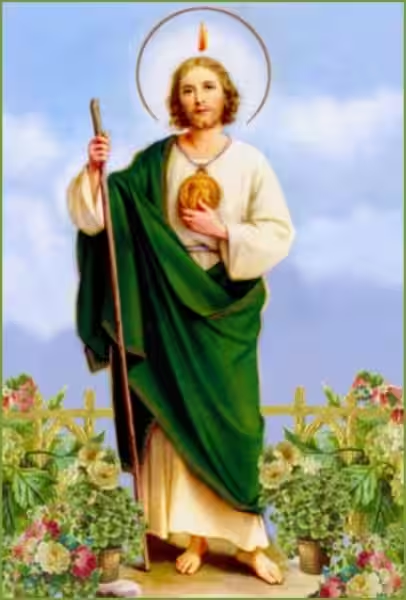
Some of the most widely recognized Catholic saints include Saint Peter, Saint Paul, the Blessed Virgin Mary, Saint Joseph, Saint Francis of Assisi, Saint Anthony of Padua, Saint Jude, Saint Michael the Archangel, Saint Joan of Arc, and Saint Therese of Lisieux.
What makes a person a saint in the Catholic Church?
In the Catholic Church, sainthood is a recognition that a person, after death, has been determined to be in heaven and is able to intercede with God on behalf of the living. This designation is typically the result of a rigorous canonization process that verifies the person’s holiness and miracles attributed to their intercession.
What is the role of saints in Catholicism?
Catholicism teaches that saints are exemplary figures who lived lives of exceptional virtue and faith. They are seen as friends of God and are venerated (honored, not worshipped) by Catholics who ask for their prayers and intercession with God. Saints are believed to be able to pray for believers on earth, helping them to grow in faith and overcome challenges.
Are there different types of saints?
Yes, there are various categories of saints. Some are Apostles (like Peter and Paul), some are Martyrs (who died for their faith), some are Doctors of the Church (whose writings and teachings are considered important for the Church), and others are recognized for their heroic virtues and spiritual contributions. The Blessed Virgin Mary holds a unique and highest place of honor among all saints.
How does one become a saint?
The process for becoming a saint is called canonization. It begins with the candidate being declared a Servant of God. If their life of heroic virtue is recognized, they are declared Venerable. After this, a miracle attributed to their intercession is typically required for beatification (being declared “Blessed”). Finally, a second confirmed miracle is usually needed for canonization, though exceptions exist for martyrs.
Can anyone pray to saints?
Catholics are encouraged to pray to saints for their intercession. This is understood as asking a saint to pray to God on their behalf, similar to how one might ask a friend on Earth to pray for them. It is not an act of worship, which is reserved for God alone.
What is the significance of the Feast Days of Saints?
Feast days are special liturgical celebrations commemorating the life and significance of a particular saint. These days are opportunities for Catholics to remember the saint’s example, learn from their lives, and ask for their intercession. Many feast days are observed with special Masses and prayers.