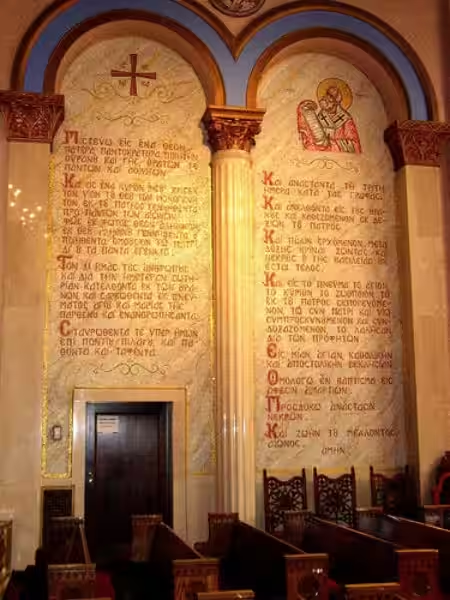
The Nicene Creed stands as a cornerstone of Christian belief, a declaration of faith that has echoed through centuries and continues to be a vital element of worship in the Orthodox Church. For many, the phrase “Nicene Creed Orthodox Church” might conjure images of ancient cathedrals and deeply rooted traditions. But beyond the historical significance, this creed offers profound insights into the very heart of what it means to be an Orthodox Christian, shaping not just theology but the lived experience of faith for millions worldwide. Understanding the Nicene Creed is not merely about memorizing phrases; it’s about grasping the foundational tenets that define Orthodox Christianity, from its understanding of God to its vision of salvation.
This article will delve into the meaning and importance of the Nicene Creed specifically within the context of the Orthodox Church. We will explore its historical origins, dissect its key affirmations about God the Father, God the Son, and God the Holy Spirit, and examine how these beliefs translate into the daily spiritual life of an Orthodox believer. By unraveling the layers of this ancient declaration, we aim to provide a comprehensive and accessible understanding of its enduring relevance in the contemporary Orthodox Church.
The Genesis of the Nicene Creed: A Council’s Defining Moment
The story of the Nicene Creed is intrinsically linked to pivotal moments in early Christian history. It wasn’t born out of quiet contemplation but out of urgent necessity. The Orthodox Church, along with the wider Christian world at the time, faced a significant theological challenge in the 4th century: the Arian controversy. Arius, a presbyter from Alexandria, taught that Jesus Christ, the Son of God, was not co-eternal and consubstantial with God the Father but was instead a created being, subordinate to Him. This teaching, if left unchallenged, threatened to undermine the very divinity of Christ, a central tenet of Christian faith.
In response to this burgeoning heresy, Emperor Constantine convened the First Ecumenical Council of Nicaea in 325 AD. While the initial council produced a creed, it was later expanded and clarified at the First Council of Constantinople in 381 AD, resulting in the Nicene-Constantinopolitan Creed that we know today. This expanded version, particularly, solidified the orthodox understanding of the Holy Trinity. Therefore, when we speak of the Nicene Creed Orthodox Church, we are referring to a creed that emerged from a critical moment of doctrinal clarification, safeguarding the essential understanding of God as a Trinity of Persons – Father, Son, and Holy Spirit – who are one God. This council’s work was crucial in preserving the unified and orthodox understanding of the Christian faith, forming the bedrock of what the Orthodox Church would continue to teach.
Understanding the Affirmations: God the Father, Son, and Holy Spirit
The Nicene Creed is structured around a clear and powerful affirmation of the Christian understanding of God. It begins with a declaration of belief in one God, the Father Almighty, Maker of heaven and earth, and of all things visible and invisible. This part establishes the monotheistic foundation of Christianity, emphasizing God’s sovereignty and His role as the creator of all existence. It speaks to a God who is not distant or detached but intimately involved in the created order, a notion deeply ingrained in the Orthodox Church’s worldview. The notion of God as “Almighty” underscores His infinite power and wisdom, offering a sense of divine order and purpose to the universe.
The creed then moves to a profound statement about Jesus Christ, the Son of God, the only-begotten of the Father, begotten before all ages, Light of Light, very God of very God, begotten, not made, consubstantial with the Father. This is the heart of the creed’s defense against Arianism. The phrase “consubstantial with the Father” (homoousios in Greek) is critical, meaning they share the same divine essence. It asserts Christ’s full divinity, that He is not a lesser god or a created being, but truly God, co-equal and co-eternal with the Father. This affirmation is central to the Orthodox Church’s understanding of salvation, as only a truly divine Christ could bridge the gap between humanity and God. The creed also affirms Christ’s humanity: “and being made man,” highlighting His Incarnation, His birth from the Virgin Mary, and His subsequent suffering and resurrection, which are the very foundation of Christian hope for redemption and eternal life within the teachings of the Orthodox Church.
The Holy Spirit: The Third Person of the Trinity
The Nicene Creed doesn’t stop with the Father and the Son; it continues to articulate the divinity of the Holy Spirit. It states: “And we believe in the Holy Spirit, the Lord and Giver of life, who proceeds from the Father, who with the Father and the Son is worshiped and glorified, who spoke by the prophets.” This powerful declaration affirms the Holy Spirit as God, co-equal and co-eternal with the Father and the Son. The phrase “Lord and Giver of life” emphasizes the Spirit’s active role in sustaining all creation and in the spiritual rebirth of believers. It’s the divine power that animates and sanctifies, a concept that is central to the spiritual life within the Orthodox Church.
The procession of the Holy Spirit “from the Father” is a point of distinction within Trinitarian theology, particularly in relation to Western traditions. For the Orthodox Church, this affirmation maintains the unique roles within the Trinity and the eternal relationship between the Father, Son, and Holy Spirit. The statement that the Spirit “spoke by the prophets” underscores His role in revealing God’s will throughout history, culminating in the Incarnation of Christ. This understanding of the Holy Spirit is not merely academic for Orthodox Christians; it speaks to the ongoing work of God in the world and in their lives, guiding, comforting, and empowering them in their journey of faith. The Holy Spirit is the divine presence that makes the teachings of the Orthodox Church a living reality.
The Nicene Creed Orthodox Church is not just a historical document; it is a living testament of faith, recited regularly during Divine Liturgy, the central worship service of the Orthodox Church. When the congregation stands and recites, “I believe in one God…,” it’s more than a ritual; it’s a communal affirmation of their shared beliefs. This communal recitation serves to strengthen their unity in Christ and to publicly declare their allegiance to the orthodox understanding of God. It’s a moment where individuals, from the youngest to the oldest, join their voices in a unified expression of their core convictions, reinforcing the foundational doctrines that the Orthodox Church holds dear.
The impact of the Nicene Creed extends far beyond the Sunday Liturgy. It shapes the daily prayer life, the understanding of sacraments, and the ethical teachings within the Orthodox Church. For instance, the belief in Christ’s divinity informs the veneration of icons, seen as windows to the divine. The understanding of the Holy Spirit’s role as “Giver of life” underpins the belief in the transformative power of the sacraments, such as Baptism and Chrismation, which are seen as means by which God’s grace is imparted. The creed provides a consistent theological framework that informs every aspect of Orthodox Christian life, ensuring that the faith is lived out in accordance with the immutable truths revealed through Christ and preserved by the Orthodox Church.
A Unifying Force for Orthodox Christians
In a world often characterized by division and differing perspectives, the Nicene Creed Orthodox Church serves as a powerful unifying force. It articulates a common doctrinal standard that binds together Orthodox Christians across geographical, cultural, and linguistic boundaries. When an Orthodox Christian from Greece encounters one from America, their shared recitation of the Nicene Creed signifies a profound commonality in their understanding of God and their path to salvation. This creed acts as a spiritual anchor, grounding believers in the essential truths of Christianity and fostering a sense of shared identity and purpose within the global Orthodox Church.
The creed’s enduring relevance lies in its ability to articulate complex theological truths in a relatively concise and accessible manner. While the theological discussions surrounding the Nicene Creed can be intricate, the creed itself is designed to be a declaration of belief that can be understood and embraced by all faithful. It provides a clarity of doctrine that is essential for maintaining the integrity of the faith passed down through the apostles. This shared understanding, articulated through the Nicene Creed Orthodox Church, is vital for the continued growth and vitality of the Orthodox Church worldwide.
Frequently Asked Questions about the Nicene Creed in the Orthodox Church
What is the Nicene Creed?
The Nicene Creed is a foundational statement of Christian belief, adopted by the First Council of Nicaea in 325 AD and expanded at the First Council of Constantinople in 381 AD. It is a concise summary of the core doctrines of the Christian faith, particularly concerning the nature of God, Jesus Christ, and the Holy Spirit.
Why is the Nicene Creed important in the Orthodox Church?
In the Orthodox Church, the Nicene Creed is not merely a historical document but a living expression of faith confessed by all Orthodox Christians. It is recited during every Divine Liturgy, serving as a communal affirmation of shared beliefs and a central element of Orthodox worship and identity.
What are the main points of the Nicene Creed?
The Nicene Creed affirms belief in one God, the Father Almighty, Creator of all things visible and invisible. It confesses belief in one Lord, Jesus Christ, the Son of God, eternally begotten of the Father, God from God, Light from Light, true God from true God, consubstantial with the Father. It states that Jesus Christ became incarnate of the Holy Spirit and the Virgin Mary, and was made man. It affirms His crucifixion, death, resurrection, and ascension, and His future glorious return. Finally, it confesses belief in the Holy Spirit, the Lord, the Giver of Life, proceeding from the Father, and worshipped and glorified with the Father and the Son. It also affirms the Church, one, holy, catholic, and apostolic, one baptism for the remission of sins, and the resurrection of the dead and the life of the world to come.
How does the Orthodox Church interpret the Nicene Creed differently from other Christian traditions?
While the core tenets are shared, there are nuances in interpretation. For instance, the Orthodox Church holds to the original wording regarding the procession of the Holy Spirit, stating that the Spirit proceeds “from the Father,” while some Western traditions added the phrase “and the Son” (Filioque), which the Orthodox Church considers a theological departure and a cause of schism. The Orthodox understanding of the Church as “one, holy, catholic, and apostolic” also emphasizes continuity with the early Church and its apostolic succession.
Is the Nicene Creed the only creed used in the Orthodox Church?
While the Nicene Creed is the primary and most widely used creed in Orthodox worship, other historical creeds, such as the Apostles’ Creed (used in some contexts, particularly in catechesis) and the Symbol of Faith, also hold significance. However, the Nicene Creed remains the definitive statement of Orthodox faith confessed publicly.
How is the Nicene Creed recited in Orthodox services?
The Nicene Creed is chanted or recited by the congregation along with the clergy during the Divine Liturgy, usually after the Gospel reading. It is an integral part of the liturgy, uniting believers in a common confession of faith.