In the tapestry of human experience, the thread of prayer weaves through countless cultures and across millennia. More than just a ritual or a set of words, prayer is a fundamental aspect of many religions, offering a profound and deeply personal pathway to connect with something greater than ourselves. Understanding the prayer purpose is not about reciting empty phrases, but about actively engaging in a dialogue, a seeking, and a surrender that can transform our lives and our understanding of the world.
Whether you are a lifelong adherent of a particular faith or someone simply curious about the spiritual landscape, exploring the purpose of prayer can illuminate its multifaceted nature. It’s a practice that transcends mere supplication, delving into realms of gratitude, confession, intercession, and ultimately, a deepening of our relationship with the divine, whatever form that may take for you.
At its core, prayer is communication. It’s the act of speaking to, listening to, and communing with God, the Universe, a higher power, or whatever name you use for the divine. This communication isn’t confined to hushed whispers in sacred spaces; it can happen anytime, anywhere, in the midst of a bustling city or a quiet forest. The purpose of prayer is to intentionally open a channel for this connection, to acknowledge our dependence and our longing for something beyond the material realm.
Think of it like this: if you have a friend you deeply care about, you don’t just talk to them when you need something. You share your joys, your sorrows, your everyday thoughts. Prayer, in its most effective form, mirrors this kind of relationship. It’s about fostering a constant, evolving connection, a spiritual lifeline that anchors us amidst the inevitable storms of life. The prayer purpose is therefore not singular, but a rich spectrum of intentions and outcomes.
The Many Facets of Prayer Purpose
1. Seeking Guidance and Wisdom
One of the most significant prayer purposes is to seek divine guidance. In moments of confusion, uncertainty, or when faced with difficult decisions, prayer offers a space to quiet the internal noise and listen for a higher perspective. This isn’t about receiving a literal instruction manual, but about cultivating an inner knowing, a sense of peace that illuminates the wisest path forward.
Imagine you’re standing at a crossroads with multiple paths ahead, each looking equally appealing and equally daunting. Prayer, in this instance, is like stepping back from the immediate pressure, taking a deep breath, and asking for clarity. It’s about surrendering your limited human perspective and opening yourself to a wisdom that transcends your own understanding. This prayer purpose is about humility and trust.
Beyond asking for what we need, a vital prayer purpose is to express gratitude. In our busy lives, it’s easy to overlook the blessings, big and small, that surround us. Prayer provides a dedicated moment to pause and acknowledge these gifts, fostering a spirit of appreciation that can shift our entire outlook.
A simple act of gratitude in prayer, like thanking for a warm bed, a nourishing meal, or the laughter of a loved one, can cultivate a profound sense of contentment. This prayer purpose actively counters feelings of lack and dissatisfaction, reminding us of the abundance that already exists. It’s a powerful way to recalibrate our focus and appreciate the present moment.
3. Confession and Seeking Forgiveness
No one is perfect, and we all make mistakes. The prayer purpose of confession allows us to acknowledge our wrongdoings, our shortcomings, and our sins. This is not an act of self-flagellation, but a sincere and honest admission before a divine being who is understood to be merciful and forgiving.
Confessing our errors in prayer is a crucial step towards healing and growth. It’s about taking responsibility for our actions and seeking to mend the brokenness we may have caused, whether to ourselves or to others. This prayer purpose is fundamental to spiritual cleansing and the recommitment to living a more ethical and compassionate life.
4. Intercession and Compassion for Others
Prayer extends beyond our individual needs to encompass the well-being of others. The prayer purpose of intercession is to pray for friends, family, strangers, or even adversaries. It’s an act of extending love and compassion, seeking divine intervention for their healing, comfort, or guidance.
When a loved one is suffering, praying for them is a way to actively participate in their healing journey, even if we cannot be physically present. This prayer purpose connects us to a universal sense of interconnectedness, reminding us that we are not alone and that our prayers can ripple outwards, offering solace and support to those in need.
5. Deepening Relationship and Spiritual Growth
Perhaps the most overarching prayer purpose is the cultivation of a deeper, more intimate relationship with the divine. Through consistent prayer, we develop a spiritual discipline that strengthens our faith, builds resilience, and fosters a sense of peace that is not dependent on external circumstances.
This continuous communion is like nurturing a plant. The more you water it, give it sunlight, and tend to it, the more it flourishes. Similarly, the more we engage in prayer, the deeper our spiritual roots grow, making us more grounded, more resilient, and more attuned to the divine presence in our lives. The prayer purpose here is transformation and becoming more aligned with our truest selves.
While the fundamental prayer purpose often revolves around connection and seeking, the expression and practice of prayer can vary significantly across different religions. Each tradition offers unique insights and methodologies for engaging with the divine, enriching the global tapestry of spiritual expression.
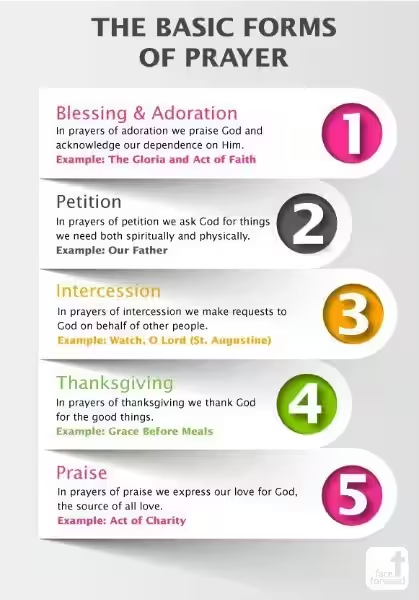
For instance, in many Christian denominations, prayer is often conversational, mirroring a personal relationship with Jesus Christ. The prayer purpose is frequently expressed through adoration, confession, thanksgiving, and supplication (often remembered by the acronym ACTS). This can involve everything from spontaneous, heartfelt appeals to structured prayers like the Lord’s Prayer, which itself outlines key prayer purposes like hallowing God’s name, seeking daily sustenance, and asking for forgiveness.
In Islam, prayer (Salat) is a structured and obligatory ritual performed five times a day. The prayer purpose is multifaceted, encompassing submission to Allah, remembrance of His presence, and a spiritual discipline that organizes the believer’s day. The physical movements and recitations of the Quran are all designed to foster a deep connection and awareness of the divine. The prayer purpose is a constant reorientation towards God.
Hinduism offers a diverse range of prayer practices, from elaborate pujas to quiet meditation and mantra recitation. The prayer purpose can be to appease deities, seek boons, express devotion, or simply to connect with the universal consciousness (Brahman). Mantras, like the Om, are considered sacred sounds that vibrate with divine energy, and their repetition is a powerful form of prayer aiming for spiritual purification and union. The prayer purpose is often aimed at liberation (moksha).
Buddhism, while often emphasizing meditation and mindfulness over petitionary prayer in the Western sense, still incorporates elements of prayer. Chanting mantras, making offerings, and reciting sutras can all serve the prayer purpose of cultivating compassion, wisdom, and a deeper understanding of the Dharma. The focus is often on transforming the mind and realizing inherent Buddha-nature, rather than asking for external intervention. The prayer purpose is self-realization and the alleviation of suffering.
Making Prayer a Meaningful Practice in Your Life
Regardless of your religious background or beliefs, understanding the prayer purpose can empower you to cultivate a more meaningful prayer life. It’s not about perfection, but about sincerity and consistency. Start small, be honest with yourself, and allow your prayer to evolve.
Consider setting aside a few minutes each day, perhaps in the morning or evening, for quiet reflection and prayer. It doesn’t need to be elaborate. You can simply sit in silence, focus on your breath, and then bring to mind what you wish to communicate. The prayer purpose can be as simple as acknowledging your presence and your desire to connect. Remember, the divine is often found in the quiet spaces we create.
Experiment with different forms of prayer. Try journaling your thoughts and prayers, or engage in mindful walking meditation as a form of prayer. Join a prayer group or find a spiritual community that resonates with you. The prayer purpose is not a rigid rulebook, but a journey of discovery. Embrace the process, be patient with yourself, and trust that in your seeking, you are already connecting.
Frequently Asked Questions: Prayer Purpose
What is the primary purpose of prayer?
The primary purpose of prayer is to establish and deepen a connection with the divine or a higher power. It’s a way to communicate, express devotion, seek guidance, offer gratitude, or request assistance.
Can prayer help with personal problems?
Many people find that prayer offers comfort, strength, and a sense of peace when facing personal challenges. While not a substitute for practical solutions, it can provide emotional and spiritual support, and some believe it can influence circumstances.
Is prayer a requirement in all religions?
While prayer is a central practice in many religions, its form, frequency, and exact purpose can vary significantly. Some religions emphasize communal prayer, while others focus on individual devotion. The understanding of what prayer achieves also differs across faiths.
What are the different ways people pray?
Prayer can take many forms, including spoken words (either memorized or spontaneous), silent contemplation, meditation, chanting, singing hymns, or performing rituals. The intention and attitude behind the prayer are often considered more important than the specific method.
Does prayer always get answered?
The concept of prayer “being answered” is interpreted differently. Some believe in direct intervention, others see answers in unexpected ways, inner peace, or the strength to cope. Many faiths teach that divine will and timing are paramount, and that not all requests are granted as expected.
Can prayer be a form of self-reflection?
Yes, prayer often involves introspection. It can be a time to examine one’s thoughts, actions, and intentions, fostering self-awareness and personal growth. It’s an opportunity to align one’s life with spiritual values and principles.