The Catholic Church Confirmation is a pivotal sacrament, often described as a spiritual confirmation of baptism. It’s a time when individuals, typically adolescents and young adults, are embraced by the Holy Spirit in a profound and personal way. This sacrament is not merely a ritual; it’s a transformative experience that empowers believers to live out their faith more boldly and authentically. Understanding the significance of Catholic Church Confirmation can illuminate its role in the lifelong journey of a Catholic, strengthening their connection to God and the Church.
For many, the preparation for Catholic Church Confirmation is a journey of deepening understanding and personal commitment. It involves more than just memorizing catechism answers; it’s about wrestling with questions of faith, exploring one’s relationship with God, and discerning how to live out the Gospel in the modern world. This period of reflection and learning is crucial, laying the groundwork for a lived faith that goes beyond mere obligation.
What is Catholic Church Confirmation and Why is it Important?
At its core, Catholic Church Confirmation is one of the three sacraments of initiation, alongside Baptism and the Eucharist. It’s the sacrament that confers the Holy Spirit in a special way, similar to how the Apostles received the Spirit at Pentecost. This divine outpouring equips the confirmand with seven specific gifts of the Holy Spirit: wisdom, understanding, counsel, fortitude, knowledge, piety, and fear of the Lord. These gifts are not meant to be passive endowments but active tools for navigating life’s challenges and spreading the Good News.
The importance of Catholic Church Confirmation cannot be overstated. It marks a maturation of the spiritual life, where the individual consciously chooses to affirm the promises made at their baptism. It’s a public declaration of their commitment to Christ and their desire to be fully participating members of the Church. Think of it like a young adult deciding to fully enlist in an army they’ve been a part of since birth; they are now ready to take on the responsibilities and fight the good fight with the full backing of their Commander.
The Gifts of the Holy Spirit: Tools for a Catholic Life
The seven gifts of the Holy Spirit received through Catholic Church Confirmation are essential graces that help believers live a virtuous and holy life. Wisdom helps us to see things from God’s perspective, discerning what is truly important. Understanding allows us to grasp the deeper meaning of faith and scripture. Counsel guides us in making right decisions, especially in difficult moral situations. Fortitude provides the courage and strength to overcome obstacles and stand firm in our beliefs.
Knowledge helps us to understand the truths of faith and how to apply them to our lives. Piety inspires us to love and serve God with devotion. Finally, fear of the Lord isn’t about being scared, but about having a deep reverence and awe for God, motivating us to avoid sin and live in His presence. These gifts are like a spiritual toolkit, empowering Catholics to live out their baptismal promises and to actively participate in the mission of the Church.
Preparing for Catholic Church Confirmation: A Journey of Growth
The preparation for Catholic Church Confirmation is typically a more involved process than that for First Communion. It often spans several months, or even years, and is designed to foster a deeper understanding of Catholic doctrine and a personal relationship with Jesus Christ. This preparation usually involves attending catechetical classes, participating in youth group activities, and engaging in community service. The goal is to move beyond intellectual knowledge to a heartfelt embrace of the faith.
This period of preparation is also a time for discernment and reflection. Candidates are encouraged to pray regularly, to read scripture, and to examine their consciences. They may also be asked to choose a Confirmation sponsor, an adult who exemplifies the Catholic faith and will guide and support them in their spiritual journey. This mentorship is a crucial element, offering a living example of what it means to be a committed Catholic. For instance, a sponsor might share stories of how they’ve relied on the Holy Spirit’s guidance in their own lives, making the abstract concept of spiritual gifts more tangible and relatable.
Choosing a Sponsor: A Guiding Light
The role of a Confirmation sponsor in the Catholic Church Confirmation process is significant. A sponsor should be a practicing Catholic who has received the sacraments of Baptism, Confirmation, and Eucharist, and who is at least 16 years old. They are more than just a godparent; they are a spiritual mentor and role model, committed to helping the confirmand grow in their faith. A good sponsor will pray for the candidate, accompany them during the preparation, and encourage them to live a life aligned with Christ’s teachings.
This relationship is a beautiful embodiment of the communion of saints, where one believer helps another on their path to holiness. The sponsor acts as a constant source of encouragement, offering advice and sharing their own experiences of faith. Imagine a seasoned hiker guiding a novice up a challenging mountain; the sponsor, through their own journey, provides invaluable wisdom and support, helping the confirmand navigate the spiritual terrain with confidence and grace.
The Rite of Confirmation: A Sacred Encounter
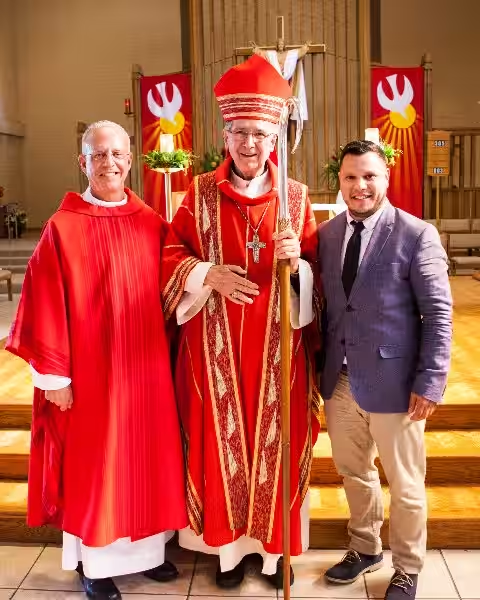
The actual rite of Catholic Church Confirmation is a solemn and beautiful liturgy, usually celebrated within a Mass. The bishop, as the ordinary minister of the sacrament, lays his hands on the heads of the candidates, praying for the descent of the Holy Spirit. The bishop then anoints each confirmand with sacred chrism, a blessed oil, while reciting the words, “Be sealed with the gift of the Holy Spirit.” This anointing is a visible sign of the spiritual realities being conferred.
The atmosphere during the ceremony is often one of reverence and joy. Families and friends gather to witness this sacred moment, celebrating the confirmands’ commitment to Christ. It’s a powerful reminder of the apostolic succession and the Church’s enduring mission. The oil of chrism, with its distinctive scent, signifies the empowerment and consecration of the confirmand for their mission in the world. It’s a moment where the invisible grace of the Holy Spirit is made tangibly present.
The Meaning of the Anointing: A Seal of Belonging
The anointing with chrism during Catholic Church Confirmation is a symbolic act with deep theological significance. It signifies that the confirmand is marked with the seal of the Holy Spirit, setting them apart for God and consecrating them for a life of Christian service. This seal is indelible, meaning it can never be erased, just as the seal on a document signifies its authenticity and authority. It’s a spiritual imprint that binds the confirmand more closely to Christ and the Church.
This anointing is reminiscent of ancient practices where kings, priests, and prophets were anointed to signify their divine appointment and their commission to serve. In Confirmation, the confirmand is commissioned to be a witness to Christ in the world. They are called to share their faith through their words and actions, becoming living embodiments of Christ’s love and truth. This seal is not a burden, but a divine empowerment for a life of discipleship.
Living the Faith After Confirmation: A Lifelong Journey
Receiving Catholic Church Confirmation is not the end of a journey, but a powerful beginning. It marks the point where an individual is fully initiated into the Church and equipped to live out their faith more actively. The gifts of the Holy Spirit are not meant to be dormant; they are meant to be cultivated and used in service to God and neighbor. This means continuing to grow in prayer, to participate in the sacraments, and to engage in works of charity.
The challenges of modern life can sometimes make it difficult to live out one’s faith boldly. However, with the strengthening grace of Confirmation, believers are empowered to face these challenges with courage and conviction. They are called to be disciples in the world, to be light and salt, and to share the joy of the Gospel with those around them. The journey of faith is a lifelong one, and Confirmation provides the spiritual fortification needed to walk that path with purpose and dedication.
Frequently Asked Questions About Catholic Confirmation
What is Confirmation?
Confirmation is a sacrament in the Catholic Church that completes the grace of Baptism. It is considered a sacrament of Christian initiation, along with Baptism and Eucharist. Through Confirmation, the baptized are more perfectly bound to the Church and are endowed with a special strength by the Holy Spirit.
What are the effects of Confirmation?
The effects of Confirmation include an increase and deepening of the graces of Baptism, a strengthening of the ability to resist sin and to defend the faith, and the indelible character that configures the recipient to Christ. It also bestows the gifts of the Holy Spirit, such as wisdom, understanding, counsel, fortitude, knowledge, piety, and fear of the Lord.
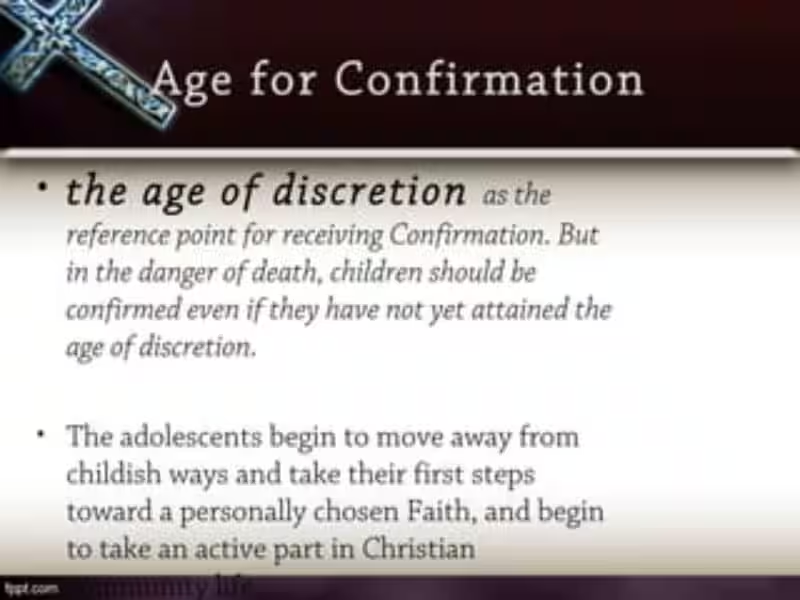
Any baptized person who has not yet been confirmed can and should receive the sacrament of Confirmation. For adults, this usually occurs at the Easter Vigil, while for children, it typically happens during adolescence. There are certain requirements, such as being in a state of grace (having confessed any mortal sins), having a sponsor, and having the intention to receive the sacrament.
What are the requirements for receiving Confirmation?
Candidates must have reached the age of reason (typically around 7 years old), have been baptized, and be in a state of grace. They are also expected to have received catechesis (religious instruction) to understand the meaning and effects of the sacrament. The candidate should also have a sponsor, who is a fully initiated Catholic in good standing.
What is the role of the bishop in Confirmation?
The ordinary minister of Confirmation is the bishop. He confers the sacrament through the imposition of hands and the anointing with Chrism. In some cases, a priest may be delegated by the bishop to administer Confirmation, particularly when adults are being confirmed.
What is the matter of the sacrament of Confirmation?
The matter of Confirmation is the anointing with Chrism, a consecrated oil. The bishop anoints the forehead of the candidate with the Chrism, saying, “Be sealed with the gift of the Holy Spirit.”
What is the form of the sacrament of Confirmation?
The form of Confirmation is the words spoken by the minister during the anointing: “Be sealed with the gift of the Holy Spirit.”
Who can be a sponsor for Confirmation?
A sponsor for Confirmation should be a practicing Catholic who has received all the sacraments of initiation (Baptism, Confirmation, and Eucharist), is at least 16 years old, and leads a life in harmony with the faith and the role of a sponsor. They should also be capable of fulfilling this spiritual role.
What is the Chrism?
Chrism is a consecrated oil made from olive oil and balsam, blessed by the bishop. It is used in the sacraments of Baptism, Confirmation, and Holy Orders, symbolizing the sealing of the Holy Spirit and the consecration of the recipient.
Why is Confirmation important?
Confirmation is important because it strengthens the baptized person’s commitment to Christ and the Church. It provides the spiritual strength needed to live out one’s faith, to bear witness to Christ, and to participate more fully in the mission of the Church. It is a sacrament that empowers believers to live a more committed Christian life.