The journey of faith is a deeply personal one, often marked by significant milestones. For many, confirmation stands out as a pivotal moment, a conscious affirmation of one’s religious beliefs. But at what age does this powerful rite of passage typically occur? This question ripples through families, religious communities, and the hearts of young people themselves, each seeking understanding and guidance. Confirmation isn’t just a date on a calendar; it’s a profound declaration of commitment, a spiritual deepening, and a testament to the enduring power of faith across generations. Understanding the nuances of confirmation at what age involves exploring its religious foundations, its practical implications, and the diverse traditions that shape this significant event.
The age of confirmation can vary dramatically depending on the specific religious denomination and even the local congregation within that denomination. This variability isn’t arbitrary; it’s rooted in theological interpretations, historical precedents, and a desire to align spiritual development with the readiness of the individual. For some, it’s a rite of passage firmly rooted in adolescence, a time of self-discovery and increasing independence. For others, it might occur earlier, or even later, reflecting a broader understanding of spiritual maturity. The question of confirmation at what age is therefore not a single answer, but a spectrum of possibilities, each holding its own unique significance for the confirmand.
At its core, confirmation is understood as a sacred ritual where individuals, having been baptized earlier in life (often as infants), publicly declare their faith and commitment to the teachings of their religion. This act solidifies their membership within the religious community and often bestows upon them the responsibilities and privileges that come with it. It’s a moment of personal agency, where the promises made on their behalf at baptism are now embraced and owned by the individual themselves. The “why” behind confirmation is as important as the “when,” emphasizing its role in spiritual formation and community integration.
The theological underpinnings often center on the concept of “strengthening through the Holy Spirit.” Many traditions believe that during confirmation, individuals receive a special outpouring of the Holy Spirit, empowering them to live out their faith more fully. This spiritual empowerment is seen as crucial for navigating the challenges of life and for actively participating in the life and mission of the church or religious body. This understanding directly informs the decision about confirmation at what age, as it’s believed that individuals should be mature enough to grasp the spiritual significance and to actively seek and receive this divine gift.
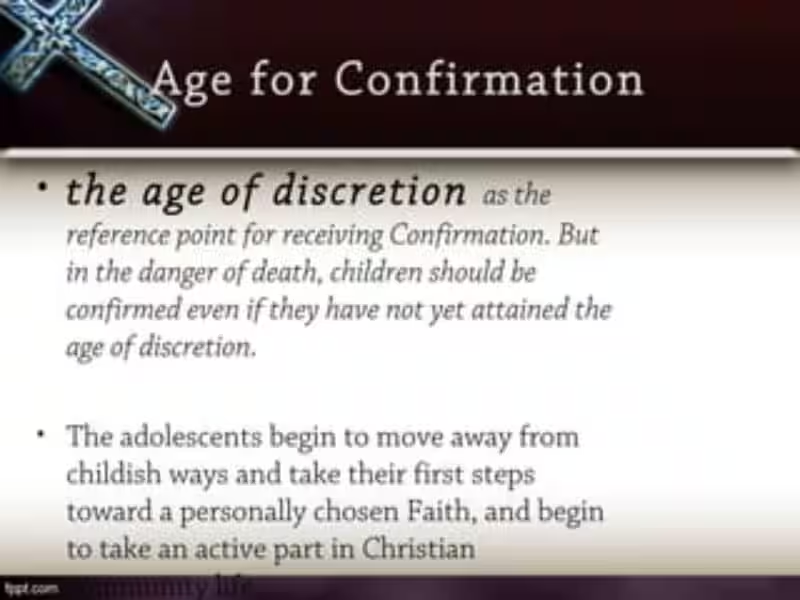
Within Christianity, the practice and timing of confirmation are remarkably diverse. In Roman Catholicism, confirmation is considered one of the seven sacraments. It is typically administered by a bishop and is generally received by adolescents, often between the ages of 7 and 16, though the exact age can vary by diocese. The preparation for this sacrament is rigorous, involving extensive catechesis – religious education – to ensure the young person understands the gravity of their commitment. This preparation highlights the importance of confirmation at what age being tied to a period of intentional learning and spiritual growth.
In many Protestant denominations, such as Lutheranism, Methodism, and Presbyterianism, confirmation is also a significant rite of passage, though it may not always be classified as a sacrament in the same way as baptism. Here too, the age can vary, but it frequently occurs during adolescence, often in the mid-to-late teenage years. Some traditions emphasize a more congregational approach, where pastors or elders guide the confirmation process. The focus remains on the individual’s personal affirmation of faith, their willingness to live according to Christian principles, and their integration into the active life of the church. This allows for a more flexible approach to confirmation at what age, prioritizing personal readiness over a strict age mandate.
Factors Influencing the Age of Confirmation
Several key factors contribute to the varying ages at which confirmation takes place across different religious traditions and even within them. One primary consideration is the developmental stage of the individual. Many theologians and educators believe that adolescence is a crucial period for developing abstract thinking, forming personal values, and making independent decisions. This makes it a natural time for young people to consciously choose to align themselves with their religious heritage. The maturity to understand the theological concepts and the ethical implications of their faith is paramount when considering confirmation at what age.
Another significant factor is the educational or catechetical process associated with confirmation. In traditions where extensive preparation is required, the curriculum is often designed for a specific age group that is deemed capable of understanding the complex doctrines and responsibilities involved. For instance, a program might span several years, beginning in late childhood and culminating in confirmation during the early teenage years. This structured approach ensures that the confirmand is well-informed and prepared for the commitment they are making. The duration and depth of this preparation often dictate the appropriate age for confirmation at what age. A child who has undergone years of religious instruction is more likely to be ready for confirmation than one who has not.
Confirmation in Other Religions: A Broader Perspective
While confirmation is a term most commonly associated with Christian traditions, the underlying concept of a formal affirmation of faith at a certain age exists in other religions, albeit under different names and with distinct practices. In Judaism, the Bar Mitzvah for boys (at age 13) and Bat Mitzvah for girls (at age 12) serve a similar purpose. This milestone signifies a young person’s transition into religious adulthood, where they become responsible for observing Jewish law and traditions. The preparation is extensive, involving learning Hebrew, studying Torah, and engaging in community service, making it a significant rite of passage that directly addresses confirmation at what age within a Jewish context.
In Islam, while there isn’t a single, universally prescribed rite analogous to Christian confirmation or Jewish Bar/Bat Mitzvah, the concept of reaching religious maturity is highly valued. Puberty is generally seen as the point at which individuals are considered capable of understanding and fulfilling their religious obligations. Many Muslim families celebrate this transition with special prayers, gatherings, and sometimes gifts, marking the young person’s commitment to Islam and their understanding of its pillars. This emphasis on individual responsibility and understanding informs the approach to confirmation at what age within Islamic practice, prioritizing a spiritual awakening and comprehension over a rigid age requirement.
The Role of Community and Family in Confirmation
The significance of confirmation extends far beyond the individual; it is deeply intertwined with the supportive embrace of family and community. Parents and guardians play a crucial role in guiding their children through the preparation process, offering encouragement, answering questions, and modeling a life of faith. The family’s commitment to their religious traditions often provides the foundational environment in which a child’s faith can blossom, making the decision about confirmation at what age a shared family discussion.
Religious communities also provide the broader context for confirmation, offering mentorship, educational programs, and a fellowship of believers. The pastor, priest, rabbi, or imam often acts as a spiritual guide, while fellow congregants offer a welcoming and supportive environment for the newly confirmed member. This collective affirmation of the individual’s faith strengthens their sense of belonging and provides them with a network of support as they continue their spiritual journey. The communal aspect of confirmation underscores that it is not just a personal declaration but a public welcome into a shared spiritual family, reinforcing the importance of confirmation at what age being a time when the individual is ready to fully participate in this communal life.
Ultimately, the question of confirmation at what age is less about finding a definitive number and more about understanding the spiritual, educational, and communal journey involved. It’s about recognizing that this rite of passage is a bridge, connecting a child’s upbringing in faith to their conscious, adult commitment. Whether in adolescence or at another stage of life, confirmation remains a powerful testament to the enduring human quest for meaning and the profound desire to connect with the divine. It is a celebration of faith, a commitment to a spiritual path, and a joyous affirmation of belonging.
Frequently Asked Questions
At what age is confirmation?
Confirmation typically occurs when an individual reaches the age of discretion, often around the age of 12-14, though this can vary by denomination and individual parish.
What is the religious significance of confirmation?
Confirmation is a sacrament in many Christian denominations that signifies a mature commitment to the faith and a deeper participation in the Christian community. It is often seen as a strengthening of the gifts of the Holy Spirit received at baptism.