The journey of faith is a deeply personal and often communal experience. For many individuals, particularly within Christian traditions, the sacrament of confirmation marks a pivotal moment, a conscious affirmation of the vows made on their behalf at baptism. This rite of passage isn’t just a symbolic gesture; it represents a profound step in a believer’s relationship with God and their commitment to living a life guided by religious principles. Understanding the significance of the age for confirmation is crucial, as it speaks to readiness, understanding, and the spiritual maturity required to embrace this sacred commitment.
This article will delve into the multifaceted aspects of confirmation, exploring why an appropriate age for confirmation is considered important. We’ll examine the theological underpinnings, the practical considerations for both individuals and religious communities, and how this milestone continues to shape the spiritual landscape for countless people. Whether you are approaching confirmation yourself, guiding a young person through this process, or simply curious about religious traditions, this exploration aims to provide a comprehensive and relatable understanding of this significant rite.
Theological Roots: Why Age Matters in Confirmation
The concept of confirmation is rooted in the belief that individuals, upon reaching a certain level of understanding and personal conviction, should actively and intentionally choose to embrace their faith. While baptism often signifies an initial entry into the Christian covenant, confirmation is seen as a personal declaration of faith. This personal declaration requires a degree of cognitive and spiritual maturity, which is why the age for confirmation is not arbitrary but carefully considered by various denominations. It’s about moving from inherited faith to owned faith, a conscious decision to live out the teachings received.
Theological traditions often draw parallels to other life stages where responsibilities and commitments are undertaken. Just as one wouldn’t expect a child to fully grasp the complexities of adult responsibilities, the age for confirmation reflects the belief that a certain level of comprehension is necessary to make informed spiritual decisions. This includes understanding core doctrines, the meaning of the sacraments, and the ethical and moral framework of their religion. Therefore, the age for confirmation is intrinsically linked to the capacity for meaningful commitment and conscious participation in the life of the faith community.
Understanding the “Why”: The Significance of Personal Affirmation
At its heart, confirmation is about personal affirmation. It’s the moment when an individual, having been nurtured in their faith, stands before their community and declares their belief and their intention to live according to its tenets. This is a powerful act of self-determination in faith. While the specific teachings and the depth of understanding expected can vary, the underlying principle remains the same: the individual is taking ownership of their spiritual path. This makes the age for confirmation a critical factor, as it should align with the individual’s ability to genuinely articulate and commit to their beliefs, rather than simply fulfilling an obligation.
Consider it like choosing to join a club. While you might be introduced to the club’s principles as a child, the decision to actively participate, to contribute, and to uphold its values becomes more meaningful when you understand what you are signing up for. The age for confirmation allows for this deeper understanding, ensuring that the commitment is voluntary and heartfelt. It’s a transition from being a recipient of faith teachings to becoming an active participant and witness to those teachings in the world.
Different religious traditions and even individual congregations may have varying guidelines when it comes to the age for confirmation. These differences are not arbitrary but are often influenced by a combination of theological interpretations, historical practices, and practical considerations. The common thread, however, is the desire to ensure that the individual is well-prepared for the responsibilities that come with this public declaration of faith. This preparation often involves more than just reaching a certain chronological age; it encompasses spiritual, intellectual, and emotional readiness.
Theologians and church leaders often consider the developmental stages of adolescents and young adults. While a younger child may have a sincere faith, the abstract theological concepts and the lifelong commitment involved in confirmation are often better understood and embraced by those in their early to mid-teens. Therefore, the age for confirmation is typically set within a range that allows for sufficient catechesis (religious instruction) and personal reflection. For example, many denominations find the age of 13 to 16 to be an appropriate window, as individuals at this age are typically capable of grappling with complex ideas and making significant personal choices.
Age Ranges: Common Practices Across Denominations
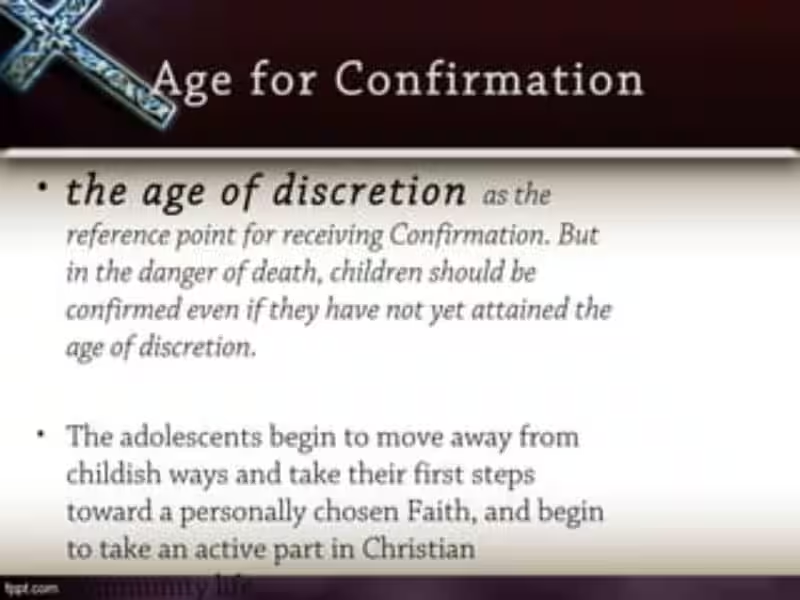
While there isn’t a universal age for confirmation, observable patterns exist across major Christian denominations. The Roman Catholic Church, for instance, historically allowed confirmation to be administered at a younger age, but current practice often encourages it to be administered when the child reaches the age of discretion, typically around 7 years old for First Communion, with confirmation often occurring at a later age, sometimes around 12-16 years old, depending on diocesan guidelines and pastoral practice. This allows for a more mature understanding and personal conviction to develop. The emphasis is on the bishop’s discretion and the pastor’s assessment of the candidate’s readiness.
In many Protestant traditions, such as Lutheran, Methodist, and Presbyterian churches, confirmation is often seen as a public affirmation of baptismal vows made by parents on behalf of an infant. Here, the age for confirmation is frequently set between 13 and 16 years old. This period is considered ideal for adolescents to undergo in-depth religious education, explore their faith critically, and then make a personal commitment to the Christian life. The age for confirmation in these contexts is therefore tied to the completion of a period of intentional discipleship training.
The Role of Spiritual and Intellectual Readiness
Beyond chronological age, the age for confirmation is fundamentally linked to a candidate’s spiritual and intellectual readiness. This means that even if a person meets the minimum age requirement, they must also demonstrate a certain level of understanding and commitment. This readiness is often nurtured through dedicated confirmation classes or catechetical programs. These programs are designed to equip individuals with the knowledge and tools necessary to live a faithful life, covering topics such as:
Theology and core beliefs of the denomination.
The meaning and significance of sacraments.
Biblical studies and interpretation.
Christian ethics and moral teachings.
The role of the church in the community and the world.
Ultimately, the age for confirmation serves as a guideline, but the true determinant is the individual’s capacity to engage with their faith on a personal level. A young person who is deeply thoughtful, asks probing questions, and demonstrates a genuine desire to live out their faith may be deemed ready for confirmation at a slightly earlier age, while another, though older, might require more time. This assessment is a collaborative effort between the candidate, their parents or guardians, and the religious leader, ensuring that the confirmation is a meaningful and well-prepared step.
The Confirmation Process: Preparation and Meaning
The confirmation process is a journey of deepening faith and understanding. It’s far more than simply attending a few classes; it’s an intentional period of spiritual formation and discipleship. During this time, candidates are encouraged to explore their beliefs, engage in prayer, learn about their religious tradition’s history and teachings, and often participate in service projects or community outreach. The age for confirmation often dictates the structure and intensity of this preparation, with younger candidates perhaps receiving more foundational instruction, while older candidates might engage in more nuanced discussions and personal reflection.
This preparation is crucial because confirmation is not an endpoint but a new beginning. It signifies an individual’s readiness to take on greater responsibility within their faith community and to live out their Christian calling more fully. Therefore, the age for confirmation is also about ensuring that the candidate is prepared to actively participate in the life of the church, to be a witness to their faith, and to continue their spiritual growth throughout their lives. It’s a commitment to a lifelong journey of learning and living according to their religious convictions.
Confirmation Classes and Mentorship
A cornerstone of the confirmation journey is the confirmation class. These classes provide a structured environment for learning and discussion, often led by pastors, priests, or experienced lay leaders. The curriculum is tailored to the age for confirmation, ensuring that the material is presented in an age-appropriate and engaging manner. For younger adolescents, the focus might be on foundational biblical stories, core tenets of faith, and practical ways to live out their beliefs in daily life. For older candidates, discussions might delve into more complex theological questions, ethical dilemmas, and the historical development of their faith tradition. Mentorship often plays a vital role, pairing candidates with mature believers who can offer guidance, encouragement, and a living example of faith.
This period of active learning and connection is designed to help the candidate move from a passive understanding of faith to an active, personal appropriation of it. The age for confirmation is considered in relation to the capacity for this kind of engagement. It’s about fostering a genuine relationship with God and understanding the responsibilities that come with being an adult member of the faith community. For example, a candidate preparing for confirmation might be encouraged to read certain books, journal their thoughts, or engage in conversations with their mentor about their doubts and questions.
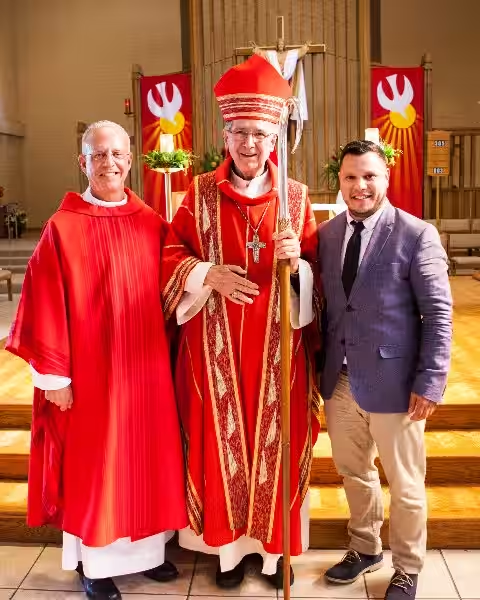
The climax of this preparatory journey is the rite of confirmation itself. This is a sacred ceremony where the candidate, having completed their preparation and demonstrated their readiness, publicly affirms their faith. They may reiterate the vows made at their baptism (or make them for the first time if baptized as an infant), often with the support of their parents and a chosen sponsor or mentor. The laying on of hands by a bishop or ordained minister is a common practice, symbolizing the impartation of the Holy Spirit and the formal reception of the individual as a full member of the church. The age for confirmation influences the solemnity and the perceived significance of this public act of commitment.
This public declaration is a powerful moment, signifying not only the individual’s commitment but also the community’s affirmation of their faith. It’s a visible sign of their integration into the body of Christ and their willingness to live out their baptismal calling. The age for confirmation ensures that this declaration is made with a degree of maturity and understanding, making it a meaningful and intentional step in their lifelong spiritual journey. It’s a moment where the individual steps forward, ready to embrace the challenges and joys of living a life dedicated to their faith.
Conclusion: Embracing the Journey of Faith Beyond Confirmation
The age for confirmation is a significant marker, representing a transition from passive reception of faith to active, conscious participation. It signifies a young person’s decision to embrace their religious heritage, to understand its teachings, and to commit to living a life guided by its principles. While the specific age may vary between denominations, the underlying principle remains consistent: readiness for commitment. This readiness encompasses not only chronological maturity but also a growing spiritual and intellectual understanding of one’s faith.
Confirmation is not the end of the faith journey, but rather a powerful launchpad for continued growth and discipleship. The skills, knowledge, and spiritual discipline cultivated during the preparation period are designed to equip individuals for a lifelong walk with God. As believers mature, their understanding of faith deepens, and their commitment is continually renewed. The age for confirmation is a milestone, a sacred moment of affirmation, but the true celebration lies in the ongoing journey of living out the faith, making a lasting impact and contributing to the vibrant tapestry of their religious community.
Frequently Asked Questions about Confirmation
What is the usual age for confirmation?
The age for confirmation varies by denomination and diocese. In many traditions, it is typically administered to adolescents, often between the ages of 12 and 17. However, some traditions may have different age requirements. It’s best to consult with your local church or religious leader for specific information.
Does confirmation require a specific religion?
Confirmation is a sacrament or rite within certain Christian denominations, most notably Roman Catholicism, Orthodox Christianity, Anglicanism, and Lutheranism. It is not a practice found in all religions. If you are considering confirmation, it implies you are a member of or are interested in joining one of these Christian traditions.