The resurrection of Jesus Christ is not merely a historical event; it is the cornerstone of Christian faith, a profound declaration of victory over sin and death, and the ultimate source of hope for believers worldwide. This pivotal moment, chronicled in the Bible, offers transformative power and eternal promise, shaping the lives of millions and providing a guiding light through life’s inevitable challenges. Understanding the significance of the resurrection is essential to grasping the depth and breadth of the Christian message.
The Bible verse that encapsulates this most foundational truth is perhaps best found in the Apostle Paul’s letter to the Corinthians. He states, “For what I received I passed on to you as of first importance: that Christ died for our sins according to the Scriptures, that he was buried, that he was raised on the third day according to the Scriptures.” (1 Corinthians 15:3-4). This passage isn’t just a historical account; it’s a theological declaration that lays bare the very essence of God’s plan for humanity. Without this resurrection, the Christian message would crumble, becoming a tale of a good man who met a tragic end, rather than the divine intervention that redeems humanity.
The Historical and Theological Significance of the Empty Tomb
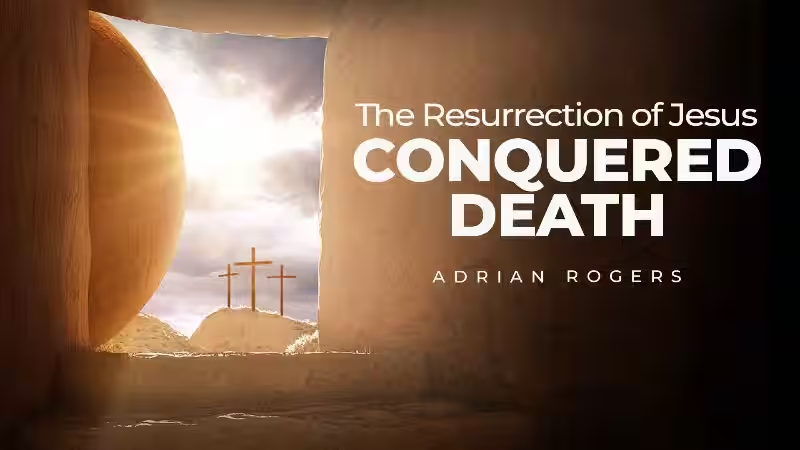
The empty tomb is more than just the absence of a body; it is a powerful testament to the divine power of God. Imagine the scene: a tomb, sealed with a heavy stone, guarded by Roman soldiers, and then, inexplicably, empty. This wasn’t a clandestine exhumation or a simple misunderstanding. The resurrection signifies that Jesus, who was crucified and died, was powerfully raised back to life by God. This event validates Jesus’ identity as the Son of God and confirms the efficacy of his sacrifice for the sins of the world.
The Bible provides multiple accounts of the post-resurrection appearances of Jesus. From the women at the tomb, like Mary Magdalene, to the disciples on the road to Emmaus, and finally to the assembled apostles, these encounters were not fleeting hallucinations. They were tangible, verifiable interactions that solidified belief and transformed fear into boldness. As the Apostle Peter declared in his sermon on the day of Pentecost, “God raised him from the dead, freeing him from the agony of death, because it was impossible for death to keep its hold on him.” (Acts 2:24). This declaration, echoing through the ages, underscores the absolute victory that the resurrection represents.
Jesus’ Resurrection: The Proof of His Divinity and Mission
The divinity of Jesus is inextricably linked to his resurrection. If Jesus were merely a prophet or a teacher, his death would have been the end of his earthly influence. However, his resurrection proves he was who he claimed to be: God in human flesh. This wasn’t just a demonstration of power; it was the fulfillment of prophecy and the ultimate proof of his divine mission to reconcile humanity to God. “He was delivered over to death for our sins and was raised to life for our justification.” (Romans 4:25). This verse highlights how Christ’s resurrection is not only a past event but has present and future implications for every believer, justifying them before God.
Consider the impact of Jesus’ resurrection on the early church. The disciples, once fearful and hiding, became fearless evangelists, willing to face persecution and even death for their faith. This radical transformation is direct evidence of the power of the resurrection. Their testimonies, recorded in the Bible, are consistent and unwavering, all pointing to the reality of a living Christ. The Bible verse “Because, if you confess with your mouth that Jesus is Lord and believe in your heart that God raised him from the dead, you will be saved.” (Romans 10:9) illustrates the centrality of belief in the resurrection for salvation.
The Hope and Assurance Found in Christ’s Resurrection
The resurrection of Jesus Christ offers unshakeable hope and profound assurance to believers. It assures us that death is not the end, but a transition to eternal life for those who are in Christ. This hope is a powerful antidote to the anxieties and fears that plague the human heart, providing comfort in times of sorrow and strength in the face of adversity. The Apostle Paul beautifully articulates this in his letter to the Thessalonians: “Now we know that the one who raised the Lord Jesus from the dead will also raise us with Jesus and present us with you before himself.” (2 Thessalonians 3:14). This is not mere wishful thinking; it’s a divine promise grounded in the historical reality of the resurrection.
This promise of future resurrection is a cornerstone of Christian eschatology, the study of end times. It means that the suffering and injustices of this life are not the final word. For believers, death is a gateway to a perfected existence, free from pain, suffering, and sin. The Bible verse “But Christ has indeed been raised from the dead, the firstfruits of those who have fallen asleep.” (1 Corinthians 15:20) uses the metaphor of firstfruits, the initial harvest, to signify that Christ’s resurrection is the guarantee and precursor to the resurrection of all believers. This assurance empowers Christians to live with purpose and faith, knowing that their ultimate destiny is one of glorious triumph.
The resurrection of Jesus Christ is the unifying truth that binds Christians together, regardless of their background or denomination. It is the irrefutable evidence of God’s love and power, a beacon of hope in a world often shadowed by despair. By understanding and embracing this central tenet of faith, individuals can experience transformative grace and find eternal solace in the living Christ. The Bible’s message of resurrection is an invitation to a life empowered, a future secured, and a hope that will never fade.
Frequently Asked Questions about Jesus’ Resurrection
What Bible verses speak about Jesus’ resurrection?
Several New Testament passages describe Jesus’ resurrection. Key verses include:
* 1 Corinthians 15:3-8: “For what I received I passed on to you as of first importance: that Christ died for our sins according to the Scriptures, that he was buried, that he was raised on the third day according to the Scriptures, and that he appeared to Cephas, and then to the Twelve. After that, he appeared to more than five hundred of the brothers and sisters at the same time, most of whom are still living, though some have fallen asleep. Then he appeared to James, then to all the apostles, and last of all he appeared to me also.”
* Luke 24:1-12: This passage details the women finding the empty tomb and the angels announcing Jesus’ resurrection.
* John 20:1-29: This chapter describes Mary Magdalene at the tomb, Jesus appearing to her, and later to his disciples.
* Matthew 28:1-20: This account includes the earthquake, the angel at the tomb, and Jesus’ appearance to the women and then the disciples.
* Mark 16:1-20: This brief Gospel concludes with the discovery of the empty tomb and Jesus’ commission to his disciples.
* Acts 2:22-36: Peter’s sermon on the day of Pentecost explicitly references Jesus’ resurrection as proof of his divine authority.
* Romans 1:4: “and who through the Spirit of holiness was declared with power to be the Son of God by his resurrection from the dead: Jesus Christ our Lord.”
What is the religious significance of Jesus’ resurrection?
The resurrection of Jesus is a cornerstone of Christian belief and holds profound religious significance. It is seen as:
* Proof of Jesus’ divine nature: Christians believe the resurrection confirms Jesus’ claims to be the Son of God and that he has power over sin and death.
* Victory over sin and death: His resurrection signifies the defeat of death and the promise of eternal life for believers.
* Foundation of Christian faith: The Apostle Paul states in 1 Corinthians 15:17, “And if Christ has not been raised, your faith is futile; you are still in your sins.” The resurrection is the essential event that validates the Christian message.
* Hope for believers: It offers the assurance of a future resurrection for all who believe in Jesus, providing hope in the face of mortality.
* The basis for salvation: Through his death and resurrection, Jesus is believed to have atoned for the sins of humanity, making salvation possible for those who have faith in him.
How does Jesus’ resurrection relate to the concept of religion?
The resurrection of Jesus is central to the religion of Christianity. It is the event that distinguishes Christianity from other religions and philosophical systems. Its relation to religion includes:
* The fulfillment of prophecy: Christians believe Jesus’ resurrection was the fulfillment of Old Testament prophecies concerning the Messiah.
* The validation of Jesus’ teachings: His resurrection served as divine confirmation of everything Jesus taught about God, love, and the Kingdom of God.
* The establishment of a new covenant: The resurrection marks the inauguration of a new relationship between God and humanity, mediated through Jesus Christ.
* The inspiration for the early church: The belief in the resurrection fueled the evangelistic efforts of the early apostles, leading to the rapid spread of Christianity.
* The basis for Christian worship and practice: Christian holidays, particularly Easter, commemorate the resurrection. Core practices like baptism and communion are often understood in light of Christ’s death and resurrection.
* The object of faith: For Christians, belief in Jesus’ resurrection is not merely historical acceptance but an act of faith that forms the core of their religious identity and worldview.