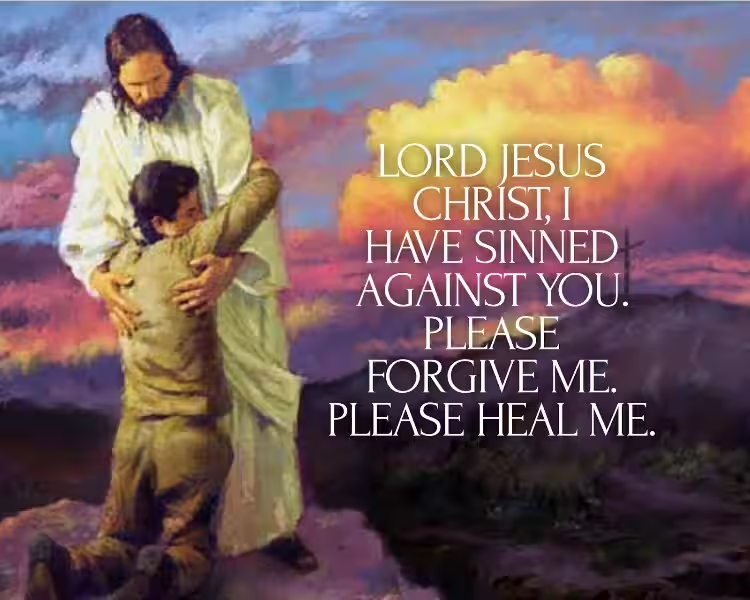
In the quiet moments of reflection, when the weight of our actions settles upon us, a profound yearning often arises: the plea, “Jesus, forgive me of my sins.” This isn’t just a religious phrase; it’s a deeply human cry for solace, for a clean slate, and for the restoration of our relationship with the divine. Religion, in its myriad forms, offers pathways to this very redemption, providing frameworks for understanding our shortcomings and seeking divine grace.
The concept of sin, and the subsequent need for forgiveness, is central to many faith traditions. It acknowledges our inherent fallibility, the times we fall short of our ideals, and the ways we can inadvertently or intentionally cause harm. Understanding this universal human experience is the first step towards embracing the transformative power of seeking forgiveness, particularly through the lens of Christian belief: the belief that through Jesus Christ, genuine absolution is possible.
What exactly constitutes a “sin”? In a religious context, sin is often understood as an act, thought, or attitude that separates us from God, from others, and even from our true selves. It can be a deliberate transgression of divine law, a failure to act when we should have, or a harboring of negative emotions like pride, envy, or anger. These aren’t always grand, dramatic offenses; often, they are the subtle erosions of our character, the small compromises that, over time, can build a wall between us and what is good.
The burden of unaddressed sin can be heavy. It can manifest as guilt, shame, anxiety, and a pervasive sense of being unworthy. This is why the prayer, “Jesus, forgive me of my sins,” resonates so deeply. It’s an acknowledgment that we cannot carry this burden alone and a courageous step towards liberation. Think of it like a persistent, nagging cough; you can try to ignore it, but it will continue to disrupt your peace. Seeking forgiveness is like finding the cure, allowing you to breathe freely again.
The Weight of Our Choices
Our choices, both big and small, have consequences. When we stray from ethical paths, or when our actions cause pain to others, we accumulate a spiritual debt. This doesn’t mean we are permanently flawed or irredeemable. Rather, it highlights our capacity for error and the importance of acknowledging that error. Religion provides tools for this acknowledgment, encouraging introspection and accountability. For example, many traditions have practices of confession or prayer that allow individuals to articulate their wrongdoings.
The desire to be free from this weight is universal. It’s the reason we apologize after a disagreement, or the impulse to make amends when we’ve hurt someone. The Christian understanding, however, elevates this personal responsibility by pointing to a divine solution. The plea, “Jesus, forgive me of my sins,” is an act of faith, trusting in a power greater than ourselves to cleanse and restore. It’s about recognizing that we are not defined solely by our mistakes, but by our capacity for repentance and growth.
The Role of Jesus in Forgiveness
Central to Christian theology is the belief that Jesus Christ’s life, death, and resurrection offer the ultimate atonement for human sin. The New Testament narratives describe Jesus as the Son of God, who willingly sacrificed himself to bridge the gap between humanity and God, a gap created by sin. This sacrifice is seen not as a mere symbolic act, but as a powerful, redemptive event that makes forgiveness accessible to all who believe.
When we utter the prayer, “Jesus, forgive me of my sins,” we are invoking this foundational belief. We are acknowledging our need for divine intervention and placing our trust in the atoning work of Christ. This is more than just a verbal recitation; it’s an act of faith that opens the door to a profound spiritual transformation. It signifies a desire to turn away from past misdeeds and to embrace a new way of living empowered by God’s grace.
Atonement and Grace
The concept of atonement is crucial here. It means making amends or reparations. In the Christian faith, Jesus’ sacrifice is understood as the ultimate atonement. He took upon himself the weight of humanity’s sins, offering a way for us to be reconciled with God. This is an act of grace, which is unmerited favor – something we don’t deserve but receive freely through faith.
Therefore, when you pray, “Jesus, forgive me of my sins,” you are not just asking for a pardon; you are accepting the gift of grace offered through Christ. This grace empowers you to move forward, not as someone still bound by past mistakes, but as someone redeemed and renewed. It’s like being offered a brand-new, unblemished book after you’ve accidentally spilled ink on the previous one. The past is acknowledged, but the future is clean and ready to be written.
Seeking forgiveness is not a one-time event; it’s the beginning of a journey. The prayer, “Jesus, forgive me of my sins,” is often coupled with repentance. Repentance, in its truest sense, is a complete turning away from sin and a turning towards God. It involves not just regretting our actions, but actively choosing to change our behavior and our mindset.
This transformation isn’t something we achieve on our own strength. It’s a process facilitated by the Holy Spirit, guiding us towards a deeper understanding of God’s will and empowering us to live a life that honors Him. This might involve making amends where possible, actively resisting temptation, and cultivating virtues like love, kindness, and humility. It’s a continuous process of growth and sanctification, where the initial plea for forgiveness spurs ongoing spiritual development.
Living a Life of Faith and Action
The impact of receiving forgiveness extends beyond personal relief. It often inspires a desire to live a life that reflects God’s love and mercy. This means extending forgiveness to others, practicing compassion, and engaging in acts of service. When we truly believe that “Jesus, forgive me of my sins” has been answered, we are motivated to live in a way that aligns with that profound gift.
Consider the ripple effect of kindness. When someone receives unexpected generosity, they are often moved to be generous themselves. Similarly, experiencing divine forgiveness can transform us into instruments of that same grace in the world. This isn’t about earning salvation, but about responding with gratitude and a desire to honor the one who has offered such immense love and mercy through their sacrifice.
Finding Peace Through Divine Forgiveness
Ultimately, the desire to say “Jesus, forgive me of my sins” stems from a deep-seated longing for peace. Peace with God, peace with ourselves, and peace with others. The religious framework, particularly within Christianity, offers a profound and enduring path to this peace. It’s a peace that surpasses understanding, a tranquility that arises from knowing that our transgressions have been washed away and that we are accepted and loved.
This journey of forgiveness is not always easy. It requires humility, honesty, and a willingness to confront our own imperfections. However, the rewards are immeasurable. It’s the liberation from the chains of guilt, the shedding of shame, and the embrace of a new identity as a child of God, redeemed and made whole. The promise of “Jesus, forgive me of my sins” is not just an invitation; it’s a powerful declaration of hope and the promise of a life renewed.
Frequently Asked Questions about Jesus Forgiving Sins and Religion
What does it mean to have Jesus forgive your sins?
Having Jesus forgive your sins means acknowledging that you have done things that are wrong (sins) and believing that Jesus, through his sacrifice on the cross, has paid the penalty for those sins. This act of forgiveness is seen as a gift of grace, offering reconciliation with God and the promise of eternal life.
Is forgiveness of sins unique to Christianity?
While the concept of seeking forgiveness for wrongdoing is present in many religions, the specific belief that Jesus Christ, as the Son of God, is the means by which sins are forgiven is central to Christianity. Other religions offer different paths to atonement and reconciliation.
How does one receive forgiveness from Jesus?
In Christian belief, receiving forgiveness typically involves repentance (turning away from sin), faith in Jesus Christ and his atoning sacrifice, and often through the sacrament of baptism or confession, depending on the denomination.
What is “religion” in this context?
In this context, “religion” refers to a system of beliefs and practices, often concerning the worship of a god or gods, and providing a moral framework and a sense of meaning. Christianity is one such religion, and the concept of Jesus forgiving sins is a core tenet of this faith.
Are there different views on sin and forgiveness within Christianity?
Yes, while the core belief in Jesus’s atonement is shared, different Christian denominations may have varying interpretations of the nature of sin, the process of receiving forgiveness, and the role of sacraments or good works in conjunction with faith.
Does forgiveness of sins mean one will never sin again?
No, for most Christians, forgiveness is not a one-time event that eradicates the capacity to sin. Instead, it is seen as a continuous process of seeking God’s forgiveness and striving to live a life that honors God, acknowledging that struggles with sin may continue.
What if someone doesn’t believe in Jesus?
If someone does not believe in Jesus, the Christian understanding of forgiveness through him would not apply. Their spiritual or ethical journey would likely be guided by the principles and beliefs of their own chosen faith or worldview.