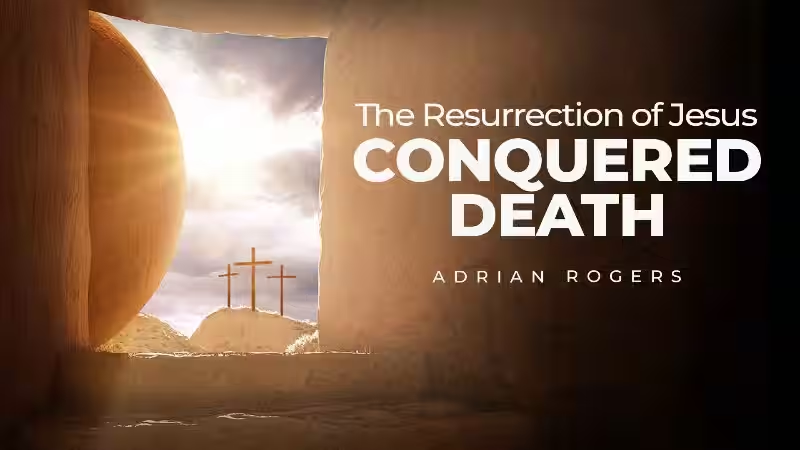
The resurrection of Jesus Christ is the cornerstone of Christian faith, a transformative event that reverberates through history and continues to offer profound meaning to millions worldwide. It’s not merely a historical detail; it’s a living testament to God’s power, a promise of victory over death, and the foundation of our hope. As we delve into the biblical accounts, we find not just a narrative, but powerful truths that can reshape our understanding of life, suffering, and the ultimate triumph of good.
This article will explore the significance of Jesus’ resurrection through the lens of key Bible verses, offering insights that are both informative and deeply relatable. We’ll uncover how this divine intervention provides comfort in times of sorrow, strength in the face of adversity, and an unwavering assurance of eternal life. Prepare to be encouraged as we journey through the scriptural evidence and discover the abiding power of the resurrection.
The most immediate and striking evidence of Jesus’ resurrection is the empty tomb. The Gospels vividly describe the scene: the stone rolled away, the grave clothes neatly folded, and the absence of Jesus’ physical body. This wasn’t a clandestine removal or a staged event; it was a divine declaration. The women who went to anoint Jesus’ body, expecting to find a deceased Savior, were met with the astonishing news delivered by angelic messengers: “He is not here; he has risen, just as he said.” (Matthew 28:6). This declaration, spoken from the very place of death, immediately shifted the narrative from despair to unfathomable joy.
Imagine the shock and disbelief that must have washed over those first witnesses. They had just experienced the crushing weight of Jesus’ crucifixion, the loss of their leader and friend. The tomb, a symbol of finality and defeat, instead became the epicenter of a new beginning. This event wasn’t just a private miracle for a few; it was a public demonstration of God’s sovereignty. The Apostle Paul later articulated this profound truth when he wrote, “And if Christ has not been raised, your faith is futile; you are still in your sins.” (1 Corinthians 15:17). This verse underscores that the resurrection isn’t an optional add-on to faith; it’s the very bedrock upon which it stands. The empty tomb, therefore, is not just a historical curiosity but a powerful testament to the reality of God’s intervention in human history.
The resurrection wasn’t confined to the empty tomb. The Bible verse about Jesus’ resurrection extends to His appearances to His disciples and many others in the days and weeks following. These encounters were crucial in dispelling doubt and solidifying belief. From Mary Magdalene weeping outside the tomb to the disciples on the road to Emmaus, Jesus made Himself known in tangible ways. He ate with them, spoke with them, and showed them His wounds – the very marks of His sacrifice. This was not a ghost or an illusion; it was the resurrected, glorified Christ.
One particularly poignant encounter is described in John 20:27-28, where Jesus addresses Thomas, who had famously doubted. He says to Thomas, “Put your finger here; see my hands. Reach out your hand and put it into my side. Stop doubting and believe.” Thomas’s response is profound: “My Lord and my God!” This moment highlights the transformative power of seeing and believing. It wasn’t just about witnessing a spectacle; it was about a personal encounter with the risen Lord. These appearances served to validate the resurrection and equip the disciples with the authority and confidence to spread the Good News. The resurrected Christ, appearing to His followers, provided irrefutable proof that death had been conquered and a new covenant established, offering assurance and a mandate for their mission.
The Meaning of Resurrection: Victory, Hope, and New Life
The Bible verse about Jesus’ resurrection carries immense theological weight, speaking to victory over sin and death, the assurance of eternal life, and the promise of new life for believers today. Jesus’ death on the cross was the ultimate sacrifice, paying the penalty for humanity’s sins. But it was His resurrection that validated that sacrifice and broke the chains of death, ushering in a new era of redemption. As the Apostle Paul powerfully states in 1 Corinthians 15:55-57, “Where, O death, is your victory? Where, O death, is your sting? The sting of death is sin, and the power of sin is the law. But thanks be to God! He gives us the victory through our Lord Jesus Christ.” This is a declaration of triumph, a song of victory that echoes through the ages.
This victory offers us unshakeable hope. In a world often marked by suffering, loss, and the inevitability of death, the resurrection of Jesus presents a contrasting reality. It tells us that death is not the end, but a transition to eternal life for those who believe in Him. This hope is not wishful thinking; it is rooted in the historical reality of the resurrection. It means that our trials and tribulations, while real, are not the ultimate story. The resurrection promises that a future of joy and peace awaits, where “He will wipe every tear from their eyes. There will be no more death or mourning or crying or pain, for the old order of things has passed away.” (Revelation 21:4). This transformative promise empowers us to live with courage and conviction, knowing that our ultimate destiny is secured.
Living in the Power of the Resurrection
The implications of Jesus’ resurrection extend beyond historical fact and theological doctrine; they call us to a transformed way of living. Understanding and embracing the Bible verse about Jesus’ resurrection means recognizing that we are no longer bound by the power of sin and death. We are called to live lives that reflect this new reality, embodying the love, grace, and forgiveness that Christ demonstrated. The Apostle Paul encourages believers in Romans 6:4, “We were therefore buried with him through baptism into death in order that, just as Christ was raised from the dead through the glory of the Father, we too may live a new life.” This signifies a spiritual rebirth, a departure from our old ways and an embrace of a life guided by the Holy Spirit.
This “new life” is characterized by purpose, resilience, and an active faith. It means facing challenges with the assurance that God is with us, drawing strength from the victory Christ has already won. It also compels us to share this hope with others, becoming ambassadors of reconciliation and demonstrating the transforming power of the Gospel. When we truly grasp the magnitude of the resurrection, our perspective shifts. We begin to see our present circumstances through the lens of eternal victory, finding meaning in our struggles and joy even in sorrow. It’s about living not just for Christ, but in the power of His resurrection, allowing it to permeate every aspect of our lives.
Frequently Asked Questions About the Resurrection of Jesus
What Bible verses talk about Jesus’ resurrection?
The resurrection of Jesus is a central theme in the New Testament. Key passages include:
1 Corinthians 15:3-8: This passage describes the gospel, stating that Christ died for our sins, was buried, was raised on the third day according to the Scriptures, and appeared to many witnesses.
Luke 24:1-12: This account details the discovery of the empty tomb by the women and their subsequent report to the disciples.
Matthew 28:1-10: This chapter describes the resurrection itself, the angelic announcement, and Jesus appearing to the women.
Mark 16:1-8: Similar to Matthew, this passage recounts the discovery of the empty tomb and the angel’s message.
John 20:1-29: This Gospel provides a detailed narrative of the resurrection appearances to Mary Magdalene, the disciples (including Thomas), and emphasizes the reality of Jesus’ risen body.
Acts 1:3: This verse states that after his suffering, Jesus presented himself alive to them by many convincing proofs, appearing over a period of forty days and speaking about the kingdom of God.
Why is Jesus’ resurrection important to Christianity?
The resurrection of Jesus is foundational to the Christian faith. It serves as:
Proof of Jesus’ divine nature and his victory over sin and death.
The basis for the forgiveness of sins and the promise of eternal life for believers.
The validation of Jesus’ teachings and his claims about himself.
The assurance of a future resurrection for all who believe in him.
What does the resurrection mean for people of other religions?
The resurrection of Jesus is a belief specific to Christianity. While other religions have their own sacred texts, figures, and beliefs about life, death, and the afterlife, the concept of Jesus’ physical resurrection is not a part of their doctrines. Different religions offer distinct paths to understanding the divine, morality, and the human condition, each with its own unique narratives and theological frameworks.