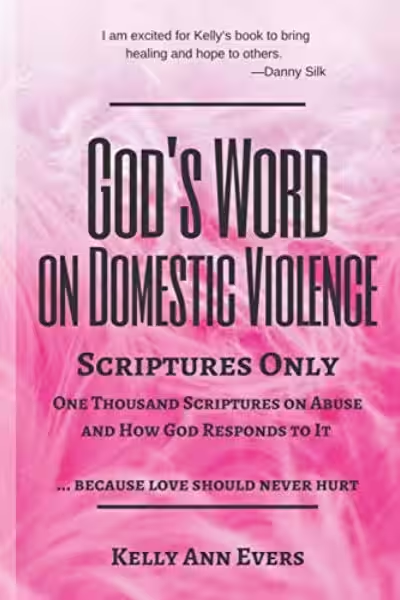
Domestic violence, a brutal reality that shatters lives and erodes the foundations of homes, is a topic many would prefer to ignore. Yet, its insidious presence permeates communities, and for those who hold faith dear, the question often arises: what does the Bible say about such profound suffering within relationships? This isn’t about finding justification for abuse, but rather about seeking understanding, solace, and a path toward healing within the sacred texts that guide so many. The Bible, a complex tapestry of human experience and divine wisdom, offers verses that speak to the sanctity of relationships, the consequences of cruelty, and the enduring power of God’s love to mend what is broken.
Many believe that faith should be a shield against violence, a sanctuary of peace and respect. However, the reality is that domestic violence can happen in any household, regardless of religious affiliation. It’s a painful paradox that can leave individuals feeling confused, isolated, and even doubly betrayed – by their abuser and by a faith they thought would protect them. This article aims to explore how the Bible addresses themes relevant to domestic violence, offering hope and practical guidance for those caught in its grip, and for those who wish to support them. We will delve into passages that speak to the value of every individual, the sinfulness of harming others, and the divine call for justice and restoration.
The Foundation of Love: God’s Design for Relationships
At its core, the Bible presents a vision of relationships characterized by love, respect, and mutual care. This ideal is not a distant, unattainable standard, but a fundamental principle woven throughout scripture. From the creation narrative, where humanity is created in God’s image and called to fellowship, to the New Testament emphasis on selfless love, the divine blueprint for human connection is one of harmony and mutual flourishing. This foundational understanding is crucial when confronting the stark reality of domestic violence, which stands in direct opposition to God’s design.
The Apostle Paul, in his letter to the Ephesians, provides a profound insight into the nature of godly relationships. He writes, “Husbands, love your wives, just as Christ loved the church and gave himself up for her” (Ephesians 5:25). This verse doesn’t advocate for a one-sided submission but for a sacrificial, Christ-like love from husbands, mirroring the self-giving love Christ demonstrated for humanity. This is a powerful call to protect and cherish, not to control or harm. Similarly, the admonition for wives to respect their husbands (Ephesians 5:33) is set within the broader context of mutual love and honor, not as an invitation to endure abuse.
When Love Turns to Cruelty: Biblical Perspectives on Harm
The Bible is unflinchingly honest about the darkness that can reside in the human heart, and it does not shy away from condemning actions that inflict pain and suffering. While explicit verses detailing “domestic violence” as we understand it may not appear with those exact words, the principles of justice, compassion, and the prohibition of cruelty are abundantly clear. The Mosaic Law, for instance, included provisions to protect the vulnerable and punish those who harmed others, reflecting God’s concern for fairness and the well-being of all people.
Consider the timeless wisdom found in Proverbs: “A gentle answer turns away wrath, but a harsh word stirs up anger” (Proverbs 15:1). This verse speaks to the power of our words and attitudes in escalating or de-escalating conflict. While it doesn’t directly address physical abuse, it highlights the destructive potential of harshness and the importance of communication that fosters peace. More directly, the prophet Malachi condemns those who practice deceit and violence, stating, “I will be a swift witness against sorcerers, against adulterers, against perjurers, against those who oppress the hired worker in his wages, the widow, and the fatherless, and against those who turn aside the sojourner, and do not fear me, says the Lord of hosts” (Malachi 3:5). The inclusion of “oppression” and the protection of the vulnerable underscore God’s deep disapproval of any form of abuse or exploitation.
The Sin of Violence and Oppression
The Bible consistently condemns violence and oppression, viewing it as a direct affront to God’s character and a violation of His created order. When one person intentionally harms another, especially within the context of intimacy and supposed safety, it is a profound betrayal of trust and a transgression that God takes seriously. The sacredness of life is a recurring theme, and any act that diminishes or destroys it is met with divine displeasure.
Jesus himself taught, “Therefore whatever you want men to do to you, do also to them, for this is the Law and the Prophets” (Matthew 7:12). This principle of the Golden Rule is a powerful ethical compass. If we would not want to be subjected to abuse, then we are commanded by Christ to refrain from inflicting it upon others. This extends to all forms of harm, including emotional and physical violence. The Old Testament prophet Isaiah powerfully declares, “Woe to those who draw iniquity with cords of vanity, and sin as if with a cart rope, who say, ‘Let him make haste, let him speed his work, that we may see it; and let the purpose of the Holy One of Israel draw near, and let it come, that we may know it!’” (Isaiah 5:18-19). This “woe” is a declaration of judgment against those who persist in wrongdoing and disregard divine justice, highlighting the gravity of sin and its consequences.
The Vulnerable and the Voiceless
Throughout scripture, there is a consistent emphasis on God’s special concern for the vulnerable, the marginalized, and the oppressed. This includes widows, orphans, the poor, and those who have no one to defend them. Domestic violence victims often find themselves in a similar position of extreme vulnerability, stripped of their power and silenced by fear. The Bible calls for active protection and advocacy for these individuals.
The book of James is particularly clear on this matter: “Pure and undefiled religion before God, the Father, is this: to visit orphans and widows in their affliction, and to keep oneself unspotted from the world” (James 1:27). This verse highlights that genuine faith is not merely about internal belief but about tangible acts of compassion and justice. For someone experiencing domestic violence, this means reaching out, offering support, and ensuring their safety. The prophet Jeremiah cries out, “For the violence done to my brother, I am clothed with shame, and a cry of anguish is on my lips” (Jeremiah 22:5). This passage expresses a deep sense of solidarity and pain when injustice occurs, urging us to feel the suffering of others and to speak out against it.
While the Bible acknowledges the reality of human brokenness and the pain of abuse, it is fundamentally a book of hope and redemption. For those who have experienced domestic violence, faith can be a source of immense strength, comfort, and courage to seek and find healing. God’s love is portrayed as unconditional and unwavering, even when human love fails. This divine love offers a foundation for rebuilding trust and self-worth.
The psalmist David, who himself faced betrayal and persecution, often turned to God in his distress, crying out, “The Lord is near to the brokenhearted and saves the crushed in spirit” (Psalm 34:18). This is a powerful promise for anyone feeling broken by violence. It assures them that God sees their pain and is actively present to provide solace and restoration. Furthermore, the teachings of Jesus offer a path toward forgiveness and reconciliation, not as an obligation to endure further harm, but as a process of spiritual liberation and emotional freedom.
The Path to Restoration and Justice
Finding a way out of an abusive relationship is an incredibly difficult journey, but the Bible offers principles that guide individuals toward safety, justice, and eventual restoration. While reconciliation may be a distant goal or not possible in all circumstances, the pursuit of justice and the restoration of dignity are paramount. Faith communities are called to be havens of support and practical assistance for victims.
The prophet Isaiah proclaims, “Learn to do good; seek justice, correct oppression; bring justice to the fatherless, plead the widow’s cause” (Isaiah 1:17). This is a direct mandate for individuals and communities of faith to actively engage in seeking justice and protecting the vulnerable. This might involve connecting victims with resources, offering safe housing, or advocating for legal protection. The New Testament also emphasizes the importance of truth and accountability. While encouraging forgiveness, it does not condone the perpetuation of sin. The goal is not simply to survive, but to thrive and be made whole, a process that often involves breaking free from the cycle of abuse.
God’s Unfailing Love as a Source of Strength
Ultimately, the overarching message of the Bible concerning human suffering, including domestic violence, is one of God’s enduring love and His desire for the well-being of all His creation. Even in the darkest of times, the promise of God’s presence offers a beacon of hope. This love is not dependent on our perfection or the perfection of our relationships; it is a steadfast and unconditional love that can empower individuals to heal and rebuild their lives.
Jesus’ own ministry was a testament to reaching out to the marginalized and broken. He said, “Come to me, all who labor and are heavy laden, and I will give you rest” (Matthew 11:28). This invitation is extended to everyone, including those wounded by violence. It speaks to a divine embrace that offers comfort, strength, and the promise of a future filled with peace and wholeness. For those navigating the complexities of domestic violence, turning to faith can provide not only spiritual grounding but also the inner fortitude needed to seek help, find safety, and begin the journey toward healing.
Frequently Asked Questions About Bible Verses and Domestic Violence
Does the Bible condone or promote domestic violence?
No, the Bible does not condone or promote domestic violence. While there are passages that have been misinterpreted or taken out of context to justify abuse, a comprehensive understanding of scripture, particularly Jesus’ teachings on love, compassion, and the sanctity of human life, clearly condemns violence and mistreatment within relationships.
Are there Bible verses that speak about protecting the vulnerable and oppressed?
Yes, the Bible is filled with verses that emphasize the protection of the vulnerable and oppressed. Passages in the Old Testament, such as those in the Law concerning justice for the widow and the orphan (e.g., Exodus 22:22-24), and the prophetic calls for justice (e.g., Isaiah 1:17), highlight God’s concern for those who are mistreated. In the New Testament, Jesus consistently showed compassion and defended those on the margins of society.
How does the Bible address the role of love and respect in marriage?
The Bible strongly emphasizes love and respect within marriage. Ephesians 5:25-33 instructs husbands to love their wives as Christ loved the church, a sacrificial and cherishing love. It also calls wives to respect their husbands. These passages are understood to be foundational principles for healthy, mutually supportive relationships, not justifications for control or harm.
Can Bible verses about submission be used to justify abuse?
Verses discussing submission within marriage (e.g., Ephesians 5:22, Colossians 3:18, 1 Peter 3:1) are often misunderstood. Within the broader biblical context, submission is understood as a willing, respectful yielding within a framework of mutual love and care, not as a mandate for coercion or the toleration of abuse. Abusers often twist these verses to gain control and inflict harm, which is a perversion of their intended meaning.
What does the Bible say about seeking justice and safety?
The Bible consistently calls for justice and the protection of individuals. While it emphasizes forgiveness and reconciliation, this does not negate the need for safety and justice for victims of abuse. Jesus himself overturned tables in the Temple when it was being used for exploitation, demonstrating that righteous anger and action against injustice are divinely sanctioned. Seeking help and ensuring safety is a responsible and biblically supported action.
Are there biblical principles that support leaving an abusive relationship?
While the Bible values commitment in marriage, it does not endorse staying in a situation where one’s life or well-being is in danger. The overarching principles of love, protection, and justice would support seeking safety and deliverance from an abusive partner. The priority of safeguarding the innocent and the oppressed is paramount in biblical ethics.