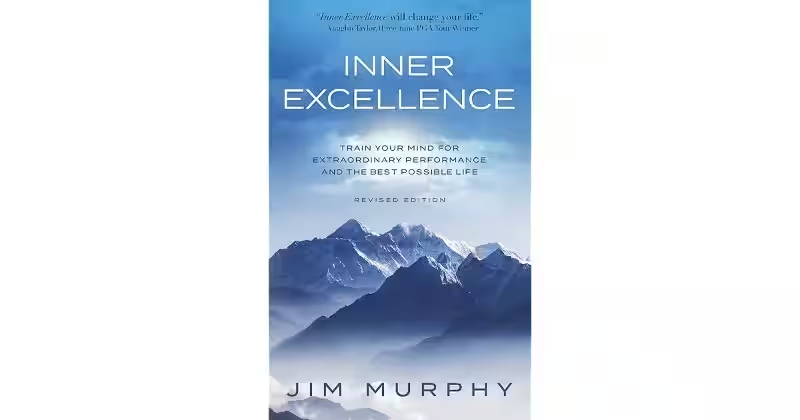
In the whirlwind of modern life, where external achievements often dictate our worth, it’s easy to lose sight of a more profound and lasting source of fulfillment: our inner world. The concept of “inner excellence,” explored in works like the recently popular book of the same name, offers a compelling roadmap to cultivating a life of purpose, peace, and true accomplishment. This isn’t about climbing the corporate ladder or accumulating material possessions; it’s a deep dive into the very core of who we are, a journey that resonates deeply with spiritual seekers across traditions. Many religious and spiritual paths have, for millennia, emphasized the importance of internal development, and “Inner Excellence” provides a contemporary framework to understand and implement these timeless principles.
The book, in essence, argues that true excellence originates from within, a cultivated state of being rather than a set of external accolades. It’s about understanding our thoughts, emotions, and motivations, and learning to harness them for greater good. This resonates powerfully with the spiritual concept of “the kingdom of God is within you,” a sentiment echoed in various religious texts. Whether you identify with a specific faith or are on a more personal spiritual quest, the principles of “Inner Excellence” offer a universal language for self-improvement and a more meaningful existence. We’ll be exploring how these ideas can illuminate your spiritual path, drawing parallels with established religious wisdom and offering practical insights for your own journey.
At its heart, “Inner Excellence” proposes that achieving our highest potential requires a fundamental shift in focus. Instead of chasing fleeting external validation, we are encouraged to cultivate a robust inner landscape. This involves understanding and mastering our internal dialogue, the constant stream of thoughts that shapes our perception of reality. For instance, a person constantly telling themselves “I’m not good enough” will struggle to achieve anything significant, regardless of their external circumstances. Conversely, someone who practices positive self-affirmation and recognizes their inherent worth will approach challenges with greater confidence and resilience. This internal mastery is a cornerstone of many spiritual disciplines.
Furthermore, the book emphasizes the cultivation of emotional intelligence and mindfulness. It’s not enough to simply acknowledge our emotions; we must learn to understand their origins, manage their intensity, and respond to them constructively. This aligns perfectly with religious practices like meditation and prayer, which are designed to quiet the mind, foster self-awareness, and develop a deeper connection to oneself and the divine. Think of a monk in deep contemplation, or a devout person in prayer; both are engaging in practices that hone their inner selves, fostering a sense of peace and clarity that transcends worldly distractions. The pursuit of inner excellence is, in many ways, a spiritual discipline accessible to all.
The Spiritual Resonance: Finding “Inner Excellence” in Religious Traditions
The principles of “Inner Excellence” are not novel; they are ancient wisdom dressed in modern language. Many religious traditions have long championed the development of inner qualities as the pathway to spiritual enlightenment and a life well-lived. Consider the Buddhist concept of mindfulness and compassion, where the cultivation of a calm and empathetic mind is paramount. This directly mirrors the “Inner Excellence” focus on emotional regulation and understanding others. The goal is to transcend the ego, reduce suffering, and foster a sense of interconnectedness – all aspects of profound inner growth.
Similarly, in Christianity, the teachings of Jesus often emphasize humility, love, and forgiveness. These are not merely external behaviors but deeply internal states of being. The Sermon on the Mount, for example, calls for a radical transformation of one’s inner disposition, urging followers to love their enemies and turn the other cheek. This requires immense inner strength and a cultivated sense of peace that “Inner Excellence” seeks to foster. The pursuit of these virtues is inherently a journey of spiritual excellence, where the internal transformation leads to a more righteous and fulfilling life. Even in the Abrahamic traditions, the emphasis on charity, kindness, and adherence to divine principles are all outward manifestations of an inner commitment to goodness and spiritual alignment.
Practical Applications for Your Spiritual Journey
So, how can we translate the lessons of “Inner Excellence” into tangible spiritual growth? The book suggests starting with self-awareness exercises. This could involve journaling about your thoughts and feelings, identifying recurring negative patterns, and actively challenging them with more constructive perspectives. For example, if you find yourself constantly criticizing yourself for minor mistakes, you can consciously reframe these thoughts by focusing on what you learned from the experience and acknowledging your effort. This practice of mindful self-reflection is akin to the confessional in some religions or the daily examination of conscience preached in others, offering a structured way to confront and refine our inner selves.
Another powerful application lies in cultivating gratitude. Regularly acknowledging the good in your life, no matter how small, can profoundly shift your perspective and foster a more positive outlook. This aligns with religious practices that encourage thankfulness to a higher power. A simple daily ritual of listing three things you are grateful for can dramatically improve your emotional well-being and spiritual contentment. Furthermore, the book advocates for purposeful action, encouraging readers to align their daily activities with their core values and spiritual beliefs. This means not just thinking about being a good person, but actively seeking opportunities to embody those qualities in the world – whether through acts of service, honest work, or compassionate interactions. This deliberate integration of inner conviction and outer action is the hallmark of true spiritual and personal excellence.
Overcoming Obstacles on the Path to Inner Excellence
The journey to “Inner Excellence” is rarely a smooth, uninterrupted ascent. We will inevitably encounter internal obstacles, such as ingrained fear, self-doubt, and the persistent pull of distractions. These are the spiritual “demons” that many religious traditions speak of – internal adversaries that hinder our progress. The book suggests that acknowledging these challenges without judgment is the first step towards overcoming them. Instead of berating yourself for feeling anxious, for instance, try to understand the root of that anxiety, perhaps a past negative experience or an unaddressed fear. This empathetic self-understanding is crucial.
Moreover, the book emphasizes the importance of consistency and patience. Spiritual growth is not an overnight transformation; it’s a lifelong practice. There will be days when you feel you’ve taken two steps back, but the commitment to continue is what truly matters. This resonates with the religious concept of perseverance in faith. Many saints and spiritual leaders faced immense trials and tribulations, yet their enduring commitment to their spiritual path ultimately led them to profound states of grace. Embracing these setbacks as learning opportunities, rather than failures, is key to maintaining momentum and fostering resilience. The development of a strong inner resolve is as vital in spiritual pursuits as it is in achieving personal excellence.
Nurturing Lasting Inner Excellence Through Spiritual Connection
Ultimately, the pursuit of “Inner Excellence” is deeply intertwined with our spiritual connections. Whether it’s a connection to a higher power, to the universal consciousness, or to the interconnectedness of all beings, this sense of belonging and purpose can be a powerful motivator and sustainer. Religious practices often provide a structured framework for fostering these connections, offering rituals, communities, and sacred texts that guide and support our inner development. The communal aspect of many religions, the shared experience of worship and mutual support, can be incredibly fortifying for those on the path to inner excellence.
By integrating the principles of “Inner Excellence” with our existing spiritual beliefs and practices, we can unlock a profound and lasting sense of fulfillment. It’s about recognizing that the most significant achievements are not measured in external gains, but in the depth of our character, the clarity of our mind, and the compassion in our hearts. This ongoing journey of self-discovery and spiritual refinement allows us to live a life of authentic excellence, where our inner world radiates outwards, creating a positive impact on ourselves and the world around us. This harmonious blend of inner cultivation and spiritual connection is the ultimate pathway to a life of true meaning and enduring peace.
Frequently Asked Questions: Inner Excellence Book Summary & Religion
Is “Inner Excellence” a religious book?
“Inner Excellence” is not inherently a religious book. Its core focus is on personal development, self-improvement, and unlocking one’s potential through principles and practices that are often secular in nature. While some of the concepts might resonate with or be interpreted through a religious lens by individuals, the book itself does not advocate for any specific religion or theological doctrine.
Does “Inner Excellence” promote a particular religious viewpoint?
No, “Inner Excellence” does not promote any particular religious viewpoint. The book aims to provide universal strategies for improving one’s inner state, mindset, and capabilities, which can be applied by individuals of any or no religious background.
Can someone with strong religious beliefs benefit from “Inner Excellence”?
Yes, individuals with strong religious beliefs can absolutely benefit from “Inner Excellence.” The principles of self-awareness, mindfulness, goal setting, and positive psychology discussed in the book can complement and enhance one’s existing spiritual or religious practices. Many religious traditions also emphasize inner growth and virtue, which align with the themes of “Inner Excellence.”
Are there any conflicts between the teachings in “Inner Excellence” and religious doctrines?
Generally, there are no inherent conflicts between the teachings in “Inner Excellence” and most religious doctrines. The book focuses on personal growth, ethical conduct, and positive mental states, which are often shared values across various faiths. However, as with any self-help material, individual interpretation and alignment with specific religious interpretations would be up to the reader.
Does “Inner Excellence” suggest any practices that are contrary to religious teachings?
The practices suggested in “Inner Excellence” are typically focused on mental discipline, self-reflection, and behavioral change. These are not generally considered contrary to religious teachings. For instance, mindfulness, gratitude, and goal setting are practices that can be found in secular contexts as well as within various religious traditions.