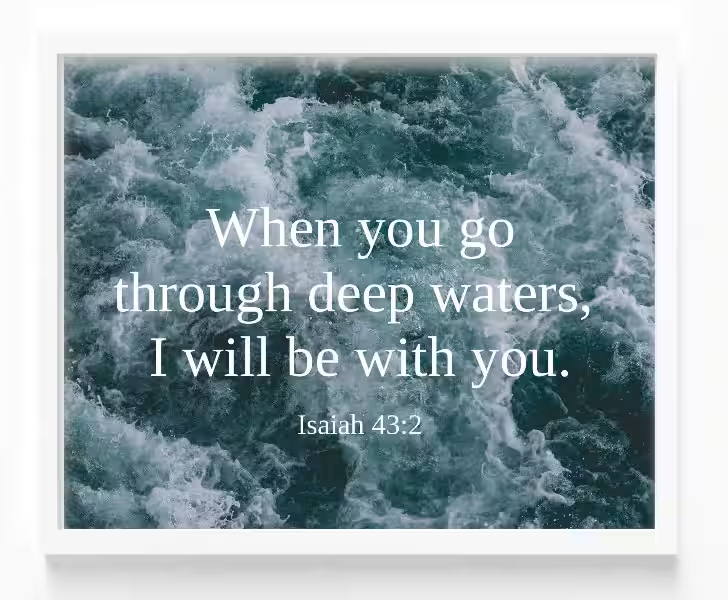
The raw, chilling whisper, “I have no future,” can echo in the deepest chambers of the soul, a profound emptiness that seems to swallow all hope. It’s a sentiment that transcends circumstance, a feeling that can grip anyone, regardless of their background, age, or achievements. When this crushing realization descends, the world can feel like a canvas stripped bare of color, a narrative abruptly cut short. This pervasive sense of hopelessness, this stark declaration of “I have no future,” often leaves individuals adrift in a sea of despair, searching for an anchor in a storm of existential dread. But what if, within the very fabric of our shared human experience, there exists a force, a framework, a guiding light that can offer solace and a path forward, even when the future seems irrevocably lost? Religion, in its myriad forms, has long grappled with this profound human struggle, offering narratives, rituals, and communities that can help us confront the darkness and rediscover the possibility of tomorrow.
For many, the idea of religion might feel distant, even irrelevant, when faced with such acute despair. It can seem like a platitude, a superficial comfort for problems that run far deeper. However, beneath the surface of dogma and ritual lies a profound engagement with the human condition, including its deepest anxieties and fears. When the internal compass spins wildly, and the thought “I have no future” becomes all-consuming, turning towards faith can be a radical act of seeking something larger than oneself, something that can hold the immensity of that feeling without being consumed by it. This article aims to explore how religious perspectives can offer a framework for understanding and ultimately transcending the feeling that “I have no future,” providing practical solace and actionable insights for those grappling with this profound sense of desolation.
The Weight of “I Have No Future”: Understanding the Despair
The declaration “I have no future” is more than just a passing thought; it’s a deeply ingrained belief system that can cripple progress and stifle even the smallest spark of optimism. This feeling often stems from a confluence of factors, including crippling setbacks, persistent failures, or a perceived lack of control over one’s life circumstances. When dreams are repeatedly dashed, and efforts seem to yield only further disappointment, it’s easy to conclude that the path ahead is blocked. This can manifest as crippling anxiety, deep-seated depression, or a pervasive sense of futility that makes even mundane tasks feel overwhelming.
Consider Sarah, a talented artist who, after years of rejection from galleries and dwindling financial resources, found herself staring at a blank canvas, the words “I have no future” a constant hum in her mind. Her passion, once a vibrant source of joy, now felt like a cruel joke. This feeling of being trapped, of having exhausted all avenues, is a common thread for those who feel their future is non-existent. It’s a sensation that can be so potent that it blurs the present moment, making it impossible to envision any positive change. The world contracts, and the only certainty is the bleakness that stretches out indefinitely, reinforcing the conviction that “I have no future” is an unalterable truth.
Spiritual Frameworks for a Barren Horizon
Many religious traditions offer a profound counterpoint to the idea of a predetermined, bleak future. They introduce concepts that can reframe perceived endings as potential beginnings. For instance, the Christian concept of divine providence suggests that a higher power has a plan, not necessarily one we can always understand in the moment, but one that ultimately leads towards good. This doesn’t negate hardship, but it offers a perspective that hardship is not the final word. Similarly, in Buddhism, the doctrine of impermanence (Anicca) teaches that all things are in constant flux, meaning that even the most dire situations are temporary. The understanding that nothing, not even despair, is permanent can be a powerful antidote when the mind insists, “I have no future.”
The concept of redemption and rebirth is also a recurring theme across faiths. In Hinduism, the cycle of karma and reincarnation suggests that present circumstances are a result of past actions, and future lives can be shaped by present choices and spiritual growth. This offers a long-term perspective that extends far beyond a single lifetime, implying that even if this earthly existence feels devoid of promise, there are opportunities for change and evolution in the grand cosmic scheme. For someone feeling the weight of “I have no future” in this life, the idea that their spiritual journey continues can provide a measure of comfort and a renewed sense of purpose, even if it’s a purpose focused on spiritual evolution rather than immediate worldly success.
Finding Hope in the Divine Narrative
Religion often provides a compelling narrative of hope, even in the face of overwhelming adversity. These stories, whether of prophets overcoming trials, communities rebuilding from ruin, or individuals finding faith in their darkest hours, serve as powerful archetypes that resonate with our own struggles. The narrative of Job in Judaism and Christianity, who endures immense suffering yet maintains his faith, offers a testament to the possibility of enduring unimaginable loss and still finding a way to live. These stories act as spiritual anchors, reminding believers that they are not alone in their pain and that even the most devastating experiences can be navigated.
Furthermore, many religious teachings emphasize the inherent worth and dignity of every individual, regardless of their achievements or failures. This perspective can be incredibly liberating when the internal narrative of “I have no future” is fueled by self-criticism and a sense of inadequacy. The Islamic concept of Allah’s boundless mercy (Rahmah), for example, assures believers that forgiveness and a fresh start are always possible, provided there is sincere repentance and a commitment to change. This belief can dismantle the rigid walls of self-condemnation, opening up space for self-compassion and the courage to envision a different path, one where the whisper “I have no future” begins to fade.
The Power of Community and Shared Faith
One of the most significant contributions of religion to combating feelings of hopelessness is the strength found in community. When you feel like “I have no future,” isolating yourself can exacerbate the despair. Religious congregations, sanghas, or ummah provide a support network where individuals can share their burdens, receive encouragement, and find practical assistance. This shared experience of faith creates a powerful sense of belonging, countering the loneliness that often accompanies profound despair. Communal prayer, meditation, or worship can elevate the spirit and offer collective strength that transcends individual limitations.
These communities often engage in acts of service and charity, which can redirect focus from personal despair to the needs of others. Giving back, whether it’s volunteering at a soup kitchen or supporting a religious charity, can instill a sense of purpose and remind individuals of their capacity to make a positive impact. This outward focus can be a powerful antidote to the inward spiral of “I have no future.” By actively participating in the well-being of others, individuals can rediscover their own value and agency, finding that their future, even if uncertain, is not entirely without meaning or contribution.
Practical Steps: Rebuilding Hope Through Spiritual Practices
For those who resonate with the idea that religion can offer a lifeline when the phrase “I have no future” feels like a death sentence, tangible steps can be taken. Regular engagement with sacred texts can provide wisdom, inspiration, and a renewed perspective. Whether it’s reading Psalms for comfort, contemplating Buddhist sutras for mindfulness, or reciting verses from the Quran for guidance, these practices can be grounding. Consistent prayer or meditation acts as a direct conduit to the divine, offering a space for honest expression of fears and a quiet reception of peace. Even a few minutes each day dedicated to connecting with a higher power can begin to chip away at the edifice of despair.
Another crucial step is to actively seek mentorship or spiritual guidance. Often, a wise elder, a trusted religious leader, or a fellow congregant can offer invaluable insights and a listening ear. They can help interpret religious teachings in a way that is relevant to your specific struggles, providing a compassionate perspective that challenges the limiting belief that “I have no future.” Furthermore, participating in religious rituals and ceremonies, such as weekly services, fasting periods, or communal celebrations, can reinforce a sense of belonging and continuity, reminding you that you are part of something larger and enduring, a tapestry of faith that has weathered countless storms.
Embracing the Journey, Not Just the Destination
Ultimately, the feeling that “I have no future” is often a symptom of focusing too intensely on a specific, often unattainable, outcome. Religious traditions, at their core, emphasize the journey of spiritual growth and becoming. The focus shifts from achieving a perfect, preordained future to living fully and intentionally in the present moment, guided by faith and a commitment to ethical living. This shift in perspective can be profoundly liberating. It means that even if the envisioned future doesn’t materialize, the present moment can still be filled with meaning, purpose, and love.
The wisdom found in various faiths encourages patience, perseverance, and trust in a process that is often beyond our immediate comprehension. When the thought “I have no future” arises, it can be met with a gentle reminder that God’s timing is not our timing, or that the path of enlightenment is a lifelong endeavor. By cultivating gratitude for the present, even its smallest blessings, and by engaging in acts of kindness and compassion, individuals can gradually rebuild a sense of hope. This is not about denying the pain or the difficulty, but about finding the strength within faith to navigate the challenges with grace and resilience, knowing that each step taken in faith, no matter how small, contributes to a future that is being continually shaped by divine love and personal growth.
Frequently Asked Questions: Facing the Future and Finding Meaning
I Have No Future
Q: I feel like I have no future and don’t see any point in continuing. What can I do?
A: It’s completely understandable to feel this way when you’re experiencing despair. These feelings are often a sign that you are in immense pain and need support. Please know that you are not alone, and there are people who want to help. Reach out to a crisis hotline or mental health professional immediately. They can provide a safe space to talk about your feelings and explore options. Your future is not predetermined, and things can change with the right support and perspective.
Q: How can I start to believe that there might be a future for me?
A: Shifting from a belief of no future to one with possibilities takes time and often requires external support. Start by focusing on very small, manageable steps. This could be as simple as getting out of bed, taking a shower, or eating a meal. Celebrate these small victories. Connect with trusted friends, family, or a therapist who can offer encouragement and help you identify glimmers of hope. Sometimes, seeing your situation through another’s eyes can reveal possibilities you can’t see yourself right now.
Q: What if I don’t have anyone to talk to?
A: Even if you feel isolated, there are always resources available. Crisis hotlines and text lines are accessible 24/7 and are staffed by trained individuals who can listen without judgment and offer immediate support. Online forums and support groups can also connect you with others who have experienced similar feelings, providing a sense of community and shared understanding. Your local community mental health services are also a vital resource.
Religion
Q: I’m struggling with my faith and questioning my religion. Is this normal?
A: Absolutely. Questioning your faith and experiencing doubt is a very common and often healthy part of spiritual or religious growth. Many people go through periods of intense questioning, re-evaluation, and even a loss of faith. It doesn’t necessarily mean you’re “bad” or that your beliefs are invalid.
Q: How can I explore my religious or spiritual beliefs if I’m feeling lost?
A: There are many ways to explore your beliefs. You can read religious texts, philosophical works, or books by theologians and spiritual leaders. Engaging in conversations with people who have different perspectives, whether they share your faith or not, can also be illuminating. Consider attending religious services or spiritual gatherings and observe, or seek out spiritual directors, mentors, or trusted members of your faith community for guidance. Mindfulness, meditation, and prayer can also be personal ways to connect with your inner self and explore your spiritual path.
Q: What if my religion tells me I’m wrong for questioning?
A: Different religions and denominations have varying approaches to questioning. Some encourage critical thinking and dialogue, while others may emphasize adherence to doctrine. If you feel judged or dismissed for your questions within your faith, it might be beneficial to seek out alternative interpretations, scholars, or communities that foster a more open and questioning environment. Remember that your personal journey of understanding is valid, and you have the right to seek answers at your own pace.
Q: Can religion offer comfort to someone who feels they have no future?
A: For many, religion can provide immense comfort and a framework for understanding suffering and finding hope. Concepts like divine love, an afterlife, purpose, and a plan can offer solace during difficult times. Religious communities can also provide social support and a sense of belonging. However, it’s important to acknowledge that for some, religious beliefs might exacerbate feelings of guilt or judgment, which can be counterproductive. The comfort derived from religion is deeply personal, and its effectiveness can vary from individual to individual.