For many, the word “confession” conjures images of hushed rooms, whispered sins, and a somewhat daunting experience. In the Catholic faith, however, confession – more formally known as the Sacrament of Penance and Reconciliation – is a vibrant and profoundly healing encounter with God’s mercy. It’s not just about admitting wrongdoing; it’s a vital pathway to spiritual renewal, forgiveness, and a deeper relationship with Christ. So, how does Catholic confession work, and what makes it such a cornerstone of Catholic life?
This article aims to demystify the process, offering a clear, relatable, and informative guide for anyone curious about this sacred sacrament. Whether you’re a practicing Catholic preparing for confession, someone considering returning to the Church, or simply seeking to understand this aspect of Christian faith, we’ll explore its meaning, its steps, and its transformative power. Understanding how does Catholic confession work is the first step towards appreciating its immense spiritual value.
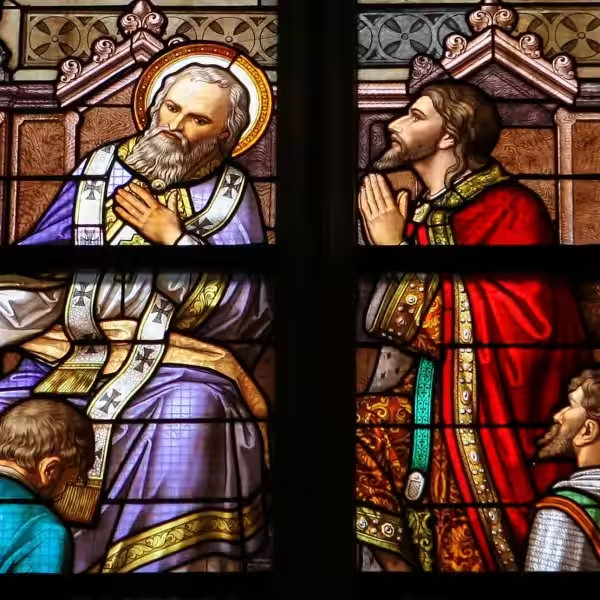
At its core, Catholic confession is about encountering God’s boundless mercy. Jesus himself instituted this sacrament, empowering his apostles and their successors (priests) to forgive sins in his name. This isn’t a human judge handing down a sentence; it’s a divine physician offering healing and restoration to a soul wounded by sin. The Church teaches that through confession, Catholics can receive God’s forgiveness for sins committed after baptism, allowing them to be reconciled with God and the Church.
Think of it like this: imagine you’ve accidentally broken something precious, a family heirloom. You feel guilty and ashamed, and you know you can’t fix it on your own. Confession is like approaching a wise and loving elder who, through their own experience and authority, can help you mend what’s broken and restore its beauty. The priest acts as Christ’s instrument, but the true forgiveness comes directly from God, who is infinitely merciful. This understanding of God’s mercy is central to grasping how does Catholic confession work.
Preparing Your Heart: An Honest Examination
Before approaching the confessional, a crucial element of how does Catholic confession work involves personal preparation. This is known as an examination of conscience. It’s a prayerful reflection on one’s actions, thoughts, and omissions since the last confession, with the goal of identifying sins. The Church provides various aids for this, often in the form of detailed lists of common sins categorized by the Ten Commandments or the Beatitudes.
This examination isn’t about dwelling on failures or scrupulously listing every minor imperfection. Instead, it’s a loving self-assessment, done with the guidance of the Holy Spirit, to understand where we have fallen short of God’s love. For example, instead of thinking, “I was impatient with my child today,” an examination of conscience might lead to the realization, “I failed to show love and patience when my child was struggling, choosing anger instead.” This honest self-awareness is the foundation of a fruitful confession.
Love of God: Have I prayed regularly? Have I put God first in my life? Have I doubted my faith?
Love of Neighbor: Have I treated others with kindness, respect, and charity? Have I spoken ill of anyone? Have I harbored resentment or anger? Have I helped those in need?
Honesty and Integrity: Have I been truthful in my words and actions? Have I stolen anything, no matter how small?
Purity of Heart and Body: Have I engaged in impure thoughts or actions? Have I respected my own body and the bodies of others?
Responsibility: Have I been diligent in my work, studies, and family obligations? Have I used my talents for good?
The Confessional: A Sacred Space of Encounter
When you enter the confessional, you are stepping into a sacred space where the divine and human meet. The physical setting, often a screened booth, is designed to offer privacy and encourage openness. You’ll typically find a screen separating you from the priest. This separation is intentional, fostering a sense of anonymity and allowing for a more direct encounter with God through His minister.
The priest is bound by the Seal of Confession, an inviolable vow of absolute secrecy. He can never reveal anything heard in confession, even under threat of punishment or death. This absolute confidentiality ensures that the penitent can speak with complete trust and freedom, knowing their sins will remain between them and God. This sacred trust is a vital part of understanding how does Catholic confession work.
The Rite of Confession: A Step-by-Step Guide
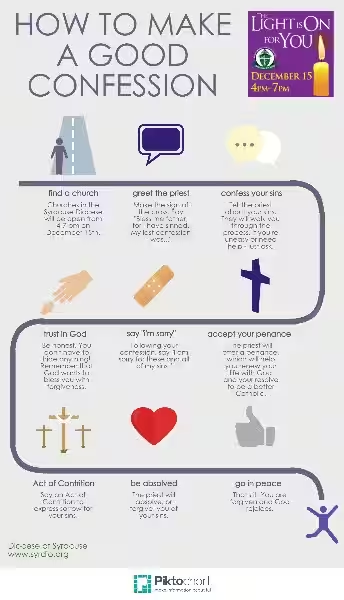
Understanding the practical steps of how does Catholic confession work can ease any apprehension. The sacrament typically follows a simple yet profound pattern:
1. The Greeting and the Sign of the Cross
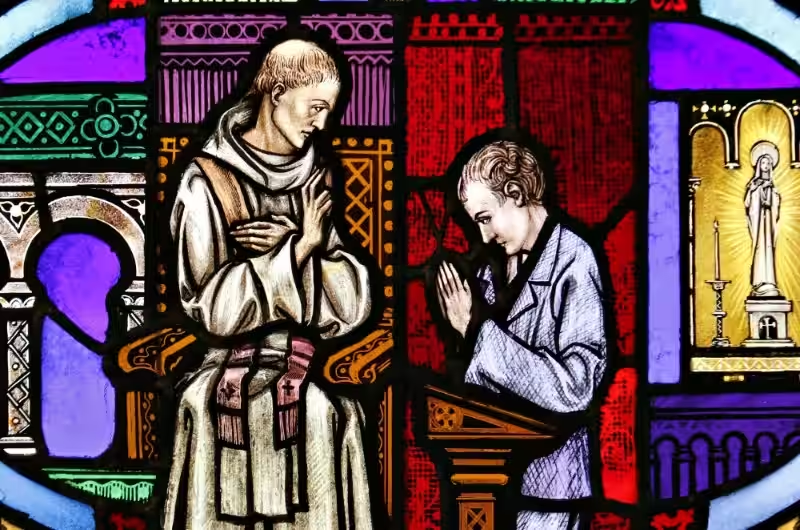
You begin by approaching the priest and making the Sign of the Cross. You might say something like, “Bless me, Father, for I have sinned. It has been [time period] since my last confession.” This opening acknowledges your intention to confess and places your act under God’s blessing.
2. The Confession of Sins
This is the heart of the sacrament. You then confess your sins to the priest, as honestly and completely as you can, drawing from your examination of conscience. It’s helpful to be concise and to the point. For example, instead of a long, rambling narrative, you might say, “I have been angry with my spouse,” or “I have struggled with gossip.” The priest may ask clarifying questions to help you understand the gravity of certain sins or to encourage a more thorough confession.
After you’ve finished confessing, the priest will offer spiritual counsel and encouragement. He may help you identify patterns of sin in your life or offer advice on how to overcome them. Then comes the most powerful moment: absolution. The priest, acting in the person of Christ, will extend his hands over you (or make a gesture of blessing) and recite the prayer of absolution, which includes words like, “God the Father of mercies, through the death and resurrection of his Son has reconciled the world to himself and sent the Holy Spirit among us for the forgiveness of sins; therefore, by the ministry of the Church, may God give you pardon and peace, and I absolve you from your sins in the name of the Father, and of the Son, and of the Holy Spirit.”
4. The Act of Penance (The “Penance”)
Finally, the priest will assign you an act of penance. This is typically a prayer or a good deed, such as praying the Our Father a certain number of times, reading a specific Scripture passage, or performing an act of charity. The penance is not a punishment but a means of spiritual healing and reparation, helping you to make amends for your sins and grow in virtue.
The Fruits of Confession: Renewal and Reconciliation
The impact of how does Catholic confession work extends far beyond the confessional. Receiving absolution brings about sanctifying grace, which heals the soul, restores it to friendship with God, and strengthens it against future temptation. It’s like a spiritual bath, washing away the stains of sin and renewing our interior life.
Moreover, confession reconciles us with the Church. Sin can damage our communion with the Body of Christ. By being forgiven, we are reintegrated more fully into the community of believers, strengthening our bonds of love and unity. The sacrament also provides spiritual direction and encouragement, helping us on our ongoing journey of holiness. It’s a profound experience of God’s loving embrace, reminding us that we are always beloved children, even when we stumble.
Making Confession a Regular Practice
The Catholic Church encourages its members to go to confession regularly, typically at least once a year, but many find spiritual benefit in going more frequently, perhaps monthly or whenever they feel a particular need for God’s healing. Understanding how does Catholic confession work can transform it from a feared obligation into a cherished opportunity. It’s a testament to God’s immense love and His desire for a deep and personal relationship with each of us. By embracing this sacrament, we open ourselves to the transformative power of His mercy, allowing us to live more fully in His grace and love.
Frequently Asked Questions about Catholic Confession
What is Catholic confession?
Catholic confession, also known as the Sacrament of Penance or Reconciliation, is a sacrament instituted by Jesus Christ in which Catholics acknowledge their sins to a priest. The priest, acting in the person of Christ, grants absolution, which is God’s forgiveness for those sins.
Catholics believe that Jesus gave the apostles the authority to forgive sins (John 20:23). Priests, as successors to the apostles, have received this authority. Confessing to a priest is seen as a way to receive God’s forgiveness through the Church, which is considered the body of Christ. It also provides guidance and spiritual support from the priest.
What kind of sins should be confessed?
Catholics are obliged to confess all mortal sins (sins that are grave in matter, committed with full knowledge and deliberate consent) at least once a year. However, confessing venial sins (less serious sins) is also encouraged as it helps to grow in holiness and strengthen one’s relationship with God.
How often should one go to confession?
While confessing mortal sins once a year is the minimum obligation, Catholics are encouraged to go to confession more regularly, especially if they have committed mortal sins. Many Catholics go monthly or even weekly to receive the grace of the sacrament and to grow in their spiritual life.
What happens during a confession?
Typically, the penitent (the person confessing) kneels in a confessional or meets with the priest in a private setting. The confession begins with a greeting, and the penitent confesses their sins. After the confession, the priest will offer spiritual counsel and assign a penance, which is usually a prayer or a good work to be performed. The priest then grants absolution, after which the penitent recites an Act of Contrition.
Is the priest bound by secrecy?
Yes, priests are bound by the “Seal of Confession,” which is an absolute and inviolable secrecy. They cannot reveal anything they hear during confession to anyone, under any circumstances, and face severe penalties if they do. This secrecy is considered sacred.
What if I can’t remember all my sins?
It is not necessary to remember every single sin. If you confess all the mortal sins you can remember and have a sincere desire to confess any you may have forgotten, you receive the full benefit of the sacrament. God’s mercy is vast.
Can I confess my sins directly to God?
Catholics can and should pray for forgiveness directly to God at any time. However, for mortal sins, the Sacrament of Reconciliation is the ordinary means instituted by Christ for receiving forgiveness through the Church. It’s not a matter of choosing one over the other, but understanding the role of the sacrament in the Catholic faith.