In the vast tapestry of religious practice, the concept of Catholic penance often evokes a sense of mystery, sometimes even a touch of austerity. Yet, beneath the surface lies a profound and deeply human dimension of faith, a pathway designed not for punishment, but for profound healing, spiritual growth, and a renewed closeness with God. This article aims to demystify Catholic penance, exploring its essence, its purpose, and its enduring relevance in the modern religious landscape. We will delve into why this practice, rooted in the teachings of Jesus Christ and the traditions of the Catholic Church, remains a vital tool for believers seeking to live a more authentic and grace-filled life.
Far from being a mere ritualistic act, Catholic penance is an active engagement with our faith, a conscious effort to mend what is broken within ourselves and our relationship with the divine. It’s about embracing vulnerability, acknowledging our imperfections, and deliberately choosing actions that foster spiritual well-being. This journey is not about dwelling on past mistakes with crippling guilt, but rather about learning from them and actively seeking restoration. Understanding the nuances of penance can unlock a richer, more meaningful spiritual experience for anyone seeking deeper connection and reconciliation.
The Heart of Catholic Penance: More Than Just a Sacrament
At its core, Catholic penance is a response to sin. However, the Church’s understanding of sin is not solely about breaking rules; it’s about disrupting our relationship with God, ourselves, and others. Sin creates division, a spiritual wound that requires healing. Penance, therefore, is the process of seeking that healing and reconciliation. It’s a recognition that while God’s mercy is boundless, we are called to actively participate in our own spiritual restoration. This participation involves a conscious turning away from sin and a turning towards God, often accompanied by acts of contrition and amendment.
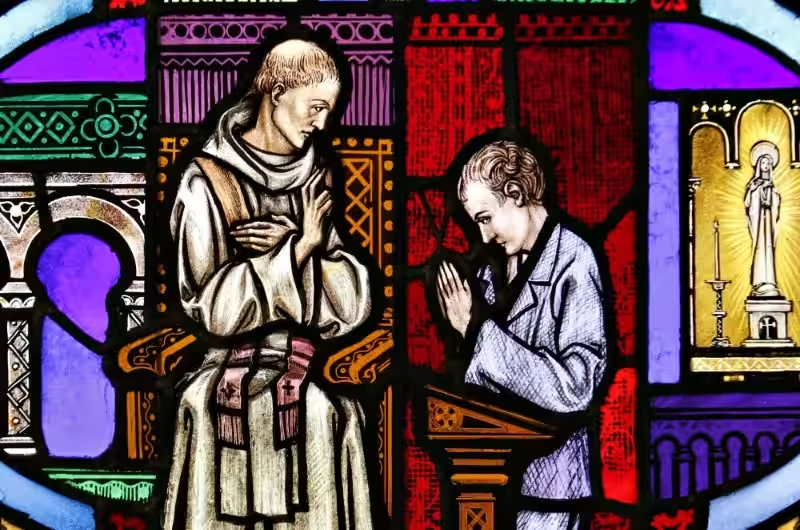
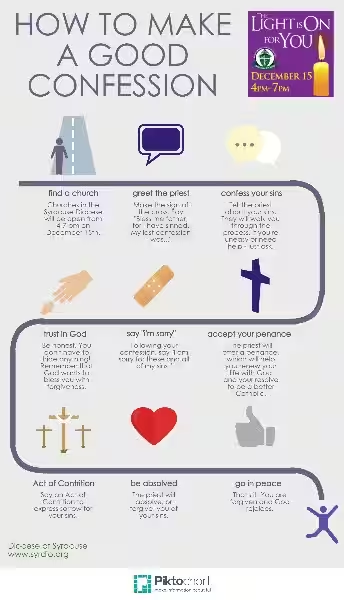
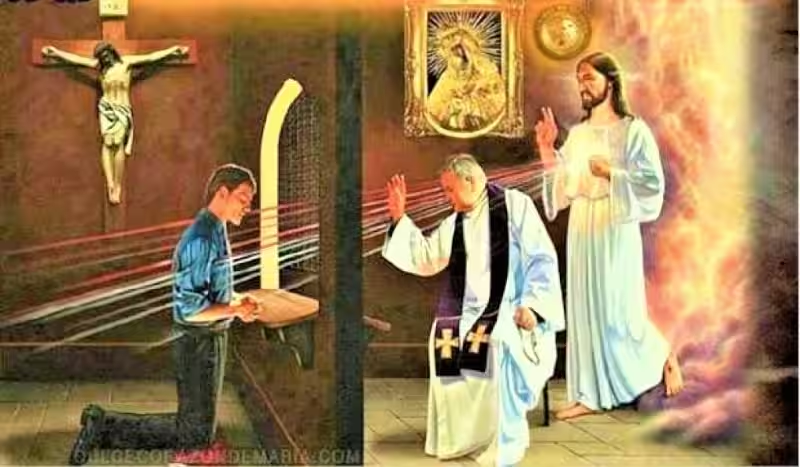
The most well-known form of penance is the Sacrament of Reconciliation, often referred to as confession. This sacrament offers a tangible and profound encounter with God’s mercy. When we confess our sins to a priest, acting in persona Christi (in the person of Christ), we are not simply confessing to another human being. Instead, we are presenting our brokenness to Christ himself, who offers forgiveness and healing through the Church. The priest, guided by the Holy Spirit, imparts God’s absolution, freeing us from the guilt and eternal consequences of sin and offering us the grace to begin anew. This is a cornerstone of Catholic understanding and a powerful, personal experience of divine forgiveness and renewal.
Forms and Practices of Penance: A Spectrum of Spiritual Engagement
While the Sacrament of Reconciliation is central, Catholic penance encompasses a broader spectrum of practices designed to foster spiritual growth and atonement. These acts are not meant to be punitive, but rather transformative, helping us to detach from worldly attachments, cultivate virtues, and grow in love for God and neighbor. They are tangible expressions of our desire to make amends and to align our lives more closely with Christ’s teachings. Think of it as spiritual exercise, strengthening our resolve and deepening our commitment.
These practices can take many forms, often tailored to individual needs and circumstances. They include:
Prayer: Deepening our connection with God through personal prayer, meditation, or reciting devotional prayers like the Rosary. This allows for intimate conversation and listening to God’s will.
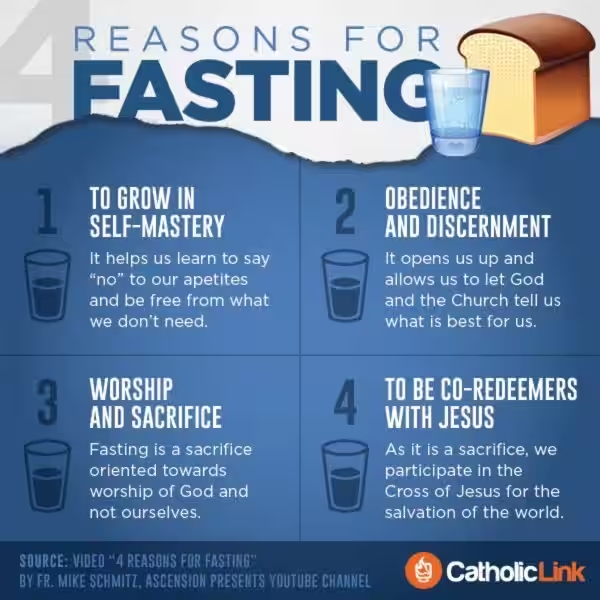
Fasting and Abstinence: Observing days of fasting and abstinence, as prescribed by the Church, helps us to discipline our desires, experience solidarity with those who suffer from hunger, and focus on spiritual rather than physical gratification.
Acts of Charity and Service: Performing acts of kindness, generosity, and service to those in need is a powerful way to live out our faith and make amends for any harm caused by our actions or inactions. This demonstrates a concrete commitment to love in action.
Sacrifice: Making personal sacrifices, whether it be giving up a comfort, a habit, or dedicating extra time to spiritual pursuits, can be an offering to God and a way to atonement for our sins. It signifies a willingness to give something up for a greater spiritual good.
Each of these practices, when undertaken with a sincere heart, contributes to the ongoing process of spiritual renewal and purification.
The Purpose of Penance: Healing, Growth, and Reconciliation
The ultimate purpose of Catholic penance is multifaceted, aiming at the holistic well-being of the believer. Firstly, it serves to heal the wounds of sin. When we sin, we damage our relationship with God. Penance, particularly through the Sacrament of Reconciliation, offers the grace to mend this relationship, restoring us to a state of spiritual health and friendship with God. It’s like mending a torn garment, restoring its integrity and beauty.
Secondly, penance is crucial for spiritual growth and maturation. By engaging in penitential practices, we learn to discipline our passions, overcome our weaknesses, and cultivate virtues such as humility, patience, and charity. This ongoing effort strengthens our spiritual muscles, enabling us to resist temptation more effectively and to live a life more fully aligned with Christ’s teachings. It’s a process of continual conversion, a lifelong journey of becoming more like Christ.
Finally, penance is intrinsically linked to reconciliation. Not only does it reconcile us with God, but it also calls us to reconcile with our fellow human beings. When we have wronged others, acts of penance can include seeking their forgiveness and making amends for the harm caused. This aspect highlights the social dimension of our faith, reminding us that our relationship with God is intertwined with our relationships with one another. True penance, therefore, extends beyond the individual, fostering peace and healing within communities.
Living a Penitent Life: Embracing God’s Mercy in Daily Life
To truly embrace Catholic penance is to integrate its spirit into the fabric of our daily lives. It is not a series of isolated events, but a continuous disposition of the heart. This means cultivating a habit of self-reflection, honestly assessing our actions and intentions, and remaining open to God’s gentle guidance. It involves a willingness to acknowledge our shortcomings without succumbing to despair, trusting instead in God’s infinite mercy and love.
Living a penitent life is also about active participation in the Church’s sacraments and practices. This includes regular reception of the Eucharist, which nourishes our spiritual life, and frequent recourse to the Sacrament of Reconciliation. It also means embracing opportunities for prayer, fasting, and charitable works, not as burdensome obligations, but as joyful expressions of our faith and our desire to grow closer to God. Ultimately, a penitent life is a life lived in constant communion with God, marked by gratitude for His boundless mercy and a deep commitment to living a life worthy of His love.
Frequently Asked Questions About Catholic Penance
What is Catholic penance?
Catholic penance refers to acts of self-discipline, prayer, fasting, or almsgiving undertaken to atone for sins, to grow in virtue, and to show repentance. It is an outward expression of an inward disposition of sorrow for sin and a desire for reconciliation with God.
Penance is important because it is seen as a way to participate in Christ’s redemptive work, to heal the spiritual wounds caused by sin, and to foster a deeper relationship with God. It is also a means to strengthen one’s will against temptation and to grow in holiness.
What are some common forms of penance?
Common forms of penance include prayer (especially praying the Rosary or the Stations of the Cross), fasting (abstaining from certain foods, particularly on Fridays and during Lent), abstaining from pleasures, acts of charity or almsgiving, and the Sacrament of Reconciliation (Confession).
Is penance only about punishment for sins?
While penance is related to atoning for sins, it is not solely about punishment. It is also a positive aspect of spiritual growth, a way to align oneself more closely with Christ’s teachings and example, and to seek spiritual healing and purification.
Does penance mean I have to suffer?
Penance often involves embracing discomfort or sacrifice, which can be difficult. However, the focus is on the spiritual benefit derived from these acts, rather than on gratuitous suffering. It is about willingly offering a small sacrifice in union with Christ’s sacrifice.
How does penance relate to the Sacrament of Reconciliation?
In the Sacrament of Reconciliation, the priest often assigns a penance to the penitent as part of the absolution. This assigned penance is a concrete act of atonement and spiritual healing that the person undertakes after confessing their sins.
Can I do penance on my own, or does it need to be prescribed?
While the Church encourages and guides the practice of penance, individuals can undertake acts of penance on their own initiative as a personal devotion or response to God’s grace. However, prescribed penances, especially those assigned in confession, are specifically tied to the sacrament.
Is penance something only devout Catholics do?
The call to repentance and spiritual growth is part of the Christian life for all believers. While the practice and understanding of penance are deeply rooted in Catholic tradition, the underlying principles of turning away from sin and seeking to live a virtuous life are universal to Christianity.