The journey of parenthood is filled with wonder, anticipation, and, let’s be honest, a healthy dose of questions. One of the most common and deeply felt inquiries revolves around our little ones’ development, particularly their language acquisition. As parents, we eagerly await those first precious words, each syllable a testament to their growing understanding of the world around them. A frequent question that surfaces, often whispered in hushed tones among friends or pondered during quiet moments of reflection, is: how many words should my 13-month-old be saying? This isn’t just about ticking boxes on a developmental chart; it’s about understanding the miraculous unfolding of communication, a gift we often see through a spiritual lens, recognizing it as part of a divine plan for our child’s unique journey.
This article aims to provide a reassuring and informative guide for parents navigating this exciting stage, weaving in the rich tapestry of faith and spirituality that often informs our understanding of child development. We’ll explore what’s considered typical for a 13-month-old’s vocabulary, acknowledge the wide spectrum of normal, and offer practical ways to foster language growth, all while remembering the sacred trust we hold as caregivers. It’s a time of immense learning for both parent and child, a period where we can lean on our faith to provide comfort, strength, and a deeper appreciation for the miracle of speech.
The Sacred Beginning of Speech: What to Expect at 13 Months
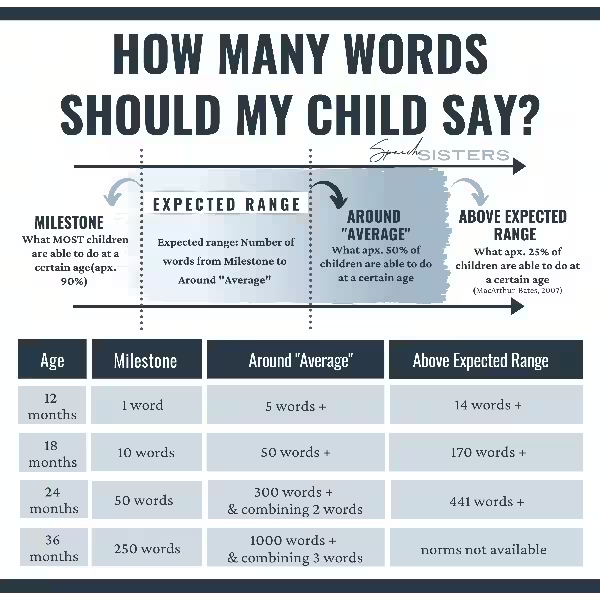
The question of how many words should my 13-month-old be saying is a natural one, reflecting our deep desire to see our children thrive and communicate. At 13 months, a baby is typically beginning to explore the world of spoken language with more intention. While there’s no single, rigid number that applies to every child, a general guideline suggests that many 13-month-olds will be using between two to six recognizable words consistently. These words are often simple and directly related to their immediate environment and needs, such as “mama,” “dada,” “ball,” “dog,” or “bye-bye.” It’s important to remember that this is a broad spectrum, and some babies may say a few more, while others might be focusing on understanding and gestures. The Bible itself often speaks to the importance of communication and understanding, reminding us that even in our earliest stages, the capacity for connection is divinely instilled. We are created with an innate drive to connect, and language is a primary tool for that connection.
Beyond the specific number of words, it’s crucial to observe the quality and context of their vocalizations. Are they babbling with varied intonation, mimicking sounds they hear, and responding to their name? Are they using gestures, like pointing or waving, to communicate their desires? These are all vital precursors to spoken language and are just as important as the spoken words themselves. Think of it as a building process, where each sound, gesture, and understood word is a brick laid in the foundation of their communication skills. Our faith teaches us patience and observation, encouraging us to see the divine hand at work in these progressive steps, recognizing that each stage is purposeful and part of a greater plan. The ability to communicate, even in its nascent forms, is a precious gift from our Creator, enabling us to share our thoughts, needs, and love with others.
Nurturing the Gift of Language: Practical and Spiritual Approaches
When considering how many words should my 13-month-old be saying, it’s also essential to focus on how we can actively nurture this budding ability. This involves creating an environment rich in language and interaction, a practice that can be deeply intertwined with our spiritual values of love, attentiveness, and nurturing. One of the most effective methods is simply to talk to your baby constantly. Narrate your day, describe what you’re doing, and point out objects around you: “Mama is putting on your socks,” “Look at the bright red car,” “That’s a fluffy doggy.” This constant exposure to language helps them associate sounds with meaning. Reading books together, even simple board books with bright pictures, is another powerful tool. Point to the images and name them, encouraging your baby to repeat the sounds if they can. This practice of shared reading can become a sacred ritual, a time of bonding and learning that strengthens your connection and their linguistic capacity.
Beyond direct instruction, fostering a love for communication is paramount. Respond enthusiastically to their attempts to communicate, whether it’s a babble or a recognized word. Celebrate their efforts! Singing songs, even simple nursery rhymes, and engaging in playful back-and-forth conversations (even if it’s just turn-taking sounds) are incredibly beneficial. Consider the spiritual aspect of this: in our faith traditions, listening and responding are core tenets of spiritual connection. Applying this to our parenting means being fully present and responsive to our child’s every attempt to connect, recognizing that each interaction is a sacred opportunity to build trust and encourage their development. Remember, the goal isn’t just to reach a word count, but to foster a lifelong love of communication, a gift that allows us to share our hearts and minds, and ultimately, to better understand God’s creations.
Understanding the Spectrum of Development: When to Seek Reassurance
While we’ve discussed the question of how many words should my 13-month-old be saying, it’s vital to emphasize that this is a spectrum, not a rigid rulebook. Every child develops at their own pace, influenced by a myriad of factors including genetics, temperament, and the richness of their environment. Some babies may be verbal naturals, while others might be more focused on mastering motor skills or understanding language before they start speaking extensively. It’s completely normal for a 13-month-old to be saying anywhere from zero to ten words, and even beyond that, as long as they are making progress in other areas of communication like understanding, gesturing, and babbling. Our faith often teaches us to avoid comparison, reminding us that each individual is unique and fearfully and wonderfully made. This applies acutely to our children’s development, encouraging us to celebrate their individual journey rather than measuring it against others.
However, if you have concerns about your child’s overall communication development, it’s always best to consult with your pediatrician or a speech-language pathologist. Red flags might include a lack of babbling, no response to their name, or a lack of gesture use by around 12-15 months. These professionals can provide a thorough assessment and offer tailored guidance. Remember, seeking professional advice is not a sign of failure, but rather a proactive step in ensuring your child receives the support they need. In many religious traditions, seeking wisdom and guidance is encouraged. Just as we might seek counsel from elders or spiritual leaders for life’s challenges, seeking expert advice for our child’s development is a wise and loving act. It’s about ensuring we are doing everything within our power to nurture this precious gift of communication.
By 13 months, most babies are starting to say a few words, typically around 1 to 3 recognizable words. However, there’s a wide range of normal development. Some babies may say more, while others might be closer to understanding words than speaking them. Focus on their receptive language (understanding) as much as their expressive language (speaking).
What are the main religions in the world?
The world’s largest religions, based on the number of adherents, are Christianity, Islam, Hinduism, Buddhism, and Sikhism. Judaism is also a major world religion with a significant historical and cultural impact. Many people also identify with folk religions, indigenous beliefs, or no religious affiliation.
Can I raise my child without religion?
Yes, it is absolutely possible to raise a child without adhering to a specific religion. Many parents choose to raise their children in a secular household, focusing on values, ethics, and a love of learning. You can introduce your child to different belief systems through literature, cultural events, and discussions about the world, allowing them to form their own understanding as they grow.