In the quiet corners of our hearts, beneath the veneer of everyday life, lies a landscape of choices, some bright and others shadowed. We navigate this terrain with varying degrees of success, inevitably stumbling, falling, and sometimes, deliberately straying from paths we know are right. The weight of these missteps, these moments of imperfection, can become a heavy burden. This is where the profound and often misunderstood practice of confessing our sins enters, offering a pathway to spiritual relief, profound healing, and a deeper connection with the divine. It’s not about dwelling in guilt, but about acknowledging our humanity and seeking a return to wholeness.
The concept of confessing your sins isn’t exclusive to one faith; it’s a thread woven through the tapestry of many religious traditions, a universal acknowledgment of our fallibility and our inherent desire for redemption. Whether it’s a whispered prayer in solitude, a formal rite within a congregation, or a personal reckoning with oneself, the act of bringing our transgressions into the light is a powerful step towards spiritual growth. This article will explore the multifaceted reasons why confessing your sins is not just a religious duty, but a vital component of a fulfilling spiritual life, offering practical insights and relatable narratives to guide your understanding.
The Weight of the Unspoken: The Psychological and Spiritual Toll of Sin
We are, by nature, social creatures, and our inner lives are deeply intertwined with our external actions and their consequences. When we commit an act that we know is wrong, a dissonance arises. This internal conflict, this silent acknowledgment of having fallen short, can manifest in a myriad of ways. It can breed anxiety, a gnawing unease that whispers doubts about our worthiness. It can lead to a sense of isolation, as if a secret barrier has been erected between us and those we love, or even between ourselves and a higher power. The unspoken burden of sin, left unaddressed, can corrode our peace of mind, cloud our judgment, and dim the light within us.
Consider the simple act of telling a lie, even a small one. Initially, it might seem insignificant, a minor detour. But the lie often requires further lies to maintain its facade, creating a tangled web of deceit. This internal burden, this constant vigilance to keep the truth hidden, is exhausting. Spiritually, it creates a separation. Religion teaches us that we are made in the image of a loving and truthful God, and when we act contrary to that nature, we create a rift. To truly embrace the teachings of any religion means recognizing this rift and actively seeking to mend it, and confessing your sins is the first crucial step in that mending process.
The Release of Confession: Finding Freedom and Forgiveness
The act of confessing your sins, in its purest form, is an act of liberation. It’s like opening a heavy door that has been bolted shut, allowing fresh air and light to flood into a stagnant space. When we acknowledge our wrongdoings, we are no longer carrying them alone. We are presenting them, not for condemnation, but for cleansing. This is where the concept of divine forgiveness, central to many religions, becomes tangible. It is through the willingness to confess that we open ourselves to receive the grace and mercy offered to us, allowing us to let go of the guilt and shame that bind us.
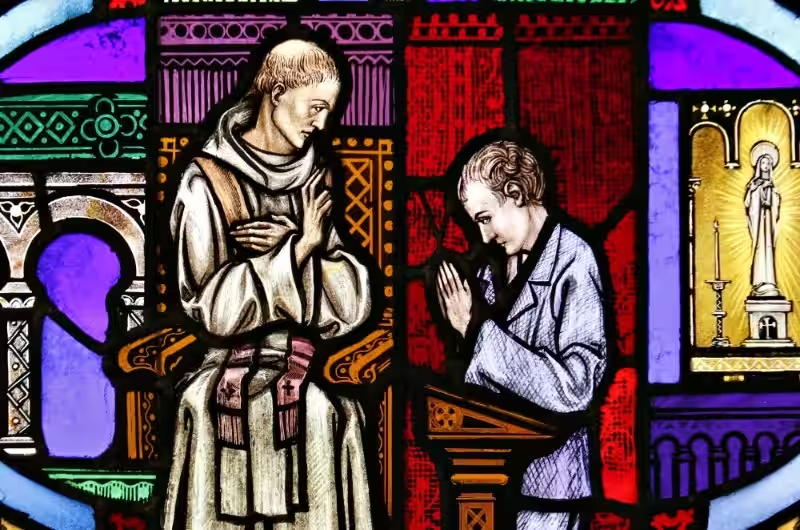
Many find immense solace in the structured ritual of confession, such as the sacrament of Reconciliation in Catholicism. Here, the act of confessing your sins to a priest, who acts as an intermediary, provides a tangible point of human connection and divine absolution. However, the underlying principle extends beyond formal religious practices. Even a private prayer, where you pour out your heart to God, acknowledging your failures, can bring about a profound sense of relief. This unburdening allows for a renewed sense of hope and a stronger resolve to strive for better, knowing that you are not defined by your mistakes but by your capacity for repentance and change. It’s about acknowledging vulnerability and embracing divine compassion.
Beyond the Ritual: Practical Steps for Confessing Your Sins
Confessing your sins isn’t a one-time event; it’s a continuous practice of self-reflection and spiritual discipline. It involves a genuine desire to understand why we err and a commitment to change. The process begins with honest self-examination. This means taking the time to sit with yourself, perhaps with a journal, and prayerfully consider your actions, words, and even your thoughts. Are there patterns of behavior that are causing harm to yourself or others? Are you holding onto grudges, engaging in gossip, or acting with pride? The goal isn’t to berate yourself, but to identify areas for growth.
Once you’ve identified your transgressions, the next step is the act of confession itself. As mentioned, this can take many forms. For some, it might involve approaching a religious leader for guidance and absolution. For others, it might be a heartfelt prayer offered in the sanctuary of your own home, where you openly present your heart to God. The key is sincerity and a genuine desire to be forgiven and to do better. Think of it like visiting a doctor for a diagnosis and treatment plan. You wouldn’t expect to get better without acknowledging the illness and following the prescribed course of action. Similarly, to experience spiritual healing, we must first confess your sins and then actively work towards personal transformation.
The Fruits of a Repentant Heart: Transformation and Renewed Relationship
The ripple effect of confessing your sins extends far beyond immediate relief. It fosters a profound transformation within the individual. When we’ve acknowledged our shortcomings and sought forgiveness, a new sense of spiritual clarity often emerges. We begin to see the world, and ourselves, with greater compassion and understanding. The burden lifted allows for increased empathy towards others who are also struggling. This renewed perspective can mend broken relationships, heal old wounds, and strengthen our bonds with our faith community.
Furthermore, the practice of confessing your sins cultivates humility and gratitude. We recognize our dependence on a higher power for grace and forgiveness, and this realization fosters a deep sense of thankfulness. It’s a continuous cycle: we sin, we confess, we are forgiven, we learn, and we strive to live a more virtuous life, preparing ourselves for the next time we might falter. This ongoing process of repentance and renewal is the very essence of a vibrant and evolving spiritual journey, deepening our connection with the divine and enriching our human experience. It’s about embracing the journey of becoming, rather than striving for an unattainable perfection.
Frequently Asked Questions: Confessing Your Sins
What is confession of sins?
Confession of sins is the act of admitting one’s wrongdoings or transgressions before God, and in some religious traditions, before a designated religious authority or community. It is a practice aimed at seeking forgiveness, reconciliation, and spiritual healing.
People confess their sins for various reasons, including:
To seek forgiveness from God.
To find peace of mind and alleviate guilt.
To repair damaged relationships with God and others.
To grow spiritually and avoid repeating mistakes.
To receive guidance and absolution from a religious leader.
What are the different religious perspectives on confessing sins?
Different religions have varying approaches to sin confession:
Christianity: Many Christian denominations practice confession, with some emphasizing direct confession to God (e.g., many Protestant traditions) and others including confession to a priest as a sacrament for absolution (e.g., Roman Catholicism, Orthodox Christianity).
Judaism: While not a sacrament, Jewish tradition emphasizes teshuvah (repentance), which includes acknowledging sins, regretting them, and resolving not to repeat them. Direct prayer to God for forgiveness is central.
Islam: Muslims are encouraged to seek forgiveness directly from Allah through prayer and repentance. While there is no formal confession to a human, seeking advice from scholars is permissible.
Buddhism: Buddhism focuses on understanding the causes of suffering, which stem from negative actions (karma). While there isn’t a ritualistic confession to a deity or clergy, individuals are encouraged to reflect on their actions, develop mindfulness, and cultivate positive qualities to purify their karma.
Hinduism: Hinduism emphasizes karma and dharma. Individuals are encouraged to acknowledge their wrongdoings through prayer, penance, and acts of devotion to seek divine grace and purification.
Is confession a mandatory practice in all religions?
No, confession of sins is not a mandatory practice in all religions. The emphasis and form of acknowledging wrongdoing vary significantly. Some religions prioritize direct prayer and personal repentance, while others have established sacramental or ritualistic confessions.
What happens after confessing sins?
The outcome of confessing sins depends on the religious tradition and individual beliefs. Generally, it is believed to lead to:
Forgiveness from God.
A sense of relief and spiritual renewal.
The opportunity to start anew.
In some traditions, absolution or a penance assigned by a religious leader.