The Bible, a cornerstone of faith for billions worldwide, is a vast and complex tapestry of narratives, laws, poetry, and prophecy. For many, approaching its pages can feel like stepping into an ancient, awe-inspiring library. Yet, without a guide, the sheer volume and historical distance can sometimes create a barrier to understanding. This is where the invaluable role of biblical commentary shines. More than just notes in the margin, biblical commentary serves as a vital bridge, connecting the timeless truths of scripture to the modern reader’s heart and mind. It’s a journey of discovery, a scholarly endeavor, and a deeply personal exploration of faith.
The practice of interpreting and explaining sacred texts is as old as religion itself. From the earliest scribes meticulously copying and adding their thoughts to the scrolls, to the sophisticated theological works of today, the desire to grasp the full import of God’s word has been a constant. This enduring human impulse is the very essence of what drives the creation and consumption of biblical commentary. It’s about more than just reading words; it’s about understanding the context, the author’s intent, the cultural background, and the profound theological implications that resonate across millennia.
Navigating the Depths: What is Biblical Commentary?
At its core, biblical commentary is an in-depth explanation and interpretation of a specific biblical text. Think of it as a seasoned traveler sharing their knowledge and experience of a foreign land. They don’t just point to landmarks; they explain the history behind them, the local customs, the best routes to take, and the potential challenges to be aware of. Similarly, a biblical commentary delves into the original languages (Hebrew, Aramaic, and Greek), historical settings, literary genres, and theological themes of the biblical books. This provides a richer, more nuanced understanding than a surface-level reading alone can offer. A good commentary will often dissect a verse or passage, offering multiple perspectives and even acknowledging areas where scholars may disagree.
This process isn’t about replacing the biblical text with human opinion; rather, it’s about illuminating the text so that its original message can be heard more clearly. For instance, understanding the concept of “sacrifice” in the Old Testament, without a commentary to explain the agrarian and covenantal context of ancient Israelite worship, might lead to a misinterpretation of Jesus’ sacrifice. A commentary would help us see the continuity and fulfillment of God’s redemptive plan, moving beyond a simplistic understanding of animal offerings to the ultimate sacrifice of Christ. These works are essential tools for anyone serious about engaging with the Bible on a deeper level, whether for personal study, sermon preparation, or academic research.
Types of Biblical Commentary: A Spectrum of Insight
The world of biblical commentary is wonderfully diverse, catering to a wide range of needs and interests. We can broadly categorize them into a few key types, each offering a unique lens through which to view scripture. There are commentaries aimed at the general reader, often written in accessible language and focusing on practical application and devotional insights. These might be found in study Bibles or popular devotional series. Then, there are more academic commentaries, which engage deeply with textual criticism, linguistic analysis, and historical-theological debates. These are often multi-volume sets written by leading scholars in their fields and are indispensable for in-depth study.
Furthermore, we encounter commentaries that focus on specific theological traditions, such as reformed, evangelical, or Catholic perspectives. While all aim to be faithful to the text, their interpretive frameworks and emphasis may differ, offering valuable insights from varied theological viewpoints. Some commentaries are highly focused, dedicating an entire volume to a single book of the Bible, while others offer a broader overview of entire testaments or even the whole canon. The key is to find commentaries that align with your personal goals and the depth of study you wish to undertake. For example, a new believer might start with a devotional commentary on the Gospels, while a seminary student might dive into a critical commentary on the Pauline epistles.
The Role of Biblical Commentary in Religion and Faith
The impact of biblical commentary on religious life and personal faith is profound and multifaceted. For many religious traditions, scripture is the ultimate authority, and the faithful have a deep-seated desire to understand its teachings accurately. Commentary provides the tools to navigate complex passages, resolve apparent contradictions, and grasp the overarching narrative of redemption. It allows individuals to move beyond a superficial acquaintance with scripture to a robust understanding that informs their beliefs, practices, and worldview. Without proper guidance, misinterpretations can lead to doctrinal errors or a diminished appreciation for the richness of God’s word.
Consider the Great Commission in Matthew 28:19-20: “Go therefore and make disciples of all nations, baptizing them in the name of the Father and of the Son and of the Holy Spirit, teaching them to obey everything that I have commanded you.” A simple reading might inspire the act of evangelism. However, a thorough biblical commentary would explore the historical context of Jesus’ audience, the meaning of “discipleship” in the first century, the theological significance of baptism, and the weight of Jesus’ command to teach obedience. This deeper understanding fuels a more informed and effective ministry, transforming a general desire to share faith into a purposeful and grounded mission. This engagement with scripture, facilitated by commentary, strengthens individual faith and nourishes the collective life of the religious community.
Enriching Personal Faith Through Commentary
For the individual believer, biblical commentary can be a powerful catalyst for spiritual growth. When we grapple with a difficult passage or a profound theological concept, a well-crafted commentary can offer clarity, encouragement, and new perspectives. It can illuminate the character of God, the nature of sin, the depths of grace, and the hope of eternal life, all revealed through the biblical narrative. This deeper understanding often leads to a more intimate relationship with God, as we begin to see His hand at work throughout history and in our own lives. The ability to connect with scripture on this level transforms passive reading into an active dialogue with the divine.
Imagine reading about the parable of the Prodigal Son (Luke 15:11-32). Without commentary, we might focus on the son’s repentance or the father’s forgiveness. However, a good biblical commentary might also explore the societal context of shame and honor in ancient Israel, the theological implications of God’s boundless love and mercy, and the call for believers to emulate that same grace towards others. This expanded understanding moves us beyond a simple story to a profound revelation of God’s heart and a challenge to our own attitudes. By wrestling with these insights, our personal faith is not only strengthened but also broadened and deepened, leading to a more vibrant and Christ-like walk.
The Scholarly Pursuit: Accuracy and Context in Biblical Commentary
Beyond personal devotion, biblical commentary plays a crucial role in the academic and theological study of scripture. Scholars dedicate their lives to meticulously examining biblical texts, striving for accuracy in translation, historical context, and theological interpretation. This rigorous approach ensures that our understanding of the Bible is grounded in sound scholarship, free from anachronism or misrepresentation. The goal is to allow the Bible to speak on its own terms, within its original historical and cultural milieu, rather than imposing modern assumptions upon it.
For instance, when studying the book of Revelation, a purely devotional reading might focus on sensational end-times prophecies. However, a scholarly biblical commentary would likely delve into the genre of apocalyptic literature, the historical pressures faced by early Christians in the Roman Empire, and the symbolic language employed by John. This approach helps us to discern the immediate message to the persecuted church while also exploring its enduring theological truths. The commitment to scholarly rigor in biblical commentary is essential for maintaining the integrity of religious tradition and fostering informed theological discourse.
Understanding the Original Languages and Cultures
A significant aspect of scholarly biblical commentary involves engaging with the original languages of the Bible: Hebrew, Aramaic, and Greek. These languages carry nuances and cultural context that are often lost in translation. Commentaries that are proficient in these ancient tongues can offer precise word meanings, explore rhetorical devices, and shed light on cultural idioms that are essential for accurate interpretation. For example, the Hebrew word “hesed,” often translated as “lovingkindness” or “mercy,” carries a much deeper meaning of steadfast covenant love that a simple translation might not fully convey.
Moreover, understanding the ancient Near Eastern and Greco-Roman cultures in which the biblical texts were written is paramount. This includes knowledge of their social structures, political systems, religious practices, and philosophical ideas. A commentary that incorporates this cultural context can help us understand why certain laws were given, why specific parables were told, or why certain prophetic pronouncements were made. For instance, understanding the prevalent practice of client-patron relationships in the Roman world can profoundly illuminate Jesus’ teachings on humility and service, as seen in passages like Mark 10:42-45. This integration of linguistic and cultural expertise is what elevates biblical commentary from mere explanation to profound revelation.
The Future of Biblical Commentary: Technology and Accessibility
As we look to the future, biblical commentary continues to evolve, embracing new technologies and striving for greater accessibility. The digital age has revolutionized how we access and engage with biblical scholarship. Online databases, digital libraries, and interactive commentary platforms now make a vast array of resources available at our fingertips. This democratizes access to scholarly insights, allowing individuals from all walks of life to benefit from the same resources that were once confined to university libraries and theological seminaries. The sheer volume of information available online means that a reader can often find multiple commentaries on a single passage, offering a panoramic view of interpretive possibilities.
Furthermore, advancements in digital tools are enabling more sophisticated forms of biblical commentary. AI-powered tools are beginning to assist in textual analysis, cross-referencing, and even generating preliminary interpretations. While the human element of theological insight and spiritual discernment remains irreplaceable, these technologies offer exciting possibilities for accelerating research and making complex data more understandable. The goal remains to ensure that the enduring truths of scripture are communicated effectively to each new generation, and modern technology is proving to be a powerful ally in this ongoing mission of biblical commentary. This ensures that the rich heritage of biblical understanding continues to grow and empower believers worldwide.
Frequently Asked Questions: Word Biblical Commentary
What is the Word Biblical Commentary (WBC)?
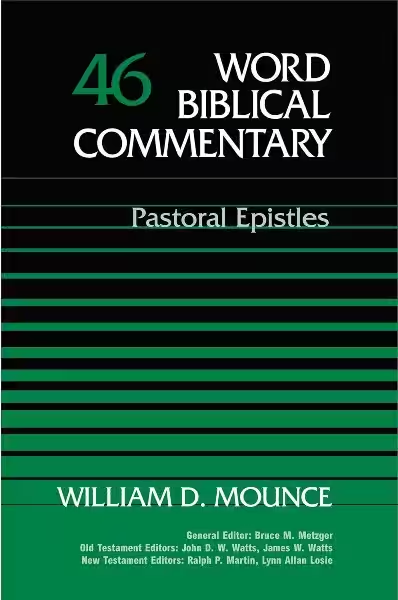
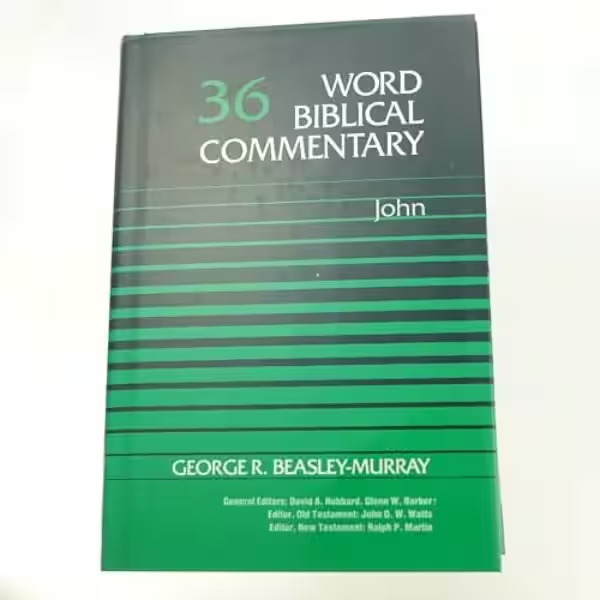
The Word Biblical Commentary (WBC) is a renowned and comprehensive series of scholarly commentaries on every book of the Bible. It aims to provide a detailed and accessible explanation of the biblical text, integrating historical, literary, and theological insights.
Who is the target audience for the WBC?
While written from a scholarly perspective, the WBC is designed for a broad audience, including pastors, theological students, serious lay readers, and anyone interested in a deep and thorough understanding of the Bible.
What is the typical structure of a WBC volume?
Each WBC volume generally follows a consistent structure. It typically begins with an introduction to the book, followed by a verse-by-verse exposition of the text. The exposition often includes sections on the original Hebrew or Greek, textual criticism, translation, and theological implications.
What is the theological perspective of the WBC?
The WBC series is known for its broadly evangelical and conservative theological perspective. Contributors, while diverse in their specific denominational backgrounds, generally affirm the inspiration and authority of Scripture.
How does the WBC approach the original languages of the Bible?
The WBC places significant emphasis on engaging with the original Hebrew and Greek texts. It provides transliterations and translations of key words and phrases, making it accessible even to those without extensive knowledge of biblical languages.
What makes the WBC different from other Bible commentaries?
The WBC is distinguished by its thoroughness, its commitment to both linguistic detail and theological reflection, and its consistent scholarly rigor across all its volumes. It seeks to bridge the gap between technical academic study and practical understanding.
Are there any specific religious denominations that favor the WBC?
While respected across many Christian traditions, the WBC is particularly favored by evangelical and conservative Protestant denominations due to its theological orientation.
Where can I purchase the Word Biblical Commentary series?
The WBC series is available through most major Christian bookstores, online retailers, and directly from publishers like Zondervan. Many theological libraries also house the complete set.