In the tapestry of global faiths, certain figures emerge not from ancient scriptures or widely recognized pantheons, but from the fervent devotion of the people themselves. La Santísima Muerte, the Holy Death, is one such enigmatic entity. Far from the terrifying specter of mortality, for her devotees, she represents a powerful, protective, and just divine force. Understanding her presence often begins with the profound connection forged through Santisima Muerte prayers. These are not merely requests; they are dialogues of trust, expressions of gratitude, and pleas for guidance in the often-turbulent journey of life.
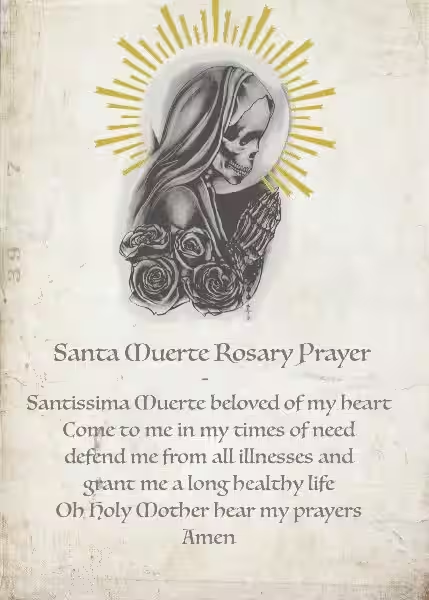
The concept of venerating death itself can be startling to some. However, for those who turn to La Santísima Muerte, she is not the end, but a merciful intermediary, a guide through the veil, and a powerful protectress against the hardships and injustices of this world. Her image, often depicted as a skeletal figure adorned in vibrant robes and holding symbolic tools, is a potent reminder of life’s ephemeral nature, urging followers to live with purpose and to seek solace in her divine presence. The practice of Santisima Muerte prayers is central to this relationship, acting as the bridge between the mortal and the divine.
La Santísima Muerte is a syncretic folk saint, whose veneration has roots in pre-Hispanic indigenous beliefs about death, blended with Catholic traditions and other cultural influences. She is not a saint in the traditional Catholic sense, nor is she officially recognized by the Vatican. Instead, she has emerged organically from the grassroots, particularly in Mexico and increasingly in other parts of the world where diaspora communities have brought their traditions. Her appeal lies in her perceived impartiality and her willingness to hear the pleas of all, regardless of their social standing or past transgressions.
Devotees often describe her as a fair and powerful protector, especially for those who feel marginalized or forgotten by society. She is seen as a force that can bring justice, financial stability, protection from harm, and even healing. The offering of Santisima Muerte prayers is a way to acknowledge her power and to foster a personal relationship with her, seeking her intervention in specific life circumstances. This veneration is deeply personal and often involves rituals, offerings like flowers, candles, and alcohol, and, of course, prayer.
The Role of Prayer in Devotion
For believers, prayer is the most direct and intimate way to communicate with La Santísima Muerte. It’s a moment of vulnerability and strength, where hopes are laid bare and trust is placed in her hands. Santisima Muerte prayers are not rigid recitations; they are heartfelt appeals, whispered or spoken aloud, infused with the sincerity of the supplicant. Whether it’s a prayer for protection for a loved one, a plea for financial relief, or a request for guidance through a difficult decision, the act of praying is an assertion of faith and a conscious connection to her divine energy.
The power of prayer, in any religious context, lies in its ability to focus intention and to cultivate a sense of peace and empowerment. For followers of La Santísima Muerte, Santisima Muerte prayers serve this purpose by reinforcing their belief in her capabilities and by providing a structured way to channel their anxieties and aspirations. It is through these prayers that devotees feel her presence most acutely, experiencing a sense of comfort and reassurance in the face of life’s uncertainties.
Navigating Life’s Trials with La Santísima Muerte’s Guidance
Life presents us all with a multitude of challenges, from the mundane anxieties of daily existence to the profound struggles of illness, loss, and injustice. In these moments, many seek a divine ally, someone who understands the complexities of the human condition and possesses the power to intercede. For adherents of La Santísima Muerte, she is that ally, and Santisima Muerte prayers are the means by which they seek her unwavering support.
These prayers are often offered with a deep understanding that La Santísima Muerte is a force of balance. She is believed to bring about justice and fairness, ensuring that actions have consequences and that those who have been wronged may find recourse. This is why many turn to her in times of legal trouble or when facing oppressive circumstances. A simple prayer for justice can be a powerful statement of faith in her ability to set things right.
Seeking Protection and Safety
One of the most common reasons people turn to La Santísima Muerte is for protection. This can range from safeguarding oneself and loved ones from physical harm to warding off negative energies or malicious intent. The visual representation of La Santísima Muerte, with her unwavering gaze, often inspires a sense of security in her devotees. Her power is invoked through Santisima Muerte prayers that act as a spiritual shield.
For example, a person working in a dangerous environment might recite a Santisima Muerte prayer for protection before starting their shift. This isn’t just a passive wish; it’s an active engagement with their faith, a conscious decision to invite her divine guardianship. The prayer becomes a personal invocation, a reminder of her presence and a plea for her watchful eye. This sense of being divinely watched over can provide immense psychological comfort and a renewed sense of strength.
Financial Blessings and Stability
In a world where financial struggles can cause immense stress and hardship, many seek La Santísima Muerte’s assistance in securing prosperity and stability. She is often invoked for financial blessings, success in business, and relief from debt. The belief is that she can open doors to new opportunities and help individuals overcome economic obstacles. The act of offering Santisima Muerte prayers for financial well-being is a testament to the faith in her ability to influence worldly affairs.
Imagine a small business owner facing a difficult period. They might light a green candle, a color often associated with prosperity by her devotees, and offer a Santisima Muerte prayer for financial success. This prayer isn’t a demand, but a hopeful request, a demonstration of their trust in her power to guide their ventures towards profitability. It is through these acts of devotion and prayer that believers feel a tangible connection to her benevolent influence.
The Practice of Santisima Muerte Prayers: Intent and Ritual
The effectiveness of Santisima Muerte prayers, like any form of prayer, is deeply tied to the intent and sincerity of the person offering them. While specific prayers exist for various purposes, the underlying principle is a genuine connection with her energy and a clear, heartfelt intention. It is not about reciting words mindlessly, but about pouring one’s spirit into the supplication.
Rituals often accompany these prayers, enhancing their spiritual power. This can include lighting candles of specific colors (red for love and passion, white for purity, black for protection, green for money, blue for knowledge), offering drinks like tequila or rum, or placing symbolic items such as flowers, fruits, or small coins. These offerings are not bribes but gestures of respect and gratitude, further solidifying the devotional bond through Santisima Muerte prayers.
Crafting Your Own Santisima Muerte Prayers
While many find comfort in established prayers, the most potent Santisima Muerte prayers are often those that come directly from the heart. There is no single, definitive prayer book for La Santísima Muerte, which allows for a deeply personal and evolving relationship. When crafting your own, consider the following:
Be Specific with Your Intention: Clearly articulate what you are seeking. Are you asking for protection, healing, guidance, or financial assistance?
Express Gratitude: Always include thanks for her presence and any blessings received.
Acknowledge Her Power: Show respect for her divine authority and impartiality.
Be Sincere: Speak from the depths of your heart, letting your emotions guide your words.
Focus on Balance: Understand that her justice is absolute; therefore, align your intentions with fairness and righteousness.
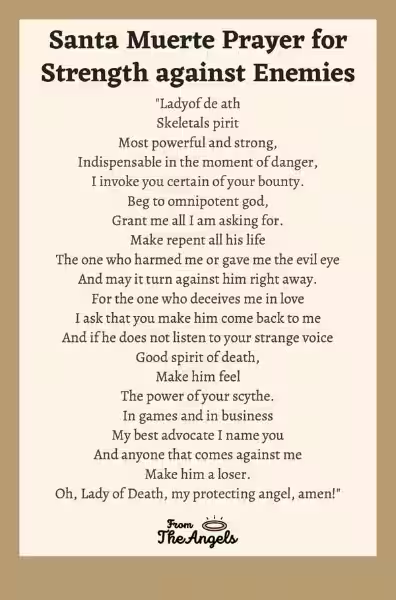
A simple, heartfelt prayer might sound like this: “Oh, Santísima Muerte, my beloved protector, I come before you with a humble heart, asking for your strong shield to guard me from all harm and negativity. Thank you for your constant presence and for the strength you bestow upon me. Guide my steps towards peace and prosperity, and may your divine justice prevail in all matters. Amen.” This type of personal Santisima Muerte prayer fosters a direct and intimate connection.
The Importance of Faith and Respect
Ultimately, the relationship with La Santísima Muerte, like any spiritual path, is built on faith and respect. Her devotees believe that she is a powerful, benevolent force who listens to the sincere pleas of those who approach her with an open heart. Santisima Muerte prayers are more than just words; they are a manifestation of this unwavering belief, a testament to the enduring human need for divine connection and protection in the face of life’s profound mysteries. Embracing her essence through prayer offers a unique path to finding solace, strength, and justice in the world.
Santisima Muerte Prayers: Frequently Asked Questions
What is “La Santisima Muerte”?
La Santisima Muerte, also known as Holy Death, is a revered folk saint or personification of death in Mexican and Latin American folk Catholicism. She is not recognized by the Roman Catholic Church, but is widely venerated by many who seek her protection and intercession.
What kind of prayers are offered to La Santisima Muerte?
Prayers to La Santisima Muerte vary greatly depending on the devotee’s intentions. Common themes include protection from harm, healing, prosperity, guidance, and love. There are specific prayers and novenas (nine-day prayers) associated with her, as well as more personal supplications.
Are there specific rituals or offerings for Santisima Muerte prayers?
Many devotees include offerings as part of their prayers. Common offerings include candles (especially white, black, red, or purple), flowers, incense, alcohol (like tequila or rum), cigarettes, water, and fruit. The specific offerings can depend on the intention of the prayer.
Is it considered disrespectful to pray to La Santisima Muerte?
Respect for La Santisima Muerte is paramount among her devotees. Prayer and worship are considered acts of devotion and reverence. The perception of disrespect often arises from those outside of her veneration who may misunderstand her nature or practices. For her followers, she is a powerful and loving protector.
Can anyone pray to La Santisima Muerte?
Yes, anyone can pray to La Santisima Muerte. Her veneration is open to all who seek her aid, regardless of their background or religious affiliation. Devotion is often seen as a personal relationship with her.
What is the difference between praying to Santisima Muerte and other religious figures?
While all religious figures are approached with reverence, prayers to La Santisima Muerte are often characterized by a directness and a focus on tangible results, such as protection, material well-being, and overcoming obstacles. Her devotees often see her as a powerful, unbiased dispenser of justice and a protector against negative forces.
Where can I find Santisima Muerte prayers?
Santisima Muerte prayers can be found in various places. Many are passed down through oral tradition within families and communities. You can also find them in books dedicated to her veneration, online forums, and on websites dedicated to folk saints and popular devotion.
Is praying to Santisima Muerte considered a form of religion?
While La Santisima Muerte is not an officially recognized religion by major institutions like the Catholic Church, her veneration is a significant aspect of folk Catholicism and popular religiosity in Mexico and parts of Latin America. It is a form of spiritual practice and devotion for many individuals, often integrated into their personal understanding of faith.