The question, “Who does Islam worship?” is fundamental to understanding this vast and globally significant religion. At its core, Islam is a monotheistic faith, meaning it centers around the worship of one, and only one, God. This singular entity is known in Arabic as Allah. The concept of Allah is not a new deity introduced with Islam; rather, Muslims believe Allah is the same God worshipped by prophets such as Abraham, Moses, and Jesus, as revealed through different scriptures over time. Therefore, when asking “who does Islam worship?”, the unequivocal answer is Allah, the One True God.
This unwavering commitment to absolute monotheism, known as Tawhid, is the bedrock of Islamic belief and practice. It permeates every aspect of a Muslim’s life, from their daily prayers to their moral compass and their understanding of the universe. The essence of Islamic worship is a complete surrender and submission to the will of Allah, recognizing His absolute power, sovereignty, and mercy. This isn’t a blind obedience, but rather a deeply personal and conscious act of devotion stemming from a profound understanding of His attributes and His role as the Creator and Sustainer of all existence.
The Islamic understanding of God is profoundly unique, emphasizing His absolute oneness and transcendence. He is not a physical being, nor does He have partners, equals, or offspring. The Quran, Islam’s holy book, repeatedly stresses this point through verses that define Allah’s incomparable nature. For example, it states, “Say: He is Allah, the One and Only; Allah, the Eternal, Absolute; He begetteth not, nor is He begotten; And there is none like unto Him.” (Quran 112:1-4). This declaration is not just a theological statement; it’s a constant reminder for Muslims of the singular focus of their worship.
This emphasis on uniqueness means that all acts of devotion – prayer, supplication, sacrifice, and sincere love – are directed solely towards Allah. There is no intermediary, no saint, no prophet who is worshipped alongside Him. The very act of associating partners with Allah, known as Shirk, is considered the gravest sin in Islam, as it undermines the fundamental principle of Tawhid. Imagine a kingdom ruled by a single, benevolent king. The subjects direct all their petitions and loyalty to him, not to his ministers or generals, because he is the ultimate authority and source of all good. This analogy, while imperfect, helps illustrate the singular focus of Islamic worship.
Allah’s Attributes: Guiding Principles for Worship
Understanding who does Islam worship also involves appreciating the divine attributes of Allah. These attributes, described extensively in the Quran and prophetic traditions, inform the nature and spirit of Islamic worship. They are not merely labels but reflections of His perfect essence. Some of the most prominent attributes include:
Ar-Rahman (The Most Compassionate) and Ar-Rahim (The Most Merciful): These titles highlight Allah’s boundless love and forgiveness, encouraging believers to turn to Him with hope and repentance.
Al-Malik (The King) and Al-Quddus (The Holy): These emphasize His absolute sovereignty and perfect purity, inspiring awe and reverence in worship.
Al-Alim (The All-Knowing) and Al-Baseer (The All-Seeing): These attributes remind Muslims that Allah is aware of all things, seen and unseen, fostering a sense of accountability and sincerity in their actions.
Al-Qadir (The All-Powerful) and Al-Khaliq (The Creator): These underscore His omnipotence and role as the source of all creation, leading to gratitude and recognition of His divine might.
These attributes are not something to be worshipped in themselves, but rather they are manifestations of the one Allah that Muslims worship. Learning about these attributes deepens a Muslim’s connection with their Creator, making their worship more meaningful. For instance, when a Muslim faces hardship, remembering Allah’s attribute of Ar-Rahman (The Most Compassionate) can bring comfort and strength, encouraging them to pray and seek His assistance with confidence.
The Practice of Worship in Islam
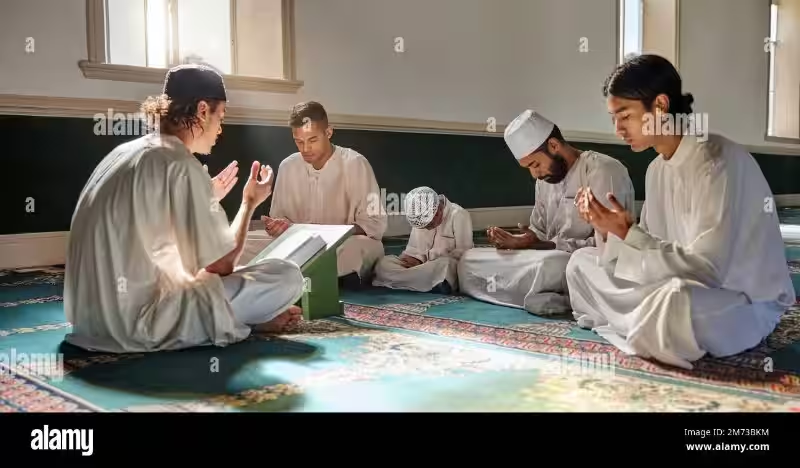
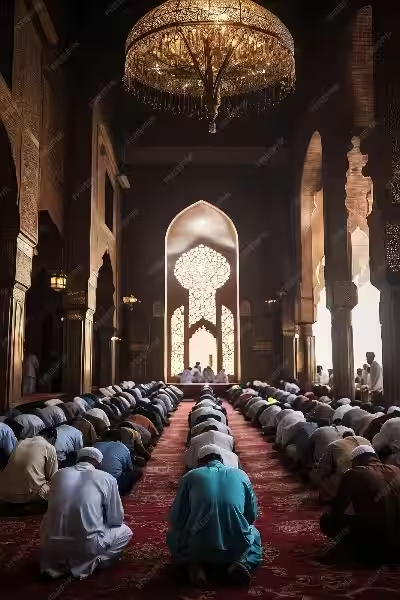
The worship of Allah in Islam is not confined to mere belief; it is an active and consistent practice integrated into the daily lives of Muslims. This practice is guided by the teachings of the Quran and the Sunnah (the traditions and practices of Prophet Muhammad, peace be upon him). The most visible form of this worship is the Salah (daily prayers), performed five times a day at prescribed times. These prayers serve as a direct communion between the worshipper and Allah, a spiritual anchor in the ebb and flow of life.
Beyond the obligatory prayers, Muslims engage in various forms of voluntary worship, such as Dua (supplication), where they individually beseech Allah for guidance, strength, and blessings in all aspects of their lives. They also practice Dhikr (remembrance of Allah), which can involve reciting specific phrases, contemplating His creation, or simply maintaining a constant awareness of His presence. Fasting during the month of Ramadan is another significant act of worship, designed to foster self-discipline, empathy for the less fortunate, and a deeper spiritual connection. All these practices are aimed at strengthening the bond between the individual and the Allah they worship.
It is crucial to clarify that in Islam, Prophet Muhammad (peace be upon him) is revered, respected, and loved immensely, but he is not worshipped. He is considered the final prophet in a line of messengers sent by Allah to guide humanity. Muslims worship only Allah. Prophet Muhammad’s role was to receive and convey Allah’s final revelation, the Quran, and to demonstrate through his own life how to live according to its teachings. His example, the Sunnah, serves as an invaluable guide for Muslims in their pursuit of pleasing Allah.
Muslims show their love and respect for the Prophet by following his teachings, emulating his character, and supplicating for peace and blessings upon him. This act of sending blessings upon the Prophet, known as Salawat, is a way of honoring him and is considered a righteous deed. However, it is never done with the intention of worshipping him or seeking his favor independently of Allah. The ultimate goal of a Muslim’s actions, including their love for the Prophet, is to draw closer to and gain the pleasure of Allah, the one deity worthy of all worship.
Conclusion: The Singular Focus of Muslim Devotion
In summary, when we ask “who does Islam worship?”, the answer is unequivocally Allah. This worship is characterized by its absolute monotheism, its emphasis on Allah’s unique and majestic attributes, and its integration into the daily lives of Muslims through prayer, supplication, and remembrance. The faith is a complete submission to the will of the one true God, recognizing His absolute power, wisdom, and mercy.
The journey of a Muslim is one of striving to live in accordance with the divine will, seeking the pleasure of Allah in all endeavors. This journey is illuminated by the teachings of the Quran and the exemplary life of Prophet Muhammad (peace be upon him), who himself was a worshipper of Allah. The core of Islamic devotion lies in this pure, unadulterated, and singular focus on Allah as the sole object of worship, love, and ultimate reliance.
Frequently Asked Questions: Who Does Islam Worship?
What is the central belief in Islam regarding worship?
Muslims worship only one God, known as Allah in Arabic. This belief is the absolute foundation of Islam and is referred to as Tawhid, the oneness of God.
Does Islam worship any other deities or prophets?
No, Islam strictly prohibits the worship of any other deities, idols, or beings. While Muslims revere prophets like Jesus, Moses, and Muhammad (peace be upon them all), they are considered messengers of God, not deities to be worshipped. Muhammad is the final prophet in a line of messengers.
What does “Allah” mean?
“Allah” is the Arabic word for God. It is a unique and singular name that refers to the one, supreme creator and sustainer of the universe.
Can you explain the concept of “Tawhid” further?
Tawhid is the core tenet of Islam and encompasses three main aspects: Tawhid al-Rububiyyah (Oneness of Lordship), Tawhid al-Uluhiyyah (Oneness of Worship), and Tawhid al-Asma wa al-Sifat (Oneness of Names and Attributes). In essence, it means that Allah is the sole creator, sustainer, and sovereign, and that worship is due to Him alone, with no partners or equals.
What is the role of the Quran in understanding who Muslims worship?
The Quran, considered the literal word of God revealed to Prophet Muhammad, explicitly states the oneness of Allah and the prohibition of associating partners with Him in worship. It is the primary source for understanding Islamic theology.
Are there any intermediaries or saints that Muslims worship?
No, Islam emphasizes direct worship of God. Muslims do not worship saints, angels, or any other intermediaries. Prayers and supplications are directed solely to Allah.
What is the implication of worshipping only Allah?
Worshipping only Allah means dedicating all acts of devotion, love, fear, and reliance to Him alone. It is the ultimate expression of submission to the Creator.