The question of whether the Muslim God is the same as the Christian God is a fundamental inquiry that lies at the heart of interfaith dialogue and personal understanding. For many, especially those outside these faiths, the idea of different religions worshipping different deities can seem intuitive. However, for Christians and Muslims, the reality is far more nuanced. Both religions adhere to strict monotheism, a belief in one, singular God, and this shared foundation leads to significant overlap, yet distinct theological interpretations create crucial differences. Understanding these similarities and divergences is not just an academic exercise; it can foster greater empathy, dispel misconceptions, and illuminate the shared human quest for meaning and connection with the divine.
Delving into this question requires us to move beyond surface-level assumptions and explore the core tenets of each faith. We’ll examine the names used for God, the attributes ascribed to Him, the historical context of their beliefs, and the ways in which each religion understands God’s relationship with humanity. This exploration aims to provide a clear, accessible, and informative overview, enabling readers to grasp the complexities of these two Abrahamic faiths and the profound question: is Muslim God the same as Christian God?
The Foundation of Monotheism: A Shared Ancestral Root
At the most basic level, the answer to “is Muslim God the same as Christian God?” leans towards a resounding “yes” in terms of the fundamental belief in a single, supreme creator. Both Christianity and Islam trace their spiritual lineage back to Abraham, a pivotal figure revered in both traditions as a prophet and a patriarch. This shared Abrahamic heritage means that both religions worship the same God of creation, the one who brought the universe into existence and sustains it. This is not a case of two separate deities, but rather two distinct paths that ultimately lead to the same divine source.
However, the significance of this shared root goes deeper. It signifies that the core understanding of God as omnipresent, omnipotent, and benevolent is largely consistent. When a Christian prays to God, or a Muslim offers a supplication (dua), they are, in essence, addressing the same singular entity. The historical narratives within both faiths often refer to the same divine interventions and revelations, albeit interpreted through different prophetic lenses. This common ground is a powerful starting point for understanding the similarities, moving us closer to answering the question: is Muslim God the same as Christian God?
Defining God: Names and Attributes
While the underlying belief in one God is shared, the specific ways in which God is named and His attributes are described can differ. Christians typically refer to God as “God” or “the Father,” and within the Trinitarian doctrine, they also recognize Jesus as the Son and the Holy Spirit as co-equal parts of the divine. Muslims, on the other hand, exclusively use the Arabic name “Allah” to refer to God. This name is not a title but the very essence of the divine, signifying “the God.” The Quran, Islam’s holy book, provides a rich tapestry of God’s attributes, famously encapsulated in the 99 Names of Allah, such as Ar-Rahman (The Most Gracious), Ar-Rahim (The Most Merciful), Al-Malik (The King), and Al-Quddus (The Holy).
This distinction in nomenclature and the emphasis on specific attributes are crucial for understanding the nuances. For instance, the Christian concept of the Trinity – God as Father, Son, and Holy Spirit – is a central tenet of Christian theology that is not present in Islam. Muslims strictly adhere to the concept of Tawhid, the absolute oneness and uniqueness of God, rejecting any notion of division or partnership. Therefore, while both worship the same God, the theological framework through which that worship is understood and expressed differs significantly. So, when asking “is Muslim God the same as Christian God?”, we must acknowledge these distinct theological interpretations of God’s nature and personhood.
The Role of Prophets and Revelation: Channels of Divine Communication
A key area where the understanding of God’s interaction with humanity diverges lies in the concept of prophets and divine revelation. Both Christians and Muslims believe that God communicates His will to humanity through prophets. Christianity recognizes a lineage of prophets culminating in Jesus Christ, whom they believe to be the Son of God and the ultimate revelation of God’s love and salvation. The Bible, comprising the Old and New Testaments, is considered the inspired word of God, with the New Testament holding paramount importance for Christians.
Islam, too, reveres prophets, including Abraham, Moses, and Jesus. However, Muslims believe that Muhammad is the final prophet in this line, receiving the final and complete revelation from God in the form of the Quran. The Quran is seen as the literal word of God, preserved in its original Arabic form, providing guidance for all of humanity until the end of time. While both faiths acknowledge the divine origin of scripture, the specific content, interpretation, and the finality of revelation present distinct pathways in how God’s message is understood. This difference in prophetic succession and scriptural authority is a significant factor when considering whether Muslim God is the same as Christian God in practice and theological emphasis.
Jesus in Islam and Christianity: A Point of Departure
The figure of Jesus offers a particularly compelling case study for exploring the similarities and differences. For Christians, Jesus is divine, the Son of God, part of the Holy Trinity, who was crucified, died, and resurrected to atone for the sins of humanity, offering salvation and eternal life to believers. His life, teachings, miracles, and sacrifice are the cornerstone of Christian faith. The belief in Jesus’ divinity is central to the Christian understanding of God’s redemptive plan.
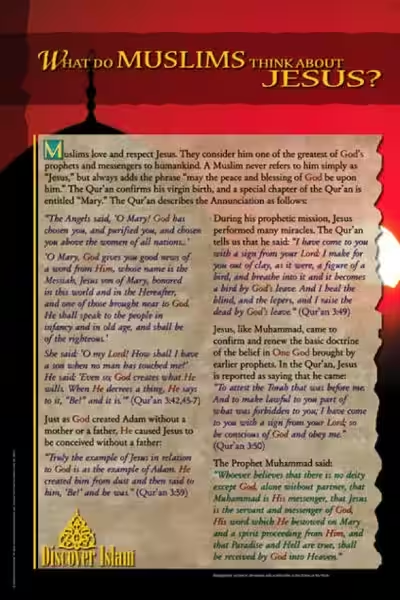
In Islam, Jesus (Isa in Arabic) is revered as a highly significant prophet of God, born of the Virgin Mary through a miraculous conception. Muslims believe he performed miracles, preached the Gospel (Injil), and will return before the Day of Judgment. However, Islam strictly rejects the divinity of Jesus and the concept of the Trinity. Muslims believe Jesus was a mortal human being, a messenger of God, not God himself or the Son of God in a literal, divine sense. This fundamental divergence in the nature and role of Jesus highlights a critical distinction, even as both faiths acknowledge his importance. Therefore, while both traditions hold Jesus in high esteem, the theological implications of his identity lead to different answers to the question: is Muslim God the same as Christian God, particularly concerning the manifestation of God in human form.
Worship and Practice: Expressing Devotion to the One God
The outward expressions of faith, the rituals, and the practices of worship also reveal both commonalities and distinctions. Both Christians and Muslims engage in prayer, fasting, charity, and strive to live lives guided by divine principles. Christians often participate in communion (Eucharist), a ritual remembrance of Jesus’ sacrifice, and gather for Sunday worship in churches, focusing on scripture, sermons, and communal singing. Baptism is a significant sacrament for Christians, symbolizing spiritual cleansing and new life in Christ.
Muslims, on the other hand, adhere to the Five Pillars of Islam: the declaration of faith (Shahada), prayer (Salat) performed five times daily facing the Kaaba in Mecca, charity (Zakat), fasting during the month of Ramadan (Sawm), and pilgrimage to Mecca (Hajj) if able. These practices are direct acts of submission and devotion to Allah, emphasizing obedience, community, and remembrance of God’s presence. While the underlying intention is to worship and connect with the divine, the specific forms of worship and the theological underpinnings are unique to each faith. These practices, therefore, offer a tangible way to see how the broader question of “is Muslim God the same as Christian God?” manifests in the daily lives of believers.
The Concept of Salvation and the Path to God
Ultimately, the path to salvation and the understanding of how humanity is reconciled with God are central to any religious framework. Christianity teaches that salvation is achieved through faith in Jesus Christ, his atoning sacrifice, and God’s grace. By accepting Jesus as their savior, individuals are believed to be forgiven of their sins and granted eternal life. This emphasis on redemption through Christ is a defining characteristic of Christian soteriology.
Islam, conversely, emphasizes submission to the will of Allah (the meaning of “Islam” itself) as the path to salvation. Through sincere belief, good deeds, adherence to divine commands as revealed in the Quran and the Sunnah (teachings and practices of Prophet Muhammad), and seeking God’s mercy, individuals can attain paradise. While good works are crucial, the ultimate judgment rests with Allah’s infinite mercy and justice. Therefore, the means by which individuals are brought into a right relationship with God and the nature of eternal reward differ, reflecting the distinct theological frameworks. This difference in the how of reaching God underscores the complexity of the question: is Muslim God the same as Christian God, especially when considering the ultimate destiny of the soul.
Conclusion: Shared Beliefs, Distinct Paths
In conclusion, the question “is Muslim God the same as Christian God?” is best answered with a qualified “yes” and “no.” Yes, in the fundamental belief in a single, all-powerful, creator God who is the source of all existence. Both faiths share Abraham as a spiritual ancestor and acknowledge God’s attributes of mercy, justice, and power. However, the “no” arises from the distinct theological interpretations, the understanding of God’s nature, the role of prophets, the nature of divine revelation, and the path to salvation.
The Christian doctrine of the Trinity and the divinity of Jesus present a theological framework that is fundamentally different from the strict monotheism (Tawhid) and the view of Jesus as a prophet in Islam. These differences, while significant, do not negate the shared reverence for the one God. Understanding these overlaps and divergences is crucial for fostering mutual respect, dispelling unfounded prejudices, and appreciating the rich diversity within monotheistic traditions. Ultimately, both Christianity and Islam offer profound ways for humanity to connect with the divine, each with its own unique journey of faith and devotion to the same, singular God.
Frequently Asked Questions: Is the Muslim God the Same as the Christian God?
Is the God worshipped by Muslims the same as the God worshipped by Christians?
Yes, Muslims and Christians worship the same God. Both religions are Abrahamic faiths, tracing their spiritual lineage back to Abraham. Christians refer to God as the Father, Son, and Holy Spirit (the Trinity), while Muslims refer to God as Allah. While the theological understanding and descriptions of God differ, the core belief is in one, supreme, all-powerful creator.
How do the names for God differ?
In Christianity, God is commonly referred to as “God,” and in the context of the Trinity, as “Father,” “Son” (Jesus Christ), and “Holy Spirit.” In Islam, the Arabic word for God is “Allah,” which is used in all Islamic traditions. Muslims also have 99 names or attributes for Allah that describe His characteristics.
Are there key theological differences in the understanding of God?
The most significant theological difference lies in the Christian doctrine of the Trinity, which posits God as three co-equal persons in one divine essence. Islam strictly adheres to Tawhid, the absolute oneness and uniqueness of God, rejecting any notion of partners or equals to Allah. Muslims believe Jesus was a prophet of God, not divine, and reject the concept of the Son of God in the Christian sense.
How do Muslims view Jesus compared to Christians?
Muslims revere Jesus (Isa) as a highly significant prophet of God, born of the Virgin Mary, and believe he performed miracles. However, they do not believe he is the Son of God or divine, nor do they believe he was crucified in the same manner depicted in Christian theology. They believe he was raised to heaven by God.
What are the implications of these differences for religious practice?
While both religions emphasize worship, prayer, charity, and adherence to divine guidance, the specific practices and rituals differ. Muslims engage in daily prayers (Salat) facing the Kaaba in Mecca, and follow the teachings of the Quran and the Sunnah of Prophet Muhammad. Christians engage in various forms of worship, including church services, sacraments, and prayer, guided by the Bible and Christian traditions.