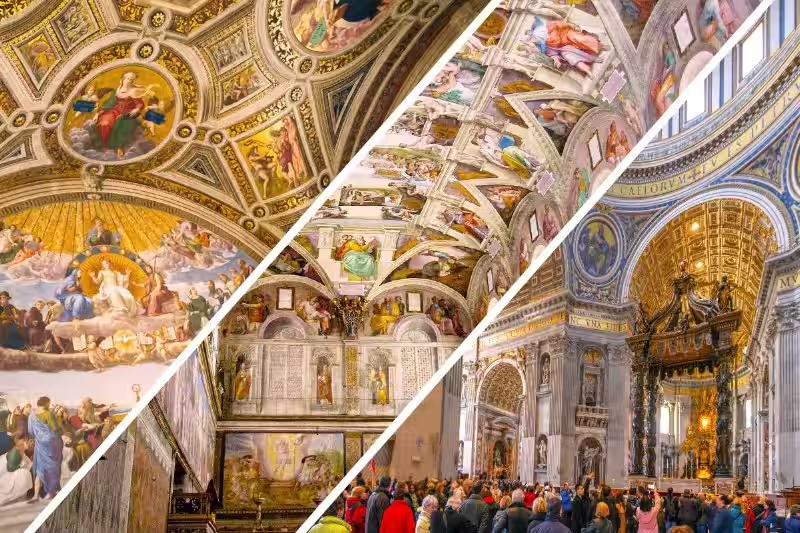
When one speaks of the heart of the Catholic world, two iconic structures in Vatican City immediately spring to mind: the Sistine Chapel and St. Peter’s Basilica. While both are intrinsically linked to religion, faith, and the profound artistry that has served to express it, they offer distinctly different experiences and serve unique purposes. Understanding the nuances between the Sistine Chapel and St. Peter’s Basilica is not merely an exercise in architectural appreciation; it’s a journey into the very essence of religious devotion, historical narrative, and the human capacity to translate the divine into tangible form.
Imagine standing before a breathtaking fresco, its colors still vibrant after centuries, depicting stories that have shaped the spiritual landscape for generations. Now, envision yourself within a colossal edifice, its scale designed to inspire awe and facilitate communal worship. This divergence in experience lies at the core of the Sistine Chapel vs. St. Peter’s Basilica comparison. While both are sacred spaces within religion, one is a sanctuary of sublime art that narrates divine history, and the other is a monumental testament to the Church’s enduring presence and its role in the lives of millions of faithful.
The Sistine Chapel, often mistakenly thought of as a basilica itself, is in fact a chapel. Its fame is inextricably linked to the masterpieces of Renaissance art that adorn its walls and ceiling, most notably Michelangelo’s breathtaking frescoes. This space is a testament to how art can serve as a powerful vehicle for religious storytelling, making biblical narratives accessible and emotionally resonant for the faithful. The sheer artistic genius on display turns this relatively modest-sized chapel into an unparalleled gallery of religious thought and expression.
Stepping into the Sistine Chapel is akin to entering a sacred book. The ceiling, with its iconic depiction of the Creation of Adam, where God’s finger nearly touches that of man, is a profound visual metaphor for the divine spark within humanity. The Last Judgment, covering the altar wall, is a stark and stirring portrayal of divine justice, a cornerstone of religious belief. These artworks are not mere decorations; they are theological statements, rendered with an intensity that continues to captivate and inspire awe, providing a deeply personal and visual encounter with core tenets of religion.
Michelangelo’s Divine Intervention: The Ceiling and The Last Judgment
Michelangelo’s work in the Sistine Chapel is, without question, its defining feature. The ceiling, painted between 1508 and 1512, depicts nine scenes from the Book of Genesis, including the universally recognized “Creation of Adam.” This fresco, more than any other, encapsulates the religious concept of humanity’s direct connection to the divine. It’s a moment frozen in time, a testament to the power of God and the potential inherent in humankind, all rendered with an anatomical precision and emotional depth that remain unparalleled.
The “Last Judgment,” painted much later on the altar wall, presents a contrasting yet complementary vision. It is a stark and powerful reminder of divine accountability, a core religious doctrine. The swirling vortex of figures, both damned and saved, conveys the immense power and finality of God’s judgment. This fresco, with its vivid portrayal of spiritual consequence, serves as a potent visual sermon, reinforcing the importance of faith and righteous living within the framework of religion.
While Michelangelo’s frescoes dominate the imagination, the Sistine Chapel is also adorned with significant works by other Renaissance masters. The walls feature a series of frescoes by artists like Botticelli, Perugino, and Ghirlandaio, depicting scenes from the lives of Moses and Christ. These narrative panels provide a comprehensive visual journey through foundational religious stories, offering a rich tapestry of devotional art that complements the grander visions of Michelangelo.
These earlier frescoes, though perhaps less universally famous than Michelangelo’s ceiling, are crucial to the chapel’s religious significance. They offer a different stylistic approach to religious storytelling, emphasizing clarity and narrative progression. Together, these diverse artistic contributions within the Sistine Chapel create a unified space dedicated to the contemplation of sacred history and the divine will, making it a profound destination for those seeking a deeply artistic engagement with religion.
St. Peter’s Basilica: A Monument to Faith and Community
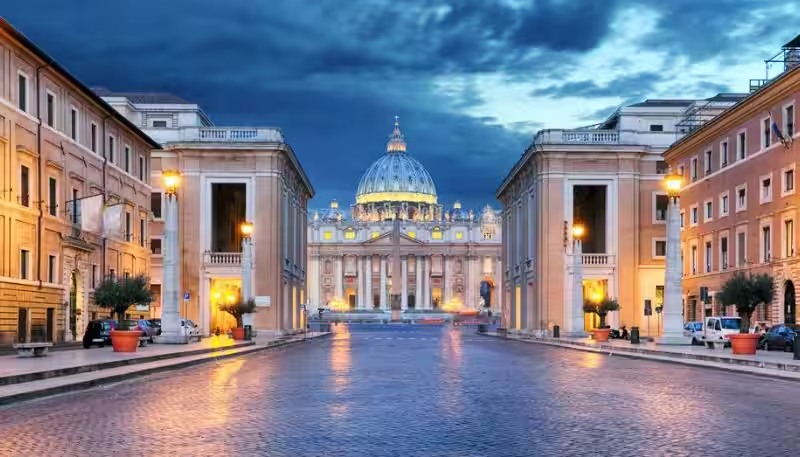
In stark contrast to the intimate, albeit awe-inspiring, artistic immersion of the Sistine Chapel, St. Peter’s Basilica is a testament to the grandeur of the Catholic Church and its enduring role as a spiritual anchor for millions. It is a place of communal worship, a vast edifice designed to house pilgrims, host papal ceremonies, and embody the physical presence of faith on a monumental scale. Its sheer size and architectural magnificence are intended to inspire a sense of wonder and the sublime, reflecting the vastness of religious belief.
While the Sistine Chapel draws visitors for its unparalleled art, St. Peter’s Basilica attracts them for its architectural majesty and its status as a central hub of religious activity. It is here that the Pope often presides over significant liturgical events, connecting the faithful across the globe. The basilica’s design, with its soaring dome and expansive nave, creates a powerful atmosphere conducive to prayer, reflection, and a profound sense of belonging to a global religious community.
Bernini’s Baroque Brilliance: The Baldacchino and the Cathedra Petri
Within the cavernous expanse of St. Peter’s Basilica, Gian Lorenzo Bernini’s genius left an indelible mark, most notably with the stunning bronze Baldacchino that stands over the papal altar. This colossal canopy, reaching nearly 100 feet high, is a masterpiece of Baroque sculpture and architecture, drawing inspiration from the classical columns of the ancient Temple of Solomon. It serves as a visual anchor, a magnificent focal point that draws the eye upwards and emphasizes the sacredness of the site, reinforcing its religious importance.
Equally significant is Bernini’s contribution to the Cathedra Petri, or Chair of Saint Peter. This elaborate sculptural ensemble encases an ancient wooden chair believed to have been used by St. Peter himself. The dynamic interplay of bronze, stucco, and colored glass creates a dramatic and moving depiction of divine enlightenment descending upon the faithful. This work powerfully symbolizes the apostolic succession and the continuity of religious authority, a vital concept within Catholicism.
The Dome: A Heavenly Threshold
Perhaps the most recognizable feature of St. Peter’s Basilica is its magnificent dome, designed by Michelangelo, though completed after his death by Giacomo della Porta and Domenico Fontana. This architectural marvel is not just a structural element; it’s a spiritual aspiration. The act of ascending to the top of the dome offers not only breathtaking panoramic views of Rome but also a profound sense of spiritual elevation, a feeling of being closer to the heavens, a common theme in religious narratives.
The dome’s interior is adorned with mosaics that further enhance its religious significance. The sheer scale and engineering prowess behind its construction are a testament to human ingenuity, but within the context of religion, it represents the immense power and reach of the Church. It is a beacon of faith, visible for miles, symbolizing hope and spiritual guidance for countless individuals around the world, making it a vital symbol in the landscape of religious architecture.
Sistine Chapel vs. St. Peter’s Basilica: A Tale of Two Spiritual Experiences
When comparing the Sistine Chapel and St. Peter’s Basilica, it’s crucial to recognize that their primary functions and the experiences they offer are distinct, though complementary within the broader context of religion. The Sistine Chapel is a sanctuary of contemplative art, a space where the individual soul can engage with divine narratives through unparalleled visual masterpieces. It is a place for quiet reflection and profound artistic appreciation of religious themes.
Conversely, St. Peter’s Basilica is a monumental center for communal worship and pilgrimage. Its vastness is designed to accommodate large gatherings, and its grandeur inspires awe and a sense of collective devotion. While both spaces are profoundly sacred and deeply connected to religion, the Sistine Chapel offers an intensely personal artistic encounter with the divine, whereas St. Peter’s Basilica provides a powerful and communal experience of faith and the Church’s enduring presence.
Art as Theology vs. Architecture as Devotion
The fundamental difference lies in their primary modes of expression. The Sistine Chapel is a masterclass in art as theology. Every brushstroke, every figure, is meticulously crafted to convey religious doctrine, biblical events, and theological concepts. It’s a space where the stories of faith are not just told, but deeply felt through the visceral impact of Renaissance art. The religious message is delivered through the language of painting.
St. Peter’s Basilica, on the other hand, utilizes architecture as devotion. Its immense scale, its soaring heights, and its intricate ornamentation are all designed to inspire reverence and a sense of the sacred. The building itself is a prayer, a physical manifestation of the Church’s grandeur and its commitment to serving the faithful. It’s a space where the physical environment actively contributes to the religious experience, fostering a sense of awe and spiritual connection through its very structure.
Purpose and Practice: A Chapel of Art vs. A Basilica of Worship
The intended purpose of each space dictates the nature of the visitor’s experience. The Sistine Chapel, while a consecrated space and the site of the papal conclave (where cardinals elect a new Pope), is primarily visited for its artistic and historical significance, offering a deeply personal encounter with religious narratives. Visitors often move through it in hushed awe, absorbing the visual splendor and contemplating the profound religious themes depicted.
In contrast, St. Peter’s Basilica is a living, breathing center of religious practice. It hosts daily Mass, papal audiences, and countless other liturgical celebrations. Its purpose is to facilitate active worship and to serve as a spiritual home for Catholics worldwide. The experience here is often more communal, with shared prayers, hymns, and the palpable energy of a congregation united in faith. The religious experience is one of active participation and communal devotion.
Navigating Your Visit: Experiencing Both Sacred Sites
Understanding the distinction between the Sistine Chapel and St. Peter’s Basilica enriches the visitor experience immensely. Approaching the Sistine Chapel with an awareness of its artistic narrative and its theological depth will transform a visual tour into a profound journey through biblical history and religious thought. It’s about engaging with the stories depicted, understanding their significance within Catholicism, and appreciating the sheer brilliance of the artists who brought them to life.
When visiting St. Peter’s Basilica, the focus shifts to experiencing the sacred atmosphere, marveling at the architectural scale, and understanding its role as a global center of religious life. Whether attending a Mass, climbing the dome, or simply standing in quiet contemplation, the basilica offers a palpable sense of connection to centuries of religious tradition and to a worldwide community of believers. Both sites, though different in their presentation, offer deeply meaningful encounters with the enduring power of religion.
Sistine Chapel vs. St. Peter’s Basilica: A Religious Perspective
What is the primary religious significance of the Sistine Chapel?
The Sistine Chapel is the Pope’s private chapel and the site of papal conclaves, where new popes are elected. It also serves as a place for significant papal ceremonies. Its artistic masterpieces, particularly Michelangelo’s ceiling and Last Judgment, are considered profound expressions of Christian theology and biblical narratives.
What is the primary religious significance of St. Peter’s Basilica?
St. Peter’s Basilica is one of the most important churches in Christianity, considered the spiritual center of the Catholic Church. It is traditionally believed to be built over the tomb of Saint Peter, one of Jesus’ twelve apostles and the first Pope. It is a major pilgrimage site and hosts significant papal liturgies.
Are both the Sistine Chapel and St. Peter’s Basilica Catholic sites?
Yes, both the Sistine Chapel and St. Peter’s Basilica are integral parts of the Vatican City and are central to the Catholic faith. They are under the authority of the Pope.
Can I attend Mass at either location?
Mass is regularly celebrated in St. Peter’s Basilica. While the Sistine Chapel is primarily a site for papal ceremonies and papal conclaves, access for regular public Mass is generally not available due to its specific functions.
Do the artworks in the Sistine Chapel and St. Peter’s Basilica have religious themes?
Absolutely. The art in both locations is deeply rooted in religious themes. The Sistine Chapel’s frescoes depict key events from the Old and New Testaments, while the art within St. Peter’s Basilica, including Michelangelo’s Pietà and Bernini’s Baldacchino, are all powerful representations of Christian doctrine and history.
How do the two buildings relate to each other in terms of religious function?
While both are in the Vatican and hold immense religious importance, the Sistine Chapel is more specifically tied to the administrative and electoral functions of the papacy, as well as being a sacred space for contemplation and artistic devotion. St. Peter’s Basilica serves as the principal church of the Catholic world, a place of public worship, and a monumental testament to the faith.