The tapestry of the Greek Orthodox Church is woven with the vibrant threads of countless lives dedicated to faith, love, and service. These are the individuals we venerate as saints – not distant, unattainable figures, but real people who walked this earth, faced struggles, and ultimately achieved an extraordinary closeness to God. Their stories, preserved through tradition and scripture, offer a profound source of inspiration, guidance, and comfort to believers across the globe. Understanding the role of Greek Orthodox Church saints is not merely an academic pursuit; it’s an invitation to connect with a living history of devotion and to discover how their virtues can illuminate our own paths.
Far from being mere historical footnotes, the saints serve as living examples of Christian virtue in action. They represent the ultimate fulfillment of the Gospel’s teachings, demonstrating how to love God with all one’s heart and one’s neighbor as oneself, even in the face of immense adversity. Their lives are a testament to the power of divine grace and the potential for human transformation. By studying their journeys, we can gain practical insights into cultivating our own spiritual lives, learning from their triumphs and their struggles.
The Foundation of Sainthood: What Makes a Saint?
In the Greek Orthodox tradition, sainthood is not an award bestowed for good deeds alone. It is a divine recognition of a life lived in profound union with God, characterized by exceptional holiness and virtue. The Church, guided by the Holy Spirit, discerns sanctity through a rigorous process that often involves the veneration of relics, the occurrence of miracles attributed to the individual’s intercession, and a widespread, enduring popular devotion. This is not a bureaucratic appointment but a deep, spiritual affirmation of a soul’s sanctification and closeness to the divine.
The path to sainthood is as diverse as humanity itself. It encompasses martyrs who gave their lives for Christ, ascetics who dedicated themselves to prayer and self-denial in the wilderness, hierarchs who shepherded the Church with wisdom, monastics who found God in the stillness of the cloister, and laypeople who lived extraordinary lives of faith within their families and communities. Each saint, regardless of their station in life, offers a unique perspective on how to live the Orthodox faith authentically. Think of Saint Nicholas of Myra, renowned for his generosity and compassion, or Saint Basil the Great, a theologian and bishop who shaped much of Orthodox liturgy and monasticism. Their lives, though historically distant, resonate with timeless values.
The Martyr’s Crown: Witnessing Faith unto Death
Among the most revered of the Greek Orthodox Church saints are the martyrs. These individuals exemplify unwavering faithfulness, choosing to endure unimaginable suffering, and often death, rather than renounce their belief in Jesus Christ. Their sacrifice is seen not as a tragic end, but as the ultimate act of love and witness, a testament to the enduring power of the Christian faith. The early centuries of Christianity were rife with persecution, and the blood of these martyrs became, in the words of Tertullian, “the seed of the Church.”
Consider the story of Saint George, the dragon-slayer, whose legend, while embellished over centuries, speaks to the courage of a soldier who refused to compromise his faith even under threat of death. Or the Forty Holy Martyrs of Sebaste, who faced freezing temperatures and a brutal execution for their refusal to abandon Christ. Their stories are not just tales of bravery; they are profound reminders of the ultimate stakes of faith and the unbreakable bond between the believer and their Savior. These saints demonstrate that true freedom is found not in earthly comfort, but in spiritual integrity.
The Ascetic Path: Seeking God in Solitude and Prayer
The ascetics, often found in the deserts or remote mountains, represent another powerful stream of Greek Orthodox Church saints. These men and women voluntarily embraced lives of extreme simplicity, rigorous prayer, and self-denial, seeking to purify their bodies and souls to achieve a deeper communion with God. Their struggles against personal passions and temptations are seen as a spiritual warfare, a battle for the heart and mind that ultimately leads to profound inner peace and divine wisdom.
A prime example is Saint Anthony the Great, often called the “Father of Monasticism,” whose encounters with demons and his wisdom in guiding others are legendary. Another is Saint Mary of Egypt, a former sinner transformed by repentance and a life of profound asceticism. Their lives teach us that spiritual growth often requires sacrifice and discipline, and that by challenging our own limitations, we can uncover a strength and clarity we never knew we possessed. The pursuit of inner stillness and contemplative prayer remains a cornerstone of Orthodox spirituality.
The Hierarchs and Shepherds: Guiding the Flock with Wisdom
The Greek Orthodox Church also honors hierarchs and bishops who, through their divine calling, provided spiritual leadership and theological guidance to the faithful. These saints, like Saint John Chrysostom, renowned for his eloquent preaching, or Saint Athanasius of Alexandria, a staunch defender of Orthodox dogma, dedicated their lives to preserving the purity of Christian doctrine and nurturing the spiritual health of their congregations. Their writings and sermons continue to be studied and cherished for their profound theological insights.
These leaders were not merely administrators; they were shepherds who deeply loved their flocks. They faced heresy, schism, and political pressures, yet remained steadfast in their commitment to the Gospel. Their examples remind us of the importance of sound doctrine, passionate preaching, and compassionate leadership within the Church. They show us that living a life dedicated to the service of others, particularly within the context of the Church community, is a path to holiness.
The Monastics: Finding God in the Stillness of the Cloister
Monks and nuns occupy a special place in the hearts of the Orthodox faithful. Having renounced the world and its distractions, they dedicate their lives entirely to prayer, fasting, and community living within monastic settings. These sanctuaries of silence and devotion are seen as spiritual powerhouses, where the lives of the monastics are a constant intercession for the world. Their existence is a powerful witness to the ultimate reality of the spiritual realm.
The Monasteries of Mount Athos, for example, have been home to generations of saints, preserving ancient traditions of prayer and spiritual struggle. The wisdom and humility of these “Fathers and Mothers” of the desert and cloister are sought after by those seeking spiritual direction. Their lives underscore the value of dedication, community, and the pursuit of a life focused solely on God. They demonstrate that surrendering worldly attachments can lead to profound spiritual freedom.
The Humble Faithful: Sainthood in Everyday Life
It is crucial to remember that sainthood is not confined to the monastery or the martyr’s field. The Greek Orthodox Church also recognizes and honors laypeople who, through their ordinary lives, lived lives of extraordinary holiness. These are the parents who raised their children in faith, the artisans who worked with integrity, the doctors and nurses who served the sick with compassion, and the individuals who consistently chose love and forgiveness in their daily interactions. Their sanctity is found in the sanctification of the mundane.
Consider Saint Paraskevi, a simple woman who lived a life of prayer and charity, or Saint Demetrios, a soldier who was also a devout Christian. Their lives demonstrate that every Christian has the potential for holiness, regardless of their profession or social standing. The ability to transform everyday actions into acts of worship and love is the essence of their example. They remind us that faith is meant to be lived out, not just believed.
The Role of Saints in Orthodox Life Today
The Greek Orthodox Church saints are not relics of the past; they are active participants in the spiritual life of the Church today. Through their intercessions, they bring our prayers before the throne of God. When we pray to a saint, we are not worshipping them; rather, we are asking them to pray for us, seeing them as our spiritual elder brothers and sisters who are already in God’s presence. This concept of asking for prayers is central to Orthodox piety.
They offer practical guidance and moral examples for navigating the complexities of modern life. Facing a difficult decision? Perhaps you can find inspiration in the prudence of Saint John the Merciful. Struggling with anger? Reflect on the patience of Saint Paisios of Mount Athos. Their stories provide a roadmap for living a virtuous life, offering wisdom gleaned from their own experiences of facing similar challenges.
Icons: Windows to the Divine
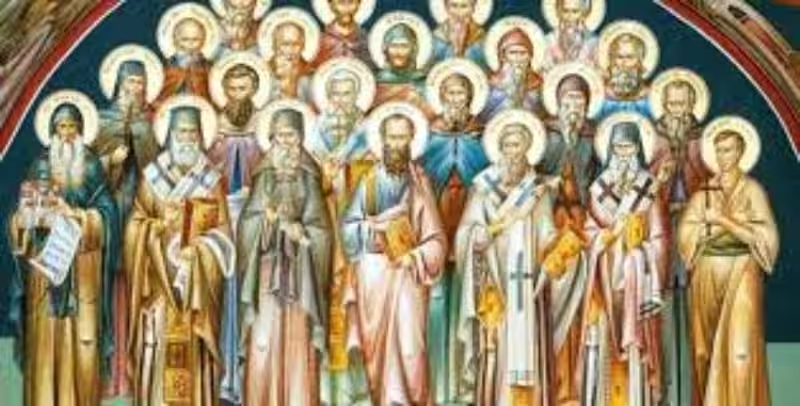
The veneration of icons is intrinsically linked to the lives of the Greek Orthodox Church saints. These artistic representations are not mere decorations but are considered “windows to heaven,” offering a tangible connection to the holy person depicted. When we gaze upon an icon of the Theotokos (Mother of God) or Saint John the Baptist, we are reminded of their presence and their intercessory power. The beauty and symbolism within icons are designed to draw the worshipper into a deeper spiritual experience.
The act of venerating an icon – often with a kiss or a bow – is an act of respect and love, acknowledging the sacredness of the person represented and the divine grace that shone through them. It is a visual reminder of the communion of saints that extends beyond earthly life. The vivid colors and stylized forms of Orthodox icons are meant to transcend the material and point us towards the spiritual realities they represent.
Feasts and Celebrations: Remembering and Emulating the Saints
The Church calendar is a rich tapestry of feast days, dedicated to commemorating the lives and accomplishments of various Greek Orthodox Church saints. These celebrations are more than just holidays; they are opportunities for corporate worship, spiritual reflection, and communal rejoicing. By observing these feasts, we actively remember and honor those who have gone before us in faith, and we are encouraged to emulate their virtues.
From the grand celebration of Pascha (Easter), which honors Christ the King of Saints, to the more specific commemorations of saints like Saint Andrew the Apostle or Saint Spyteridon, each feast day offers a unique opportunity to deepen our understanding and appreciation of the sanctity of life. These celebrations are often accompanied by special services, Vespers, and the sharing of traditions, reinforcing the communal nature of Orthodox faith.
The Greek Orthodox Church saints are a beacon of enduring light, illuminating the path for believers through their lives of faith, love, and sacrifice. Their stories, far from being ancient history, are living testaments to the transformative power of God’s grace and the potential for human holiness. By engaging with their lives, we are not only learning about the past but also discovering practical wisdom and profound inspiration for our present and future.
Whether through the martyrs’ unwavering courage, the ascetics’ profound devotion, the hierarchs’ wise guidance, the monastics’ dedicated prayer, or the laypeople’s everyday sanctity, the saints offer a diverse and accessible spectrum of spiritual excellence. They remind us that the call to holiness is universal, and that each of us, in our own unique way, can strive to live a life that pleases God. The legacy of Greek Orthodox Church saints is not a closed chapter, but an unfolding narrative that continues to inspire and guide generations.
Greek Orthodox Church Saints: Frequently Asked Questions
Who are the saints in the Greek Orthodox Church?
In the Greek Orthodox Church, saints are individuals who have lived a life of exceptional holiness and are recognized by the Church as having attained a special closeness to God. They are venerated as examples of Christian faith and love, and are believed to intercede for believers before God.
How are people recognized as saints?
The process of recognizing someone as a saint, known as canonization, is a formal one within the Orthodox Church. It typically involves years of prayer, investigation into the person’s life and miracles attributed to their intercession, and a decision by the Holy Synod of the Church.
What is the role of saints in Orthodox worship?
Saints play a significant role in Orthodox worship. They are commemorated during divine services, and believers often pray to them for intercession and guidance. Icons of saints are venerated as windows to heaven, reminding the faithful of God’s presence and the communion of saints.
Are there different types of saints in the Orthodox Church?
Yes, there are various categories of saints. These include Apostles, Prophets, Martyrs (those who died for their faith), Hierarchs (bishops and theologians), Ascetics (monastics and hermits who practiced rigorous self-discipline), and Righteous Persons (lay people who lived exceptionally holy lives).
Can saints perform miracles?
Orthodox tradition teaches that saints, through their closeness to God, can intercede and God can perform miracles through their prayers. These miracles are often cited as evidence of a person’s sainthood.
Are all Greek Orthodox Christians expected to venerate saints?
Veneration of saints is a deeply ingrained practice in the Greek Orthodox Church, but it is a personal matter of faith. The Church encourages the veneration of saints as inspirations and intercessors.
What is the significance of icons of saints?
Icons are sacred images that depict Christ, the Theotokos (Mother of God), and saints. They are not merely pictures but are considered spiritual aids that help believers focus on prayer and connect with the heavenly realm. Veneration of an icon is directed towards the person depicted, not the material object itself.