The Soldier’s Unseen Battles: Faith as a Weapon and a Shield
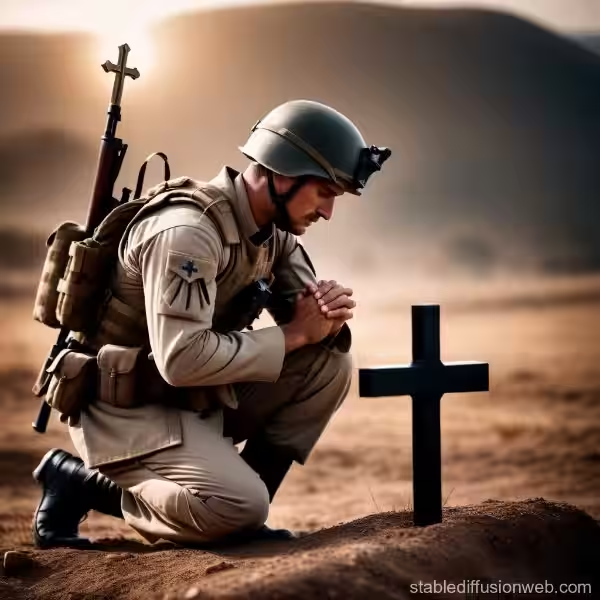
The image of a soldier often conjures up scenes of bravery, discipline, and unwavering resolve on the battlefield. We see them in uniform, carrying arms, facing down threats with a steely gaze. But beyond the physical skirmishes and strategic maneuvers, soldiers frequently engage in a deeper, more personal conflict – the battle for their faith. In times of profound stress, isolation, and existential questioning, the tenets of their religion can become not just a comfort, but a vital source of strength, a moral compass, and a profound wellspring of hope. These are the unseen battles, fought not with bullets, but with belief.
The very nature of military service, with its inherent dangers and the stark realities of life and death, often compels individuals to confront their spiritual beliefs head-on. Whether it’s a quiet prayer before a dangerous mission, a shared hymn in a makeshift chapel, or the solemn reflection on mortality, verses about soldiers and their faith offer a window into the human spirit’s enduring connection to the divine, even amidst the chaos of war. These sacred passages don’t just offer solace; they frequently provide a framework for understanding their purpose, their sacrifices, and their connection to something larger than themselves.
Scriptural Echoes of Service and Sacrifice
Across various religious traditions, we find narratives and teachings that speak directly to the experiences and character of those who serve. These verses often highlight virtues like courage, loyalty, righteousness, and selflessness, qualities that are not only essential for military success but are also deeply rooted in spiritual teachings. They acknowledge the difficult choices soldiers must make and the profound burdens they carry, offering a sense of validation and understanding from a higher power.
Consider, for instance, the Old Testament’s depiction of soldiers who were not merely instruments of war, but were often guided by divine principles. The Book of Joshua, for example, recounts instances where God directly commanded and supported Israelite warriors in their campaigns, emphasizing the importance of obedience and faith in their endeavors. Even in passages that speak of judgment, there’s often an underlying acknowledgement of the duty and sacrifice involved in protecting a people or upholding a cause. This isn’t to glorify war, but to recognize the spiritual dimension inherent in the soldier’s calling.
Inspiring Courage and Steadfastness
One of the most prominent themes in verses about soldiers and religion is the empowerment of courage. Facing fear is an intrinsic part of military life, and religious texts often provide the spiritual fortitude to overcome it. The Bible, for example, offers numerous passages that speak to God’s presence with those who are afraid. In Isaiah 41:10, a powerful verse reassures, “So do not fear, for I am with you; do not be dismayed, for I am your God. I will strengthen you and help you; I will uphold you with my righteous right hand.” This isn’t a promise of immunity from danger, but a promise of divine companionship and inner strength to face it.
This theme resonates deeply, as soldiers often grapple with the primal instinct of self-preservation. Knowing that they are not alone, that a divine power is actively supporting and strengthening them, can be a profound source of moral courage. Imagine a soldier in a tense situation, the adrenaline coursing, the sounds of battle all around. In that moment, recalling such a verse can shift their focus from the overwhelming fear to a quiet confidence in a higher purpose and a guiding presence. It’s a mental and spiritual anchor in the face of overwhelming adversity, allowing them to perform their duties with greater resolve.
Religious faith often provides a moral framework for understanding the concept of duty and the pursuit of justice, which are central to military vocations. Soldiers are often tasked with upholding laws, protecting the innocent, and maintaining peace, endeavors that can be deeply intertwined with religious principles of righteousness and fairness. Verses about soldiers frequently acknowledge the weight of these responsibilities and the ethical considerations involved in the use of force.
The New Testament, while emphasizing peace and love, also contains verses that acknowledge the role of legitimate authority and the protection of society. Romans 13:1-4 speaks of governing authorities being established by God and serving as God’s servants to execute wrath on the wrongdoer. This passage, interpreted in various ways, can provide a theological basis for the legitimacy of military service as a means of maintaining order and protecting citizens. It suggests that when soldiers act with justice and uphold righteous principles, they are, in a sense, participating in a divinely ordained order.
Navigating Moral Dilemmas
The realities of warfare inevitably present soldiers with complex moral dilemmas. Questions about proportionality, collateral damage, and the justification of conflict can weigh heavily on the conscience. Religious teachings, with their emphasis on compassion, forgiveness, and the sanctity of life, can serve as a vital guide in navigating these difficult ethical terrains. Verses that promote mercy and restraint, even in the heat of battle, are often contemplated by soldiers seeking to align their actions with their spiritual convictions.
For example, while the Old Testament contains accounts of warfare, it also emphasizes the importance of justice and care for the vulnerable. Prophets like Amos passionately denounced injustice and oppression, reminding the people of God’s desire for righteousness. This historical context informs the understanding that even in necessary conflict, the spirit of compassion should not be abandoned. It’s a constant internal struggle to uphold the mission while adhering to one’s moral and spiritual values, a testament to the profound impact of faith on a soldier’s decision-making.
Faith in the Face of Loss and Suffering
Perhaps among the most profound applications of faith for soldiers is in confronting the inevitable losses and suffering that accompany military service. Witnessing the death of comrades, experiencing injuries, and grappling with the psychological toll of combat are immense challenges. In these moments, religious verses offer not just comfort, but a transcendent perspective that can help soldiers process grief and find meaning in their experiences.
Many faith traditions speak of an afterlife, of peace beyond earthly suffering, and of the ultimate triumph of good over evil. These beliefs can provide a crucial framework for hope when faced with the grim realities of war. The New Testament, for instance, is replete with promises of eternal life and reunion with loved ones. Verses like John 14:2-3, where Jesus says, “In my Father’s house are many rooms; if it were not so, I would have told you. I am going there to prepare a place for you,” offer a profound message of hope and continuity that can sustain soldiers through their darkest hours.
The sacrifices made by soldiers, both their own and those of their fallen comrades, demand a deep sense of meaning. Religious faith can imbue these sacrifices with a higher purpose, transforming personal loss into a contribution towards a greater good. The concept of redemption and sacrifice is central to many faiths, and soldiers often find parallels between their own willingness to give their lives for a cause and the foundational narratives of their religions.
When a soldier loses a friend in combat, the pain can be unimaginable. However, reflecting on verses that speak of love and sacrifice, such as Jesus’ words in John 15:13, “Greater love has no one than this: to lay down one’s life for one’s friends,” can offer a profound sense of connection and understanding. It validates the ultimate sacrifice and suggests that such acts are imbued with a sacred significance, helping survivors to process grief and honor the memory of the fallen by continuing to serve with dedication and integrity.
The Role of Chaplains and Religious Communities
The presence of chaplains and the support of religious communities are invaluable resources for soldiers seeking to nurture their faith. These individuals and groups provide a tangible connection to their spiritual traditions, offering guidance, counsel, and a space for communal worship and reflection. They are often the first responders to the spiritual and emotional needs of service members, bridging the gap between the demands of military life and the solace of faith.
Chaplains, regardless of their specific denomination, are trained to minister to people of all faiths and no faith, offering a listening ear, spiritual guidance, and practical support. They conduct services, provide counseling, and help soldiers navigate the complex spiritual and ethical challenges they face. This dedicated support system ensures that faith remains a vibrant and accessible aspect of a soldier’s life, even in the most challenging environments. Their role is to strengthen the inner soldier through spiritual means.
A Sanctuary in the Storm
The ability to gather for prayer, scripture study, or simply a quiet moment of reflection in a place of worship, however humble, can be a powerful source of resilience and community. These moments offer a respite from the constant vigilance and pressure of military operations, allowing soldiers to reconnect with their core beliefs and with each other on a spiritual level. The shared experience of faith can foster a sense of camaraderie and mutual support that is as vital as any tactical advantage.
Imagine a deployed unit, far from home, with limited contact. A makeshift chapel, perhaps a tent or a repurposed room, becomes a sacred space. Here, soldiers can find a sanctuary from the storm of war, joining together in song, prayer, and the reading of sacred texts. This communal act of faith reinforces their shared values and provides a powerful reminder that they are part of something larger, a community of believers united in their service and their devotion. This spiritual anchor is crucial for maintaining morale and well-being.
Conclusion: The Enduring Power of Faith in Uniform
Verses about soldiers and religion offer a profound testament to the enduring power of faith in the crucible of military service. They reveal that beyond the uniform and the weaponry lies a complex human being wrestling with profound questions of life, death, duty, and purpose. These sacred texts provide not only comfort and solace but also a moral compass, a source of courage, and a beacon of hope that allows soldiers to face their challenges with unwavering resolve.
The scriptures remind us that the battles fought by soldiers are not solely external. They are also internal, spiritual contests where faith acts as an indispensable weapon and shield. By understanding these verses, we gain a deeper appreciation for the sacrifices made by our service members and the profound spiritual strength that underpins their dedication. It is a strength that allows them to serve with integrity, to face adversity with courage, and to find meaning even in the face of profound loss, demonstrating that faith marches on, even in the heart of war.
Frequently Asked Questions: Verses About Soldiers and Religion
What does the Bible say about soldiers and faith?
The Bible mentions soldiers in various contexts, often highlighting their duty, discipline, and sometimes their faith. For example, in Matthew 8:5-13, Jesus encounters a Roman centurion who demonstrates remarkable faith, leading Jesus to say He has not found such great faith in all of Israel. The Apostle Paul also refers to spiritual warfare using military metaphors, such as in Ephesians 6:10-17, where believers are encouraged to put on the “full armor of God.”
Are there verses that encourage or condone military service?
Yes, some verses can be interpreted as supporting or acknowledging military service as a legitimate role. For instance, Romans 13:1-7 speaks about the governing authorities being established by God, and that they “bear the sword” as God’s servants to carry out wrath on the wrongdoer. This is often understood to include those in military and law enforcement roles. Additionally, stories in the Old Testament, like those of David and Joshua, involve military leadership and God’s guidance in battles.
Are there verses that caution against violence or war, especially from a religious perspective?
Absolutely. The Bible also contains strong messages advocating for peace and condemning violence. Jesus’ teachings on the “other cheek” (Matthew 5:39) and loving one’s enemies (Matthew 5:44) present a counterpoint to aggression. The Beatitudes include “Blessed are the peacemakers, for they shall be called sons of God” (Matthew 5:9). In Isaiah 2:4, there is a prophecy of nations beating their swords into plowshares and their spears into pruning hooks, signifying an end to war.
How do different religions view the role of soldiers?
Views vary significantly across religions and denominations. Some traditions emphasize the warrior aspect and divine mandate for protection, while others focus on pacifism and non-violence. For example, within Christianity, there’s a spectrum of views from just war theory, which seeks to legitimize certain forms of warfare under strict conditions, to Christian pacifism, which rejects all participation in violence. Similarly, other religions have internal debates and diverse interpretations regarding military service and the ethics of conflict.