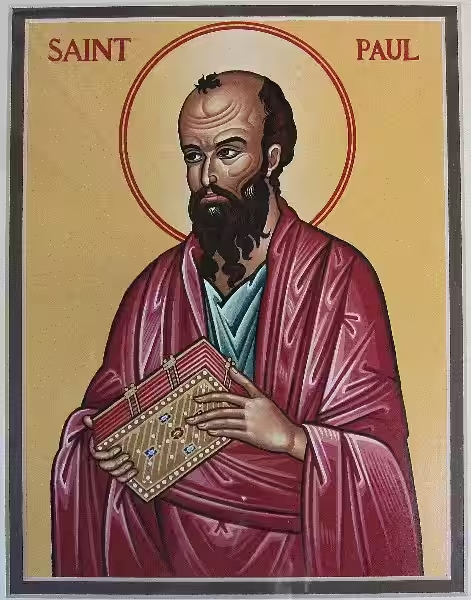
The Epistle to the Romans, penned by the Apostle Paul, stands as a cornerstone of Christian theology and a profound exploration of God’s intricate plan for humanity. It’s not just a collection of ancient writings; it’s a living, breathing testament to the transformative power of faith and the unwavering faithfulness of God. For anyone seeking to understand the core tenets of their faith, or even just curious about the foundations of a major world religion, delving into Romans offers a rich and rewarding journey. We’ll navigate its depths, uncovering its enduring relevance and practical application for our lives today, all through the lens of its powerful bible verses from Romans.
Imagine Paul, a man once zealous in his persecution of Christians, now burning with an unquenchable passion to share the very gospel he once sought to destroy. His letter to the church in Rome, a vibrant and diverse community, is his magnum opus, a systematic presentation of the good news of Jesus Christ. It addresses fundamental questions about sin, righteousness, salvation, and the intricate relationship between God and humanity, both Jew and Gentile. This article aims to unpack these profound truths, making them accessible and personally relevant for every reader.
The Universal Struggle: Sin and God’s Righteous Judgment
Paul begins by painting a stark, yet honest, picture of the human condition. He argues that no one is exempt from the grip of sin. Whether consciously practicing wickedness or unknowingly living apart from God’s perfect standard, all have fallen short. This isn’t a message of condemnation designed to crush us, but rather a necessary prelude to the good news. Understanding our predicament is the first step towards appreciating the magnitude of what God has done for us. As Romans 3:23 states, “for all have sinned and fall short of the glory of God.”
Consider a common scenario: a person who meticulously follows a diet, believing they are perfectly healthy, only to discover a hidden ailment. While the diagnosis is sobering, it’s precisely what’s needed to begin a path to true wellness. Similarly, Paul’s diagnosis of humanity’s sinfulness, as articulated in verses like Romans 1:18-32, where he details the depravity of both the nations and even those who possess religious knowledge, highlights our desperate need for a divine intervention. This isn’t about God being unfair; it’s about His perfect righteousness and His uncompromising standard of holiness.
The Divine Solution: Justification by Faith
The good news, the heart of the gospel, arrives with Paul’s exposition on justification by faith. This is the revolutionary idea that our righteousness comes not from our own efforts or adherence to religious laws, but as a free gift from God, received through our trust in Jesus Christ. Paul powerfully illustrates this in Romans 3:21-24: “But now the righteousness of God has been manifested apart from the law, although the Law and the Prophets bear witness to it, the righteousness of God through faith in Jesus Christ for all who believe. For there is no distinction: for all have sinned and fall short of the glory of God, and are justified by his grace as a gift, through the redemption that is in Christ Jesus.”
Think of it like this: imagine you owe an insurmountable debt that you could never repay. Then, someone else, with infinite resources, steps in and pays the entire amount on your behalf. You are then declared free, not because you earned it, but because of the generosity of another. This is the essence of justification. We are declared righteous, forgiven and accepted by God, not because of anything we’ve done, but solely because of Christ’s atoning sacrifice. This concept is absolutely central to understanding the religion of Christianity, and its power lies in its simplicity and accessibility.
The Transformed Life: Life in the Spirit
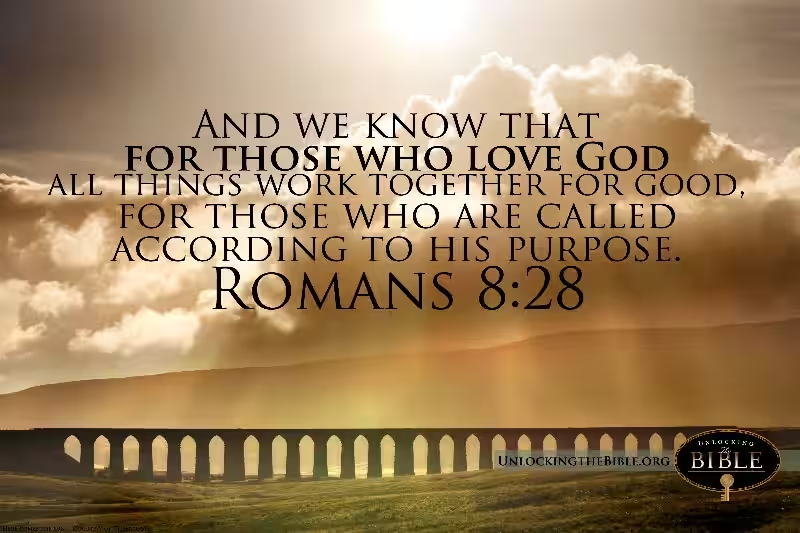
Salvation through faith in Christ is not merely a one-time event; it’s the beginning of a transformed life. Paul dedicates significant portions of Romans to explaining what it means to live as a new creation in Christ, empowered by the Holy Spirit. This is where the practical application of the gospel truly shines. We are no longer slaves to sin, but free to live according to God’s will. Romans 8:1-4 powerfully articulates this reality: “There is therefore now no condemnation for those who are in Christ Jesus. For the law of the Spirit of life in Christ Jesus has set you free from the law of sin and death. For God has done what the law, weakened by the flesh, could not do. By sending his own Son in the likeness of sinful flesh and for sin, he condemned sin in the flesh, in order that the righteous requirement of the law might be fulfilled in us, who walk not according to the flesh but according to the Spirit.”
Living by the Spirit means embracing a new way of thinking, acting, and relating to the world. It’s a process of sanctification, where we are gradually molded into the likeness of Christ. This involves actively resisting sinful desires and cultivating virtues like love, joy, peace, patience, kindness, goodness, faithfulness, gentleness, and self-control – often referred to as the fruit of the Spirit (Galatians 5:22-23). It’s about intentional living, choosing to align our lives with God’s purposes, knowing that we have His unfailing power within us.
The Inseparable Love of God
One of the most breathtaking themes in Romans is the unshakeable and unbreakable love of God. Paul concludes his discussion on the transformed life with a triumphant declaration of God’s enduring affection, even amidst trials and tribulations. He assures believers that nothing can separate them from God’s love. As Romans 8:38-39 so eloquently states, “For I am sure that neither death nor life, nor angels nor rulers, nor things present nor things to come, nor powers, nor height nor depth, nor anything else in all creation, will be able to separate us from the love of God in Christ Jesus our Lord.”
This is a profound assurance that provides immense comfort and security. Life will inevitably bring its challenges – losses, disappointments, and even persecution. However, Paul’s bible verses from Romans remind us that these external circumstances have no power to diminish God’s love for us. It’s a steadfast, unconditional love that is rooted in His unchanging character and His redemptive work through Christ. This understanding is crucial for navigating the complexities of life and maintaining a vibrant and resilient faith.
The Wider Embrace: God’s Plan for Israel and the Gentiles
Romans also addresses a sensitive but crucial theological issue: the relationship between God’s covenant people, Israel, and the inclusion of the Gentiles (non-Jews) into God’s family. Paul grapples with why many in Israel did not accept Jesus as the Messiah, while Gentiles readily embraced the gospel. He doesn’t dismiss God’s promises to Israel but reveals a divine mystery where God’s plan encompasses both, ultimately for the salvation of all who believe. Romans 11:25-26 offers a glimpse into this: “For I do not want you to be ignorant of this mystery, brothers, that a partial hardening has come upon Israel, until the fullness of the Gentiles has come in. And in this way all Israel will be saved, as it is written, ‘The Deliverer will come from Zion, he will banish ungodliness from Jacob.'”
This section highlights the sovereignty and wisdom of God’s plan, which extends beyond human expectations. It demonstrates that God’s redemptive purposes are inclusive and global. The religion of Christianity is not exclusive to any one ethnic group but is an invitation to all people, regardless of their background, to experience the transforming power of the gospel. This understanding fosters a spirit of unity and fellowship among believers from diverse origins.
Living Out the Gospel: Practical Exhortations
The final chapters of Romans shift from theological exposition to practical exhortations for living out the transformed life. Paul urges believers to present their bodies as “living sacrifices, holy and acceptable to God” (Romans 12:1). This is a call to wholehearted devotion and service, offering every aspect of our lives to God. He then provides a series of practical instructions for how this looks in daily life, covering areas such as:
Loving one another genuinely.
Using spiritual gifts for the common good.
Submitting to governing authorities.
Living a life of integrity and love towards all.
Practicing hospitality and showing compassion.
These are not abstract ideals but tangible actions that demonstrate the reality of God’s work in our lives. The bible verses from Romans in these concluding chapters serve as a practical roadmap for navigating the complexities of everyday life with a Christ-like attitude. They challenge us to move beyond mere intellectual assent to faith and to actively embody the love and truth of the gospel in our interactions with others, creating a ripple effect of positive influence in the world.
Frequently Asked Questions about Romans and Religion
What is the Book of Romans about?
The Book of Romans is a foundational text in Christian theology, primarily authored by the Apostle Paul. It comprehensively explains the gospel of Jesus Christ, focusing on themes of salvation through faith, justification by grace, and the relationship between God, humanity, and the law. It addresses issues of sin, redemption, sanctification, and the role of both Jews and Gentiles in God’s plan.
What are some key themes in the Book of Romans?
Key themes include:
* Justification by Faith: The central theme is that salvation is received through faith in Jesus Christ, not by adherence to the Law. (Romans 3:28)
* The Universality of Sin: All humanity has sinned and fallen short of God’s glory. (Romans 3:23)
* God’s Grace and Mercy: Salvation is a free gift from God, unearned and undeserved. (Romans 5:8)
* The Holy Spirit: The Spirit empowers believers for a new life and assures them of their adoption as children of God. (Romans 8:14-16)
* Sanctification: The process of being made holy and conformed to the image of Christ. (Romans 6:22)
* The Relationship between Jews and Gentiles: Paul explains how God’s salvation extends to both groups through Christ. (Romans 11:11-32)
How does Romans define salvation?
Romans defines salvation as deliverance from the penalty and power of sin, leading to reconciliation with God. It is achieved through faith in Jesus Christ’s atoning sacrifice. This salvation is not earned through good works but is a gift of God’s grace. (Romans 1:16, Romans 3:24)
What does Romans say about the Law?
The Book of Romans teaches that the Law reveals sin and our inability to achieve righteousness through our own efforts. While the Law is holy, just, and good, it cannot save us. Instead, through Christ, believers are freed from the condemnation of the Law and empowered by the Spirit to live a righteous life. (Romans 7:12)
How does Romans address the concept of “religion”?
While the word “religion” itself isn’t extensively used in Romans in the way we might use it today, the book contrasts a superficial, outward adherence to religious rules with a genuine, transformative faith in God through Jesus Christ. Paul emphasizes a living relationship with God, empowered by the Holy Spirit, rather than merely fulfilling external religious obligations. (Romans 12:1-2)