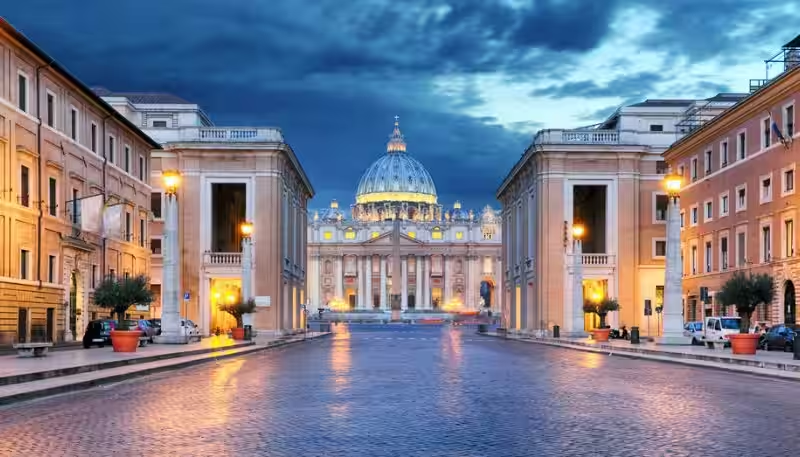
For many, the image of the Pope is inextricably linked to the majestic St. Peter’s Basilica and the hallowed halls of the Vatican. Yet, beyond the bustling heart of Rome lies a tranquil escape, a place where pontiffs have sought respite and spiritual renewal for centuries. This article invites you on an imagined Pope’s summer residence tour, delving into the historical, religious, and even horticultural significance of these often-overlooked papal retreats. We’ll explore what makes these locations so special, why they’ve been chosen by successive Popes, and what insights a visit might offer into the personal lives and spiritual journeys of those who lead the Catholic Church.
The idea of the Pope having a summer retreat might conjure images of opulent palaces, but the reality is often more nuanced. These residences have served as places for quiet contemplation, diplomatic meetings in a more relaxed setting, and even as spaces for artistic and intellectual pursuits. Understanding the role of the Pope’s summer residence tour, even if it’s a conceptual one for most of us, allows us to appreciate a different dimension of papal life and the historical tapestry of the Catholic faith.
Perhaps the most famous of the papal summer residences is the Apostolic Palace of Castel Gandolfo. Nestled amidst the picturesque Alban Hills, overlooking the serene Lake Albano, this estate has been a sanctuary for Popes since the 17th century. The beauty of the location itself, far from the summer heat and urban clamor of Rome, has always been a primary draw. Imagine stepping onto the terraces, the gentle breeze carrying the scent of cypress trees and blooming oleander, a stark contrast to the enclosed grandeur of the Vatican. This provides a profound sense of peace, conducive to deep prayer and reflection.
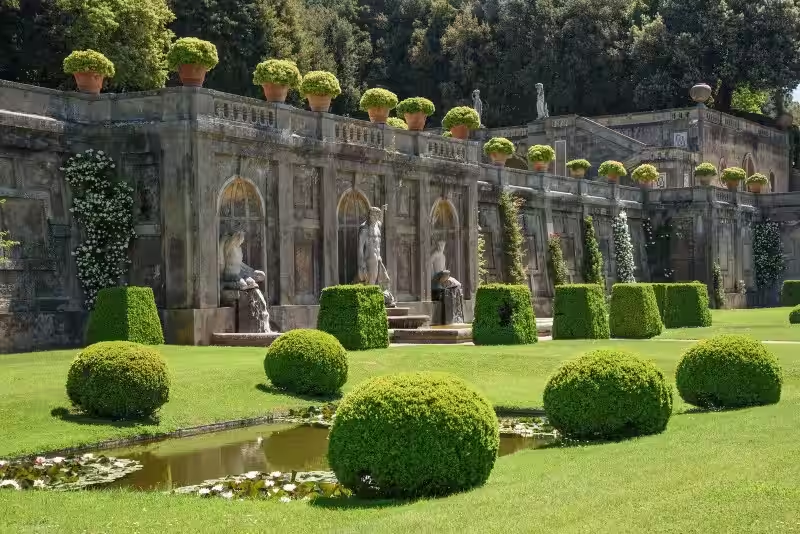
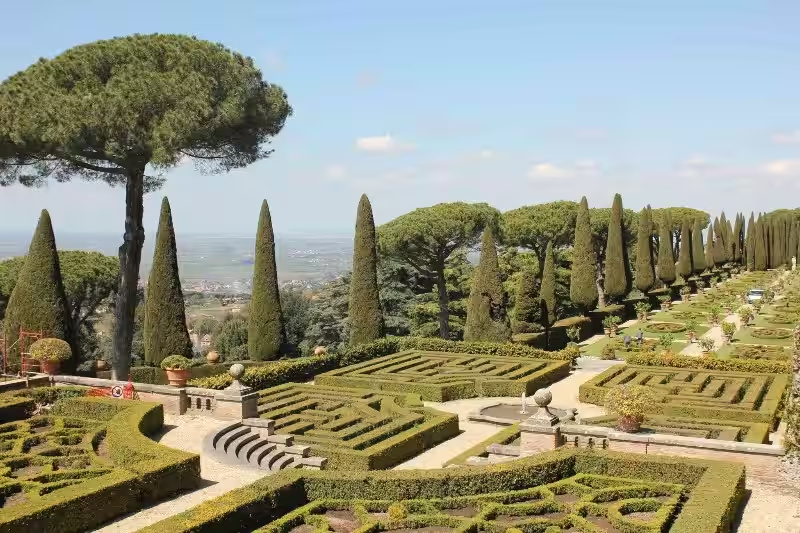
While the palace itself is a significant architectural and artistic treasure, a comprehensive Pope’s summer residence tour would also encompass the expansive gardens. These are not merely decorative but have often been cultivated with a deep appreciation for nature and a symbolic connection to religious themes. For instance, specific plants might be chosen for their biblical associations, or the layout of the gardens could mirror spiritual concepts. It’s in these tranquil spaces that Popes could walk, meditate, and engage with the natural world as a reflection of God’s creation, a truly grounding experience.
The Gardens of Castel Gandolfo: A Testament to Nature and Faith
The Gardens of the Pontifical Villas of Castel Gandolfo are a marvel of landscape design and a living testament to the Popes’ connection with nature. These gardens are not simply manicured lawns; they are intricate ecosystems carefully tended to provide both beauty and solace. Visitors on a hypothetical Pope’s summer residence tour would discover a rich tapestry of flora, from ancient olive groves and fragrant citrus trees to vibrant flowerbeds bursting with color. Each section often holds a unique character, perhaps a secluded grotto for prayer, a quiet alcove for reading, or a panoramic viewpoint offering breathtaking vistas.
The spiritual aspect of these gardens is undeniable. Many Popes have found inspiration in their tranquility, using them as places to compose sermons, write encyclicals, or simply to commune with God in a natural setting. The careful cultivation and preservation of this botanical haven reflect a deep respect for creation, aligning with the Church’s teachings on environmental stewardship. A walk through these gardens offers a tangible connection to the contemplative side of papal life, revealing how even those at the pinnacle of religious authority seek grounding in the natural world.
More Than Just a Summer Palace: The Religious and Historical Significance
The Apostolic Palace of Castel Gandolfo, and indeed the concept of any Pope’s summer residence tour, transcends mere architectural appreciation. These locations are steeped in centuries of religious history and have played a quiet but significant role in the unfolding of the Catholic faith. During times of upheaval in Rome, such as the French occupation in the early 19th century, Castel Gandolfo provided a safe haven for Popes, demonstrating its crucial strategic and spiritual importance. It has been a place where significant decisions were made, where Popes could retreat from the pressures of pontifical duties to find renewed strength and clarity.
The religious significance is also evident in the chapels and private quarters within the residence. These spaces are designed for prayer, meditation, and the private spiritual life of the Pope. Imagine the quiet devotion that has taken place within these walls over generations. Even the secular elements of the palace, such as the art and furnishings, often carry religious symbolism or have been commissioned by Popes with a deep faith. A thorough Pope’s summer residence tour would highlight these elements, revealing how faith is woven into the very fabric of these papal retreats.
The Papal Apartments: A Private Sanctuary for Reflection
Within the Apostolic Palace, the papal apartments offer an intimate glimpse into the personal lives of the pontiffs. These are not grand reception halls designed for public spectacle but rather private spaces for rest, work, and deep contemplation. If one were to embark on a Pope’s summer residence tour, the apartments would reveal a more human side of the papacy. Here, you might find a simple desk where encyclicals were drafted, a small library filled with theological texts and personal readings, or a private chapel for daily Mass and prayer.
The furnishings are typically elegant but not ostentatious, reflecting a pontiff’s desire for a peaceful environment conducive to spiritual focus. The presence of personal mementos, photographs, or religious artifacts would further personalize these spaces, offering insights into the individual pontiff’s spiritual journey and their relationship with God. It’s in these private sanctuaries that the weight of leading a global church is balanced with the personal need for quiet reflection and communion with the divine.
Beyond Castel Gandolfo: Other Papal Retreats and Their Legacy
While Castel Gandolfo is the most prominent, it’s worth noting that the concept of a papal retreat has evolved over time. Historically, various villas and even monasteries have served as summer residences or places of respite for Popes. Each location, with its unique geographical setting and historical context, has offered a distinct environment for spiritual renewal and governance. A comprehensive understanding of the Pope’s summer residence tour would acknowledge this broader historical perspective, recognizing that the need for private, tranquil spaces for the pontiff is a recurring theme throughout papal history.
These alternative retreats, though perhaps less known, have also played a crucial role in papal history. They might have been chosen for their proximity to significant religious sites, their agricultural importance, or simply their isolation from the political machinations of the capital. Exploring these lesser-known papal havens allows us to appreciate the enduring human need for peace and solitude, even for those holding the highest office in the Catholic Church. The legacy of these retreats is one of providing a vital space for spiritual grounding and the continued leadership of a global faith community.
The Vatican Gardens: An Urban Oasis of Contemplation
It’s important to remember that even within the Vatican City itself lies a significant green space: the Vatican Gardens. While not a summer residence in the same sense as Castel Gandolfo, these extensive gardens offer a vital urban oasis and a place for Popes to find quietude and connect with nature without leaving the confines of their sovereign state. A virtual Pope’s summer residence tour, or at least a tour of papal retreats, must acknowledge this invaluable space within the heart of the Vatican.
These gardens are a testament to the Popes’ appreciation for beauty and their desire for a place of contemplation amidst the grandeur of Vatican City. They feature manicured lawns, ancient trees, fountains, and even a small vineyard. Imagine the Popes walking these paths, finding moments of prayer and reflection away from the public eye. The Vatican Gardens serve as a constant reminder that even in the most bustling and historically charged environments, the pursuit of spiritual peace and connection with the natural world remains a fundamental aspect of the papal vocation.
Frequently Asked Questions: Pope’s Summer Residence Tour & Religion
What is the Pope’s Summer Residence?
The Pope’s Summer Residence, also known as Castel Gandolfo, is a historic palace and its surrounding gardens located in the Alban Hills, just outside of Rome. It has served as a summer retreat and vacation home for popes for centuries.
Can I tour the Pope’s Summer Residence?
Yes, parts of the Apostolic Palace at Castel Gandolfo and its beautifully landscaped gardens are open to the public for guided tours. These tours allow visitors to explore the papal apartments, courtyards, and the extensive gardens.
What is the religious significance of Castel Gandolfo?
Castel Gandolfo holds significant religious importance as a place of spiritual retreat and contemplation for the Pope. For centuries, it has been a sanctuary away from the formal duties of the Vatican, allowing popes to find peace and connect with their faith in a serene environment. The palace itself is adorned with religious art and artifacts, reflecting the deep spiritual life of its occupants.
What can I expect to see on a tour of Castel Gandolfo?
Tours typically include visits to the Papal Apartments, where you can see the Pope’s bedroom, study, and audience rooms. You will also have the opportunity to explore the Barberini Gardens, which feature fountains, ancient ruins, and a collection of botanical species. Some tours may also include access to the archaeological remains of an ancient Roman theater.
Are there any religious restrictions for visiting?
While the tours are open to everyone, regardless of religious affiliation, visitors are expected to behave respectfully within a sacred space. Dress modestly, as you would when visiting any religious site. Photography may be restricted in certain areas.
Is Castel Gandolfo an active papal residence?
While it remains a papal property, recent popes have chosen to spend less time at Castel Gandolfo. Pope Francis has opened parts of the palace and gardens to the public, making it accessible for tourism.
How do I book a tour?
Tours can be booked through the official Vatican Museums website or authorized tour operators. It is recommended to book in advance, especially during peak tourist seasons.
What is the relationship between Castel Gandolfo and the Vatican City?
Castel Gandolfo is part of the extraterritorial properties of the Holy See, meaning it enjoys special diplomatic status similar to that of an embassy. It is managed by the Holy See and is an integral part of the Vatican’s historical and spiritual landscape.