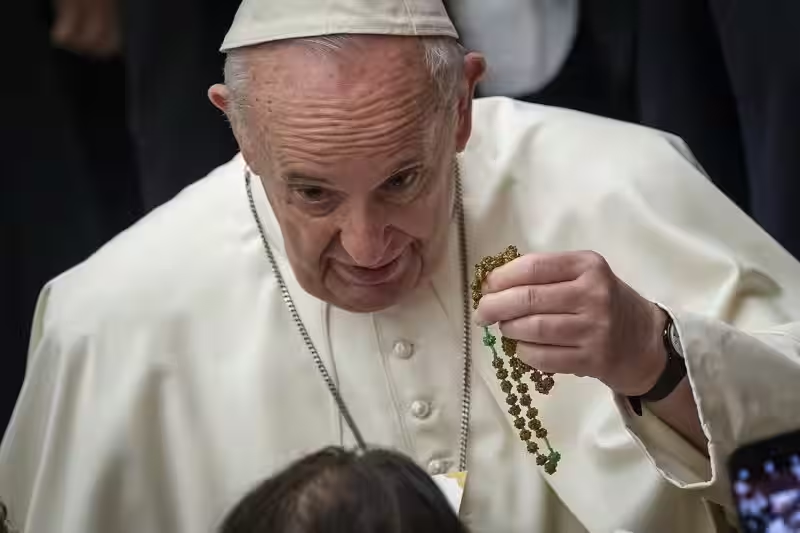
In the heart of Catholic devotion lies a practice woven with centuries of tradition, a prayer that transcends mere recitation and blossoms into a profound spiritual experience: the Santisimo Rosario. More than just a string of beads, the Rosary is a sacred pathway, a meditative journey through the pivotal moments of Jesus Christ’s life, as seen through the eyes of his mother, Mary. For millions worldwide, the Santisimo Rosario is a cornerstone of their religion, offering solace, strength, and a tangible connection to the divine.
This powerful devotion, often referred to simply as praying the Rosary, is not about seeking divine favor through rote repetition, but rather about contemplative prayer. It’s an invitation to meditate on mysteries, to walk alongside Jesus and Mary, and to absorb the lessons of their lives. Whether you’re a seasoned practitioner or a curious newcomer, understanding the Santisimo Rosario can unlock a deeper dimension of your religion and personal faith.
Unveiling the Santisimo Rosario: More Than Just Beads
At its core, the Santisimo Rosario is a series of prayers, primarily the Our Father, Hail Mary, and Glory Be, interspersed with a focus on specific events from the Gospels. These events are organized into categories called “Mysteries,” which are further divided into the Joyful, Luminous, Sorrowful, and Glorious Mysteries. Each set of Mysteries offers a unique lens through which to view the life, teachings, and redemptive work of Jesus. Imagine holding a smooth, cool bead in your hand as you recall the Annunciation, the moment Mary learned she would bear Jesus – it’s a tangible anchor for your thoughts and emotions.
The physical act of holding and moving the beads, often referred to as a rosary strand or chaplet, serves as a tactile aid to focus the mind and soul. As you move from one bead to the next, you transition from one prayer to another, and importantly, from one Mystery to the next. This rhythmic progression helps to quiet external distractions and allows for a deeper immersion into the spiritual narrative. It’s a practice that encourages mindfulness and reflection, transforming a simple set of beads into a powerful tool for prayer and spiritual growth within the context of your religion.
The Structure of the Santisimo Rosario: A Meditative Flow
The Santisimo Rosario is structured around the recitation of specific prayers and the contemplation of the Mysteries. A typical Rosary is comprised of five decades, with each decade consisting of one Our Father, ten Hail Marys, and one Glory Be. Before beginning each decade, one of the Mysteries is announced and meditated upon. For example, when praying the Joyful Mysteries, you might start with the first Mystery, the Annunciation, and as you pray the ten Hail Marys, you would reflect on Mary’s humble acceptance of God’s will and the profound implications of this event.
The order in which the Mysteries are prayed typically follows a weekly schedule, though this can be flexible. The Joyful Mysteries are traditionally prayed on Mondays and Saturdays, the Luminous Mysteries on Thursdays, the Sorrowful Mysteries on Tuesdays and Fridays, and the Glorious Mysteries on Wednesdays and Sundays. This structured approach provides a consistent framework for prayer, allowing individuals to delve into different aspects of Christ’s life and Mary’s role throughout the year. By faithfully engaging with the Santisimo Rosario, believers can cultivate a deeper relationship with God and gain profound insights into the core tenets of their religion.
The Power of Meditation: Unpacking the Mysteries
The true essence of the Santisimo Rosario lies not just in the repetition of prayers, but in the deep meditation on the Mysteries. Each Mystery presents a scene, a moment in salvation history, inviting the believer to imagine themselves present. When contemplating the Nativity, for instance, one might picture the humble stable, the gentle glow of the manger, and the awe-filled faces of Mary and Joseph. This isn’t just a story; it’s an invitation to experience the Incarnation firsthand, to feel the wonder and humility of God becoming man precisely within the framework of your religion.
Consider the Sorrowful Mysteries, which guide us through the Passion of Christ. As you meditate on the Scourging at the Pillar, you are not merely recalling an historical event; you are invited to contemplate Christ’s suffering and sacrifice for humanity. This reflection can evoke feelings of sorrow, gratitude, and a renewed commitment to living a life worthy of such love. The Santisimo Rosario, therefore, becomes a powerful tool for spiritual introspection and conversion, fostering a more profound understanding of the Christian narrative.
Navigating the Mysteries: A Guide for Devotees
To effectively engage with the Santisimo Rosario, it’s helpful to understand the specific themes of each set of Mysteries. The Joyful Mysteries focus on the early life of Jesus, highlighting themes of humility, obedience, and divine love. The Luminous Mysteries, introduced by Pope John Paul II, illuminate Jesus’ public ministry, emphasizing his teachings, miracles, and moments of divine revelation. The Sorrowful Mysteries delve into Christ’s Passion and death, inviting us to reflect on suffering, sacrifice, and ultimate redemption.
Finally, the Glorious Mysteries celebrate Jesus’ Resurrection and the events that followed, including his Ascension and the coming of the Holy Spirit. These Mysteries inspire hope, joy, and the promise of eternal life. By regularly praying and meditating on the Santisimo Rosario, individuals can cultivate virtues such as faith, hope, charity, patience, and humility, directly enriching their spiritual lives and their practice of religion.
The Santisimo Rosario as a Source of Solace and Strength
In times of personal struggle, anxiety, or grief, the Santisimo Rosario offers a profound source of comfort and strength. The rhythmic prayers can become a soothing balm for a troubled soul, while the focus on divine events provides a broader perspective on life’s challenges. When facing difficulties, meditating on the Sorrowful Mysteries, particularly the Crucifixion, can remind us that we are not alone in our suffering and that even through immense pain, redemption and hope are possible. This is a foundational element of religion for many.
Moreover, the communal aspect of praying the Santisimo Rosario, whether in a family setting, a church group, or even virtually, can foster a sense of shared faith and support. Knowing that others are praying alongside you, offering their intentions and their own struggles to God, can be incredibly empowering. The Santisimo Rosario becomes a powerful prayer of intercession, not only for oneself but also for loved ones and the world. It’s a testament to the interconnectedness of the faithful within their religion.
Practical Tips for Praying the Santisimo Rosario
For those new to the practice, starting with one decade of the Rosary can be a manageable and rewarding way to begin. Don’t be discouraged if your mind wanders; this is a common experience. Gently guide your thoughts back to the Mystery and the prayers. Many find it helpful to use a Rosary guide or an app that provides explanations of the Mysteries and prompts for reflection. Consistency is key, even a few minutes each day can build a powerful habit.
Remember, the Santisimo Rosario is a personal journey of faith. There is no single “right” way to pray it, as long as the heart is sincere and the intention is to connect with God. Consider incorporating it into your daily routine, perhaps during your commute, a quiet evening, or a moment of midday reflection. The Santisimo Rosario is a gift to the faithful, a continuous invitation to deepen their relationship with God and experience the transformative power of prayer within their religion.
The Santisimo Rosario in a Modern World: Enduring Relevance
In our fast-paced, often overwhelming modern world, the Santisimo Rosario offers a vital sanctuary of peace and spiritual grounding. It provides a structured yet flexible method for disengaging from the noise of daily life and reconnecting with what truly matters. The repetitive nature of the prayers, far from being monotonous, can induce a state of meditative calm, akin to mindfulness practices that are scientifically recognized for their stress-reducing benefits. This practice is a testament to the enduring wisdom embedded within our religion.
Furthermore, the Santisimo Rosario is not an exclusive practice; it is open to all who seek a closer relationship with the divine. Whether you are struggling with doubt, seeking guidance, or simply wishing to express gratitude, the Rosary offers a universally accessible path. The Mysteries themselves are rich with relatable human experiences – joy, sorrow, hope, and triumph – making them resonate deeply with individuals from all walks of life. This accessibility ensures the Santisimo Rosario remains a vibrant and relevant spiritual tool for generations to come.
Embracing the Santisimo Rosario: A Lifelong Journey
The journey of praying the Santisimo Rosario is a lifelong one, offering ever-deepening insights and spiritual rewards. As you become more familiar with the Mysteries and the prayers, you will find yourself discovering new layers of meaning and personal connection. The Santisimo Rosario is not a static ritual but a dynamic encounter with the divine, constantly revealing new facets of God’s love and mercy. It serves as a constant reminder of the core principles of our religion.
Whether you choose to pray it alone in quiet contemplation, with family in a shared devotional practice, or within a larger faith community, the Santisimo Rosario is a powerful testament to the enduring strength and beauty of Catholic religion. It is a sacred thread weaving through the lives of countless individuals, offering hope, peace, and an unwavering connection to the heart of God. The Santisimo Rosario is, truly, a gift that keeps on giving.
Frequently Asked Questions about the Santísimo Rosario
What is the Santísimo Rosario?
The Santísimo Rosario, often translated as the Most Holy Rosary, refers to a traditional Catholic prayer and devotion dedicated to the Blessed Virgin Mary. It involves meditating on the mysteries of the life of Jesus Christ while reciting a series of prayers, primarily the Our Father, Hail Mary, and Glory Be.
What is the purpose of praying the Rosary?
The Rosary is a form of prayer that helps Catholics meditate on the significant events in the lives of Jesus and Mary. It is believed to foster a deeper connection with God, increase faith, and obtain graces through the intercession of the Blessed Mother. It is also a way to seek spiritual guidance and strength.
What are the different mysteries of the Rosary?
The Rosary is divided into four sets of mysteries, each consisting of five events from the lives of Jesus and Mary:
The Joyful Mysteries (recited on Mondays and Saturdays)
The Luminous Mysteries (recited on Thursdays)
The Sorrowful Mysteries (recited on Tuesdays and Fridays)
The Glorious Mysteries (recited on Wednesdays and Sundays)
How do I pray the Rosary?
To pray the Rosary, one typically uses a rosary bead set. The process involves making the Sign of the Cross, reciting the Apostle’s Creed, praying an Our Father, and then three Hail Marys. After that, one meditates on the first mystery and recites an Our Father, ten Hail Marys, and a Glory Be. This pattern is repeated for each of the five mysteries in a particular set.
Is the Rosary a form of worship?
No, the Rosary is not a form of worship. In Catholicism, worship is directed solely to God. The Rosary is a devotion to the Blessed Virgin Mary, honoring her role as the Mother of God and seeking her intercession. The focus of the meditations is always on the life of Jesus Christ.
Who can pray the Rosary?
Anyone can pray the Rosary, regardless of their level of religious education or affiliation. While it is a Catholic devotion, individuals from other Christian denominations or faiths may also find spiritual benefit in meditating on the life of Jesus through this prayer method.