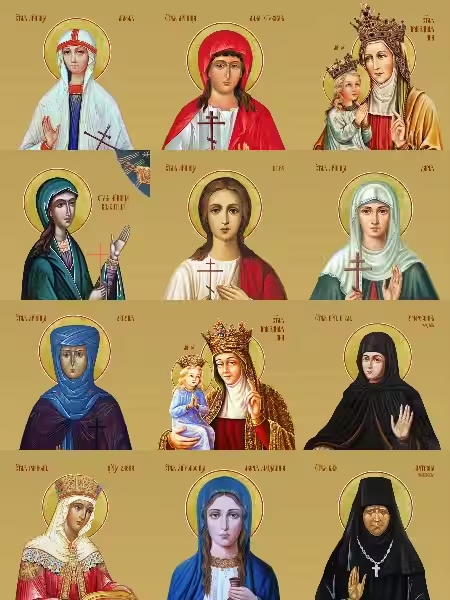
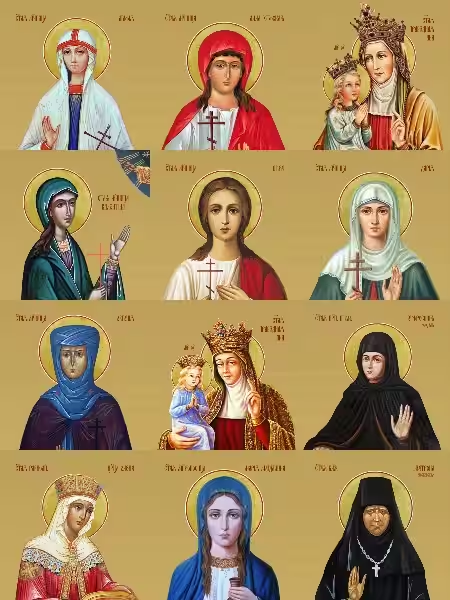
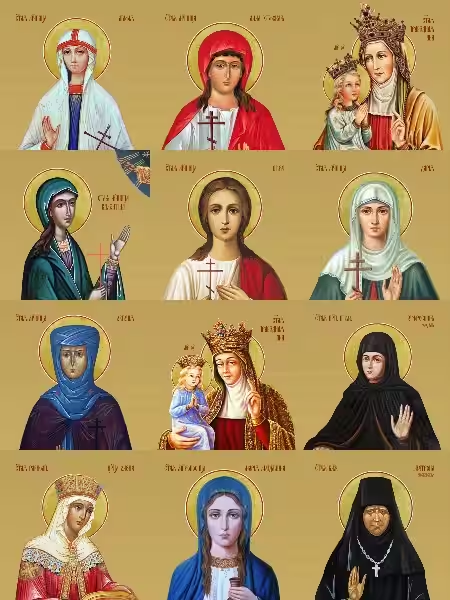
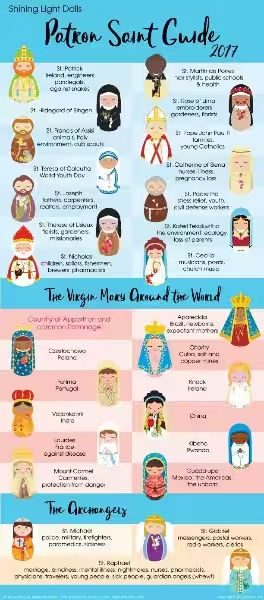
The concept of sainthood within various religious traditions often conjures images of heroic figures, individuals whose lives were marked by extraordinary virtue, profound faith, and often, immense sacrifice. While many associate this veneration with male figures, a closer examination reveals a vibrant and extensive female saints list, a testament to the diverse and potent ways women have embodied spiritual devotion throughout history. These aren’t just historical footnotes; they are role models, intercessors, and beacons of hope for millions, offering relatable journeys of struggle, resilience, and unwavering commitment to their beliefs. Understanding this rich legacy is not just an academic pursuit; it’s an opportunity to connect with powerful narratives that can inspire and guide us in our own lives.
For many, the journey into understanding female saints begins with a curiosity about the women who shaped religious thought and practice. Perhaps you’ve encountered a mention of Saint Mary Magdalene, a pivotal figure in early Christianity, or Saint Joan of Arc, the legendary warrior who inspired a nation. These are just two prominent examples from a vast and multifaceted female saints list, each with a unique story to tell. This exploration aims to illuminate the depth and breadth of these women’s contributions, demonstrating that their influence extends far beyond their specific historical contexts, offering timeless wisdom and relatable human experiences.
The Early Pillars: Pioneering Women of Faith
The earliest chapters of religious history are adorned with the stories of remarkable women who stood firm in their convictions, often in the face of immense societal and political pressure. Consider the female saints list from the early Christian era; figures like Saint Perpetua and Saint Felicity, who faced martyrdom with courage and grace, exemplify an unshakeable faith in the face of persecution. Their willingness to embrace their fate, believing in a life beyond earthly suffering, continues to resonate with believers today, offering a powerful example of ultimate devotion.
Another vital figure from this period is Saint Agnes of Rome, a young virgin martyred for her refusal to renounce her faith. Her story, often depicted with a lamb, symbolizes her purity and gentleness, yet also her unyielding inner strength. These early saints, whose names are etched into the annals of religious history, represent the foundational courage and unwavering commitment that characterized the nascent stages of many faiths. Their lives serve as a powerful reminder that faith can be a source of profound strength, even in the most challenging circumstances.
Saint Teresa of Ávila: A Mystic’s Journey to the Divine
Moving into later centuries, the female saints list continues to expand with individuals who profoundly influenced the spiritual landscape. Saint Teresa of Ávila, a Spanish Carmelite nun, mystic, and theologian, stands as a towering figure in the history of Christian spirituality. Her autobiographical works, particularly “The Interior Castle,” offer an intimate and profound exploration of prayer and the soul’s journey towards God. She described her mystical experiences with such clarity and depth that her writings remain a cornerstone of contemplative practice for countless individuals.
Saint Teresa’s relatable humanity, her struggles with doubt, and her practical approach to spiritual development make her an accessible figure despite her extraordinary gifts. She reminds us that even those closest to the divine wrestled with inner turmoil. Her enduring legacy, cemented by her inclusion on the female saints list, is one of intellectual rigor, spiritual depth, and a passionate love for God that continues to inspire seekers of all backgrounds.
Saint Catherine of Siena: The Power of a Woman’s Voice
In a time when women’s voices were often marginalized, Saint Catherine of Siena emerged as a powerful advocate and spiritual force. A Dominican tertiary, mystic, and political activist, she famously dictated her “Dialogue” to her scribes, a work that explores the nature of God, the soul, and salvation. Her fearless engagement with popes and rulers, urging them towards reform and peace, showcases a remarkable blend of spiritual conviction and practical action.
Her inclusion on any comprehensive female saints list is a clear indicator of her significant impact. Saint Catherine’s life is a testament to the idea that faith can and should translate into tangible action in the world. She navigated complex political and religious landscapes with an astonishing blend of humility and unwavering resolve, offering a powerful model for anyone seeking to make a difference through their convictions.
Saints of Compassion and Service: Caring for the Vulnerable
The female saints list is replete with women whose lives were dedicated to acts of profound compassion and selfless service. These saints embody the principle that faith is not merely an internal state but a lived commitment to alleviating suffering and uplifting humanity. Their stories often involve dedicated work in hospitals, orphanages, and through charitable organizations, demonstrating a practical and tangible expression of their spiritual beliefs.
Many of these women faced deeply challenging social conditions, yet their commitment to the marginalized never wavered. Their examples encourage us to look beyond ourselves and to find spiritual fulfillment in serving those in need. Whether it was through nursing the sick, educating the poor, or simply offering a comforting presence, these saints showed the world the transformative power of empathy and dedicated action.
Saint Mother Teresa of Calcutta: A Modern Icon of Charity
Perhaps one of the most recognizable figures on any modern female saints list is Saint Mother Teresa of Calcutta. Her lifelong dedication to serving the “poorest of the poor” in the slums of Kolkata, India, captured the hearts of the world. She founded the Missionaries of Charity, an order devoted to caring for the sick, dying, and destitute. Her simple yet profound message of love in action continues to inspire millions to engage in acts of kindness and service.
Mother Teresa’s life, though marked by immense hardship and personal struggles, became a powerful testament to the transformative power of selfless love. Her unwavering commitment to the most vulnerable among us serves as a potent reminder that even the smallest act of compassion can have a monumental impact. She demonstrated that true holiness is often found in the humble service to others.
Saint Elizabeth of Hungary: A Princess Who Chose Service
Another remarkable example of compassionate service comes from Saint Elizabeth of Hungary. A princess by birth, she renounced a life of royal privilege to dedicate herself to the poor and the sick. Her legend is filled with stories of her secret acts of charity, including famously distributing bread to the poor, which her husband allegedly tried to prevent, only to find loaves of roses in her apron. This tale, whether literal or symbolic, highlights her unwavering dedication to her charitable mission.
Saint Elizabeth’s decision to prioritize the needs of the less fortunate over her own comfort and status is a powerful testament to her faith. Her place on the female saints list signifies the profound spiritual merit recognized in a life dedicated to radical compassion and service. She reminds us that true nobility lies not in birthright, but in the generosity of spirit and the willingness to serve.
Female Saints in Diverse Traditions: A Universal Call to Holiness
While the term “female saints” is most commonly associated with Christianity, the concept of venerated holy women exists across a diverse spectrum of religious traditions. Recognizing these figures broadens our understanding of faith and the universal human yearning for spiritual connection and virtue. Each tradition offers its own unique lens through which to view holiness, yet the underlying themes of devotion, ethical living, and profound spiritual insight often resonate across cultural and religious boundaries.
Exploring these figures from different faiths allows us to appreciate the rich tapestry of spiritual expression that exists globally. It challenges us to move beyond singular perspectives and to embrace a more inclusive understanding of the ways individuals have achieved spiritual greatness. This exploration underscores that the pursuit of holiness is a deeply human endeavor, manifesting in myriad forms across the world.
The Bodhisattvas of Buddhism: Compassion in Action
In Buddhism, the concept of Bodhisattvas offers a parallel to the idea of saints. Bodhisattvas are enlightened beings who have vowed to delay their own final nirvana to help all sentient beings achieve enlightenment. Figures like Tara, a female Bodhisattva revered for her compassion and ability to overcome obstacles, embody the ideal of active compassion and selfless dedication to the well-being of others.
While not formally canonized in the same way as Christian saints, the profound veneration and emulation of Bodhisattvas like Tara on a global scale undeniably place her within a similar spiritual framework. Her iconic imagery and widespread devotion highlight the centrality of compassion and wisdom in Buddhist practice, offering a powerful example of enlightened female leadership and a commitment to universal liberation.
The Holy Women of Hinduism: Divine Feminine Power
Hinduism, with its rich pantheon of deities, also celebrates powerful feminine figures who embody divine qualities and inspire devotion. While not always designated as “saints” in the Western sense, goddesses like Lakshmi, the goddess of wealth, prosperity, and fortune, and Saraswati, the goddess of knowledge, music, and arts, are deeply venerated. Their stories and attributes represent divine feminine power, grace, and wisdom.
These goddesses are not merely abstract deities; they are actively worshipped and invoked for blessings and guidance. Their consistent presence in the devotional lives of millions signifies their role as inspirations for virtuous living and spiritual aspiration. Their veneration underscores the profound and multifaceted nature of the divine feminine within Hindu tradition, offering a unique perspective on holiness and spiritual attainment.
Conclusion: The Enduring Relevance of the Female Saints List
The exploration of the female saints list, whether from a single tradition or across multiple faiths, reveals a profound and enduring legacy of faith, resilience, and compassionate action. These women, through their diverse paths and unwavering devotion, offer relatable narratives of human experience intertwined with extraordinary spiritual depth. Their lives are not distant historical accounts but vibrant examples that continue to resonate with contemporary challenges and aspirations.
Whether you are seeking inspiration for your own spiritual journey, looking for a role model in times of difficulty, or simply curious about the rich tapestry of human devotion, the stories of these female saints hold timeless wisdom and profound encouragement. Their collective impact on religious thought, ethical practice, and the hearts of believers across centuries and cultures is undeniable. The female saints list is a testament to the powerful and multifaceted nature of holiness, demonstrating that faith knows no gender and that the pursuit of virtue can illuminate the world in myriad ways.
Frequently Asked Questions about Female Saints
What is a female saint?
A female saint is a woman who has been formally recognized by a religious tradition, most notably the Catholic Church, as having lived a life of exceptional holiness and virtue, and who is believed to be in heaven.
What are some of the most well-known female saints?
Some of the most well-known female saints include:
Saint Mary (the mother of Jesus)
Saint Martha
Saint Mary Magdalene
Saint Catherine of Siena
Saint Joan of Arc
Saint Teresa of Ávila
Saint Thérèse of Lisieux
Saint Agnes
Saint Lucy
Saint Clare of Assisi
In which religions are female saints recognized?
The concept of saints, including female saints, is most prominently recognized in Christianity, particularly in the Catholic, Orthodox, and Anglican traditions. While other religions have venerated holy women, the formal process of canonization and the specific title of “saint” are most associated with Christianity.
What criteria are used to declare a woman a saint?
In the Catholic Church, the process of canonization involves rigorous investigation into the candidate’s life, writings, and reputation for holiness. Key criteria include living a life of heroic virtue, often demonstrating profound faith, hope, and charity, and sometimes involving miracles attributed to their intercession after death. The Church seeks to ensure the candidate lived in accordance with Christian teachings and can serve as a model for believers.
Are there different types of female saints?
Yes, female saints are often recognized for different roles and contributions. They can be martyrs (who died for their faith), virgins, consecrated religious (nuns or sisters), married women who lived virtuous lives, or individuals recognized for their intellectual or spiritual contributions to the faith.
What is the role of female saints in religion?
Female saints serve as intercessors, spiritual guides, and role models for believers. They are prayed to for help and guidance, and their lives are studied as examples of faith and devotion. They demonstrate that holiness is attainable for all individuals, regardless of gender.