In the vibrant tapestry of Mexican culture, faith is not merely a private devotion; it’s a living, breathing entity woven into the fabric of daily life. At the heart of this spiritual expression, a profound and deeply personal artifact stands out: the Mexican rosary. More than just a string of beads, it’s a tangible connection to the divine, a tool for prayer, and a beautiful symbol of heritage. Understanding the Mexican rosary offers a unique window into the soul of a nation, revealing a faith that is both deeply traditional and vibrantly alive.
The very act of holding a Mexican rosary can evoke a sense of peace and grounding. Its weight, the texture of its beads, and the familiar sequence of prayers it guides us through are all part of a time-honored ritual. This article will explore the rich history, cultural significance, and the deeply personal journey of faith that the Mexican rosary represents. We will delve into its devotional power, its artistic expressions, and how it continues to be a vital conduit for religion in the lives of countless individuals.
The Sacred String: Origins and Evolution of the Mexican Rosary
The rosary, as a devotional practice, has its roots in medieval Europe, but its journey to Mexico, and its subsequent transformation, is a story of cultural fusion and deep spiritual adaptation. When Catholic missionaries arrived in the Americas, they brought with them the practice of praying the rosary. However, the indigenous populations, with their own rich spiritual traditions and artistic sensibilities, embraced and reimagined this foreign devotional tool. The Mexican rosary began to take on a distinct character, incorporating local materials and artistic styles.
Early Mexican rosaries often featured beads made from seeds, wood, or even carved bone, reflecting the natural resources available. Over time, the materials evolved to include polished stones, glass, and intricate metalwork. The devotion itself, while maintaining the core prayers, became infused with local expressions of faith, often centered around specific Marian apparitions or patron saints relevant to Mexican life. This evolution demonstrates how religion in Mexico is not a static imposition but a dynamic conversation between tradition and lived experience, with the Mexican rosary serving as a tangible testament to this ongoing dialogue.
Artistry and Devotion: The Materials and Meanings Behind the Beads
The beauty of a Mexican rosary often lies in its exquisite craftsmanship. While a basic rosary might be simple and functional, many are true works of art, reflecting the deep reverence with which they are made and used. The selection of materials is far from arbitrary; each bead, crucifix, and medal can carry layers of meaning and symbolism, adding to the devotional experience. For instance, a rosary made with volcanic rock might evoke the earth and the foundations of faith, while one adorned with vibrant enamel could represent the joy and celebration of spiritual life.
Beyond the aesthetic, the specific elements of a Mexican rosary are designed to aid prayer and contemplation. The larger beads, signifying the Our Father prayers, often stand out, guiding the fingers through the sequence. The smaller beads, for the Hail Marys, offer a rhythmic cadence to the devotion. Many Mexican rosaries also feature a central medal, frequently depicting the Virgin of Guadalupe, Mexico’s most beloved religious icon, or a patron saint, serving as a powerful focal point for prayer and intercession. This intentional design transforms the physical object into a profound aid for connecting with God and the saints, making the practice of religion more accessible and meaningful.
The Virgin of Guadalupe: A Central Icon in the Mexican Rosary
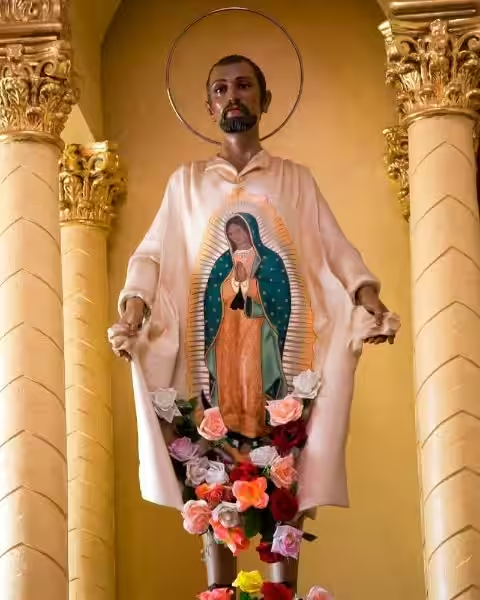
No discussion of the Mexican rosary would be complete without acknowledging the immense significance of the Virgin of Guadalupe. Her image, imbued with miraculous properties and deeply ingrained in the national psyche, is a ubiquitous presence on many Mexican rosaries. The story of her apparition to Juan Diego in 1531 is a cornerstone of Mexican Catholicism, symbolizing divine love and a powerful intercessor for the Mexican people. Holding a rosary with her image is an act of invoking her maternal care and seeking her guidance.
The Virgin of Guadalupe’s presence on a rosary is not merely decorative; it is a powerful invocation. When a devotee prays the rosary while contemplating her image, they are not just reciting prayers; they are entering into a personal dialogue, asking for her intercession in their struggles, celebrating their joys, and seeking her blessing. This connection amplifies the devotional power of the Mexican rosary, transforming it into a direct line to spiritual comfort and strength, deeply intertwined with the very identity of Mexican religion.
A Path to Peace: How the Mexican Rosary Guides Prayer
The act of praying the rosary, particularly with a Mexican rosary, is a structured yet deeply personal journey. It’s a meditative practice that unfolds over a series of prayers, each bead marking a step in the contemplation of key moments in the lives of Jesus and Mary, known as the Mysteries. These Mysteries are often divided into the Joyful, Luminous, Sorrowful, and Glorious, offering a rich narrative of the Christian faith to reflect upon. The repetitive nature of the prayers can be incredibly calming, helping to quiet a busy mind and focus the heart on spiritual matters.
For many, the Mexican rosary serves as a portable sanctuary, a constant reminder of God’s presence and love, even amidst life’s challenges. Whether carried in a pocket, kept on a bedside table, or displayed prominently, it’s a tangible anchor for faith. The familiar sequence of prayers, guided by the beads, provides a structure for seeking solace, expressing gratitude, and deepening one’s relationship with the divine. This consistent practice, facilitated by the Mexican rosary, is a cornerstone of religion for many, offering a reliable path to inner peace and spiritual growth.
Beyond the Beads: The Cultural and Social Significance of the Mexican Rosary
The Mexican rosary extends its influence far beyond individual prayer; it is a powerful social and cultural connector. In many Mexican families, rosaries are passed down through generations, becoming cherished heirlooms that carry the weight of family history and faith. The act of praying the rosary together, in homes or community gatherings, strengthens bonds and reinforces shared values. It’s a way of keeping traditions alive and transmitting the core tenets of their religion to younger generations.
Furthermore, the Mexican rosary is often present during significant life events, from baptisms and weddings to funerals. It’s a symbol of blessing, protection, and remembrance. During times of collective hardship or celebration, communities may gather to pray the rosary, creating a powerful sense of solidarity and shared spiritual purpose. This communal aspect highlights how the Mexican rosary is not just a personal devotion but a vibrant thread woven into the social fabric of Mexico, embodying their collective faith and cultural identity.
The Mexican Rosary Today: A Living Tradition
In the modern world, the Mexican rosary continues to hold its ground as a vital instrument of faith. While the world may change at a dizzying pace, the enduring power of prayer and the tactile comfort of a rosary remain constant for many. Contemporary artisans continue to create beautiful and innovative Mexican rosaries, blending traditional techniques with modern aesthetics, ensuring that this devotional tool remains relevant and appealing to new generations. The accessibility of online marketplaces has also allowed these beautiful pieces to reach a global audience, sharing a piece of Mexican spiritual heritage with the world.
The simple act of holding and praying with a Mexican rosary offers a profound connection to a rich spiritual heritage and a tangible link to the divine. It’s a reminder that in the midst of life’s complexities, there is always a path to peace and solace through faith. The Mexican rosary stands as a testament to the enduring power of religion to shape culture, foster community, and bring comfort to the human heart, a beautiful legacy that continues to inspire and guide countless souls.
Frequently Asked Questions About the Mexican Rosary
What is a Mexican Rosary?
A Mexican rosary, also known as a “rosario mexicano” or “rosario de palma,” is a specific type of rosary used in Mexico and some other Latin American countries. While structurally similar to a standard Catholic rosary, it often features distinct decorative elements, materials, and sometimes variations in the prayers or their order, reflecting local traditions and cultural influences.
What is the religious significance of a Mexican Rosary?
The religious significance of a Mexican rosary is deeply rooted in Catholic tradition. Like any rosary, it serves as a tool for meditation and prayer, particularly for the recitation of the Holy Rosary, which involves meditating on the mysteries of the lives of Jesus and Mary. The Mexican rosary carries this spiritual weight, often imbued with cultural and devotional significance specific to Mexican Catholicism, such as the veneration of particular saints or apparitions.
How is a Mexican Rosary different from a regular rosary?
The primary differences often lie in aesthetics and materials. Mexican rosaries can be crafted from a wider variety of materials, including wood, seeds, clay, and even intricately carved bone or metal. They may feature brightly colored beads, unique medal designs (often depicting Mexican saints like the Virgin of Guadalupe), and distinctive crucifixes. Some may also have a slightly different arrangement of beads for specific prayers or devotions popular in Mexico.
Can anyone use a Mexican Rosary for prayer?
Yes, anyone who wishes to pray the Rosary, regardless of their nationality or cultural background, can use a Mexican Rosary. Its purpose is fundamentally to aid in prayer and meditation within the Catholic faith. The cultural embellishments are an added layer of tradition and devotion, but the core function of prayer remains universal.
What are the common prayers recited on a Mexican Rosary?
The most common prayer recited on a Mexican rosary is the Holy Rosary, which includes the Apostles’ Creed, the Our Father (Pater Noster), the Hail Mary (Ave Maria), the Glory Be (Gloria Patri), and the Hail Holy Queen (Salve Regina). Specific intentions or novenas might also be prayed using the rosary, often incorporating prayers to the Virgin of Guadalupe or other beloved Mexican devotions.
Are there specific devotions tied to Mexican Rosaries?
Yes, Mexican rosaries are often closely associated with specific devotions popular in Mexico. The most prominent is the devotion to Our Lady of Guadalupe, Mexico’s patron saint. Many Mexican rosaries feature imagery of her, and prayers dedicated to her are frequently recited using them. Other devotions to various saints or specific Marian apparitions found in Mexico may also influence the design and use of a rosary.