For centuries, the rhythm of Catholic life has been deeply intertwined with a specific cycle of feasts, fasts, and commemorations. This isn’t just a collection of dates; it’s a sacred tapestry woven with the lives of Christ, the Blessed Virgin Mary, and the saints, guiding believers through a year of spiritual growth and devotion. Understanding the traditional Roman Catholic calendar is to unlock a profound dimension of Catholic practice, offering a roadmap for prayer, reflection, and deeper engagement with the faith. It’s a system that, while evolving over time, retains a core structure that has nourished souls for generations, providing a consistent and reliable framework for living out one’s Catholic identity.
This venerable calendar serves as a powerful educational tool, teaching us about the foundational events of salvation history and the exemplary lives of those who have gone before us. It’s a constant reminder of the unseen realities that surround us and a call to live in anticipation of the heavenly kingdom. By observing its seasons and celebrating its feasts, Catholics are invited into a lived experience of their faith, moving beyond mere intellectual assent to a deeper, more visceral connection with God and His Church. The traditional Roman Catholic calendar is, in essence, the heartbeat of Catholic devotion, pulsing with the stories and grace that define our spiritual journey.
The Foundation: The Liturgical Year and Its Seasons
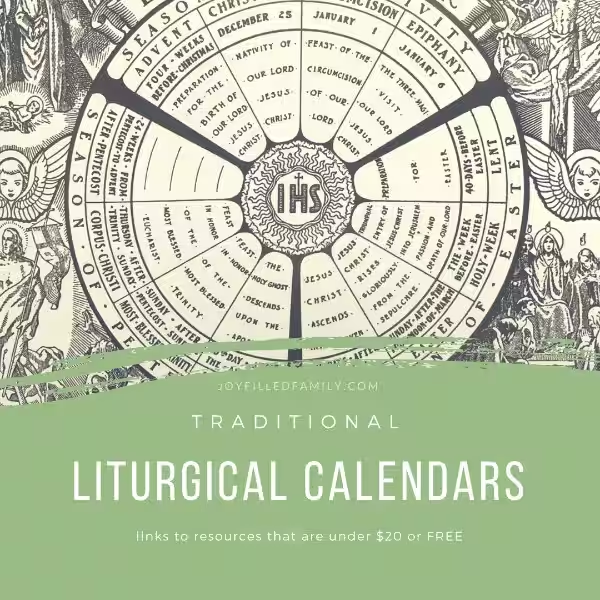
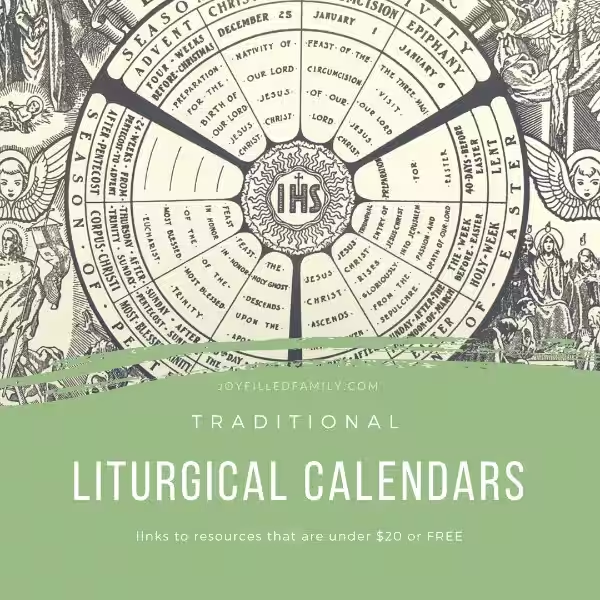
The traditional Roman Catholic calendar is not a secular calendar; it is the Liturgical Year, a cyclical commemoration of the mysteries of Jesus Christ. It begins not on January 1st, but with the First Sunday of Advent, ushering in a period of joyful anticipation for the coming of Christ. This intentional starting point immediately signals that the focus is on spiritual preparation and hope, setting the tone for the entire year. Each season within the Liturgical Year has its own distinct character and purpose, guiding the faithful through different aspects of Christ’s life and our relationship with Him.
Think of it like a grand narrative unfolding throughout the year. Advent prepares us for the Incarnation, Christmas celebrates His birth, Lent calls us to repentance and sacrifice leading to Easter, and Easter rejoices in His resurrection. Following Eastertide, Ordinary Time allows for a deeper reflection on Christ’s teachings and their application in our daily lives. This cyclical nature means that the same events are revisited each year, but with a fresh perspective, allowing for continuous growth and deeper understanding. The traditional Roman Catholic calendar provides a rich framework for this ongoing spiritual journey, ensuring that the core truths of our faith are perpetually brought to the forefront of our lives.
Advent: A Season of Hope and Preparation
Advent, the opening act of the traditional Roman Catholic calendar, is a season of vibrant anticipation, a spiritual “waiting room” for the King. It’s a time marked by a sense of both joyful hope and humble repentance. The readings and prayers during this period focus on the prophecies of the Messiah’s coming, the example of John the Baptist preparing the way, and the ultimate fulfillment of God’s promises in the person of Jesus Christ. The purple vestments worn by the clergy visually underscore this penitential yet hopeful spirit, a reminder to purify our hearts.
During Advent, we are called to examine our lives and prepare our hearts for Christ’s arrival, both in His first coming at Bethlehem and in His eventual second coming. This preparation isn’t passive; it involves active prayer, acts of charity, and a renewed commitment to living according to God’s will. Many families use an Advent wreath, lighting a new candle each week, symbolizing the growing light of Christ. This tangible practice helps children and adults alike grasp the steady progression towards the celebration of Christmas, making the traditional Roman Catholic calendar a lived experience in the home. It’s a beautiful way to cultivate patience and deepen our longing for the Savior.
Christmas: The Celebration of the Incarnation
Following the preparatory season of Advent, Christmas bursts forth with unparalleled joy, celebrating the miraculous event of God becoming man – the Incarnation. From December 25th, the Church enters a period of joyous celebration that extends for several weeks, often through the Feast of the Baptism of the Lord. The liturgy shifts from purple to festive white and gold, reflecting the immense gladness of this sacred time. The traditional Roman Catholic calendar dedicates a significant portion of its cycle to this foundational mystery, emphasizing its central importance in our faith.
The Feast of Christmas is not just a single day but a season of profound grace, inviting us to marvel at God’s love in sending His only Son into the world. It’s a time for families to gather, for communities to share in the joy, and for individuals to contemplate the humble beginnings of our Savior in the manger. The Nativity scene, a staple in homes and churches, serves as a powerful visual reminder of this divine condescension. The traditional Roman Catholic calendar ensures that this joyous event is not a fleeting moment but a sustained period of reflection and thanksgiving, allowing its transformative message to permeate our lives.
Lent: A Season of Penance and Renewal
Lent, a forty-day period of intensified prayer, fasting, and almsgiving, stands as one of the most significant seasons within the traditional Roman Catholic calendar. Beginning with Ash Wednesday, where ashes are placed on our foreheads as a stark reminder of our mortality and need for repentance, this season is a profound call to spiritual purification. It mirrors Christ’s forty days in the desert, tempting and preparing for His public ministry. The liturgical color shifts to penitential purple, signaling a time for introspection and sacrifice.
The purpose of Lent is not austerity for its own sake, but a disciplined journey towards spiritual renewal and a deeper appreciation of Christ’s sacrifice on the cross. Through prayer, fasting, and charitable works, believers are invited to shed the burdens of sin and grow in virtue. This season offers a practical opportunity to align our lives more closely with Christ’s teachings, fostering a spirit of humility and dependence on God’s grace. The traditional Roman Catholic calendar structures Lent to guide us through this transformative process, leading us ultimately to the Paschal Mystery of Easter.
Easter: The Victory Over Death
Easter Sunday marks the absolute pinnacle of the traditional Roman Catholic calendar: the celebration of Christ’s glorious resurrection from the dead. This is not merely a commemoration but a joyous proclamation of the ultimate victory of Christ over sin and death. The Easter season, known as Eastertide, is a period of immense rejoicing that extends for fifty days, culminating in the Feast of Pentecost. The Church’s vestments are once again white and gold, radiating the triumphant and life-giving nature of this most sacred feast.
The resurrection of Jesus is the cornerstone of our Christian faith, the event that validates His claims and offers us the promise of eternal life. The traditional Roman Catholic calendar dedicates this extended period to celebrating this reality, allowing its profound implications to sink deep into our hearts and minds. The joy of Easter is meant to be a lasting one, inspiring us to live lives transformed by the power of the Risen Christ. It is a testament to God’s unending love and the ultimate hope that sustains the faithful.
The Saints: Inspiring Examples on the Path of Faith
Beyond the major seasons, the traditional Roman Catholic calendar is rich with the feasts of saints. These are not mere historical footnotes; they are brothers and sisters in Christ who have lived lives of extraordinary holiness and are now our intercessors in heaven. Each saint’s day offers a unique opportunity to learn from their virtues, emulate their faith, and draw inspiration from their struggles and triumphs. Their lives serve as tangible proof that holiness is attainable for all believers, regardless of their circumstances.
The multitude of saints celebrated throughout the year – from the Apostles and early martyrs to more recent figures – provides a diverse pantheon of role models. Whether it’s the courage of St. Joan of Arc, the humility of St. Francis of Assisi, or the intellectual brilliance of St. Thomas Aquinas, there is a saint for almost every walk of life and every spiritual challenge. By studying their lives and invoking their intercession, Catholics can find guidance and strength on their own spiritual journey, making the traditional Roman Catholic calendar a living testament to the communion of saints.
Within the traditional Roman Catholic calendar, certain days are dedicated to Jesus Christ and His Blessed Mother, Mary, that hold particular significance. The Solemnity of the Annunciation, for instance, celebrates the moment Mary accepted God’s plan to bear His Son, a pivotal event in salvation history. The Assumption of Mary, a glorious celebration of her bodily ascension into heaven, highlights her unique role as Queen of Heaven and Earth. These feasts are not just commemorations but profound meditations on the mysteries of faith and Mary’s crucial part in them.
These Marian feasts, along with the many feasts of Christ such as the Transfiguration and the Sacred Heart, are central pillars of Catholic devotion. They remind us of the divine mysteries and the pivotal role of Mary, the Mother of God, in God’s salvific plan. The traditional Roman Catholic calendar elevates these celebrations, offering opportunities for profound reflection on the Incarnation, the Redemption, and the ultimate destiny of believers. They are moments to draw closer to both Jesus and His mother, deepening our love and understanding of their divine relationship.
Commemoration of Saints: Lessons in Virtue
The traditional Roman Catholic calendar is punctuated by the feasts and memorials of countless saints. While some are major solemnities, many are lesser commemorations, yet each offers a valuable lesson. The feast of a particular saint might highlight virtues like perseverance in the face of persecution, profound charity towards the poor, or unwavering faith in the midst of doubt. These are not abstract ideals but concrete examples of how faith can be lived out in the real world.
For example, the feast of St. Valentine might remind us of sacrificial love, while the feast of St. Nicholas could inspire generosity. The traditional Roman Catholic calendar provides a constant stream of these inspiring figures, acting as spiritual companions on our journey. By learning about their lives, we are encouraged to cultivate similar virtues and to trust in their intercession, knowing that they understand the challenges we face because they themselves lived them. These commemorations are vital for nurturing a vibrant and relatable faith.
Navigating the Calendar: Practical Application for Believers
Understanding the traditional Roman Catholic calendar is not merely an academic exercise; it’s a call to actively integrate its rhythms into our daily lives. This means more than just knowing when Lent begins or Christmas is celebrated. It involves engaging with the liturgical readings, participating in the sacraments, and allowing the themes of each season to shape our prayer and actions. Many find it helpful to keep a liturgical calendar handy, not just for reference, but as a guide for spiritual reflection and planning.
Imagine a family deciding to make Advent a truly special time, perhaps by dedicating one week to acts of service in preparation for the coming of Christ, or a single person choosing to focus on a specific virtue exemplified by a saint whose feast day falls within a particular month. These are practical ways to bring the traditional Roman Catholic calendar to life. It’s about allowing the sacred cycle to guide our spiritual growth, transforming ordinary days into opportunities for encountering God’s grace and love more deeply. The calendar, in this sense, becomes a living companion on our faith journey, offering constant opportunities for renewal and connection.
Using the Calendar for Prayer and Spiritual Growth
The traditional Roman Catholic calendar offers a rich source for personal prayer and spiritual development. Each season and feast day presents specific themes that can be explored through meditation and contemplation. For instance, during Lent, one might focus prayers on repentance and the passion of Christ, while during Eastertide, prayers can be directed towards thanksgiving for the resurrection and the hope of eternal life. Even the memorials of saints offer opportunities to pray for specific virtues they exemplified.
One practical approach is to choose a saint whose feast day is approaching and learn about their life, then incorporate prayers asking for their intercession in areas where they were particularly strong. This personalizes the traditional Roman Catholic calendar, making it more than just a list of dates. It becomes a dynamic tool for deepening one’s relationship with God and the communion of saints, providing a structured yet flexible path for consistent spiritual growth. This intentional engagement with the liturgical year can transform one’s prayer life from routine to revelation.
Integrating the Calendar into Family and Community Life
The traditional Roman Catholic calendar provides a wonderful framework for building a strong spiritual life within families and communities. Simple practices like observing Advent traditions, decorating for Christmas, or engaging in Lenten sacrifices together can create shared spiritual experiences that bond individuals. The feast days of saints can become opportunities for family learning, perhaps by reading stories about a particular saint or preparing a meal in their honor. This makes the faith tangible and relatable for all ages.
In parish communities, the traditional Roman Catholic calendar guides the entire liturgical life, from the weekly Mass to special celebrations and devotions. Understanding and appreciating this calendar allows members to participate more fully and meaningfully in the life of the Church. It fosters a sense of shared identity and purpose, uniting believers in the common celebration of God’s mysteries throughout the year. By embracing the rhythm of the liturgical year, families and communities can cultivate a vibrant and enduring faith, making the traditional Roman Catholic calendar the heartbeat of their spiritual lives.
Frequently Asked Questions: Traditional Roman Catholic Calendar
What is the Traditional Roman Catholic Calendar?
The Traditional Roman Catholic Calendar, also known as the Traditional Latin Mass Calendar or the Tridentine Calendar, is the liturgical calendar used by the Roman Catholic Church prior to the reforms that followed the Second Vatican Council. It features a distinctive arrangement of feasts, fasts, and seasons, often with a greater emphasis on older saints and particular devotional days.
What is the difference between the Traditional Calendar and the current General Roman Calendar?
The primary differences lie in the number of saints commemorated, the ranking of certain feasts, and the inclusion or omission of specific observances. The Traditional Calendar generally includes more saints, particularly from earlier periods of Church history, and assigns different liturgical colors and rites to various days. The current General Roman Calendar, following Vatican II, has been streamlined and updated with a focus on more universally recognized saints and a simplified structure.
When was the Traditional Roman Catholic Calendar in use?
The Traditional Roman Catholic Calendar was in use for centuries, with its definitive form largely established by the reforms of Pope Pius V in the 16th century (following the Council of Trent). It remained the standard calendar for the Roman Rite until the liturgical reforms of the late 1960s and 1970s, after the Second Vatican Council.
Can Roman Catholics still observe the Traditional Calendar?
Yes, under the provisions of Pope Benedict XVI’s motu proprio Summorum Pontificum (2007) and subsequently Pope Francis’s motu proprio Traditionis Custodes (2021), the use of the Traditional Roman Calendar is permitted for celebrations of the Mass according to the 1962 Roman Missal. Specific diocesan guidelines may apply.
What are some notable features of the Traditional Roman Catholic Calendar?
Some notable features include:
* Octaves: Extended celebrations for major feasts like Christmas, Easter, and Pentecost.
* Vigil Masses: Particular vigil Masses for certain important feasts that are distinct from ordinary daily Masses.
* Ember Days: Specific days of fasting and prayer traditionally observed four times a year.
* Rogation Days: Days set aside for prayer for the harvest and other intentions.
* Commemoration of a greater number of saints: Including many martyrs and confessors from the early Church.
* Specific fast and abstinence rules: Often more stringent than those in the modern calendar.
Where can I find a Traditional Roman Catholic Calendar?
Traditional Roman Catholic Calendars are often published by organizations dedicated to the Traditional Latin Mass, Catholic book publishers specializing in traditional liturgy, and can be found online through various Catholic websites and apostolates. It’s important to ensure the calendar you are using is based on the 1962 liturgical books or a similarly approved version.
Is the Traditional Calendar still considered “Catholic”?
Yes, the Traditional Roman Catholic Calendar is an authentic expression of the liturgical tradition of the Roman Catholic Church. The Church recognizes its validity and historical significance. Celebrations according to this calendar are considered fully Catholic.