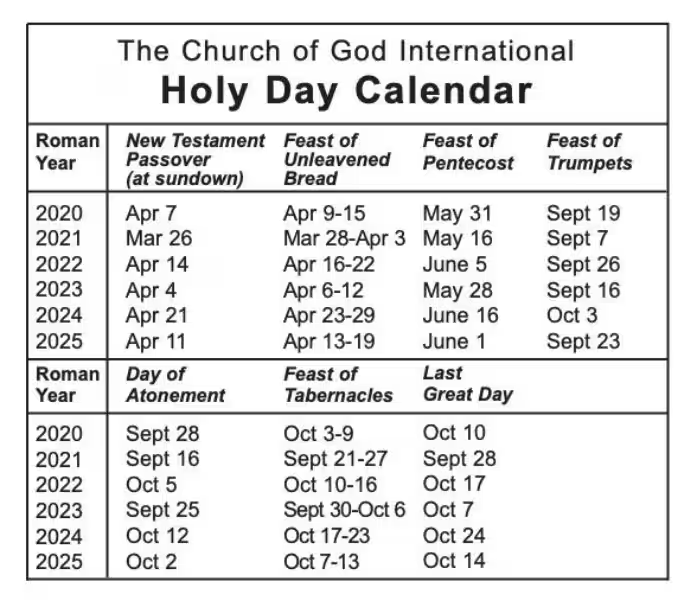
In the grand tapestry of human existence, religion provides a profound sense of meaning, community, and spiritual grounding. At the heart of many faiths lies a vibrant cycle of holy days, moments set aside for reflection, celebration, remembrance, and renewal. Understanding the holy days calendar isn’t just about marking dates on a page; it’s about connecting with the essence of your beliefs, participating in shared traditions, and experiencing the ebb and flow of spiritual observance. This article aims to demystify the concept of religious calendars, offering a relatable and informative journey through the significance of these sacred times.
The concept of a holy days calendar is as ancient as organized religion itself. From the agricultural cycles that dictated ancient pagan festivals to the meticulously preserved lunar and solar calculations of major world religions, these calendars serve as organizing principles for spiritual life. They provide a framework for communal worship, personal devotion, and the transmission of faith across generations. By observing these designated days, individuals and communities reaffirm their commitment to their spiritual path and strengthen their collective identity.
The Heartbeat of Faith: Understanding Religious Observances
Every religion, in its unique way, carves out specific periods of heightened spiritual significance. These are not mere holidays in the secular sense; they are sacred milestones that mark pivotal events, teachings, or divine interventions within a faith tradition. The holy days calendar acts as a roadmap for believers, guiding them through a year of devotion, introspection, and joyous celebration. It’s a living testament to the enduring power of faith and its ability to shape lives and communities.
Consider the Christian holy days calendar. It’s a rich mosaic, beginning with the solemn preparations of Advent leading to the joyous birth of Christ at Christmas, followed by the reflective period of Lent culminating in the profound sacrifice and resurrection celebrated during Easter. Beyond these central observances, there are days like Pentecost, commemorating the descent of the Holy Spirit, and various saints’ days, each offering unique opportunities for learning and inspiration. These days are woven into the fabric of Christian life, providing moments to connect with the core narratives and teachings of the faith.
A Deeper Dive: Exploring Major Religious Calendars
The diversity of religious traditions means a corresponding diversity in their respective holy days calendars. While the underlying purpose – spiritual connection and observance – remains consistent, the specific dates, rituals, and meanings vary dramatically. Understanding these differences fosters interfaith respect and appreciation, enriching our understanding of the global spiritual landscape. Each calendar tells a story, a narrative of divine engagement with humanity.
Let’s embark on a brief exploration of some prominent religious calendars. The Jewish holy days calendar, for instance, is deeply rooted in the Hebrew lunar cycle. It features observances like Rosh Hashanah, the Jewish New Year, a time of introspection and prayer; Yom Kippur, the Day of Atonement, the holiest day of the Jewish year marked by fasting and repentance; and Passover, commemorating the liberation of the Israelites from slavery in Egypt, a festival of freedom and remembrance.
The Islamic Holy Days Calendar: A Lunar Journey
The Islamic holy days calendar is strictly lunar, meaning its months and festivals shift approximately 10 to 11 days earlier each year in relation to the Gregorian solar calendar. This cycle is punctuated by profoundly significant observances. Ramadan, the ninth month, is a period of intense fasting, prayer, reflection, and community, culminating in the joyous celebration of Eid al-Fitr, the Festival of Breaking the Fast. Following Ramadan, the calendar marks Eid al-Adha, the Festival of Sacrifice, which commemorates Prophet Ibrahim’s willingness to sacrifice his son and is a time of giving and remembrance.
The Hindu holy days calendar is complex, often incorporating both lunar and solar calculations, leading to a vibrant array of festivals celebrated throughout the year. Major observances include Diwali, the Festival of Lights, symbolizing the victory of light over darkness and good over evil, often celebrated with lamps, fireworks, and feasting. Holi, the Festival of Colors, is a joyous occasion marking the arrival of spring and celebrating love and new life with vibrant hues. Then there’s Maha Shivaratri, a night dedicated to the worship of Lord Shiva.
Buddhism and the Cycles of Enlightenment
Buddhist traditions also adhere to distinct calendars, often influenced by regional practices and lunar cycles. Key observances include Vesak (or Buddha Purnima), which commemorates the birth, enlightenment, and passing of Gautama Buddha. This is often a time for meditation, acts of compassion, and temple visits. Other significant days might include Asalha Puja (Dharma Day), celebrating the Buddha’s first sermon, and various commemorations of important Bodhisattvas or historical figures within different Buddhist schools.
The Sikh holy days calendar is largely based on the Nanakshahi calendar, a solar calendar. Central to Sikh observance are the birthdays of their Gurus, particularly Gurpurbs celebrating the lives of Guru Nanak Dev Ji and Guru Gobind Singh Ji. These are marked by special services, readings from the Guru Granth Sahib, and community gatherings. Vaisakhi, a harvest festival, also holds immense significance for Sikhs as it commemorates the formation of the Khalsa, the purified community.
Integrating the Holy Days Calendar into Modern Life
In our fast-paced, modern world, staying connected to the holy days calendar can sometimes feel like a challenge. Yet, the spiritual nourishment and sense of belonging that these observances offer are more vital than ever. Integrating them into our lives, even in small ways, can foster deeper meaning and resilience. It’s about finding intentional moments to pause, reflect, and connect with what truly matters.
One of the most effective ways to engage with the holy days calendar is through preparation. Instead of simply noticing a holiday approaching, take time to learn about its origins and significance. For example, before Ramadan, understanding the principles of fasting, charity, and self-discipline can transform the experience from a mere abstention from food to a profound spiritual discipline. Similarly, learning about the symbolism of the Easter eggs and the story of the resurrection can imbue the celebration with deeper meaning.
Practical Tips for Observing Holy Days
Creating traditions is another powerful way to make the holy days calendar come alive. This could involve special family meals, engaging in charitable acts related to a particular observance, or dedicating time for prayer or meditation. For instance, during Diwali, families might make it a tradition to light diyas together, clean their homes thoroughly as a symbol of purification, and share sweets as an act of generosity.
Here are some practical tips for incorporating holy days into your life:
Mark your calendar: Visually seeing the important dates can be a powerful reminder.
Educate yourself and your family: Understanding the meaning behind the observance enhances the experience.
Participate in community events: Religious gatherings offer a sense of shared faith and connection.
Incorporate specific practices: Whether it’s fasting, prayer, meditation, or acts of service, engage actively.
Create personal rituals: Develop unique ways to mark these occasions that resonate with you.
Be mindful of the spirit of the day: Focus on the core values and teachings associated with each holy day.
Ultimately, the holy days calendar is a gift – a recurring invitation to connect with the divine, with our heritage, and with each other. By embracing these sacred times, we enrich our lives, strengthen our communities, and deepen our understanding of the enduring power of religion. It’s a journey of discovery, a rhythm of faith that continues to guide and inspire us through the seasons of life.
Frequently Asked Questions about the Holy Days Calendar
What is a holy day calendar?
A holy day calendar is a religious calendar that marks and observes significant religious festivals, observances, and commemorations specific to a particular faith. These days often have unique traditions, rituals, and meanings for adherents.
Why are holy days important in religion?
Holy days are important as they provide opportunities for believers to:
Connect with their faith and its history.
Engage in communal worship and spiritual reflection.
Reinforce religious identity and values.
Observe traditions and pass them down through generations.
Celebrate key events in the religious narrative.
How do different religions observe their holy days?
Observances vary greatly by religion and specific holy day. Common practices include:
Special religious services and prayers.
Fasting or feasting.
Acts of charity and almsgiving.
Family gatherings and celebrations.
Reading from sacred texts.
Pilgrimages to sacred sites.
Specific rituals and commemorations.
Are holy day calendars the same across all religions?
No, holy day calendars are unique to each religion. Different faiths have their own distinct festivals, observance dates, and calendrical systems (e.g., solar, lunar, lunisolar).
Where can I find a holy day calendar for a specific religion?
You can typically find holy day calendars for specific religions through:
Official websites of religious organizations or denominations.
Religious books or publications.
Online religious resources and apps.
Local religious institutions (churches, mosques, temples, synagogues).
Do holy days always fall on the same date each year?
This depends on the type of calendar used by the religion. Some holy days, particularly those based on a solar calendar (like the Gregorian calendar), may fall on the same Gregorian date each year. However, many holy days are determined by lunar or lunisolar calendars, meaning their dates shift annually relative to the Gregorian calendar.
What is the difference between a holy day and a regular holiday?
Holy days are specifically designated by a religion for spiritual observance and religious practice. Regular holidays, while often celebrated by many, may have secular origins or be observed for civic reasons. While some holy days may also be recognized as public holidays, their primary significance is religious.