The celestial realm, a tapestry woven with light and wonder, has long been a source of profound spiritual connection for humanity. Within this ethereal landscape, certain figures emerge as beacons of hope, comfort, and divine guidance. Among these luminous beings, the concept of a “Reine des Anges,” or Queen of Angels, resonates deeply across various religious traditions, speaking to a universal human longing for a powerful, nurturing, and intercessory feminine presence in the divine order. This article delves into the multifaceted understanding of the Reine des Anges, exploring her significance in religious contexts, her symbolic representations, and the ways in which devotion to her offers solace and strength to believers.
From ancient pantheons to monotheistic faiths, the idea of a supreme feminine entity presiding over celestial hosts, a true Reine des Anges, has manifested in diverse and compelling ways. Whether depicted as a maternal figure, a warrior of light, or a gentle guide, her presence offers a tangible connection to the divine, bridging the gap between the earthly and the spiritual. Understanding this revered figure allows us to appreciate the richness of religious iconography and the enduring power of faith in shaping human experience.
The Emergence of the Reine des Anges in Religious Thought
The notion of a “Reine des Anges” is not confined to a single creed but rather appears as a recurring motif in the spiritual landscape of humanity. In many early religions, the concept of a goddess or divine mother who held dominion over heavenly beings or was closely associated with them was prevalent. These figures often embodied fertility, protection, and cosmic order, attributes that would later be echoed in the understanding of angelic hierarchies and their leaders.
As monotheistic religions developed, particularly Christianity, the veneration of angelic beings became more formalized. While a direct title of “Reine des Anges” might not be explicitly stated in the earliest scriptures, the associated attributes and roles of certain prominent female figures and archangels paved the way for this understanding. The Virgin Mary, for instance, holds a paramount position in Catholic and Orthodox traditions, often referred to as the Queen of Heaven, Queen of Angels, and Mediatrix of all Graces. Her role as the mother of Jesus, the Son of God, grants her an unparalleled intercessory power and a position of honor among celestial beings, making her a prime example of the Reine des Anges in practice.
Mary, the Ultimate Reine des Anges: A Catholic and Orthodox Perspective
In Catholicism and Eastern Orthodoxy, the Blessed Virgin Mary is unequivocally recognized as the Reine des Anges, the Queen of Angels. This title is not merely symbolic; it reflects a profound theological understanding of her unique place in salvation history and her intimate connection with the angelic realm. Her Immaculate Conception and her role as the Theotokos (God-bearer) elevate her above all other created beings, including the angels themselves.
The veneration of Mary as Reine des Anges is expressed through numerous prayers, hymns, and feast days. The Rosary, for example, is a powerful devotional practice where believers meditate on the life of Christ and Mary, often invoking her intercession. In these prayers, Mary is frequently addressed as Queen of Angels, implying her authority and her role in presenting our petitions to God. The liturgy itself often refers to her as Queen, and artistic depictions invariably portray her surrounded by legions of angels, reinforcing her status as their sovereign. This devotion offers a comforting maternal presence for believers, a divinely appointed intercessor who understands human suffering and intercedes on our behalf with immense love and efficacy.
Devotional Practices and the Power of Intercession
The devotion to Mary as Reine des Anges provides believers with a tangible path to connect with the divine. Through prayer and meditation, individuals can feel a sense of closeness to this celestial Queen and entrust their concerns to her loving care. The understanding is that as Queen of Angels, she commands the celestial armies and can direct them to offer protection, guidance, and even miracles. This belief offers a profound sense of hope and security, particularly during times of trial or uncertainty.
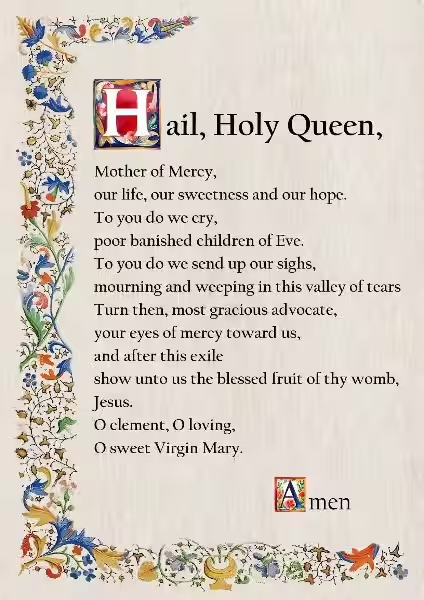
Many individuals find solace in reciting specific prayers to the Reine des Anges, such as the Hail Holy Queen or the Litany of Loreto, which enumerates many of her titles, including “Queen of Angels.” These practices are not simply about reciting words; they are about fostering a deep personal relationship with this divine intercessor. The relatable aspect lies in the human need for a benevolent authority figure who can advocate for us. Just as we might seek the help of a respected elder or a wise leader in our earthly lives, believers turn to the Reine des Anges, confident in her powerful intercession and her boundless love.
Angelic Hierarchies and the Concept of an Angelic Queen in Other Traditions
While the title “Reine des Anges” is most prominently associated with Mary in Catholic and Orthodox Christianity, the underlying concept of a supreme feminine presence or leadership within angelic or celestial realms can be traced in other spiritual traditions. Many ancient mythologies featured goddesses who presided over the heavens or commanded divine armies, embodying a similar sense of ultimate authority and celestial dominion.
In some interpretations of Judaism, particularly within Kabbalistic teachings, there are discussions of various angelic orders and their presiding archangels. While not explicitly a “Queen of Angels” in the Christian sense, the concept of a divine feminine aspect within God’s creation, often associated with wisdom (Hokhmah) or divine presence (Shekhinah), can be seen as having parallels with the nurturing and guiding aspects attributed to a Reine des Anges. These traditions highlight a belief in a structured, divinely organized cosmos where powerful spiritual beings play crucial roles in the universe’s functioning.
Symbolism and Archetypes of the Divine Feminine in Faith
The archetype of the Reine des Anges embodies powerful symbolic meanings that resonate deeply with human experience. She represents the maternal instinct, the nurturing embrace that protects and guides. She also signifies divine authority and order, a testament to the structured and benevolent nature of the spiritual universe. Her image often evokes a sense of purity, grace, and unwavering strength, qualities that inspire believers to strive for higher spiritual ideals.
Consider the simple analogy of a loving and capable mother overseeing her children. She provides them with security, teaches them right from wrong, and advocates for them when needed. The Reine des Anges, in a spiritual context, fulfills a similar role on a cosmic scale. Her presence in religious art, often depicted with a radiant aura and surrounded by cherubic beings, reinforces these symbolic attributes. This rich symbolism makes the concept of the Reine des Anges relatable across cultures and generations, offering a universal message of divine care and protection.
The Enduring Appeal of the Reine des Anges
The concept of the “Reine des Anges” continues to hold significant spiritual relevance today, offering a source of comfort, inspiration, and divine connection for countless individuals. In a world often characterized by chaos and uncertainty, the idea of a benevolent celestial Queen who intercedes for humanity provides a profound sense of hope and reassurance.
Whether understood as the Blessed Virgin Mary in Christian traditions or as a broader archetype of divine feminine leadership in the heavens, the Reine des Anges speaks to our innate human longing for divine guidance and maternal tenderness. Her enduring appeal lies in her ability to embody the perfect balance of power and compassion, authority and love, offering a tangible link to the sacred and a source of unwavering spiritual strength for all who seek her intercession.
Frequently Asked Questions about Reine des Anges and Religion
Who is Reine des Anges?
Reine des Anges is a French term meaning “Queen of Angels.” In religious contexts, it most commonly refers to the Virgin Mary, who is venerated as the Queen of the Angels in Catholic and Orthodox Christian traditions.
What is the religious significance of the title “Queen of Angels”?
The title “Queen of Angels” signifies Mary’s supreme dignity and authority over the angelic hosts. It reflects her role as the mother of Jesus Christ, the King of Heaven, and her intercessory power with God. This title emphasizes her purity, holiness, and her unique position in salvation history.
In which religions is Reine des Anges recognized?
The veneration of Mary as the “Queen of Angels” is a prominent devotion within Catholicism and Eastern Orthodoxy. While other Christian denominations may hold Mary in high regard, the specific title and its theological implications are most strongly articulated and celebrated in these traditions.
Are there specific prayers or devotions dedicated to Reine des Anges?
Yes, there are prayers and devotions that invoke Mary under her title “Queen of Angels.” The Hail Holy Queen (Salve Regina) is a well-known prayer that addresses her as “Queen of Heaven and Mother of Mercy,” which is closely related to her queenship over the angels. Many rosary meditations and litanies also include invocations of her as Queen.
What is the theological basis for Mary being called Queen of Angels?
The theological basis stems from her role as the Mother of God (Theotokos). Because she is the mother of Jesus, who is King of the universe and Lord of all creation (including the angels), she is considered Queen by maternal right. Furthermore, her purity, obedience, and cooperation with God’s will have elevated her to a position of highest honor among all creatures.