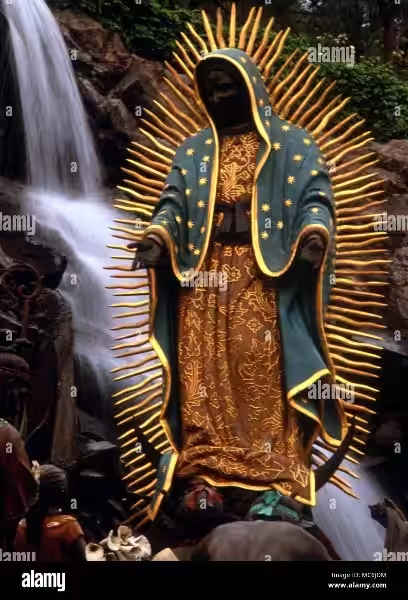
For centuries, whispers and wonder have surrounded the image of the Black Madonna. These statues, often carved from dark wood or painted with somber hues, depict the Virgin Mary holding the Christ child. Far from being a fringe phenomenon, the Black Madonna statue holds a significant place within Christian devotional practice across Europe and beyond, sparking questions about their origins, their symbolic meaning, and the profound emotional connection they inspire in countless pilgrims. These are not mere artistic curiosities; they are focal points of deep faith and enduring mystery, drawing people from all walks of life seeking solace, intercession, and a tangible link to the divine.
The allure of the Black Madonna statue transcends simple religious iconography. It speaks to a deeper human need for connection, for understanding the sacred in tangible forms. Whether one approaches these images with unwavering faith, curious skepticism, or a simple appreciation for their historical and artistic significance, their presence compels contemplation. The profound impact of the Black Madonna statue is undeniable, shaping personal journeys and connecting communities through shared reverence.
Unveiling the Origins: Theories and Traditions Surrounding the Black Madonna Statue
The exact origins of the Black Madonna statue are a subject of ongoing scholarly debate and rich popular tradition. While some theories point to ancient pagan goddesses who were later Christianized, others suggest natural discoloration of materials over time, or even intentional artistic choices by medieval craftsmen. Regardless of their precise genesis, these images have captivated believers for generations, offering a unique and powerful visual representation of motherhood and divinity.
One prevalent theory posits that many Black Madonna statues are overlaid on or derived from pre-Christian deities. In ancient cultures, dark-skinned goddesses, often associated with earth, fertility, and protection, were widely venerated. When Christianity spread, it is believed that some of these deeply ingrained cultural symbols and sacred sites were adapted and reinterpreted within the new religious framework. Imagine, for instance, a revered spring once dedicated to a nature goddess, later becoming the site of a shrine to the Virgin Mary, with a statue that retained its dark complexion as a subtle echo of its ancient past. This syncretic approach allowed for a smoother transition of faith and belief systems.
Another compelling explanation for the dark hue of the Black Madonna statue lies in the materials from which they were carved. Many were fashioned from dark woods, such as ebony or walnut, which naturally possess a deep coloration. Over centuries of exposure to candle smoke, incense, and the oils used in devotional practices, these wooden figures would have darkened considerably. It’s not difficult to envision how generations of pilgrims, lighting candles and anointing the statue with oils, could transform a lighter wood into the rich, dark patina we see today. The sheer age and the devotional environment contribute significantly to their appearance.
Finally, some scholars suggest that the dark complexion was a deliberate artistic choice. In some medieval periods, dark pigments were more readily available or were favored for their symbolic connotations of earthiness, humility, and even the sorrow of the Passion. The Black Madonna statue, in this light, might have been intended to evoke a more grounded, accessible, and relatable figure of Mary, embracing the suffering and struggles of humanity. The richness of the color could also have been seen as a sign of divine mystery, a departure from conventional, lighter depictions.
The characteristic dark complexion of the Black Madonna statue is not merely an aesthetic choice; it is imbued with a profound and multilayered symbolism that resonates deeply with believers. This darkness can represent a multitude of concepts, from the mysteries of the divine to the earthly realities of suffering and redemption. Understanding these layers of meaning unlocks a deeper appreciation for the enduring power of these sacred images.
For many, the darkness of the Black Madonna statue symbolizes the all-encompassing nature of God’s love. It suggests a divine presence that embraces all people, regardless of race or origin. This interpretation is particularly significant in a world often divided by superficial differences. The dark skin can be seen as a universal symbol of humanity, a reminder that the divine is not confined to any single ethnic group. It offers a powerful message of inclusion and acceptance, allowing individuals from diverse backgrounds to see themselves reflected in the mother of God.
Furthermore, the darkness can evoke the fertile earth, the very ground from which life springs forth. In this context, the Black Madonna statue becomes a powerful representation of creation, nurturing, and the life-giving aspects of the divine feminine. This connection to the earth resonates with ancient traditions that revered female deities as creators and nurturers. The dark hue can also be interpreted as representing the mysteries of the universe, the unknown depths that inspire awe and wonder.
Pilgrimage and Devotion: The Living Legacy of the Black Madonna Statue
The Black Madonna statue continues to be a focal point for intense devotion and fervent pilgrimage for millions around the globe. These sacred sites are not static relics of the past; they are vibrant centers of faith where individuals seek healing, solace, and spiritual guidance. The journey to a Black Madonna shrine is often a deeply personal and transformative experience, steeped in ritual and communal prayer.
Many pilgrims undertake arduous journeys to visit a specific Black Madonna statue, driven by a profound need or a fervent prayer. These journeys can involve long walks, arduous climbs, or extensive travel, symbolizing the effort and sacrifice believers are willing to make in their pursuit of divine connection. Upon arrival, they often engage in specific rituals, such as lighting candles, offering prayers, leaving votive offerings, or simply spending quiet time in contemplation before the image. The shared experience of pilgrimage fosters a strong sense of community among believers.
The stories of miraculous intercessions and healings attributed to the Black Madonna statue are numerous and inspiring. These accounts, passed down through generations, fuel the faith of new pilgrims and reinforce the belief in the powerful intercessory role of Mary. Whether it’s a recovery from illness, finding lost loved ones, or overcoming personal struggles, the perceived efficacy of the Black Madonna statue serves as a testament to its enduring spiritual significance.
Interpreting the Divine Feminine: The Black Madonna Statue and Modern Spirituality
Beyond traditional religious contexts, the Black Madonna statue is increasingly being embraced by those exploring a more holistic and inclusive understanding of spirituality. The image resonates with contemporary interest in the divine feminine, offering a powerful archetypal representation of strength, compassion, and inner wisdom. This evolution in interpretation highlights the enduring adaptability and universal appeal of these sacred figures.
In modern spiritual circles, the Black Madonna statue is often viewed as a symbol of the primordial feminine energy that exists within all beings. This energy is associated with intuition, creativity, nurturing, and the deep, interconnected web of life. The dark complexion, in this context, can represent the untamed, primal aspects of the feminine, the powerful forces that lie beneath the surface of everyday consciousness. It speaks to a connection with the earth, the moon, and the cyclical rhythms of nature.
The Black Madonna statue also serves as a potent reminder of the strength and resilience of women. Mary, as the mother of Christ, embodies unwavering love, endurance through suffering, and unwavering faith. These qualities are increasingly being recognized and celebrated in contemporary discussions about female empowerment and leadership. The dark imagery can represent the shadow aspects of the feminine, the parts that have been historically suppressed or misunderstood, now being brought into the light and embraced.
A Universal Icon: The Black Madonna Statue Across Cultures and Beliefs
The captivating presence of the Black Madonna statue extends far beyond its historical origins, transcending geographical boundaries and even some doctrinal differences. Its ability to connect with people on a deeply emotional and spiritual level has made it a universal icon of faith and hope. This widespread appeal speaks to a shared human longing for divine connection and the comfort of a maternal presence.
From the famed Black Madonna of Częstochowa in Poland to the Our Lady of Montserrat in Spain, and countless other sanctuaries across Europe, the Black Madonna statue draws millions of pilgrims annually. These sites have become hallowed grounds, places where people from diverse backgrounds gather to share in common devotion. The shared experience of venerating the Black Madonna statue can forge powerful bonds of solidarity and mutual understanding.
In some instances, the veneration of the Black Madonna statue has even extended to those outside traditional Catholic or Orthodox denominations. Individuals seeking a powerful representation of the divine feminine or a connection to ancient spiritual traditions may find themselves drawn to these images. This broader appeal underscores the idea that the symbolism of the Black Madonna statue can resonate with a variety of spiritual paths, offering a sense of peace and inspiration to a wide range of seekers. The enduring mystery and the profound emotional engagement it inspires ensure that the Black Madonna statue will continue to be a source of wonder and devotion for generations to come.
Frequently Asked Questions – Black Madonna Statues and Religion
What is a Black Madonna statue?
A Black Madonna statue is a statue or icon of the Virgin Mary and the infant Jesus in which both figures are depicted with dark or black skin. These images are found across various Christian traditions, particularly in Catholicism and Orthodoxy.
The reasons for the dark depiction are varied and debated. Theories include:
* Material and Age: Over centuries, certain materials used in the statues (like wood or plaster) and the buildup of smoke from candles and incense could have darkened the original paint.
* Symbolism: In some traditions, black can symbolize the earth, fertility, the womb, or even the divine mystery, representing Mary as the Mother of God and the Church.
* African or Middle Eastern Origins: Some scholars suggest that early Christian art might have depicted Mary with features or skin tones reflecting the populations of the regions where Christianity first flourished, such as the Middle East or North Africa.
* Interpretive Meaning: For many, the black skin is not literal but a symbolic representation of Mary’s universal motherhood, her connection to the oppressed, or her role as a figure of comfort and refuge in times of darkness.
Are Black Madonnas only found in certain denominations?
While most famously associated with Catholicism, Black Madonna images can be found in various Christian traditions. There are historical examples and interpretations within Orthodox Christianity as well.
Where are Black Madonna statues most commonly found?
Black Madonna statues are found in churches, shrines, and homes throughout Europe, particularly in France, Spain, Italy, Poland, and parts of Eastern Europe. Major pilgrimage sites exist for some of these venerated images.
What is the religious significance of Black Madonna statues?
Black Madonna statues hold deep religious significance for believers. They are often seen as powerful intercessors, symbols of divine protection, healing, and maternal love. For many, the dark complexion evokes a sense of mystery, profound spirituality, and a connection to ancient traditions. They are often focal points for prayer, pilgrimage, and devotion.
Do Black Madonnas have a specific theological meaning?
The theological interpretations are rich and diverse. They can represent Mary’s humility, her role as the “Bride of Christ,” her suffering, or her deep connection to humanity. Some see in the blackness a representation of Mary as the “Queen of Heaven” who transcends earthly boundaries and races.
Are Black Madonnas associated with Mary’s race?
While some interpretations connect them to Mary’s possible ethnic background in the Middle East or North Africa, many theologians and devotees view the blackness as symbolic rather than literal. The focus is often on Mary’s spiritual role and universal significance as the Mother of God, transcending any specific ethnicity.
Are there specific prayers or devotions associated with Black Madonnas?
Yes, many Black Madonna shrines have specific prayers, novenas, and devotions dedicated to them. Pilgrims often pray for healing, guidance, and intercession through these devotions. The veneration of specific Black Madonna images often carries unique traditions and rituals.