The concept of feminine genius, a term often associated with Karol Wojtyła (Pope John Paul II), speaks to the unique gifts, perspectives, and contributions that women bring to the human experience. It’s not about inherent superiority or a separate category of being, but rather a recognition of distinct ways of perceiving, relating, and acting that enrich society as a whole. When we turn this lens towards religion, a profound and often overlooked dimension of spiritual life comes into focus. For centuries, religious traditions have been shaped by both male and female voices, yet the specific brilliance of feminine genius has often been relegated to the margins, unacknowledged or misunderstood. This article will explore how this unique feminine insight weaves through the very fabric of religious belief and practice, making it richer, more compassionate, and ultimately, more complete.
The essence of feminine genius lies in a particular sensitivity to relationships, an inherent nurturing instinct, and a profound capacity for empathy. These are not exclusively female traits, but they are often cultivated and expressed more prominently within the female experience. In the realm of faith, this translates into a distinctive approach to encountering the divine and navigating the complexities of spiritual growth. Instead of solely focusing on abstract dogma or rigid structures, feminine genius often emphasizes the personal, the relational, and the lived experience of faith.
Consider the way many women approach prayer. While some may engage in rigorous theological study or intellectual rumination, a significant number find their deepest connection through contemplative practices, heartfelt intercession, and a deep sense of communion with God. This is not to say men do not experience these forms of prayer, but the very language and emphasis often found in women’s spiritual journals, personal testimonies, and communal prayer groups highlight a profound attunement to the subtle whispers of the Spirit. This relational understanding of the divine fosters a faith that is both deeply personal and outwardly directed, influencing how individuals live out their beliefs in the world.
The Relational Heart of Divine Encounter
The relational heart is a cornerstone of feminine genius, and nowhere is this more evident than in religious discourse. Traditional religious narratives and theological frameworks have, at times, leaned towards a more hierarchical or distant understanding of God. Feminine genius, however, often perceives God not just as a supreme being, but as a loving parent, a compassionate friend, or a source of unwavering support – an intimate presence that walks alongside us. This perspective can transform abstract theological concepts into tangible, life-affirming realities.
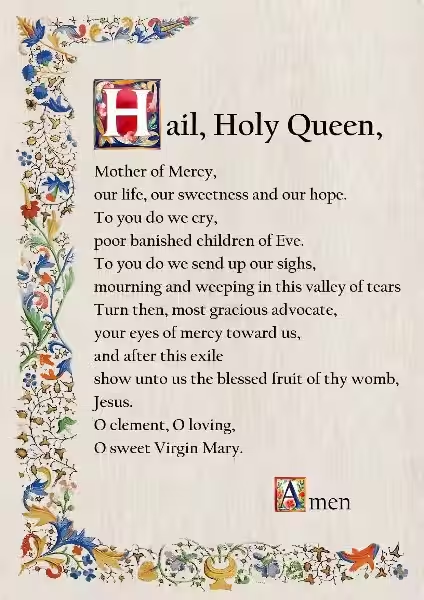
Think about the profound impact of Mary, the mother of Jesus, in Christian tradition. Her role is not just that of a biological mother, but a figure of unconditional love, unwavering faith, and profound acceptance. Her journey, marked by both joy and profound sorrow, resonates deeply with women who navigate the complexities of family, loss, and personal sacrifice. This emphasis on empathy and maternal love as divine attributes offers a powerful counterpoint to more stoic or purely intellectual interpretations of faith, inviting believers into a more tender and accessible relationship with the sacred.
Another significant aspect of feminine genius in religion is its inherent nurturing capacity. This manifests not only in the care of families and communities but also in the cultivation of faith itself. Just as a gardener tends to seeds, watering them, protecting them from pests, and providing the right conditions for growth, women often bring a similar attentive and patient approach to fostering spiritual development in themselves and others. This includes:
Creating supportive faith communities: Women frequently initiate and sustain small groups, Bible studies, and prayer circles, providing a safe space for vulnerability and shared growth.
Passing down traditions: From preparing religious meals to teaching prayers and stories, women are often the primary custodians of religious heritage, ensuring its continuity across generations.
Practicing compassionate counsel: When faced with spiritual struggles or doubts, many turn to women for their listening ear and empathetic understanding, finding guidance that is both practical and deeply compassionate.
This nurturing approach extends beyond the individual to the broader religious institution. While men may have historically held positions of leadership and authority, the invisible labor of maintaining the spiritual and emotional health of congregations has often fallen to women. This includes everything from organizing charity drives and visiting the sick to mediating conflicts and fostering a welcoming atmosphere. This “gardener’s touch” is crucial for the flourishing of any faith community, ensuring that the spiritual soil is fertile for all to grow.
Feminine Genius in Action: Diverse Religious Expressions
The influence of feminine genius is not confined to a single religious tradition; it manifests in a kaleidoscope of expressions across the world’s faiths. Recognizing these contributions allows for a more holistic and nuanced understanding of religious history and practice. It challenges monolithic interpretations and celebrates the multifaceted ways in which humanity seeks and experiences the divine.
Echoes in Ancient Traditions and Modern Movements
Across various ancient traditions, we find powerful female figures embodying the principles of feminine genius. In Hinduism, goddesses like Lakshmi embody prosperity and abundance, while Saraswati represents knowledge and creativity. Their worship often involves rituals that emphasize devotion, artistic expression, and the nurturing of family and community – all hallmarks of feminine insight. Similarly, in Indigenous spiritualities, female shamans and elders often serve as keepers of sacred knowledge and healers, drawing on a deep connection to the earth and the spirit world. These roles highlight a wisdom rooted in intuition, empathy, and the intricate interconnectedness of all life.
In more contemporary religious movements, the impact of feminine genius is increasingly evident. Many grassroots initiatives focused on social justice, interfaith dialogue, and environmental stewardship are spearheaded by women. These efforts often prioritize collaboration, consensus-building, and a profound concern for the marginalized, reflecting a distinctly relational and compassionate approach to faith in action. This is exemplified by the numerous women who have founded organizations dedicated to feeding the hungry, housing the homeless, or advocating for peace, all driven by a deep-seated conviction that their faith compels them to act with love and service.
Challenging the Patriarchy: Reclaiming the Feminine Voice
Throughout much of religious history, patriarchal structures have often silenced or minimized the voices of women. This has led to an imbalanced narrative, where masculine perspectives have been prioritized, sometimes at the expense of a more complete understanding of the divine and the human spiritual journey. The resurgence of interest in feminine genius is, in part, a reclamation of these silenced voices and a call for a more inclusive spiritual landscape.
This reclamation involves not only acknowledging historical contributions but also actively creating space for women’s leadership and theological expression today. It means challenging interpretations of scripture that perpetuate harmful stereotypes and advocating for rituals and practices that resonate with feminine sensibilities. For example, the development of feminist theology within Christianity, Judaism, and Islam has sought to re-examine sacred texts and traditions through a lens that centers women’s experiences and challenges patriarchal assumptions, aiming to create a more equitable and empowering religious experience for all.
The Future of Faith: Embracing the Full Spectrum of Genius
The integration of feminine genius into religious discourse and practice is not merely an academic exercise; it is essential for the vitality and continued relevance of faith in the 21st century. As societies evolve and become more diverse, religious traditions must adapt to reflect the richness of human experience. This means moving beyond outdated models and embracing a more comprehensive understanding of spiritual intelligence.
Cultivating a More Compassionate and Inclusive Spirituality
Ultimately, embracing feminine genius in religion leads to the cultivation of a more compassionate, holistic, and inclusive spirituality. When we value the unique insights and contributions of women, we create faith communities that are more welcoming, more understanding, and more capable of addressing the complex challenges of our time. This involves:
Encouraging women’s leadership at all levels of religious organizations.
Promoting theological discourse that incorporates diverse perspectives, including those informed by feminine genius.
Developing spiritual practices that resonate with both masculine and feminine sensibilities.
Highlighting the contributions of women throughout religious history and contemporary faith movements.
By doing so, we move towards a richer tapestry of religious experience, one where the unique brilliance of feminine genius is not an afterthought, but an integral thread woven into the very heart of what it means to believe, to love, and to serve. This inclusive approach promises a more profound and meaningful spiritual journey for everyone.
Frequently Asked Questions about the Feminine Genius and Religion
What is the “Feminine Genius”?
The “Feminine Genius” is a concept, often associated with Catholic teaching, that describes the unique and invaluable contributions that women bring to society and the Church. It emphasizes particular feminine virtues and perspectives, such as empathy, compassion, attentiveness to relationships, nurturing, and a holistic understanding of life, which are seen as complementary to masculine qualities and essential for a well-rounded human experience.
How does the Feminine Genius relate to religion?
In religious contexts, particularly within Christianity, the Feminine Genius is often understood as a gift from God, intended to enrich the spiritual life and mission of the Church and its followers. It suggests that women play a vital role in expressing and embodying divine love and mercy, in fostering community, and in bringing a particular spiritual insight. This concept can inform discussions about women’s roles within religious institutions and their unique spiritual vocations.
Does the concept of the Feminine Genius imply women are inherently different from men?
Yes, the concept of the Feminine Genius highlights inherent differences in how men and women are often perceived to express certain virtues and perspectives. It is not about inherent superiority or inferiority, but rather about complementary strengths and ways of experiencing and interacting with the world. These differences are often seen as divinely intended to create a richer and more complete human tapestry.
How is the Feminine Genius expressed in religious practice?
The Feminine Genius can be expressed in religious practice through various avenues, including roles in teaching, pastoral care, spiritual direction, charitable work, liturgical participation, and the fostering of prayer and community life. It also influences how women’s experiences of faith, suffering, and joy are understood and valued within a religious tradition.
Is the concept of the Feminine Genius universally accepted across all religions?
The specific term “Feminine Genius” is most prominently used and discussed within Catholic theology. While other religions may have concepts that celebrate women’s unique spiritual roles and contributions, they are often articulated with different terminology and theological frameworks that are specific to their own traditions. The emphasis and understanding of gendered spiritual gifts can vary significantly across different faiths.