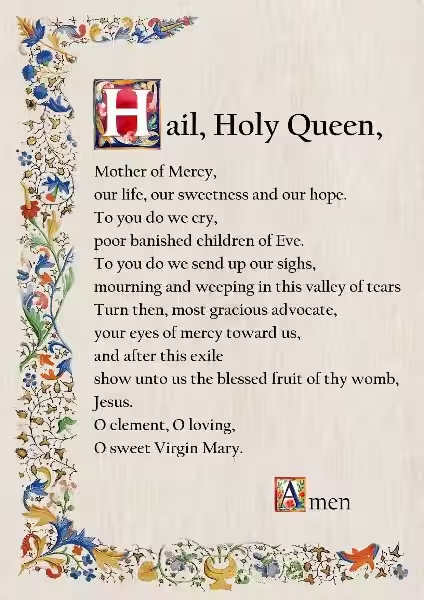
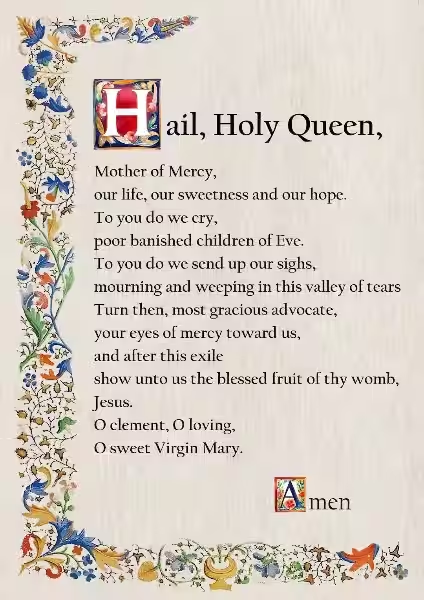
In the tapestry of human experience, religion has long served as a guiding thread, offering solace, meaning, and community. For many, the invocation of “Hail Holy Queen” is more than just a devotional phrase; it’s a profound expression of faith, a recognition of a sacred matriarchal presence that embodies love, protection, and intercession. This article will explore the multifaceted nature of religion, delving into how phrases like “Hail Holy Queen” resonate across diverse beliefs and how individuals can find enduring spiritual nourishment in our ever-evolving world.
The concept of a “Holy Queen” or a divine feminine figure is not exclusive to one tradition. Across cultures and throughout history, spiritual practices have acknowledged the power and nurturing aspects often attributed to the feminine divine. Whether it’s the Virgin Mary in Christianity, Isis in ancient Egypt, or various mother goddesses in other pantheons, the archetype of the benevolent, powerful female deity provides a unique point of connection for believers. Understanding this broader context can deepen our appreciation for figures like the Holy Queen and the comfort they offer.
The Enduring Power of Devotion: Understanding “Hail Holy Queen”
The prayer “Hail Holy Queen” is a cornerstone of Catholic devotion, deeply rooted in centuries of tradition and theological reflection. Its verses speak of Mary as the “Mother of Mercy,” the “Queen of Angels,” and a beacon of “hope.” These titles are not mere labels but reflections of a profound understanding of her role as a powerful intercessor and a compassionate mother figure. When believers utter “Hail Holy Queen,” they are invoking a spiritual presence they believe can hear their prayers, offer guidance, and intercede on their behalf with the divine.
For many, the repetition of the “Hail Holy Queen” prayer provides a sense of rhythm and structure, a meditative practice that calms the mind and opens the heart. It’s akin to finding a steady beat in the sometimes-chaotic rhythm of life. The familiar words create a safe space for vulnerability, allowing individuals to express their joys, sorrows, and petitions openly. This consistent engagement with the divine through prayer can foster a deeper sense of peace and resilience, even when facing life’s greatest challenges.
Finding Personal Meaning in Sacred Rituals
Religious rituals, including the recitation of prayers like “Hail Holy Queen,” offer tangible ways to connect with the intangible. The act of speaking the words aloud, perhaps in a communal setting or in quiet solitude, provides a sensory experience that anchors spiritual thoughts and feelings. This physical engagement can make abstract theological concepts feel more real and accessible. For instance, the imagery of Mary as a queen evokes a sense of majesty and authority, while her title as “Mother” emphasizes warmth and accessibility – a powerful combination for those seeking both divine power and maternal comfort.
Moreover, the communal aspect of shared prayer can be incredibly fortifying. When individuals gather to recite “Hail Holy Queen,” they are not just speaking words; they are participating in a collective act of faith. This shared experience fosters a sense of belonging and solidarity, reminding individuals that they are part of a larger spiritual family. This collective energy can amplify prayers and create a profound sense of shared purpose and mutual support, making the journey of faith feel less solitary.
Religion in the Modern Age: Adapting and Enduring
In the 21st century, religion navigates a complex landscape. While some may find traditional structures less appealing, the fundamental human need for meaning, connection, and ethical guidance remains. Many individuals are discovering new ways to engage with their faith, blending traditional practices like reciting “Hail Holy Queen” with contemporary expressions of spirituality. This might involve incorporating contemplative prayer into a busy schedule, engaging in online faith communities, or finding spiritual resonance in art, music, and nature.
The adaptability of religion is its enduring strength. While the world changes, the core principles of love, compassion, and seeking a higher truth often remain constant. For those drawn to the devotion of the “Hail Holy Queen,” this might translate into seeking out charitable works inspired by Mary’s compassion, or finding strength in her example of faithful obedience. The essence of the devotion can be lived out in diverse ways, demonstrating that faith is not static but a dynamic, living force.
Navigating Doubt and Seeking Clarity
It is natural for individuals to experience moments of doubt or questioning within their faith journey. These periods, while sometimes unsettling, can also be opportunities for deeper understanding and personal growth. Engaging with religious texts, seeking guidance from spiritual leaders, or engaging in open dialogue with fellow believers can help clarify complex theological questions. Even when grappling with uncertainty, the comfort found in familiar prayers like “Hail Holy Queen” can serve as a stable anchor.
For many, their faith is not about having all the answers but about having the courage to ask the questions and the trust to continue seeking. The belief in a benevolent divine presence, embodied by figures like the Holy Queen, can provide the strength to persevere through periods of doubt. This journey of faith is often characterized by seasons of clarity and seasons of questioning, and both are integral to a mature spiritual life. The continuous act of calling out “Hail Holy Queen” can be a way of reasserting one’s commitment to the search, even amidst uncertainty.
The archetype of divine motherhood, powerfully represented by the invocation “Hail Holy Queen,” speaks to a universal human experience. The innate desire for nurturing, protection, and unconditional love is something felt by all, regardless of their religious affiliation. This is why figures like Mary, hailed as the Holy Queen, resonate so deeply across denominations and even with those who may not identify with a specific religious doctrine.
The concept of a divine mother offers a profound sense of comfort and security. In times of personal crisis or global upheaval, the idea of a loving, powerful entity watching over us can be incredibly grounding. The phrase “Hail Holy Queen” encapsulates this feeling, offering a concise yet potent expression of reverence and trust in a maternal divine presence. This appeal transcends doctrinal specifics, tapping into a fundamental human need for solace and maternal care from a sacred source.
Integrating Faith into Daily Life
Making faith a living, breathing aspect of everyday existence is key to a fulfilling spiritual life. This involves more than just attending services or reciting prayers; it means consciously integrating spiritual values and principles into our actions, decisions, and interactions. For those devoted to the “Hail Holy Queen,” this might manifest as striving for greater acts of mercy in their daily dealings, emulating her humility in their personal lives, or seeking to be a source of comfort and support for others, just as they believe she is for them.
Small, consistent acts of faith can have a profound cumulative effect. This could involve a moment of gratitude before a meal, a conscious effort to practice patience with a difficult colleague, or offering a helping hand to a neighbor. These everyday actions, infused with the spirit of devotion to a figure like the Holy Queen, transform the mundane into the sacred. By living out their faith in practical ways, individuals can experience a deeper sense of purpose and connection to the divine, making their spiritual journey a continuous and enriching experience.
Frequently Asked Questions
What is Hail Holy Queen?
Hail Holy Queen, also known by its Latin title, “Salve Regina,” is a popular Marian antiphon and prayer recited by Catholics. It is traditionally sung or recited after Compline (the final prayer service of the day) during Ordinary Time and is one of the four great Marian antiphons.
The prayer is an invocation to Mary, the Mother of God, acknowledging her as the Queen of Heaven and Earth. It praises her as “life, sweetness, and our hope,” expresses sorrow for the “exiled children of Eve,” and implores her intercession for comfort and mercy in this life and in the hour of death.
When is Hail Holy Queen recited?
Historically, the Hail Holy Queen was recited daily after Compline from the feast of the Nativity of Mary (September 8) until Holy Saturday. Today, it is still commonly used after Compline, but its recitation is not as strictly tied to specific liturgical seasons for all communities. It is also frequently prayed as a devotion outside of the Liturgy of the Hours.
What is the origin of the Hail Holy Queen?
The exact origin of the “Salve Regina” is uncertain, but it is generally believed to have been composed in the 11th century, possibly by Adhemar of Monteil, Bishop of Le Puy, or by a monk of Einsiedeln. It gained widespread popularity throughout the Middle Ages and was officially incorporated into the Roman breviary in the 16th century.
What is the significance of Mary as Queen in the Hail Holy Queen?
In Catholic theology, Mary’s queenship is understood not as a political or temporal rule, but as her exalted position as Mother of God, her unique share in Christ’s redemptive mission, and her role as intercessor for humanity. She reigns in glory with her Son, Jesus Christ, and is seen as a compassionate mother guiding and protecting her children on Earth.
Are there different versions of the Hail Holy Queen?
The Latin “Salve Regina” is the original and most common version. There are also numerous translations into different languages, including English. Some variations in wording may exist between different translations or editions of prayer books, but the core message and theological intent remain the same.