The very names, Castel Vecchio and Castel Gandolfo, evoke images of enduring stone, rolling hills, and a profound connection to the past. For many, these locations are synonymous with the papal summer residence, a place of respite and reflection for the pontiffs of the Catholic Church. Yet, delve a little deeper, and you’ll discover that their significance extends far beyond mere historical tourism. These areas are deeply interwoven with the fabric of religion, offering a unique window into centuries of faith, art, and spiritual devotion that continues to resonate today. Whether you’re a devout pilgrim or a curious traveler, understanding the religious weight of Castel Vecchio and Castel Gandolfo enriches the experience immeasurably.
This journey through Castel Vecchio and Castel Gandolfo isn’t just about admiring ancient architecture or picturesque landscapes; it’s about exploring the very soul of a faith that has shaped civilizations. We’ll uncover how the strategic positioning and architectural choices of these sites reflect spiritual aspirations, how the daily lives and decisions of popes were influenced by this sacred setting, and what enduring legacies of religion they hold for us in the modern world. Prepare to be transported to a realm where history, art, and profound spiritual significance coalesce.
The Sacred Heart of Papal Retreat: Castel Gandolfo’s Religious Significance
Castel Gandolfo, perched majestically overlooking the serene waters of Lake Albano, has long served as a powerful symbol of the Catholic Church’s spiritual and temporal authority. For centuries, it has been the cherished summer sanctuary for successive popes, a place where the weight of the world could be momentarily set aside for prayer, contemplation, and governance. The very decision to establish a summer residence here speaks volumes about its perceived sanctity and its ability to foster a sense of divine connection.
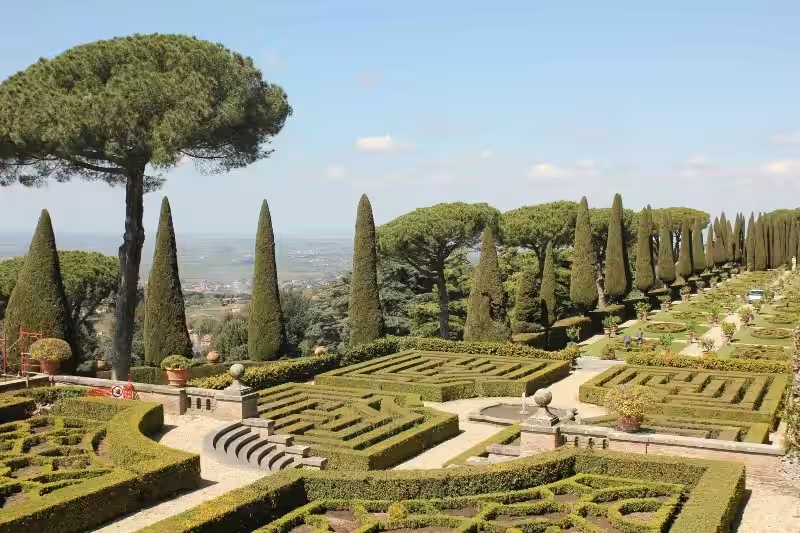
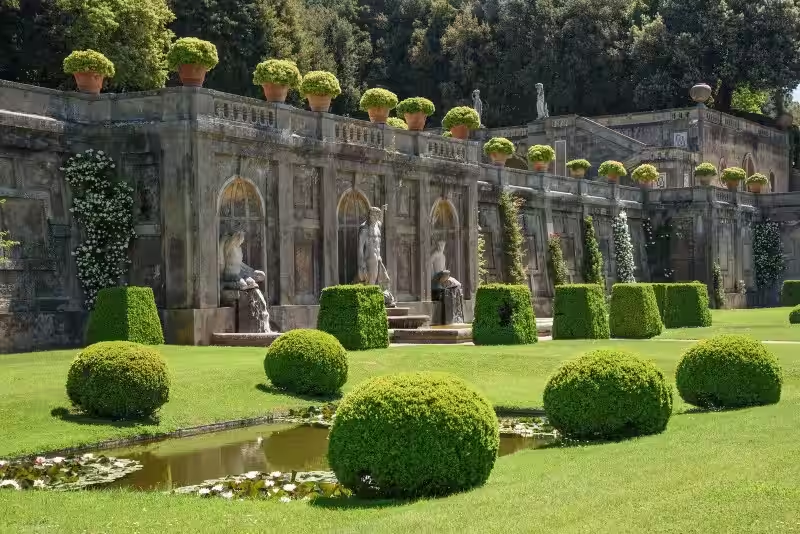
The Pontifical Palace, the crown jewel of Castel Gandolfo, is more than just a lavish estate; it’s a living testament to the continuity of religious leadership. Imagine Pope Urban VIII, in the 17th century, commissioning its construction, seeking a haven that was both beautiful and conducive to spiritual renewal. This wasn’t merely about comfort; it was about creating an environment that amplified their ability to connect with God and, by extension, serve His flock. The surrounding gardens, meticulously maintained, often feature fountains and statuary that carry religious symbolism, further reinforcing the sacred atmosphere of the estate.
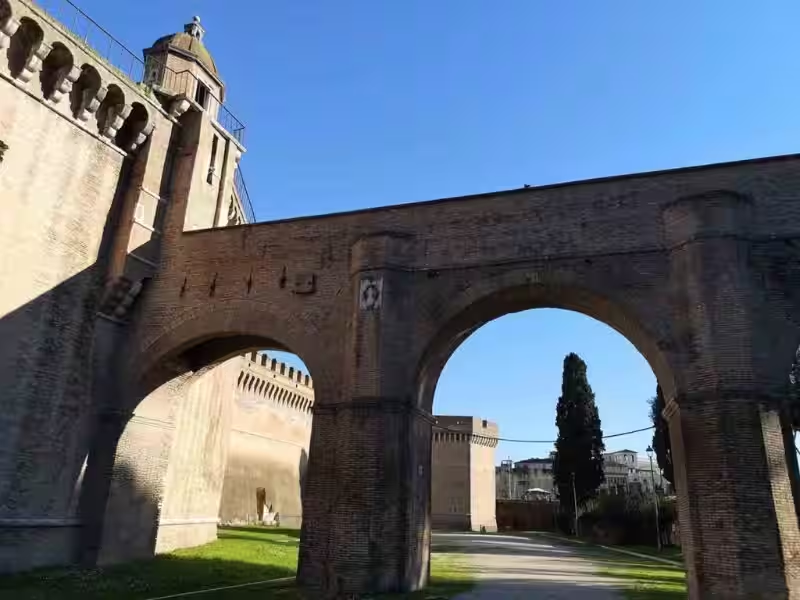
The architecture of Castel Gandolfo and its surrounding properties, including the often-overlooked Castel Vecchio in the vicinity, is a profound narrative in stone. The Pontifical Palace itself, with its imposing yet elegant structure, was designed to inspire awe and reverence. Its chapels, private apartments, and reception halls have witnessed countless moments of prayer, decision-making, and spiritual discourse that have shaped the course of religious history. Each fresco, each sculpted detail, often carries allegorical meanings rooted in Christian scripture and tradition.
Consider the Villa Barberini, now part of the Vatican Gardens and accessible from Castel Gandolfo. This sprawling estate, once a Roman emperor’s villa, was later transformed to serve religious purposes, featuring chapels and prayer spaces. Its repurposing underscores a recurring theme: the appropriation and sanctification of existing spaces for religious use, a practice deeply embedded in the history of the Church. The very land itself seems to breathe history and devotion, offering a palpable connection to those who have sought solace and spiritual guidance here before.
Castel Vecchio: A Guardian of Ancient Devotion
While Castel Gandolfo is widely recognized as the papal residence, the presence of Castel Vecchio (literally “Old Castle”) in the region hints at an even deeper and older layer of religious and historical significance. Often less visited but equally compelling, Castel Vecchio represents the foundational elements of devotion that preceded the grand papal constructions. Its origins likely lie in earlier fortifications or religious outposts, a testament to the enduring spiritual landscape of the area.
The very existence of Castel Vecchio suggests a history of safeguarding not just physical territories but also religious sanctuaries and communities. It speaks to a time when faith was often intertwined with defense and when monastic orders or early Christian communities might have established a presence in such strategic locations. Exploring the remnants of Castel Vecchio offers a glimpse into the more austere, perhaps more foundational, expressions of religion that paved the way for the grandeur of Castel Gandolfo.
Tracing the Roots of Spirituality
The historical layers embedded within the region around Castel Vecchio and Castel Gandolfo are a compelling archaeological record of religious evolution. Imagine early Christian hermits seeking refuge in caves, their simple prayers echoing through the very hills that would later host pontifical palaces. These foundational acts of faith, though perhaps less documented, are just as crucial to the spiritual narrative as the grand ceremonies held in more prominent locations.
The landscape itself, with its natural beauty and ancient springs, often held intrinsic religious significance for early peoples. The Romans, and later early Christians, frequently imbued such sites with sacred meaning, seeing the hand of the divine in the natural world. The very bedrock of Castel Vecchio might have witnessed rituals and prayers that predate elaborate church buildings, reminding us that faith can flourish in the simplest of settings. This historical depth provides a richer context for the more visible religious expressions found at Castel Gandolfo.
Experiencing the Divine: Pilgrimage and Contemplation at Castel Gandolfo
For many, a visit to Castel Gandolfo is a pilgrimage, a journey to a place imbued with the prayers and meditations of popes and saints. While the Pontifical Palace itself is not always open for general tours, the surrounding Vatican Gardens and the town offer ample opportunities to connect with the religious atmosphere. The air itself seems to carry a sense of peace, inviting introspection and a deeper connection to one’s own faith.
Walking through the Vatican Gardens, one can discover beautiful chapels, ancient ruins that have been repurposed for religious contemplation, and breathtaking vistas that inspire awe. These spaces are designed to foster a sense of the sacred, offering quiet nooks for prayer and meditation amidst stunning natural beauty. The careful landscaping, the strategically placed statuary, and the sense of tranquility all contribute to an environment conducive to spiritual reflection.
Practicalities for the Devout Traveler
When planning a visit that centers on the religious significance of Castel Vecchio and Castel Gandolfo, it’s important to be aware of what is accessible. While direct access to the papal apartments within Castel Gandolfo is limited, the Vatican Gardens offer guided tours that delve into the history and religious importance of the area. Booking these tours in advance is highly recommended, as they are often in high demand.
For those seeking a more immersive religious experience, consider attending Mass at one of the local churches in Castel Gandolfo or the surrounding towns. The spiritual pulse of the community is palpable, and participating in a local service can offer a unique perspective on the enduring faith that defines this region. Remember that Castel Vecchio, while historically significant, may be less developed for tourism, so research and guided tours are particularly valuable for understanding its religious heritage.
In conclusion, the intertwined destinies of Castel Vecchio and Castel Gandolfo offer a compelling narrative of religion, history, and enduring spirituality. From the foundational devotion hinted at by Castel Vecchio to the majestic papal retreats of Castel Gandolfo, this region is a profound testament to the power of faith to shape landscapes and lives. It’s a place where the echoes of ancient prayers mingle with the serenity of nature, inviting all who visit to connect with something larger than themselves.
Frequently Asked Questions: Castel Gandolfo and Religion
What is the historical significance of Castel Gandolfo regarding religion?
Castel Gandolfo has been a significant site for the Catholic Church for centuries. It is most famously known as the summer residence of the Pope, a tradition dating back to the 17th century. The Apostolic Palace, located within Castel Gandolfo, has served as a place of retreat, prayer, and official duties for several pontiffs.
Is Castel Gandolfo a religious site that the public can visit?
Yes, parts of Castel Gandolfo are accessible to the public. While the Apostolic Palace remains the Pope’s private residence, specific areas, including the Papal Gardens and the Villa Barberini, are open for guided tours. These tours offer a glimpse into the history and religious significance of the site.
What religious orders or institutions are associated with Castel Gandolfo?
The primary religious institution associated with Castel Gandolfo is the Holy See itself, specifically the Papacy. The Apostolic Palace and its surrounding properties are managed by Vatican City State.
Can visitors attend religious services in Castel Gandolfo?
While Castel Gandolfo is a religious center, there are no public religious services regularly held within the Apostolic Palace itself. However, the town of Castel Gandolfo has several beautiful churches where visitors can attend Mass or other services if their schedules align.
Are there any specific religious artifacts or relics housed in Castel Gandolfo?
The Apostolic Palace contains various artworks and historical items related to the Papacy. While not publicly displayed as individual relics, these collections contribute to the rich religious heritage of the site. The focus of public tours is more on the history of the Papal residence and the natural beauty of the surroundings.