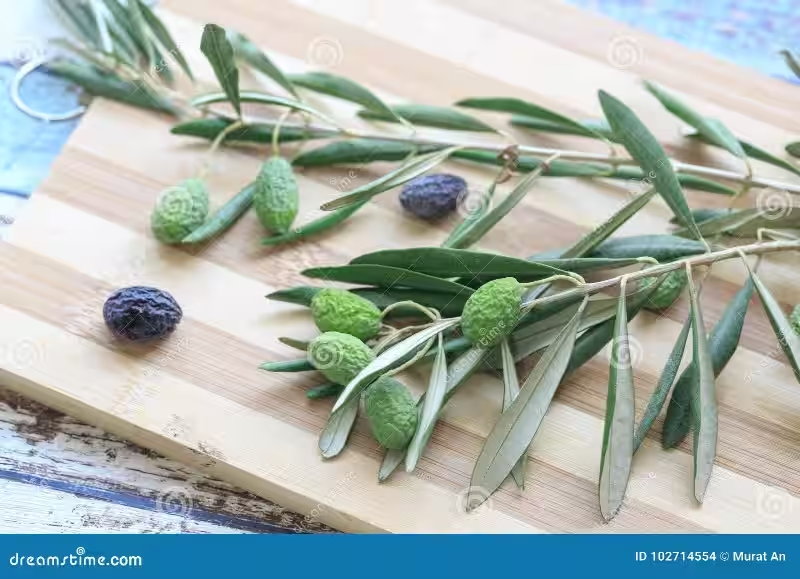
The gnarled, silvery-green leaves of the olive tree have been a symbol of peace and prosperity for millennia, their presence woven deeply into the fabric of human history. But what happens when these verdant boughs are stripped of their life, when they become dried olive branches? Far from being discarded relics, these desiccated forms carry an even richer resonance, particularly within the religious landscape. They are not just remnants; they are conduits to faith, memory, and enduring spiritual narratives that have shaped civilizations. Imagine a potter, his hands calloused from years of shaping clay, carefully selecting a dried olive branch to etch a sacred symbol onto a newly fired vessel. This act, simple yet profound, speaks to the enduring power of these natural elements in religious expression.
Across diverse faiths, the olive tree, in both its verdant and dried states, has been a cornerstone of ceremony, symbolism, and sacred practice. From the ancient Mediterranean world to the foundational texts of major religions, its image evokes a sense of continuity, resilience, and divine favor. The very scent of dried olive wood, a subtle, woody aroma, can transport us to hallowed grounds, reminding us of ancient rituals and the unwavering spirit of devotion. Exploring the role of dried olive branches in religion offers a unique lens through which to understand the enduring human quest for meaning and connection.
Olive Branches in Sacred Texts: A Symbol of Divine Promises
The most iconic biblical image involving an olive branch, though not explicitly stated as dried, is undoubtedly the story of Noah’s Ark. When the floodwaters began to recede, a dove returned to the ark, carrying an olive leaf in its beak. This small, green offering was a beacon of hope, a tangible sign that life was returning to the parched earth, and that God’s promise of a new beginning was being fulfilled. This single leaf, plucked from a tree that had endured the deluge, symbolized renewal, peace, and reconciliation after a period of divine judgment. It’s a narrative that resonates deeply, illustrating how even in the face of overwhelming destruction, nature, and by extension, divine grace, offers a path towards restoration.
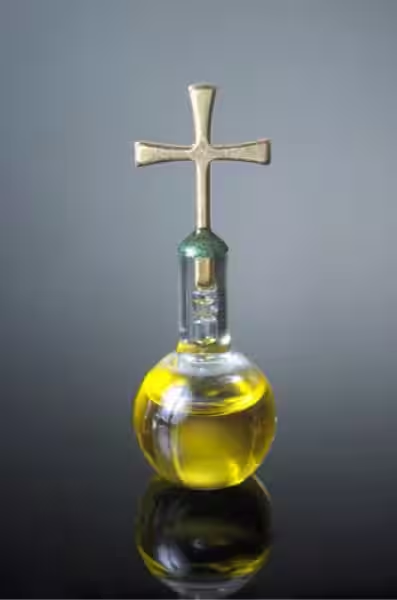
Beyond this pivotal moment, dried olive branches and their symbolism appear in various religious traditions, often representing divine favor, peace, and wisdom. In Judaism, while not as central as in Christianity, olive oil is a significant element in the menorah, symbolizing spiritual illumination. The enduring nature of the olive tree, its ability to thrive even in arid conditions, makes its branches, even when dried, potent symbols of steadfast faith and resilience. Consider the image of an elder in a synagogue, their hands weathered like the bark of an ancient olive tree, explaining the significance of olive oil to young congregants, the scent of dried olive wood perhaps subtly present in the air, carrying the weight of centuries of tradition.
The Olive Branch as a Token of Peace and Reconciliation
The concept of peace, so intrinsically linked to the olive branch, extends beyond mere absence of conflict. In many religious contexts, it signifies a deeper, more profound state of harmony, both within oneself and with the divine. The dried olive branch, therefore, becomes a potent reminder of this aspiration. It’s a tangible representation of the desire for peace, a silent prayer offered through its very form. Imagine a minister, holding a dried olive branch during a sermon on forgiveness, its brittle texture a stark contrast to the soft plea for understanding he is conveying. The branch, in its stillness, amplifies the urgency of his message.
In the early days of Christianity, the olive branch was frequently used as a symbol of peace and reconciliation. Early Christians, often persecuted, would use the olive branch as a sign of greeting and solidarity, a non-verbal declaration of their peaceful intentions. Even today, in some denominations, dried olive branches are used during liturgical services, particularly around Easter, to commemorate Christ’s entry into Jerusalem, a moment of triumph often associated with peace. The visual of a worshipper holding a dried olive branch, its pale color and delicate structure, evokes a sense of solemnity and the quiet hope for a world united in understanding and compassion.
Dried Olive Branches in Ritual and Ceremony: From Ancient Practices to Modern Devotion
The practical and symbolic uses of dried olive branches in religious ceremonies are as varied as the cultures that embrace them. In some traditions, particularly within the Eastern Orthodox Church, dried olive branches are woven into wreaths or garlands used during specific feast days, such as Palm Sunday. These decorations, while perhaps not as vibrant as their fresh counterparts, carry a distinct spiritual weight, connecting the present-day congregation to the historical events and theological interpretations of the past. The rustic beauty of the dried olive branch lends itself to a more contemplative and enduring form of veneration.
Beyond their decorative potential, dried olive branches have also been employed in more hands-on religious practices. In some folk traditions, the branches are burned to create incense, their smoke carrying prayers towards the heavens. The distinctive aroma released during this burning process is believed to purify spaces and ward off negative energies. Consider the image of a monastic elder, carefully tending a small brazier, the air thick with the fragrant smoke of burning dried olive branches, his lips moving in silent prayer. This act, steeped in tradition, highlights the enduring belief in the power of nature to facilitate spiritual connection.
The Enduring Symbolism of Resilience and Faith
The olive tree is renowned for its longevity and resilience, often surviving for centuries and continuing to produce fruit even in harsh environments. This inherent strength is mirrored in the symbolism of its dried branches. They represent a form of enduring faith, a testament to the fact that spiritual strength can persist and even be amplified through adversity. A dried olive branch, weathered and perhaps a little brittle, is a powerful visual metaphor for a faith that has been tested and has not broken, but has instead become more profound. It speaks to the quiet strength found in perseverance.
Think of a family heirloom, a simple dried olive branch preserved for generations, passed down from grandparent to grandchild. Each time it is held, it carries the stories, the prayers, and the unwavering faith of those who came before. This tactile connection to the past, facilitated by the dried olive branch, serves as a constant reminder of the enduring nature of spiritual commitment. It’s an accessible relic, a tangible piece of history that whispers tales of resilience and the unwavering belief in something greater than oneself. The dried olive branch becomes a silent guardian of faith, a humble yet powerful emblem of enduring spiritual strength.
Frequently Asked Questions about Dried Olive Branches and Religion
What are dried olive branches used for in religious contexts?
Dried olive branches hold symbolic significance in various religions, primarily related to peace, reconciliation, and divine favor. Historically, they have been used in ceremonies, as offerings, or as decorative elements in sacred spaces. Their association with the dove returning to Noah’s Ark in Abrahamic traditions is a prominent example, signifying the end of a trial and the promise of renewal and peace. In some Christian traditions, they are still used during Palm Sunday celebrations, commemorating Jesus’ entry into Jerusalem.
Are dried olive branches considered sacred in any religion?
While not universally considered inherently sacred in the same vein as holy texts or relics, dried olive branches are often imbued with sacred meaning due to their symbolic associations and use in religious practices. Their connection to peace, divine messages, and significant religious events grants them a reverent status in the eyes of believers. How they are treated and where they are placed within a religious setting can further elevate their perceived sanctity.
What is the religious symbolism of the olive branch?
The olive branch is a powerful symbol across multiple religions and cultures. In Abrahamic faiths (Judaism, Christianity, Islam), it primarily symbolizes peace, hope, and reconciliation, most famously with the story of Noah’s Ark. In ancient Greek mythology, the olive tree was sacred to Athena, representing wisdom, prosperity, and peace. In Christianity, it is also associated with Jesus Christ’s triumph and peace. Its inherent qualities – its longevity, its ability to produce oil, and its enduring greenness – contribute to its positive and spiritual connotations.
Can dried olive branches be used in personal religious practices?
Yes, dried olive branches can be incorporated into personal religious practices. Many individuals use them as a tangible reminder of peace, hope, or a specific religious message. They might be placed in a prayer space, used during meditation, or kept as a devotional item. Their natural beauty and symbolic weight can serve as a focus for prayer and reflection.
Are there any prohibitions regarding the use of dried olive branches in religion?
Generally, there are no widespread prohibitions against the use of dried olive branches in religious contexts. Their symbolism is overwhelmingly positive. However, as with any religious practice or item, respect and intention are key. They should be used in a manner that aligns with the values and teachings of the specific faith tradition being observed. It is always advisable to consult with religious leaders or texts if you have specific concerns about their use within a particular denomination or practice.