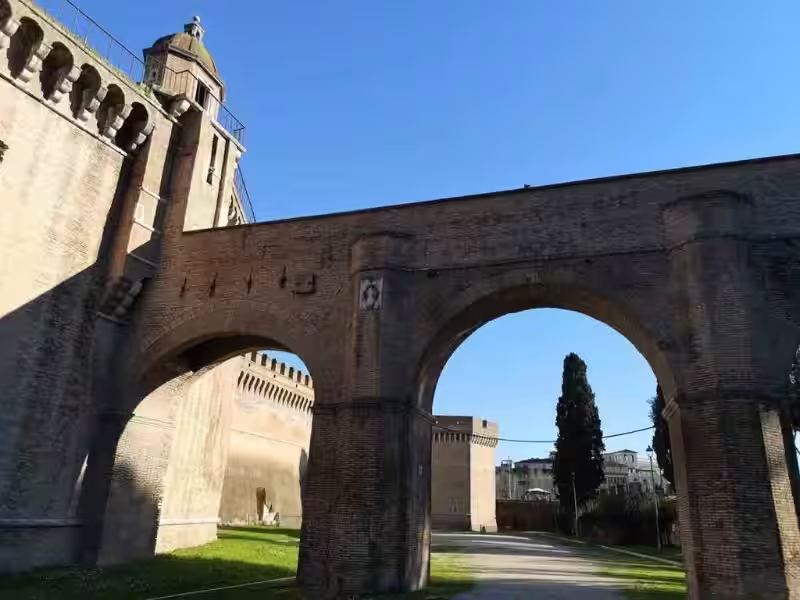
The very phrase “Passetto Borgo” conjures images of hushed corridors, ancient stones, and a profound connection to the heart of religious significance. More than just a physical structure, the Passetto di Borgo, a fortified elevated corridor connecting the Vatican City to Castel Sant’Angelo, represents a tangible link to centuries of papal history, religious intrigue, and moments of profound religious need. It’s a passage that has witnessed escapes, imprisonments, and the unwavering exercise of religious authority, silently bearing witness to the ebb and flow of faith and power in Rome.
This remarkable architectural feat, winding its way through the urban fabric of Rome, is steeped in a history deeply intertwined with the religious narrative of the papacy. Its existence is a testament to the practicalities and the spiritual imperatives that have shaped the Catholic Church throughout its long and complex journey. Understanding the Passetto Borgo is to delve into a unique facet of religious heritage, offering a glimpse into the lives and challenges faced by those who have led the faithful.
The Genesis of a Sacred Escape Route: The Passetto Borgo’s Origin
The construction of the Passetto di Borgo, initiated in 1277 during the papacy of Nicholas III, was not an act of mere architectural vanity. It was born out of a very real and pressing need for religious security. The pontiffs, often the targets of political turmoil and unrest, required a secure and discreet means of transitioning between their primary residence in the Vatican and the formidable fortress of Castel Sant’Angelo. This elevated walkway, essentially a fortified cloister, provided that crucial layer of protection.
Imagine the volatile political climate of medieval Rome, where factions vied for power and the safety of the Pope was paramount. The Passetto Borgo offered a lifeline, a protected artery that allowed the Pope and his entourage to move swiftly and unseen in times of crisis. Its design, elevated and walled, minimized exposure to the crowds and potential threats that roamed the streets below. This was not just about comfort; it was about ensuring the continuity of religious leadership and the protection of the spiritual heart of Catholicism.
The Passetto Borgo’s very existence underscores a recurring theme in religious history: the vulnerability of spiritual leaders amidst worldly power struggles. While the Pope is the Vicar of Christ, he is also a mortal man, susceptible to the machinations of earthly powers. The Passetto served as a constant reminder of this duality, a religious figurehead needing earthly fortifications to protect his spiritual mission.
Consider the famous escape of Pope Clement VII during the Sack of Rome in 1527. This harrowing event saw the Swiss Guard bravely defend St. Peter’s Basilica while the Pope, guided by the Passetto Borgo, made his way to the safety of Castel Sant’Angelo. This incident vividly illustrates the religious importance of the Passetto as a sanctuary, a pathway to survival for the leader of the Catholic world during a moment of extreme peril. It’s a story etched into the very stones of this sacred passage.
The Passetto Borgo and the Art of Religious Governance
Beyond its role as an escape route, the Passetto Borgo also played a subtle but significant part in the religious governance of the Vatican and its surrounding territories. Its strategic location allowed for swift communication and movement of papal officials, facilitating the administration of religious affairs and the maintenance of order within the papal enclave. The ability to move quickly between the administrative center of the Vatican and the defensive stronghold of Castel Sant’Angelo was crucial for effective religious leadership.
The Passetto wasn’t just a conduit for physical movement; it was a strategic element in the complex web of religious and political power that defined the papacy. Think of it as a secure internal highway, enabling the Pope to conduct meetings, issue decrees, and oversee operations with a degree of privacy and security unavailable on the open streets. This facilitated a more controlled and deliberate approach to religious governance, allowing for focused decision-making.
Daily Life and Religious Duties Within the Passetto’s Shadow
While dramatic escapes and sieges often dominate the narratives surrounding the Passetto Borgo, it’s also important to consider the more mundane, yet equally religious significant, aspects of its existence. For centuries, the corridors and chambers within the Passetto likely housed papal guards, servants, and officials, all contributing to the smooth functioning of the Vatican. Their daily lives, though perhaps less grand, were intrinsically linked to the religious mission of the papacy.
The presence of these individuals within the Passetto’s confines underscores the practical realities of supporting a vast religious institution. From preparing meals to maintaining defenses, their work, though often unseen, was essential. This aspect of the Passetto’s history reminds us that even within the most sacred of institutions, there is a human element, a collective effort dedicated to the service and preservation of the religious mission.
The Passetto Borgo Today: A Bridge Between Past and Present Religion
Today, the Passetto di Borgo stands as a remarkable historical monument, a tangible connection to the profound religious and political history of Rome. While no longer actively used for papal escapes, it remains a potent symbol of the enduring legacy of the papacy and the intricate relationship between faith and power. Visitors can now experience its grandeur, walking in the footsteps of popes and imagining the pivotal moments it has witnessed throughout its long religious history.
The accessibility of the Passetto Borgo to the public, albeit with limited tours, allows for a more intimate understanding of its religious significance. It’s no longer solely a place of intrigue and peril, but a site of historical and religious contemplation. Standing within its walls, one can almost feel the weight of centuries of religious devotion, struggle, and triumph.
Experiencing the Religious Echoes of the Passetto Borgo
For those interested in religious history and the evolution of the papacy, a visit to the Passetto di Borgo offers an unparalleled experience. Guided tours often bring its stories to life, detailing papal lives, historical events, and the architectural ingenuity that made it possible. It’s an opportunity to connect with a past that continues to shape our understanding of religious traditions and institutions.
The Passetto Borgo is more than just an old corridor; it’s a narrative woven into the very fabric of religious history. It speaks of courage, of faith under pressure, and of the enduring power of the religious ideals that have guided humanity for millennia. Its silent presence in the heart of Rome continues to resonate with the echoes of a sacred past, offering a unique perspective on the intricate journey of religion through time.
Frequently Asked Questions about the Passetto di Borgo
What is the Passetto di Borgo?
The Passetto di Borgo is an elevated fortified corridor that connects the Vatican City with Castel Sant’Angelo. It is approximately 800 meters long and has served as a secret escape route for Popes in times of danger.
What is the religious significance of the Passetto di Borgo?
The Passetto di Borgo is intrinsically linked to the history of the Papacy and the Catholic Church. Its primary religious significance lies in its role in protecting the Pope, the head of the Catholic Church. It has been used in several historical instances to ensure the safety of the Pontiff, underscoring its importance in the continuity and security of the Church’s leadership.
Can visitors walk through the Passetto di Borgo?
Access to the Passetto di Borgo is generally restricted and not a regular tourist attraction. However, it is occasionally opened to the public for guided tours, often organized by specific institutions or during special events. It is advisable to check with the Vatican Museums or official Vatican tourist information for any available tour schedules.
What is the history behind the Passetto di Borgo’s construction?
The Passetto di Borgo was built in 1277 by Pope Nicholas III. He commissioned its construction to provide a secure and direct means of escape from the Apostolic Palace in the Vatican to the impregnable fortress of Castel Sant’Angelo, which served as a refuge.
Has the Passetto di Borgo been used in religious conflicts or emergencies?
Yes, the Passetto di Borgo has played a crucial role during several historical emergencies. Most famously, it was used by Pope Clement VII to escape the Sack of Rome in 1527, when Imperial troops stormed into the city. It has also been utilized during other periods of unrest and political turmoil to ensure the safety of the Pope.